
Roman coins are more than remnants of an ancient monetary system. They are miniature historical documents that preserve the names of emperors, record political events, reveal religious beliefs, and provide evidence of how the Roman Empire governed its vast territories. Through their inscriptions, portraits, imagery, metal composition, and archaeological context, historians can often determine when and where a coin was produced, sometimes narrowing its date to a remarkably short period.
Yet identifying a Roman coin is not always straightforward. Some carry the names and titles of their issuers, while others commemorate emperors who died generations before the coins were struck. Understanding these objects requires a combination of historical research, archaeology, scientific analysis, and numismatic scholarship.
Roman Coins Were More Than Money
Roman coins served practical economic purposes, facilitating trade, taxation, military payments, and everyday transactions. They also communicated political messages throughout the empire.
Unlike modern currency, which often uses standardized national symbols, Roman coinage frequently presented portraits of rulers, religious figures, military victories, public buildings, and events associated with imperial authority.
These designs functioned as a form of public communication. Coins passed through the hands of soldiers, merchants, farmers, and urban residents, allowing imperial imagery to circulate far beyond Rome itself.
The coins issued under Emperor Titus provide a particularly revealing example. Following the inauguration of the Colosseum in AD 80, Roman coinage depicted the amphitheater, presenting the monumental building as evidence of imperial generosity and achievement. Titus’s father, Vespasian, had initiated the project, and its completion reinforced the Flavian dynasty’s public image.
The monument’s surviving inscriptions and the imagery on contemporary coins offer complementary evidence of how the building was presented to the Roman population.
A similar relationship exists between Trajan’s Column and the coinage of Emperor Trajan. Coins depicting the column preserve details of its appearance that are difficult to reconstruct from the surviving monument alone. They therefore provide evidence not only of imperial messaging but also of Roman architecture and its decorative features.
These examples demonstrate an essential principle of numismatics: a coin’s imagery and inscriptions should be interpreted within their historical context.
Dating Roman Coins Through Imperial Titles
One of the most reliable ways to date Roman imperial coins is to examine their inscriptions.
Roman emperors accumulated titles and renewed certain offices at specific intervals. These included the consulship and tribunicia potestas, or tribunician power, which gave the emperor important legal and political prerogatives associated with the office of tribune of the plebs.
Because these titles changed over time, they can help historians establish when a coin was issued.
Trajan’s Column illustrates the method. Its dedicatory inscription records several of the emperor’s titles, including his sixth consulship and his seventeenth year of tribunician power. These details help establish the monument’s chronology, conventionally associated with AD 113, although individual titles can refer to periods spanning more than one calendar year.
When comparable titles appear on coins, researchers can compare them with the chronology of the emperor’s reign and narrow the likely production date.
During the Roman Republic, before Augustus established the imperial system in 27 BC, moneyers also provide important chronological clues. Moneyers were magistrates responsible for overseeing coin production. Their names and associated imagery can sometimes be matched with known officials and other historical evidence.
However, not every coin carries enough information to establish an exact year. Some dates remain approximate, and historians must distinguish between the period in which a coin was struck and the date when it entered circulation or was deposited.
How Historians Determine Where a Coin Was Minted
Identifying a coin’s mint—the workshop where it was manufactured—can be just as challenging as dating it.
The Roman Empire operated numerous mints across its territories. Their locations and importance changed over time in response to military needs, administrative developments, and political circumstances.
Some coins provide direct evidence of their origin. Provincial issues, for example, sometimes name the city or community responsible for producing them. Later imperial coins frequently carry mint marks, abbreviated inscriptions that identify a mint or, in some cases, a particular workshop within it.
When these markings are absent or unclear, researchers turn to indirect evidence.
Artistic Style and Engraving
Coin dies were engraved with designs that were then transferred onto metal blanks through striking. Engravers working at different mints developed recognizable artistic conventions.
Researchers compare portrait proportions, facial features, lettering, and the treatment of figures to identify similarities among coins. These comparisons can suggest that particular issues originated from the same mint or engraving tradition.
Such judgments require caution. Artistic styles can overlap, engravers can move between workshops, and the appearance of a coin may be affected by wear, corrosion, or incomplete striking.
Die Links
A more direct connection exists when two coins were struck using the same die.
If researchers identify identical engraving details, including distinctive flaws or marks, they may establish a die link between the specimens. These links can reveal relationships between issues and sometimes help reconstruct the sequence of production at a mint.
Archaeological Distribution
The locations where coins are discovered also provide valuable evidence.
If large numbers of a particular coin type appear in a concentrated geographical area, that distribution may suggest a regional origin or an important circulation network. Nevertheless, coins traveled extensively through trade, military movements, taxation, and personal exchange. Their findspots do not automatically establish where they were manufactured.
The strongest attributions combine inscriptions, artistic style, die studies, and archaeological distribution rather than relying on any single clue.
The Mystery of Coins Honoring Long-Dead Emperors
Some of the most intriguing Roman coins depict rulers who had been dead for decades or even centuries.
During the third century AD, Roman emperors issued commemorative coins honoring earlier rulers. These issues included portraits of emperors such as Augustus, Vespasian, and Nerva, accompanied by designs and inscriptions associated with their deification.
The Latin term consecratio refers to the formal consecration of a deceased ruler, traditionally marking his elevation to divine status within the Roman imperial religious system.
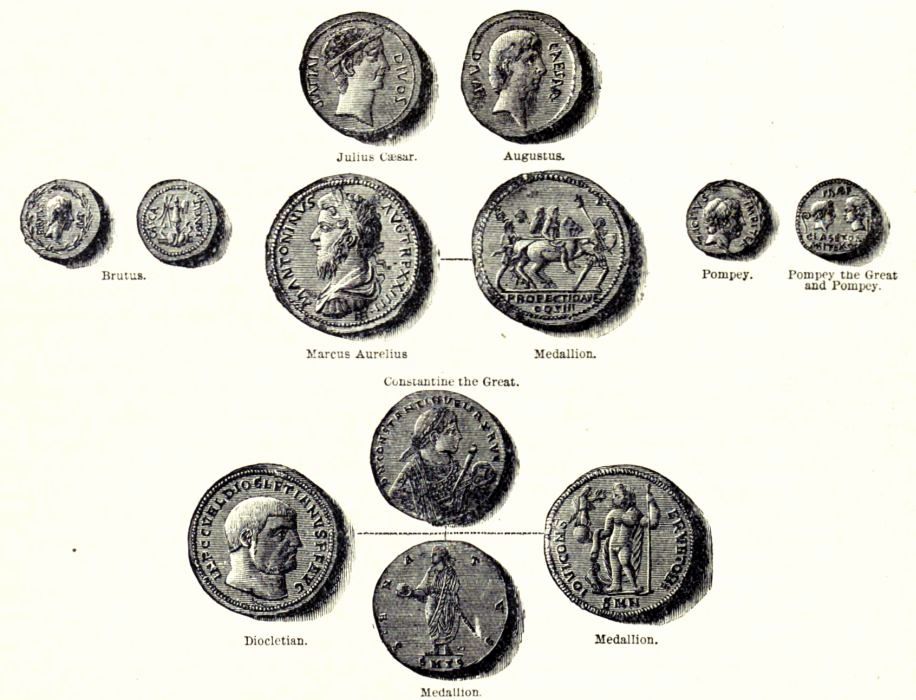
But why would a reigning emperor issue money bearing somebody else’s portrait?
Such coins could connect the current ruler with Rome’s established traditions, reinforce the legitimacy of imperial authority, and evoke memories of emperors regarded as successful or worthy of honor. They also helped sustain the religious and political significance of the imperial cult.
Identifying the ruler who ordered these coins presents a fascinating historical problem because the commemorative designs do not necessarily name the issuing emperor.
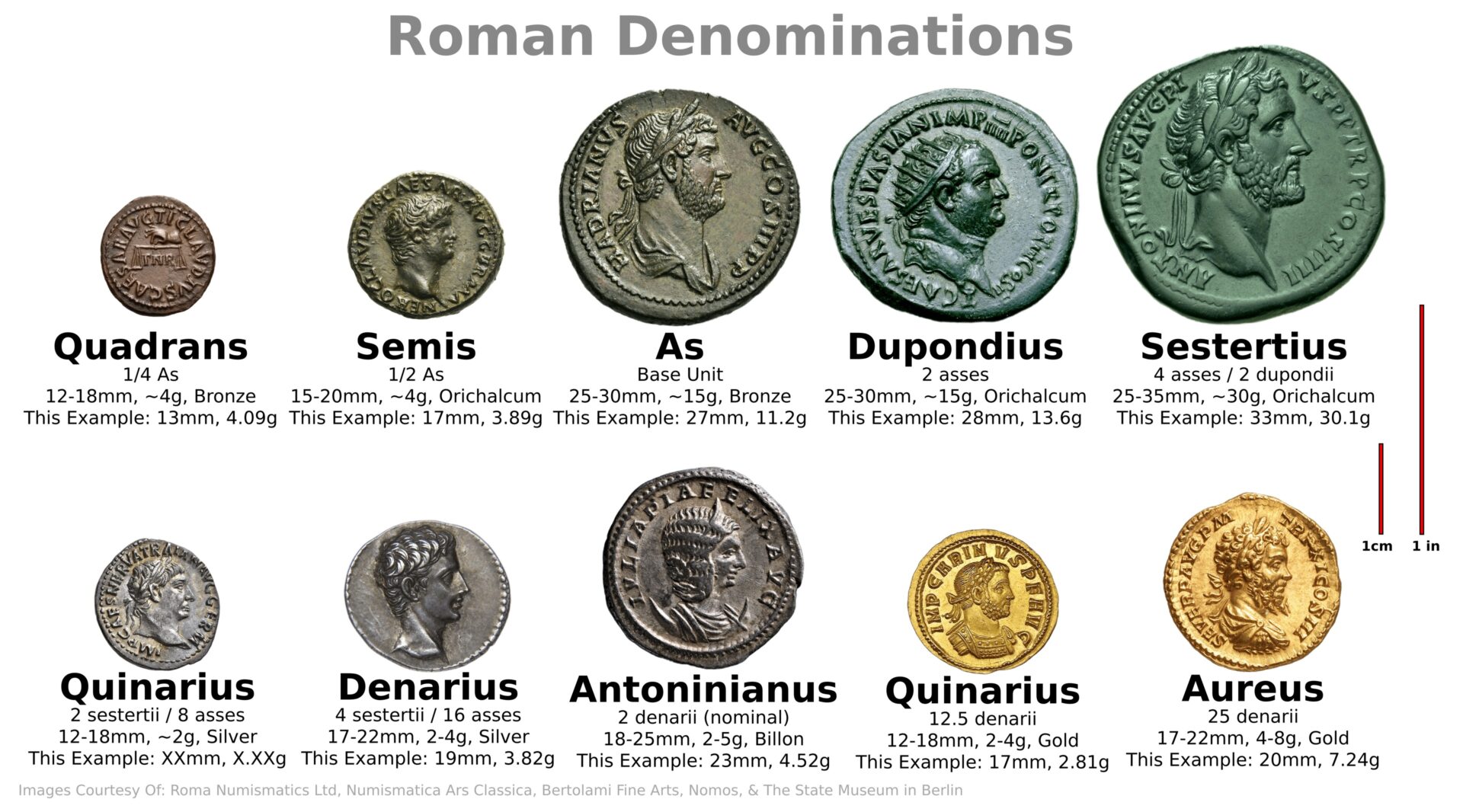
One important example is a series of third-century antoniniani, a denomination introduced under Caracalla that initially had a nominal value of two denarii. The commemorative issues honored multiple deceased emperors and featured designs associated with their consecration.
Their attribution has been debated among numismatists, with proposed dates and issuers including Philip I, also known as Philip the Arab, and Trajan Decius.
Several kinds of evidence help resolve the question.
Coin Hoards and the Plevna Discovery
A coin hoard is a group of coins deliberately concealed or otherwise deposited together in antiquity. Its contents can help establish when a coin type must already have existed.
The Plevna hoard, which contained thousands of Roman coins, included examples of the commemorative series. Its composition provides evidence for the period when those coins were in circulation.
The key principle is that a hoard can establish a terminus ante quem—a latest possible date by which a coin must have been produced—if the archaeological circumstances show that the deposit remained closed after burial.
However, the date of a hoard is not necessarily the exact date of every coin within it. Researchers must examine the latest issues represented, the historical circumstances, and the reliability of the archaeological context.
Hybrid Coins
Another useful clue comes from hybrid coins, which combine designs normally associated with different coin types.
A specimen in the British Museum reportedly combines the portrait of Vespasian with a reverse design associated with the coinage of Trajan Decius. Such a combination can provide evidence of a relationship between the commemorative series and Decius’s minting operations.
Hybrid coins are particularly valuable because they can connect otherwise separate groups of issues through shared dies, engraving practices, or production errors.
Metal Composition and Weight
The physical properties of a coin provide another line of evidence.
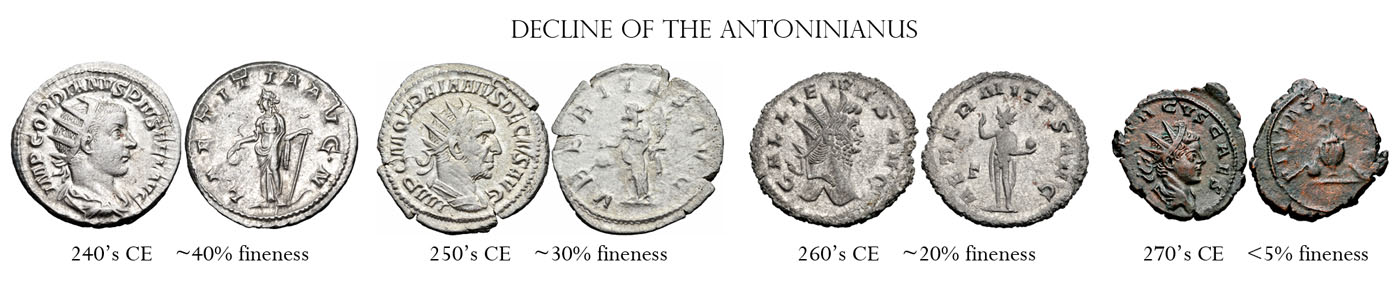
Roman silver coinage underwent significant changes over time. During the third century AD, many denominations contained progressively less silver, reflecting wider monetary and political pressures.
Researchers can compare the weights and metal compositions of commemorative coins with securely attributed issues from different reigns. If the results align closely with a known coinage, they can support a proposed date and mint attribution.
No single measurement proves who issued a coin. Weight standards varied, coins circulated and wore down, and metal composition could differ between batches. Scientific analysis becomes most useful when combined with archaeological and historical evidence.
Archaeology Can Establish a Coin’s Chronological Limits
Coins discovered in securely dated archaeological contexts provide additional chronological evidence.
Suppose a coin is recovered from a sealed deposit beneath a building destroyed in a historically documented event. If the archaeological relationship is secure, the coin must have been deposited before that destruction.
This does not necessarily tell researchers when the coin was minted. It establishes that the coin existed by the time it entered the deposit.
The distinction matters because Roman coins could remain in circulation for years or decades after their production. Some were also reused, hoarded, or transported far from their original mints.
Overstruck coins provide another useful clue. In this process, a new design was struck over an older coin, sometimes leaving traces of the original imagery or inscription. When researchers identify the underlying type, they can establish the relative sequence of the two issues.
Together, stratigraphy, hoard analysis, overstrikes, and scientific examination allow historians to reconstruct coinage chronologies even when inscriptions are incomplete or absent.
The Major Catalogs Used to Identify Roman Coins
Generations of numismatists have assembled reference catalogs documenting Roman coin types, their inscriptions, dates, denominations, and proposed mint locations.
These publications are essential because a coin’s appearance alone rarely provides a complete identification.
Several major reference works serve different areas of Roman numismatics:
| Catalog | Primary coverage |
|---|---|
| Roman Republican Coinage (RRC), by Michael H. Crawford | Republican coinage and much of the late Republican period |
| Roman Imperial Coinage (RIC) | Imperial coinage from Augustus through the later Roman Empire |
| Coins of the Roman Empire in the British Museum (BMCRE) | Imperial coinage represented in the British Museum’s collection |
| Roman Provincial Coinage (RPC) | Coinage issued by cities and authorities across the Roman provinces |
| Late Roman Bronze Coinage (LRBC) | Important reference for late Roman bronze issues |
| Roman Coins and Their Values, by David Sear | A broad reference for identifying and understanding Roman coinage |
Catalogs are not infallible. New discoveries, revised chronologies, and disagreements among specialists can lead to different interpretations of the same coin. For this reason, collectors and researchers often compare more than one reference.
Catalog numbers are especially important because they allow other people to verify an identification and distinguish one coin type from closely related varieties.
How to Identify a Roman Coin Step by Step
For someone examining an unidentified Roman coin, a systematic approach is more reliable than guessing from a portrait.
1. Establish the Basic Characteristics
Begin by recording the coin’s apparent metal, weight, diameter, and condition. Photograph both sides clearly, using good lighting and a neutral background.
Do not clean the coin aggressively. Cleaning can damage its surface and remove evidence that helps establish its authenticity and identity.
2. Identify the Obverse and Reverse
The obverse is the principal face, often bearing a ruler’s portrait. The reverse carries the secondary design, which may depict a deity, personification, military trophy, animal, building, or religious symbol.
Record the direction of the portrait, clothing, headgear, objects held by figures, and other visible details.
3. Transcribe the Inscriptions
Roman coins often use abbreviated Latin legends. Imperial titles such as IMP for imperator, AVG for Augustus, and COS for consul can help identify the issuer and narrow the date.
Do not assume that every inscription is complete. Wear, damage, and weak striking can obscure letters, while some abbreviations have multiple possible interpretations.
4. Determine the Denomination and Coinage Category
Establish whether the coin is likely Republican, imperatorial, imperial, or provincial.
Denomination can often be inferred from a combination of weight, diameter, metal, design, and historical period. Weight alone is not conclusive because Roman standards changed and individual coins varied.
5. Consult the Appropriate Catalog
Once the likely ruler and denomination have been identified, consult the relevant specialist reference.
For imperial coins, RIC is a key starting point. Compare the obverse legend, reverse legend, imagery, denomination, and proposed date. Illustrations or plates can help distinguish similar types.
6. Record a Complete Attribution
A useful attribution should include:
-
Issuing authority or ruler.
-
Mint, if known.
-
Date or date range.
-
Denomination.
-
Metal, weight, and diameter of the individual specimen.
-
Description of the obverse and reverse.
-
Inscriptions on both sides.
-
At least one catalog reference.
A complete record makes the identification transparent and allows it to be checked against other specimens and published scholarship.
A Practical Example: A Denarius of Lucius Verus
Lucius Verus ruled jointly with Marcus Aurelius from AD 161 until his death in AD 169. His coinage illustrates how inscriptions, imagery, and catalog references work together.
Consider a silver denarius weighing approximately 3.12 grams. Its obverse depicts Lucius Verus with a bare head and a Latin inscription identifying him as Augustus.
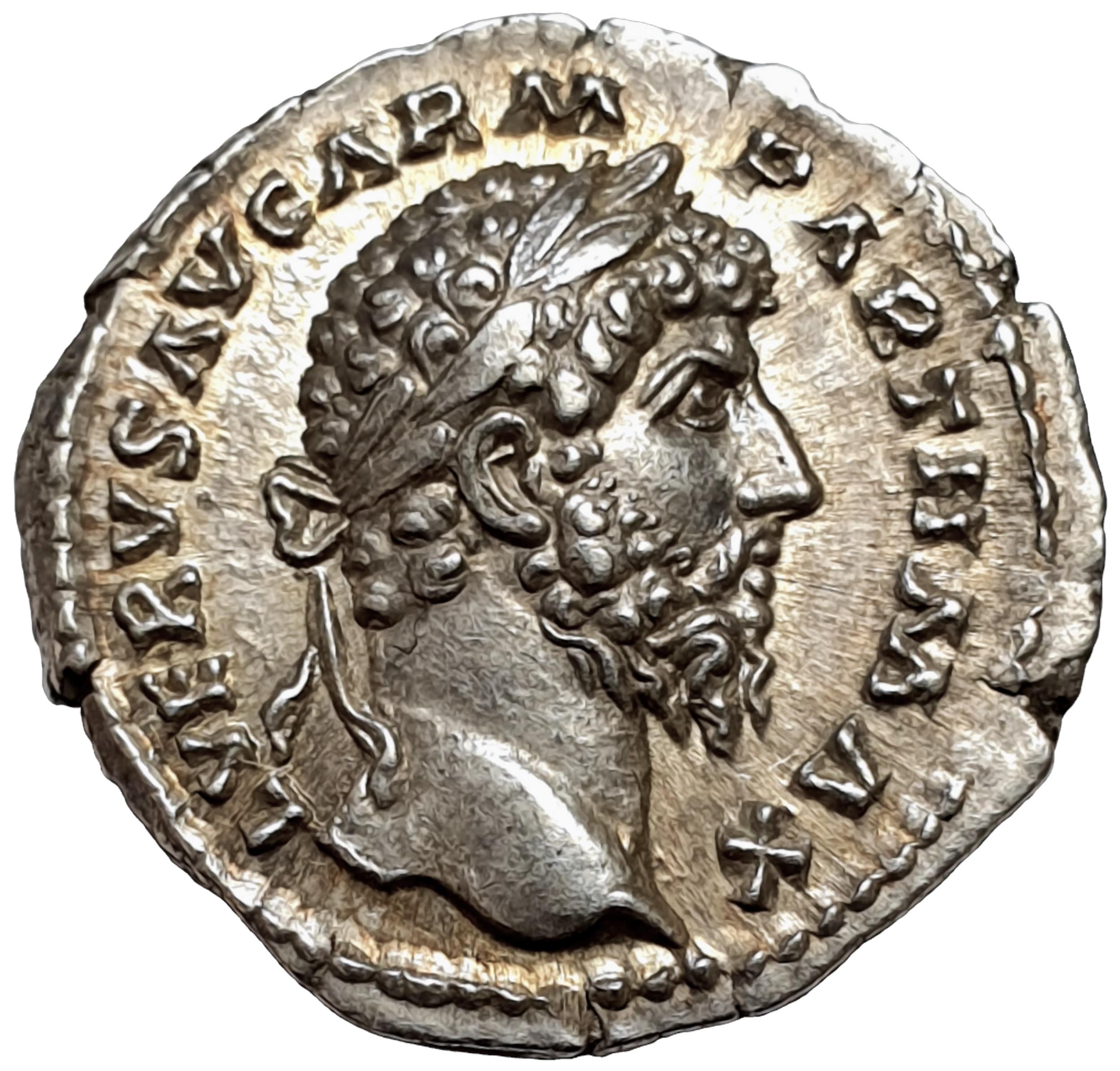
The reverse shows Providentia, a personification associated with foresight and divine providence, holding symbolic attributes. The accompanying inscription refers to Providentia Deorum, meaning the providence of the gods.
By comparing these details with the appropriate volume of Roman Imperial Coinage, a researcher can identify a matching type. The relevant volume is RIC III, which covers the coinage of Antoninus Pius, Marcus Aurelius, Lucius Verus, and Commodus.
The specific type described in the source material is cataloged as RIC III 463 and dated to AD 161, with production attributed to the mint at Rome.
This example also highlights an important practical point: the weight quoted in a description must be measured from the actual specimen. A catalog’s standard weight or the weight of another example cannot substitute for the measurement of the coin being identified.
