

The Roman Candle Execution: Did Nero Burn Christians Alive?
The Great Fire of Rome in AD 64 remains one of the most infamous disasters in Roman history. It destroyed large sections of the imperial capital during the reign of …
The Great Fire of Rome in AD 64 remains one of the most infamous disasters in Roman history. It destroyed large sections of the imperial capital during the reign of …
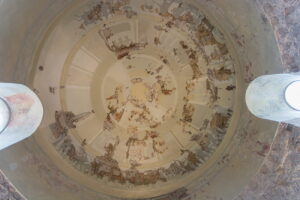
Near Tarragona, in northeastern Spain, the remains of the ancient Roman settlement of Tarraco, stands one of the most enigmatic monuments of late Roman Hispania: the complex of Centcelles. …
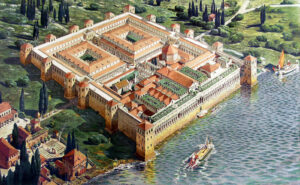
In 305 AD, Emperor Diocletian voluntarily abdicated the Roman throne and withdrew to the Adriatic coast of Dalmatia, where he had constructed an immense fortified complex near the provincial capital …

The history of the Roman Empire is often associated with military conquest, monumental architecture, sophisticated administration, and some of antiquity’s most capable rulers. Yet its imperial system also produced emperors …
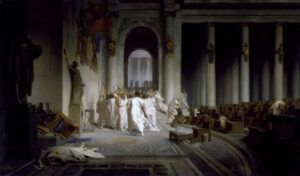
The deaths of Roman emperors reveal the fundamental weakness of imperial power: an emperor could command armies, control vast territories, and exercise authority over millions, yet remain vulnerable to …

London’s history began long before its medieval streets, Victorian landmarks, and modern skyscrapers. Beneath the financial district and among the city’s historic markets lie the remains of Londinium, the …
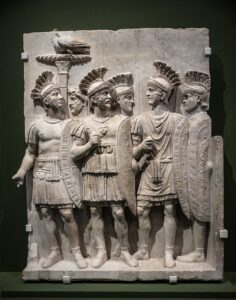
The Roman army did not become one of the most formidable military institutions of the ancient world through weapons and battlefield courage alone. Its strength rested on a disciplined …

The Colosseum, formally known as the Flavian Amphitheatre, was one of the most ambitious engineering projects of the Roman Empire. Completed in the first century AD, it combined monumental architecture, …

The Pax Romana, or “Roman Peace,” was one of the most consequential periods in ancient history. Beginning with the establishment of Augustus’ principate in 27 BCE and conventionally lasting …
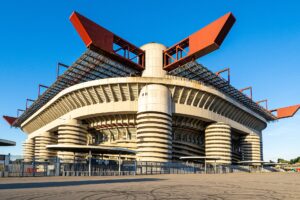
The Roman Empire at its territorial height under Emperor Trajan, around AD 117, encompassed a vast network of provinces stretching from Britain and the Iberian Peninsula to the eastern Mediterranean, …

Roman engineering is often remembered through its surviving successes: the Pantheon, Colosseum, aqueducts, roads, bridges, and monumental harbors. Yet Roman engineering was also defined by projects that proved too ambitious, …
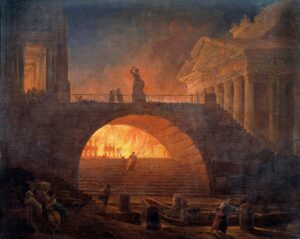
In July 64 CE, Rome suffered one of the most destructive urban fires in its history. The blaze consumed large sections of the imperial capital, displaced thousands of residents, destroyed …
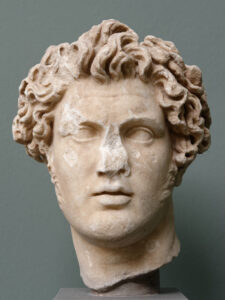
By the beginning of the 3rd century BC, Rome had become the dominant power in much of Italy. City after city had fallen under its influence, and the Roman Republic …
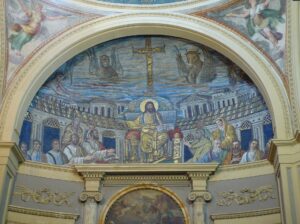
The Roman Empire was not inherently opposed to religious diversity. Across its vast territory, Romans encountered and incorporated an extraordinary range of gods, rituals, priesthoods, and foreign cults. Egyptian Isis …