
Leptis Magna was one of the most important cities of Roman North Africa, a prosperous Mediterranean port whose wealth, monumental architecture, and cultural diversity reached extraordinary heights under Emperor Septimius Severus, who was born there around AD 145. Its surviving ruins in modern Libya reveal a city shaped by Phoenician traders, Punic traditions, Roman imperial power, and later Christian and Byzantine rule.
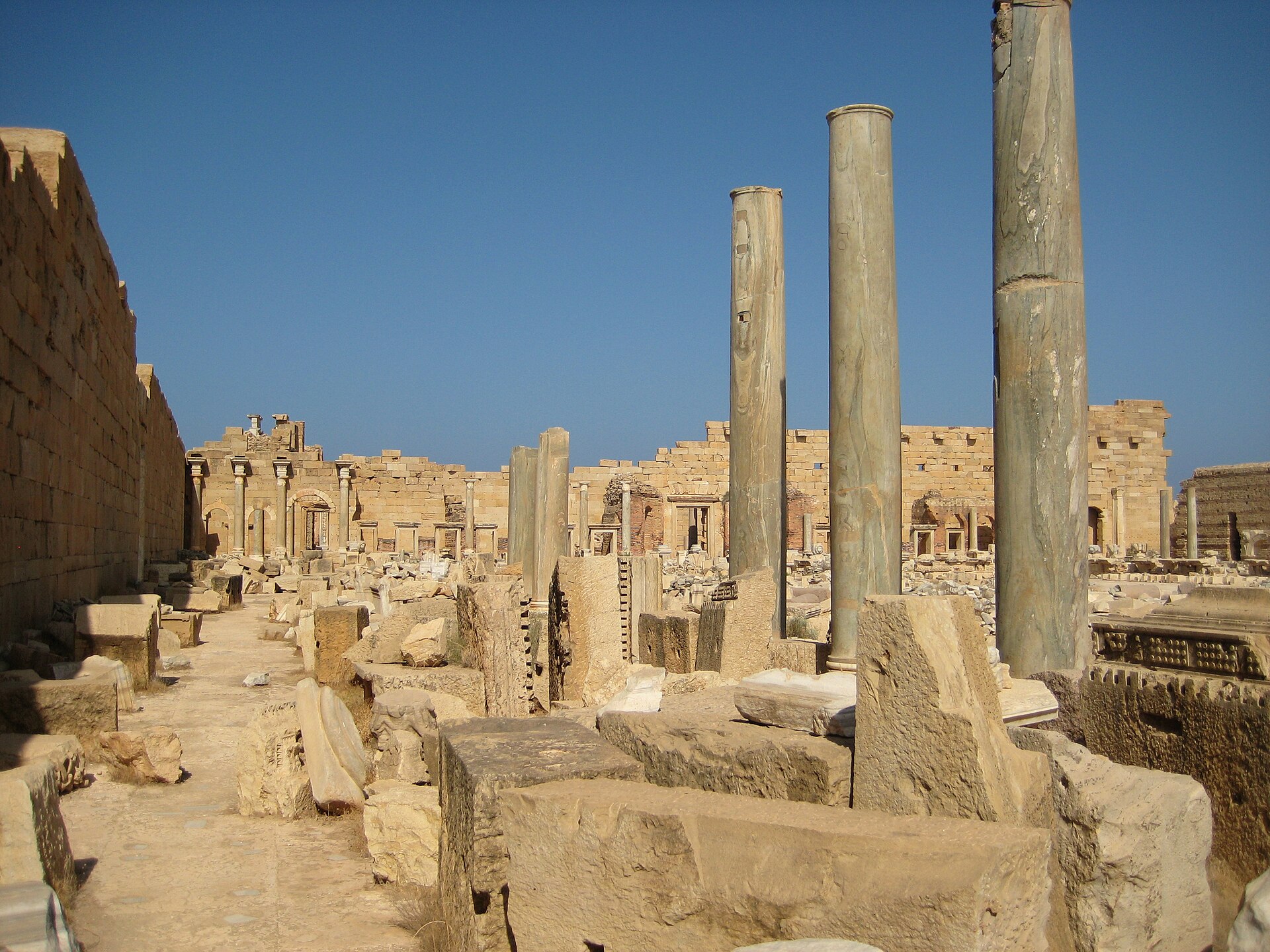
Yet Leptis Magna’s decline was neither sudden nor the result of a single catastrophe. Economic difficulties, changing political circumstances, environmental pressures, and successive invasions transformed the city over several centuries. Its rediscovery also carries a complicated modern history, as Italian colonial ambitions helped shape the archaeological exploration of Libya during the twentieth century.
Today, Leptis Magna offers a remarkable record of how ancient Mediterranean societies interacted, prospered, adapted, and ultimately changed.
From Phoenician Trading Post to Roman Port
Leptis Magna’s history began long before Roman rule. Phoenician settlers established a trading center near the mouth of the Wadi Lebda, a seasonal watercourse that connected the coastal region with routes into the North African interior. Its location gave merchants access to maritime commerce and inland resources.
The city later became part of the Punic world, the network of Phoenician-descended communities whose most powerful center was Carthage. Although the exact date of Leptis Magna’s foundation remains uncertain, its development reflected the wider commercial connections linking North Africa with the eastern and central Mediterranean.
Rome’s destruction of Carthage in 146 BC fundamentally altered the regional balance of power. Leptis Magna subsequently expanded its commercial importance and eventually came under Roman control. During the imperial period, its harbor connected North African agricultural production with markets across the empire.
Ships carried olive oil and other agricultural goods, while the region’s broader trading networks connected it to commodities and people moving across the Sahara and Mediterranean. Such commerce generated wealth for local elites, who invested in public buildings, religious monuments, and urban infrastructure.
Leptis Magna became more than a port. It was a city whose architecture expressed its prosperity and its growing relationship with Rome.
A City of Multiple Cultures
Leptis Magna’s Roman identity did not erase its earlier traditions. Latin inscriptions appeared alongside Punic writing, while architectural styles and religious practices reflected influences from across the Mediterranean.
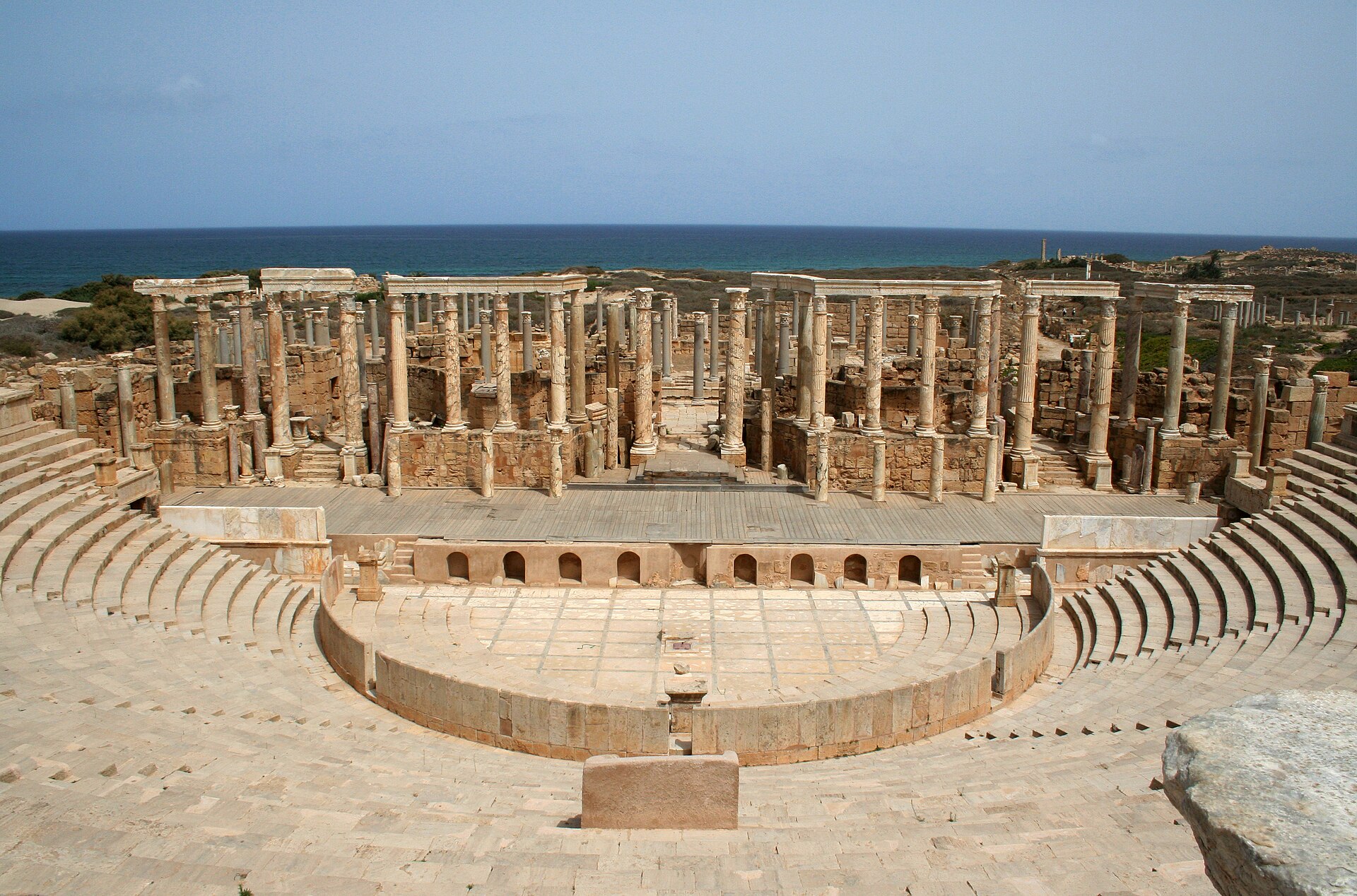
One particularly revealing monument is the city’s theater, constructed in the early first century AD through the benefaction of a wealthy local citizen of Punic background. Its inscriptions demonstrate how local elites could express civic pride through Roman institutions while retaining connections to their earlier cultural heritage.
A dedication associated with the theater uses the Latin title ornator patriae, meaning a benefactor or embellisher of his homeland. The monument also preserves evidence of Punic linguistic traditions.
Such inscriptions challenge the idea that Romanization was simply a process in which local cultures disappeared. In Leptis Magna, adopting Latin, Roman civic offices, and monumental building practices could coexist with enduring local identities.
Religious life was similarly diverse. Traditional Roman and Greek deities were worshipped alongside gods whose cults had spread from other parts of the Mediterranean, including the Egyptian goddess Isis. Christianity also became established in North Africa, although the precise chronology of its earliest development in Leptis Magna remains incompletely documented.
This was the strength of the Roman Mediterranean: not cultural uniformity, but the integration of communities whose languages, customs, and religious practices could overlap.
Septimius Severus and the City’s Golden Age
Leptis Magna reached its greatest monumental splendor under Septimius Severus, who became emperor in AD 193 after a civil war following the death of Pertinax. His African origins were an important part of his identity, although he ruled an empire whose political and cultural institutions extended far beyond his birthplace.
Severus invested heavily in Leptis Magna, transforming its urban landscape with ambitious construction projects. A new monumental district included the Severan Forum, a grand basilica, and a colonnaded avenue. The emperor also commissioned a monumental four-sided arch at the intersection of major streets.
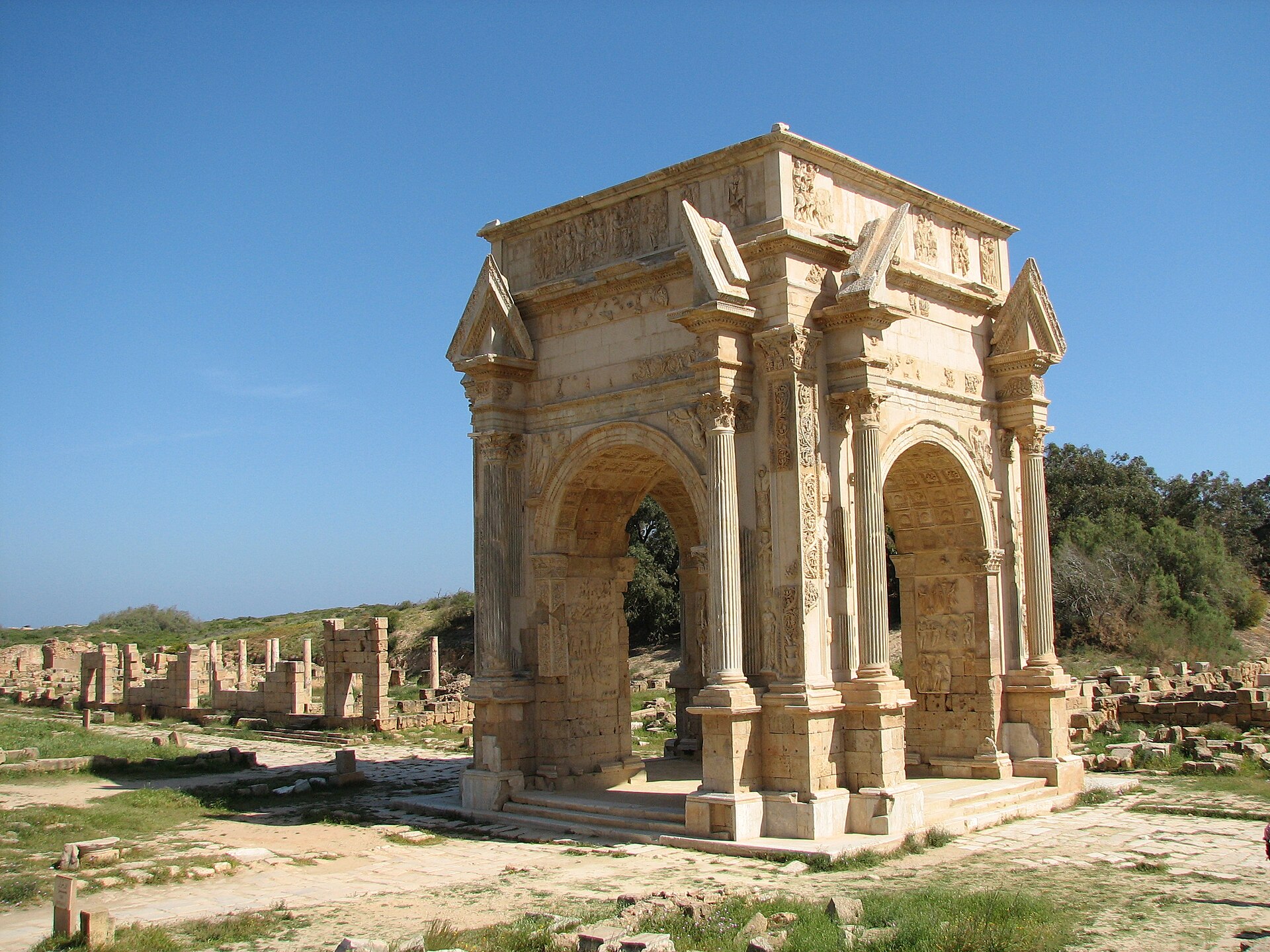
These structures were decorated with elaborate sculpture and imported marble, reflecting the city’s wealth and its connections with craftsmen and suppliers across the empire. Its artificial harbor, market, warehouses, baths, theater, and amphitheater demonstrated the engineering and organizational capabilities that supported its prosperity.
Severus died in AD 211 at Eboracum, modern York, in Britain. He left the empire to his sons Caracalla and Geta, whose rivalry ended in Geta’s murder in AD 211. Caracalla subsequently ordered his brother’s name and images erased from many public monuments, a practice known as damnatio memoriae, or the condemnation of memory.
The Severan dynasty did not preserve Leptis Magna’s prosperity indefinitely. The enormous building projects of the early third century demanded resources that later generations could not necessarily sustain. Nevertheless, the city’s architectural legacy continued to reflect the ambitions of its most famous son.
The Amphitheater and the Machinery of Roman Entertainment
Leptis Magna’s amphitheater provides another window into Roman urban life. Unlike the theater, which hosted dramatic performances, the amphitheater was designed for spectacles such as gladiatorial combat and animal hunts.
The structure was built into a natural depression near the coast, taking advantage of the landscape to accommodate its seating and arena. Its construction is generally dated to AD 56, during the reign of Nero, making it an early example of a permanent Roman amphitheater in North Africa.
The building’s corridors, entrances, and circulation routes reveal how Roman architects managed large crowds and organized spectacles. Religious imagery associated with the games also illustrates the relationship between entertainment and ritual.
The amphitheater was not an isolated monument. It formed part of a wider urban landscape that included a circus for chariot racing, public baths, temples, and commercial districts. Together, these buildings helped make Leptis Magna a center of civic life comparable in ambition, if not in political importance, to major cities elsewhere in the empire.
Wealth Beyond the City Walls
Leptis Magna’s prosperity depended on more than its public monuments. Its agricultural hinterland supplied the olive oil that made the surrounding region one of Roman North Africa’s important producing areas.
Wealthy landowners maintained estates and villas along the coast, while agricultural workers cultivated the land and supported production for local consumption and export. Enslaved people also formed part of the labor system that sustained elite wealth in Roman society.
The remains of coastal villas reveal the lifestyles available to prosperous inhabitants. Frescoes, mosaic floors, private bathing facilities, and decorative sculpture demonstrate how provincial elites adopted architectural fashions associated with Roman Italy while adapting them to local circumstances.
Yet the same evidence reveals the inequalities beneath the city’s grandeur. The wealth displayed in monumental buildings and private estates depended on agricultural production, unequal access to resources, and labor performed by people whose lives rarely appear in surviving inscriptions.
Leptis Magna’s prosperity was therefore both an achievement of Roman urbanism and a product of the economic and social structures that supported the empire.
Why Did Leptis Magna Decline?
The decline of Leptis Magna cannot be explained by one event. Its transformation unfolded over several centuries, and historians continue to investigate the relative importance of economic, environmental, political, and military pressures.
During the third and fourth centuries, parts of the city experienced disruption and abandonment. Earthquakes may have damaged buildings and infrastructure, while changing economic conditions placed pressure on the maintenance of expensive public works.
The harbor was particularly important. Its artificial basin, channels, and protective structures required continued maintenance. Changes in sedimentation and the movement of the Wadi Lebda may have affected its usefulness, although the precise relationship between harbor silting, engineering failures, and economic decline remains a subject of investigation.
Political and military instability also altered the region. In AD 439, the Vandals captured Carthage and established control over much of Roman North Africa. Leptis Magna’s fortunes deteriorated amid the wider weakening of Roman authority, although the exact sequence of events affecting the city is not fully documented.
The Byzantine Empire reconquered parts of North Africa in the sixth century under Emperor Justinian. Leptis Magna was reoccupied and fortified, but its urban footprint had contracted. Some older public buildings were adapted for Christian worship or military use, demonstrating that the city did not simply disappear when its classical monuments ceased to function as originally intended.
A further destructive episode occurred in AD 523, when the region experienced conflict involving local groups and Byzantine authorities. The extent of the damage to Leptis Magna and its immediate surroundings remains difficult to establish in every detail.
By the seventh century, Arab-Muslim expansion had transformed the political landscape of North Africa. Leptis Magna gradually lost its former urban importance, and shifting settlement patterns, economic changes, and the encroachment of windblown sand contributed to the preservation of its abandoned monuments.
It is misleading, however, to describe the city’s transformation as the simple replacement of a civilized pagan society by Christianity and Islam. Religious change was only one part of a much broader historical process.
Archaeology and the Legacy of Italian Colonialism
Leptis Magna’s modern archaeological history is inseparable from Italy’s occupation of Libya. Italian forces invaded Ottoman-controlled Tripolitania and Cyrenaica in 1911, beginning a colonial war that culminated in Italian control of the region.
Archaeological exploration expanded during the colonial period, with excavations uncovering many of the city’s principal monuments. Under Fascist rule, particularly during the 1920s and 1930s, Roman ruins were increasingly used to support the political claim that Italian expansion into Libya represented a return to an ancient Roman inheritance.
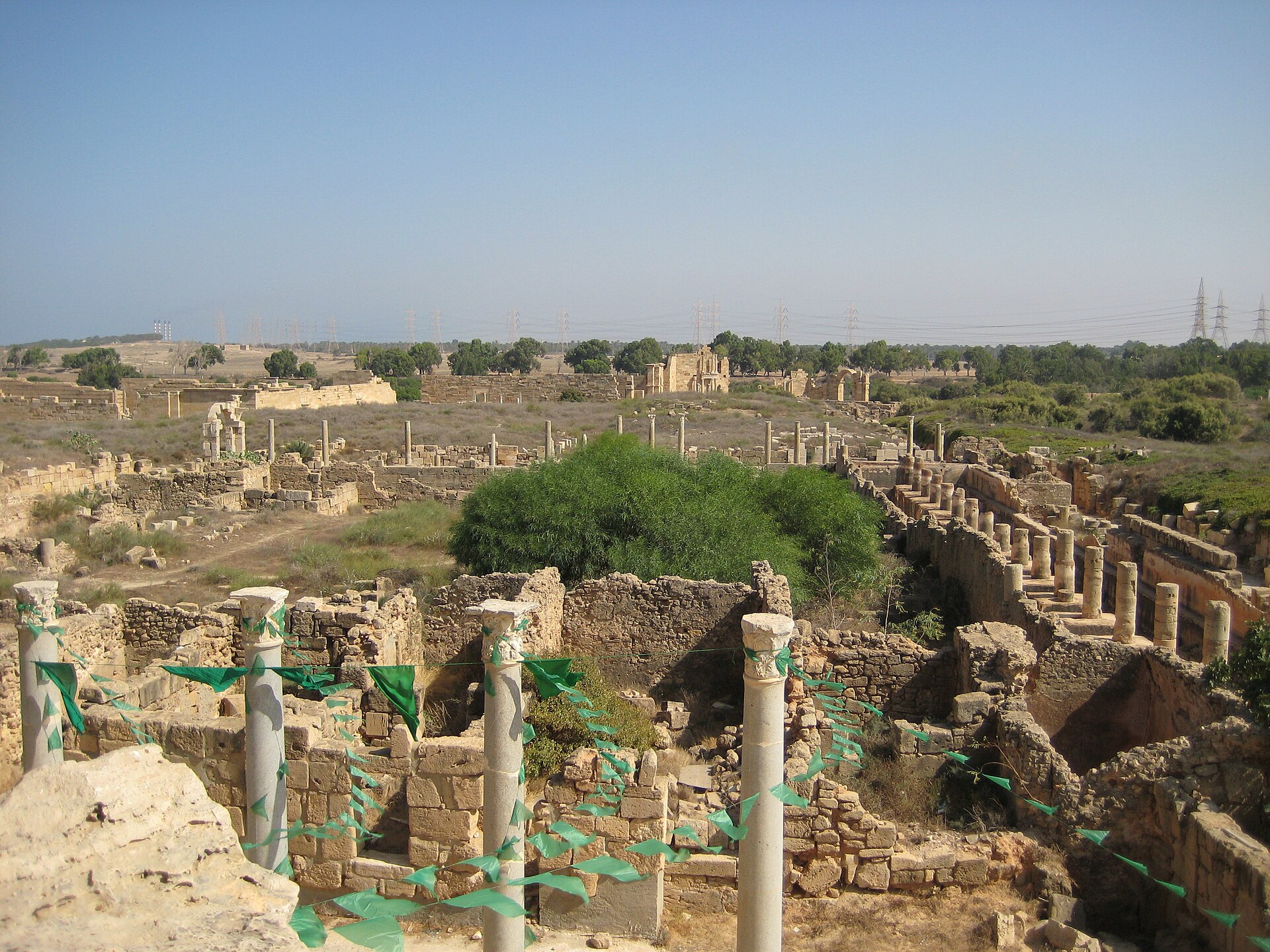
This was not an impartial interpretation of the past. Archaeology became entangled with colonial propaganda, and the emphasis on Rome’s monuments could marginalize Libya’s other histories and the communities living among the ruins. Modern scholarship has examined how colonial institutions influenced excavation priorities, restoration practices, and the presentation of Roman North Africa.
After Libya gained independence, archaeological research continued through international collaboration. Italian archaeologist Antonino Di Vita became closely associated with research and restoration at Leptis Magna, while other teams investigated its harbor, cemeteries, urban development, and surrounding agricultural settlements.
Today, researchers combine traditional excavation with aerial photography, satellite imagery, geographic information systems, and three-dimensional scanning. These methods help identify buried structures, reconstruct ancient landscapes, and document monuments vulnerable to deterioration.
The site’s preservation remains a concern. Windblown sand helped protect many structures for centuries, but exposure to weather, water damage, inadequate maintenance, and political instability can threaten monuments once excavation removes their protective covering. Leptis Magna was inscribed on UNESCO’s World Heritage List in 1982 and added to the List of World Heritage in Danger in 2016 amid concerns about the wider conflict in Libya.
Leptis Magna’s Enduring Significance
Leptis Magna was never merely a distant imitation of Rome. It was a major North African city with its own history, traditions, commercial networks, and political influence. Its monuments show how local communities participated in the Roman imperial system while retaining elements of older cultural identities.
Its decline was equally complex. Economic pressures, infrastructure problems, natural disasters, military conflict, and changing political and religious institutions all contributed to its transformation.
The ruins preserve more than the memory of imperial grandeur. They reveal the interconnected nature of the ancient Mediterranean and the dependence of great cities on the resources, institutions, and communities that sustained them.
Leptis Magna’s importance today lies not only in what remains of its Roman golden age, but also in what archaeology can teach us about the many peoples who shaped North African history—and the responsibility to preserve that heritage beyond the political ambitions of any one era.
