
After Justinian, Everything Fell Apart
You inherit an empire that looks strong on a map but feels strained in reality. You see the lands won under Justinian, yet you also face empty coffers, tired armies, and enemies pressing on every border. While you try to secure your rule in Constantinople, new threats rise in the Balkans, Italy, and the east.
You must manage faith disputes at home and dangerous rivals abroad. As pressure builds from the Avars, Lombards, and Persians, you make choices that reshape Italy and test Rome’s strength. Each decision forces you to balance pride, survival, and limited resources.
Key Takeaways
- You take power over an empire stretched thin by past wars and heavy costs.
- You face invasions and uprisings across the west while conflict grows in the east.
- You make hard choices that change Italy and shape the empire’s future.
Enduring Impact of Justinian’s Rule
Justinian spent his life restoring Roman lands in the west while holding the line in the east. You see the results in both gains and heavy costs.
Gains in Land and the Price Paid
You reclaim Italy, secure Africa, and protect the border with Persia. You also take back Rome itself while fighting major wars in the east and guarding the Balkans.
But success drains your strength. Armies grow tired. The treasury runs low after years of campaigns. You stretch your forces across Italy, Africa, Persia, and the Danube at the same time.
When the Lombards invade Italy in 568, they face little resistance. You have already reduced troop numbers there after earlier victories. The Po Valley falls, and only a few cities hold out for a time.
At the same time:
- The Avars attack near the Danube and target Sirmium.
- The Visigoths strike Roman lands in Spain.
- War flares again in Africa against the Moors.
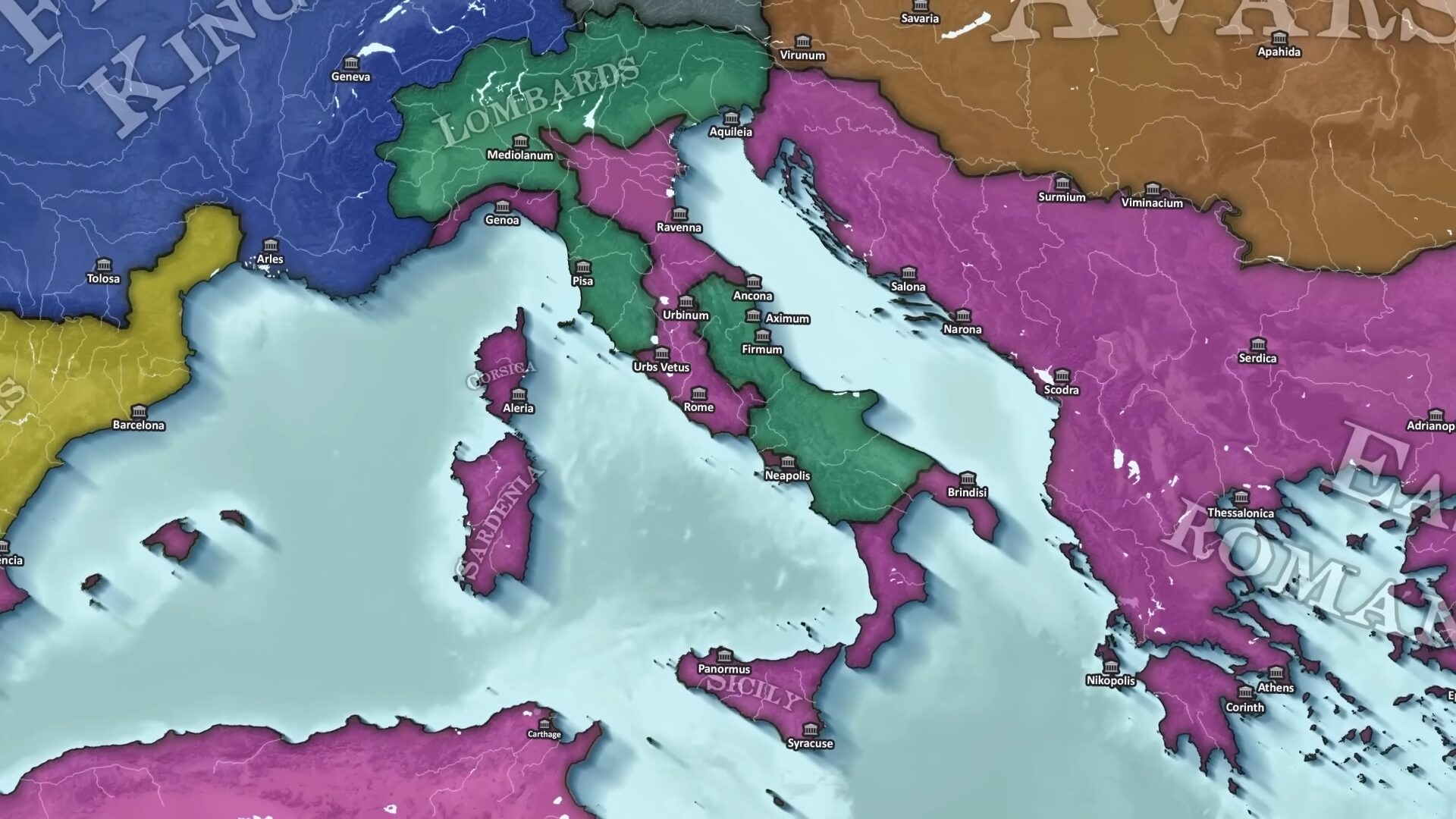
You cannot send enough support to every front. Italy splits between Lombard control and the lands you still hold, such as Ravenna, Rome, parts of southern Italy, and Sicily.
Pressure on Government and Defense
You inherit an empire burdened by debt and long wars. The treasury feels the strain from years of military action under Justinian.
Even so, you cancel unpaid taxes from years past. This act shows confidence in the empire’s economy, though resources remain tight.
You must also secure your rule in Constantinople. Rivals exist, and you rely on loyal guards and church leaders to confirm your authority.
Beyond politics, you face constant military threats:
| Region | Main Challenge |
|---|---|
| Balkans | Avar pressure and raids |
| Italy | Lombard invasion and loss of territory |
| Spain | Visigoth attacks |
| East | Renewed war with Persia |
You focus on Persia and the Balkans, which limits what you can send west. As a result, the lands Justinian fought hard to win begin to weaken under new attacks.
Religious conflict adds another layer of strain. You try to unite Christian factions, but deep divisions remain. Disputes between Chalcedonians and Monophysites continue and demand your attention.
You rule an empire that looks large on a map, yet you must defend every edge at once.
Justin II’s Rise and Early Struggles
Securing Control in the Capital
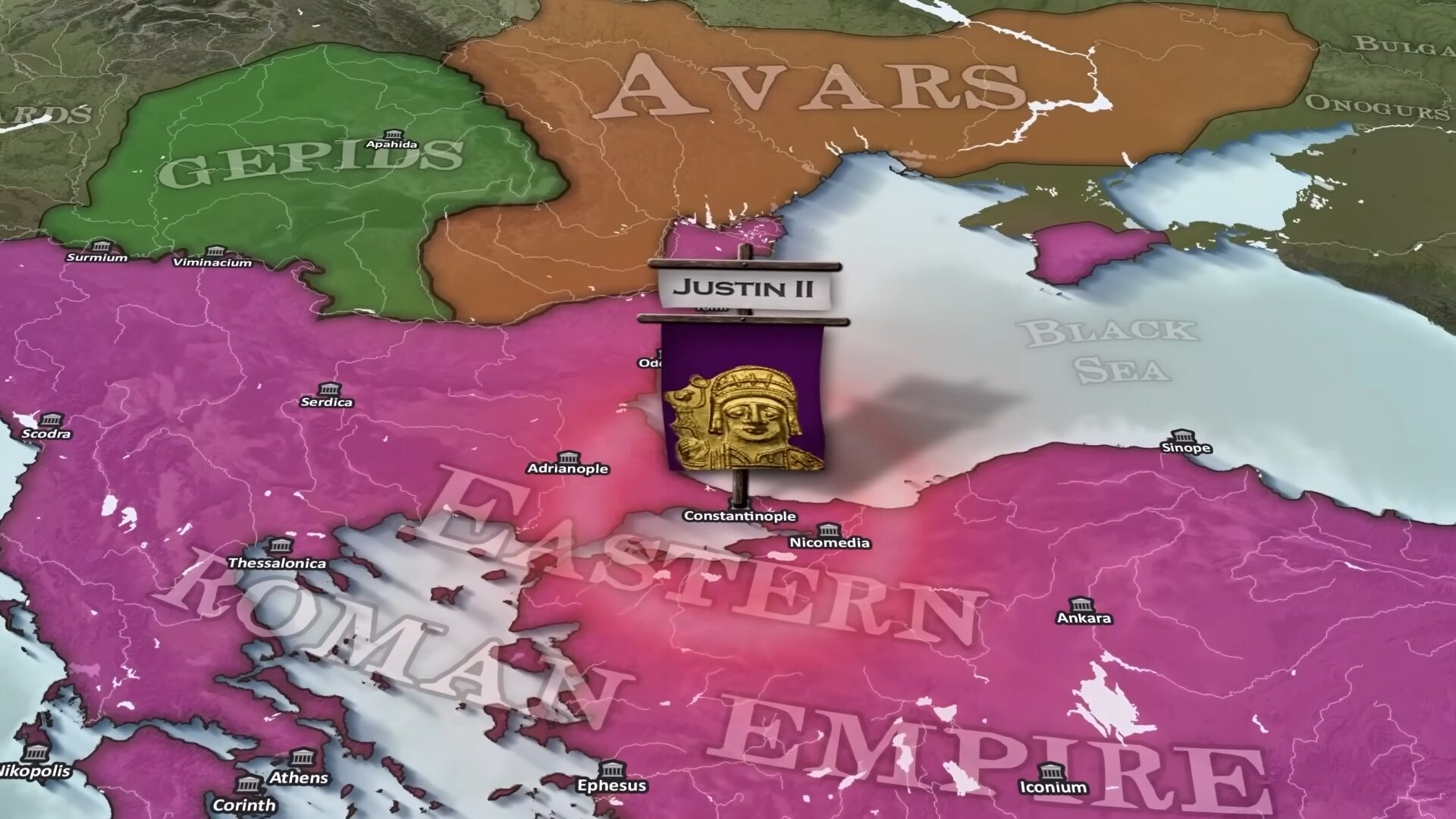
You move quickly to secure your rule in Constantinople. Marcian, another nephew of Justinian, could claim the throne, but he remains far away in Africa.
You enter the Great Palace under the guard of the Excubitors and their commander Tiberius. Patriarch John Scholasticus crowns you emperor.
After you secure your position, you announce Justinian’s death and present yourself to the people at the Hippodrome. You make it clear that authority now rests with you.
Financial Strain and Tax Decisions
You inherit an empire drained by years of war. Campaigns in Italy, Africa, Persia, and the Balkans have stretched the treasury.
You state that you found the treasury weighed down by debt and nearly empty. Even so, you cancel all unpaid taxes dating back to 560 or earlier.
This action shows confidence in the state’s economy. Despite past military costs, you act as if the empire can still bear the strain.
Church Divisions and Religious Policy
You face ongoing disputes within Christianity. The main conflict divides Chalcedonians and Monophysites.
You try to bring unity between these groups. Moderate voices respond, but more extreme members resist compromise.
In the end, you continue the policy of opposing the Monophysites. Your successors follow the same course.
Changing Control and the Future of the Gipedes
Avar Talks and End of Payments
You face the Avars almost at once. Within a week of taking power, their ruler Buan sends envoys to you in Constantinople.
These steppe warriors live north of the Danube on the Hungarian plain. They rely on strong cavalry and had received yearly payments from Rome since the 550s to prevent conflict.
Buan expects you to continue these subsidies. You refuse.
The Avars do not react right away. Your focus shifts to events in Pannonia, where tension between nearby kingdoms grows.
War Between Lombards and Gipedes
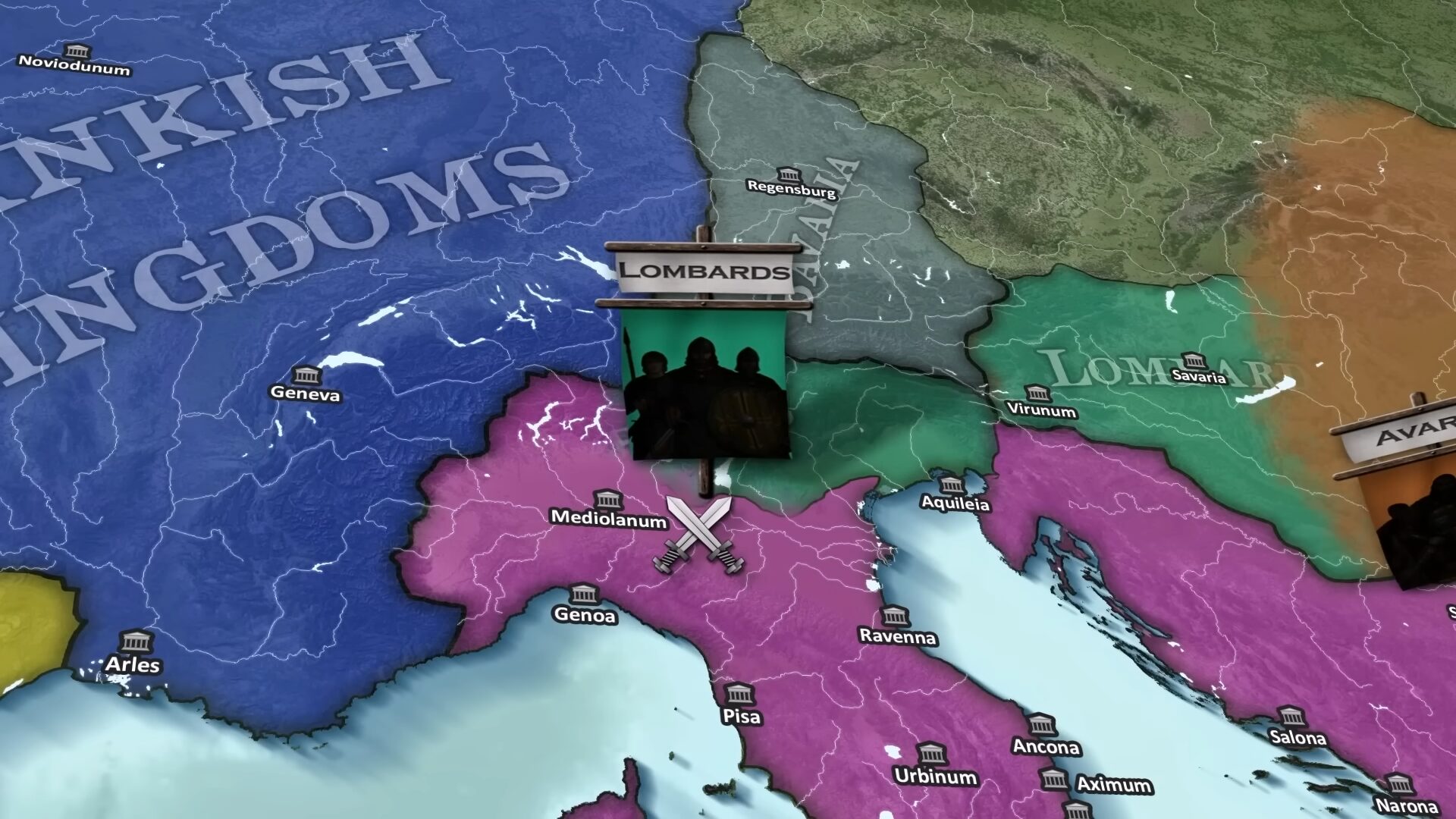
You must also deal with the Gipedes under King Kunimund. He controls Sirmium and lands across the Hungarian plain.
At the same time, the Lombards under Alboin settle in Pannonia. They clash with the Gipedes.
In 567, Kunimund asks you for help against the Lombards. He offers to hand over Sirmium in return for your support.
After the Lombards suffer defeat, Kunimund refuses to give you the city. His broken promise changes the balance of power.
The Lombards then seek aid from the Avars. Kunimund turns to you again and repeats his offer of Sirmium.
End of the Gipede Realm
You take control of Sirmium. But once you secure the city, you do not save the Gipedes.
The Lombards and Avars join forces. They strike quickly and destroy the Gipede kingdom.
Kunimund dies in the fighting. Alboin has his skull turned into a drinking cup and later forces Kunimund’s daughter, Rosamund, to marry him.
With that, the Gipede state disappears, and power in the region shifts to the Lombards and Avars.
Lombard Invasion and Transformation of Italy
Strained Roman Defenses in the Peninsula
You inherit an empire that has fought on many fronts at once. Italy has just come out of long wars, and you cut troop numbers there after victory.
At the same time, you face pressure on the Danube, conflict with Persia, and unrest in other western lands. Your army and treasury cannot fully support every frontier.
This leaves northern Italy exposed when a new enemy looks south.
Lombard Advance and the Breakup of Their Rule
In 568 AD, the Lombards cross into northern Italy. You offer little resistance, and they move quickly through the region.
By the next year, they control most of the Po Valley. Only Ticinum holds out for a time before it falls in 572 AD.
Other threats rise as well:
- Avars attack Sirmium and wound the Roman commander Bonus.
- Visigoths strike Roman lands in Spain and take cities such as Malaga, Acedona, and Cordoba.
- War resumes in Africa against the Moors.
In Italy, Lombard unity does not last. In 573 AD, Rosamund leads a revolt and kills King Alboin. His successor also dies within a year.
The Lombards then split into separate duchies. Key centers include:
| Region | Lombard Power Base |
|---|---|
| Northern Italy | Several local dukes |
| Spoleto | Southern duchy |
| Benevento | Southern duchy |
Even divided, they remain strong. Over time, they marry into local families and adopt Italian customs.
Roman Strongholds and Signs of Recovery
You still hold key cities:
- Ravenna
- Rome
- A narrow land corridor linking them
- Parts of Liguria
- Naples
- Sections of southern Italy
- Sicily
You do not commit major forces to expel the Lombards. Persia and the Balkans demand your focus.
The loss of much of Italy comes just as the land begins to recover from earlier wars. Even so, the areas you keep show economic life.
Southern Italy maintains active pottery workshops and wide trade networks. These regions remain more complex and wealthier in commerce than Lombard-held lands.
Western Provinces Under Siege
You face pressure on every western frontier at the same time. While you focus on Persia and the Balkans, new and old enemies test your control in Italy, Spain, and Africa. Troops are few, and you cannot send large forces to every crisis.
Avar Pressure on the Danube Frontier
You meet the Avars almost at once after taking power. Their leader, Kagan Buan, comes to Constantinople to demand the yearly payments they received before.
You refuse to continue these subsidies. For a time, they hold back.
Soon, they try to grow stronger by striking at Sirmium. In the fighting, your commander Bonus suffers wounds. You replace him with Tiberius, who keeps up the war for a short period.
In 571 AD, you agree to peace with the Avars. The Danube line remains tense, but open war pauses.
Visigothic Offensives in Iberia
At the same time, the Visigoths move against your lands in Spain. King Leovigild leads attacks on Roman positions.
They seize key cities:
- Malaga
- Assidona
- Cordoba
Despite these losses, you reach a settlement in 572 AD. Peace returns, and you still hold part of Spain under Roman rule.
Fighting the Moors in North Africa
Trouble also returns to North Africa. War with the Moors breaks out again while you struggle in Italy and along the Danube.
You must divide your strength across several regions. Africa demands attention, but it is not your main focus.
With Persia in the east and threats in the Balkans, you cannot commit major forces to the western provinces. Each frontier pulls on the same limited army and treasury.
Persian Wars and Eastern Front Crisis
You face a hard truth. Justinian expanded the empire, but he drained its strength. Armies grew tired, the treasury ran low, and enemies watched every border.
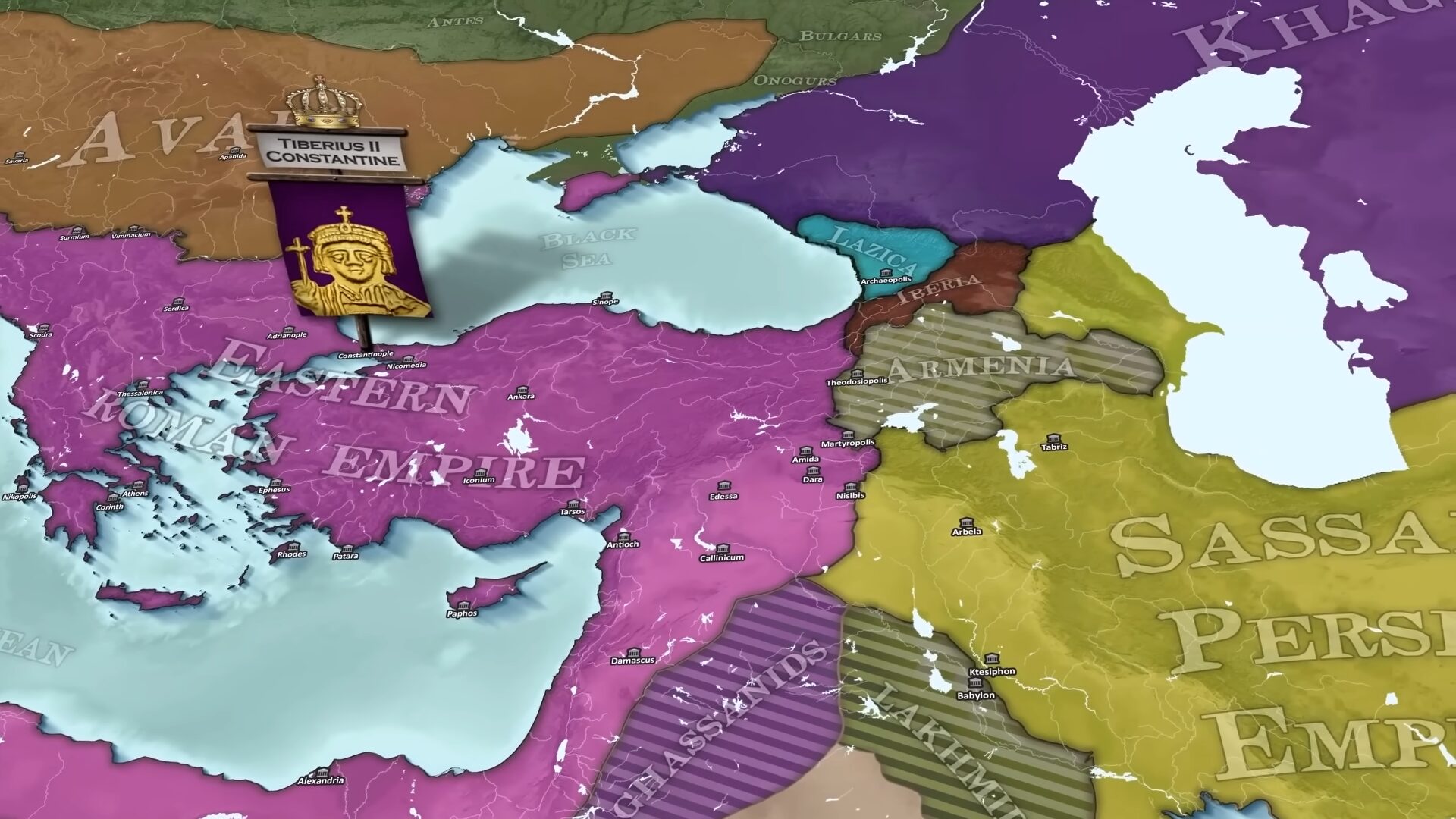
When you take power as Justin II, you inherit these pressures. The east demands your full attention.
Causes of the New War with Persia
You step into rule after two major wars with Persia. Tension already sits beneath the surface.
Your empire has stretched its forces across Italy, Africa, the Balkans, and the eastern frontier. Persia sees this strain.
You must guard the eastern border while other regions call for troops and money. This renewed conflict with Persia does not begin in peace. It grows from years of rivalry and the clear signs that your resources are thin.
Turkic Expansion and Shifting Alliances
You do not deal only with Persia. New powers rise beyond your borders.
Within a week of your coronation, the Avars send envoys to you. Their leader, Kagan Buan, wants the annual payments that Justinian once gave them. They live north of the Danube and rely on strong cavalry.
You refuse to continue these subsidies.
At the same time, three forces compete in the region:
- Avars north of the Danube
- Gepids under King Kunimund, holding Sirmium
- Lombards led by Alboin in Pannonia
Kunimund asks for your help against the Lombards and offers Sirmium in return. After the Lombards win, he refuses to keep his promise.
The Lombards then join with the Avars. Kunimund again turns to you and again offers Sirmium. This time you take the city, but you leave the Gepids exposed.
The Lombards and Avars destroy the Gepid kingdom. Kunimund dies, and his defeat ends their rule.
The Fall of Dara and Justin II’s Breakdown
While you struggle in the west and along the Danube, the eastern war with Persia demands focus. The empire cannot fully support every front at once.
Italy suffers as Lombards seize key cities. The Balkans remain under threat. Persia presses in the east.
The strain shows in your rule. Military pressure, financial limits, and constant war weigh on you heavily. The eastern crisis becomes the clearest sign that the empire cannot fight everywhere at the same time without cost.
Shift of Authority to Tiberius II
The Power Held by Empress Sophia
You see Empress Sophia take an active role as Justin II’s rule weakens. She does not step aside during the crisis.
She works to steady the court and protect the throne. You can tell she understands that the empire cannot afford chaos while enemies press the borders.
Her influence helps shape what happens next in the palace.
Naming Tiberius as Junior Emperor
You watch Justin raise Tiberius, commander of the Excubitors, to the rank of Caesar. This move does not happen by chance.
Tiberius already stands close to power. He guards the palace and supports Justin from the start of his reign.
By giving him this title, you see a clear plan to secure the succession and prevent rivals from stepping in.
War Plans and Peace Deals
You follow Tiberius as he takes charge in key military matters. He replaces Bonus at Sirmium and continues the struggle against the Avars.
Soon after, you see him help bring about a peace agreement in 571 AD. This deal eases pressure along the Danube.
While the west suffers from Lombard gains and other attacks, you notice that the main focus stays on the eastern war with Persia and the defense of the Balkans. These choices shape the empire you pass on to the next ruler.
Results and Lasting Effects
Justinian left you an empire that looked strong on a map but felt weak at its edges. You had wide borders, tired soldiers, and money problems at the same time. Enemies watched every frontier and moved when they saw a chance.
You faced pressure in the west, the Balkans, and the east all at once. Italy, Africa, Spain, and the Danube line all demanded troops. You could not fully protect them all.
Ongoing Struggle with Persia
You turned much of your focus to the eastern frontier. Persia remained a constant rival and shaped many of your choices.
Because of this eastern threat, you did not send enough force to remove the Lombards from Italy. You kept your main attention on Persia and the Balkans instead. This choice allowed the Lombards to stay and grow stronger in the lands they had taken.
Your eastern wars also limited how much support you could give to other regions. Every campaign in the east meant fewer men and fewer supplies for the west.
The Mark of Justin II and Those After Him
You began your rule by securing power in Constantinople and canceling old unpaid taxes. You tried to ease religious division, but you continued to oppose the Monophysites when unity failed.
In foreign affairs, you refused to keep paying subsidies to the Avars. That decision changed the balance north of the Danube. The fall of the Gepid kingdom followed, and new powers rose in its place.
You gained control of Sirmium but lost the Gepids as a buffer. Soon after, the Lombards entered Italy and advanced with little resistance. Italy split between Lombard duchies and the lands you still held, such as Ravenna, Rome, parts of the south, and Sicily.
Your successors inherited this divided Italy and the long rivalry with Persia. They also continued your religious stance. The empire endured, but it no longer controlled the full stretch of lands Justinian had once recovered.
