
You step into a time when Rome stands on the edge of change. I guide you through the years when power shifts fast, alliances break, and one man rises from a noble but troubled background to dominate public life. I show you how my early losses, my family ties, and the dangers I faced shaped the path ahead.
You watch me move from hunted young noble to soldier, lawyer, and rising official. I build alliances, take bold risks, win wars abroad, and tighten my hold on power at home. As trust collapses and rivals turn against me, you see how my choices drive Rome toward civil war and lasting political change.
Key Takeaways
- You see how personal struggle and ambition shape a rise to power in a divided republic.
- You follow the growth of political alliances, military success, and expanding control.
- You witness how rivalry and fear lead to civil war and the fall of an old system.
The Republic’s Unstable Final Years
Jerusalem Taken and Catiline’s Failed Plot
You see how tense Rome had become by 63 BC. In that single year, Roman forces captured Jerusalem, expanding Rome’s reach in the east.
At the same time, Lucius Sergius Catilina tried to seize power through a secret plan. His attempted takeover, now known as the Catilinarian Conspiracy, showed how weak trust had become inside the Republic.
These events did not stand alone. They formed part of a pattern of unrest, power struggles, and bold actions that marked the 60s BC.
The Emergence of Caesar, Pompey, and Crassus
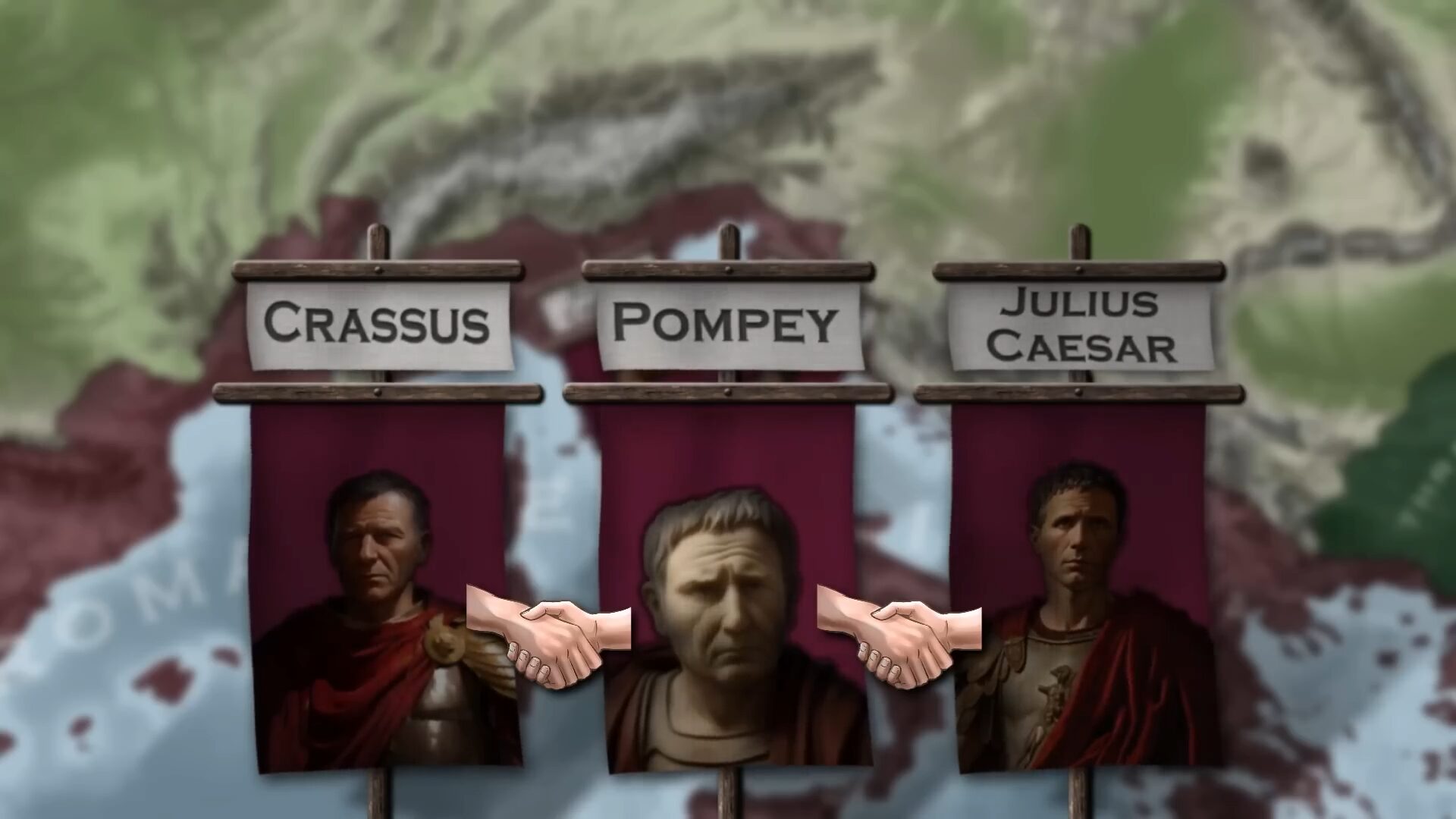
You watch Julius Caesar rise from a troubled youth to a skilled leader. Born in 100 BC into a noble family, he faced danger early because of his ties to Gaius Marius and Lucius Cornelius Cinna, enemies of Sulla.
When Sulla took control, he stripped Caesar of his priesthood and property. You see Caesar refuse to submit. He hid, joined the army, and earned respect, even winning the Civic Crown.
In 75 BC, pirates captured him. You notice his boldness. He mocked their ransom demand, told them to ask for more money, and later returned with ships to capture and execute them after his release.
Back in Rome, you see him build a political career step by step:
- Military Tribune
- Quaestor (69 BC)
- Curule Aedile
- Pontifex Maximus
- Praetor
- Propraetor in Hispania Ulterior
By 60 BC, his soldiers hailed him as imperator. He faced a choice: wait for a triumph or run for consul. He chose the consulship.
In 59 BC, you see him elected consul with Marcus Bibulus. During this year, his private alliance with Pompey and Crassus became public. Caesar had helped repair their broken relationship, forming what you now call the First Triumvirate.
When Caesar pushed a land reform law to give public land to the poor, Pompey and Crassus openly backed him. Soldiers filled the city. Opponents faced pressure and silence.
People even joked that the year was the consulship of “Julius and Caesar,” not Caesar and Bibulus.
Before his term ended, you see Caesar secure command over:
| Region | Length of Command |
|---|---|
| Cisalpine Gaul | 5 years |
| Illyricum | 5 years |
| Transalpine Gaul | 5 years |
This command protected him from prosecution and gave him four legions.
You then follow him into Gaul. He defeated tribes across the region and pushed Rome’s border outward. In 55 BC, he invaded Britain, claiming the Britons had aided his enemies. The first attempt failed. The second gained little ground.
When revolt broke out in Gaul, he crushed it. The tribes lacked unity, and Rome secured control.
By 53 BC, Crassus died in Parthia. The alliance weakened. Pompey gained strength in Rome. The Senate turned against Caesar.
In early 49 BC, the Senate declared him an enemy. Tribunes who supported him were expelled. You see Caesar act.
He crossed the Rubicon River with a single legion. That step began a civil war. The Republic now faced open conflict between its most powerful men.
Early Life and Family of Gaius Julius Caesar
Noble Lineage and Key Family Ties
You see Caesar enter the world in July 100 BC, born into an old patrician clan. His father shared his name, Gaius Julius Caesar. His family held status, but they were not the most powerful house in Rome.
On his mother’s side, you find a major political link. His uncle was Gaius Marius, a strong ally of Lucius Cornelius Cinna and a firm enemy of Lucius Cornelius Sulla.
These ties placed Caesar close to Rome’s sharpest rivalries from the start.
After his father died, you watch him marry Cornelia, Cinna’s daughter. Soon after, he became the High Priest of Jupiter, a respected religious role in Rome.
Growing Up During Rome’s Power Struggles
You cannot separate Caesar’s youth from civil conflict. Sulla gained control of Rome and moved quickly against his enemies and their allies.
Because of his family ties, Caesar became a target. Sulla stripped him of:
- His priesthood
- His inheritance
- His family wealth
Pressure mounted, but Caesar refused to give in. You see him go into hiding rather than submit.
His mother’s relatives helped ease Sulla’s anger. Even so, Caesar kept his distance for safety.
He joined the army instead. There, you see him earn respect and even receive the Civic Crown for bravery before Sulla died in 78 BC.
Loss, Danger, and Forced Absence from Rome
After Sulla’s death, Caesar returned to Rome. He had lost much of his property, so he lived in a modest home among the lower class.
He began working as a lawyer. You see him gain notice again, this time in the courts.
In 75 BC, pirates captured him while he sailed across the Aegean Sea. They demanded a ransom of 20 talents.
Caesar mocked the amount and told them to demand more. They raised it to 50 talents, and he sent men to gather the money.
While he waited over a month, he acted as if he were in charge. He ordered the pirates around and read his own speeches and poems to them.
Before his release, he warned them that he would return and punish them. After the ransom was paid, he did exactly that.
He gathered ships, hunted them down, captured them, and had them executed in Pergamon.
You see in this episode a young man who refuses humiliation and takes direct action against those who wrong him.
Caesar’s Formative Experiences
Service in the Army and the Civic Honor
After Sulla stripped you of your priesthood and property, you refused to submit. You went into hiding, then chose to stay away from Rome even after your family eased Sulla’s anger.
You joined the army and began to build your name through action.
- You earned respect from fellow soldiers.
- You received the Civic Crown, a rare award for bravery.
You secured this honor before Sulla died in 78 BC. Military life gave you status when politics had taken everything else.
Work as an Advocate in Rome
When Sulla died, you returned to Rome. You had lost your wealth, so you lived in a modest home among the lower class.
You began working as a lawyer. You gained notice in the courts just as you had in the army.
Your legal path soon blended with politics. You won election as military tribune, then as quaestor in 69 BC. After serving in Hispania and mourning Cornelia’s death, you returned to Rome in 67 BC and married Sulla’s granddaughter.
Over the next few years, you advanced step by step:
- Curule aedile
- Pontifex maximus
- Praetor
- Propraetor in Hispania Ulterior
Your soldiers later hailed you as imperator in 60 BC. You then chose to lay down your command and run for consul instead of waiting for a triumph.
Taken by Pirates and Your Response
In 75 BC, at age 25, pirates seized you while you sailed across the Aegean Sea. They demanded a ransom of 20 talents.
You laughed at the amount and told them to ask for more. They raised it to 50 talents, and you sent men to collect the money.
You stayed with them for over a month. During that time, you:
- Ordered them to listen to your speeches and poems.
- Spoke to them as if you were in charge.
- Told them you would crucify them after your release.
They treated you well and did not take your threat seriously.
Once free, you gathered a small fleet. You returned to the island, captured the pirates, and brought them to Pergamon. You carried out your promise and had them executed.
Political Ascent in the Roman Republic
Early Offices and Rise to Praetor
You begin your public path after your return to Rome. You win election as a military tribune, then secure the office of quaestor in 69 BC.
You serve as quaestor in Hispania. After Cornelia dies, you remain away from Rome until 67 BC.
When you return, you continue climbing the cursus honorum. Over the next five years, you hold these offices:
- Curule aedile
- Pontifex Maximus
- Praetor
Each role increases your standing and influence. After your praetorship, you govern Hispania Ulterior as propraetor.
Your soldiers later hail you as imperator in 60 BC. At that point, you face a choice:
| Option | Result |
|---|---|
| Remain with your army | Receive a triumph |
| Lay down command | Run for consul |
You choose to pursue the consulship.
Despite a corrupt and tense election, you win. In 59 BC, you and Marcus Bibulus take office as consuls.
During your term, your private alliance with Crassus and Pompey becomes public. You help repair their strained relationship and form what becomes known as the First Triumvirate.
When you propose a land law to redistribute public land to the poor, Crassus and Pompey openly support you. Armed supporters fill the city. Opposition weakens under pressure.
People begin calling it “the consulship of Julius and Caesar.”
Before your term ends, you secure a five-year governorship over:
- Cisalpine Gaul
- Illyricum
- Transalpine Gaul
This command shields you from prosecution for actions taken during your consulship. It also gives you four legions and room to expand your influence.
Strategic Marriages and Social Advancement
After Sulla strips you of your priesthood and inheritance, you rebuild your position step by step.
You first marry Cornelia, daughter of Cinna. This tie links you to powerful political networks opposed to Sulla.
After Cornelia’s death, you marry again in 67 BC. This time, you wed a granddaughter of Sulla.
This second marriage connects you to the family of your former enemy. It strengthens your standing in Rome’s elite circles.
Through these alliances, you move between rival factions. You maintain your place among Rome’s leading families while advancing your own power.
Building and Holding the First Triumvirate
Creating the Three-Man Pact
You already built ties with both Marcus Licinius Crassus and Gnaeus Pompeius Magnus. They did not get along, but you stepped in and helped them settle their feud.
Your effort led to a private deal between the three of you. This agreement later became known as the First Triumvirate.
At first, you kept this alliance quiet. You each stood to gain power and protection through cooperation rather than rivalry.
Your Consulship and the Fight for Control
You began your consulship in 59 BC alongside Marcus Bibulus. The election had been corrupt, but you secured victory.
During your term, news of your alliance with Crassus and Pompey became public. The shift happened when you introduced a law to take public land and distribute it to poor citizens.
Pompey and Crassus backed you openly.
- Soldiers filled the city.
- Opponents faced pressure and intimidation.
- Resistance weakened quickly.
People mockingly called it “the consulship of Julius and Caesar” instead of naming Bibulus. Violence and political force marked this year.
Before your term ended, you secured command over:
| Region | Length of Control |
|---|---|
| Cisalpine Gaul | 5 years |
| Illyricum | 5 years |
| Transalpine Gaul | 5 years |
This command protected you from prosecution for actions taken during your consulship.
How Rome Viewed Your Rule
As your alliance became widely known, fear grew in Rome. People understood that you and your allies used calculated and forceful tactics to reach your goals.
Many citizens saw your effectiveness. Others worried about what that power meant for the Republic.
Even so, you maintained control and prepared for your next ambitions beyond Rome.
Conquest and Expansion in Gaul and Britain
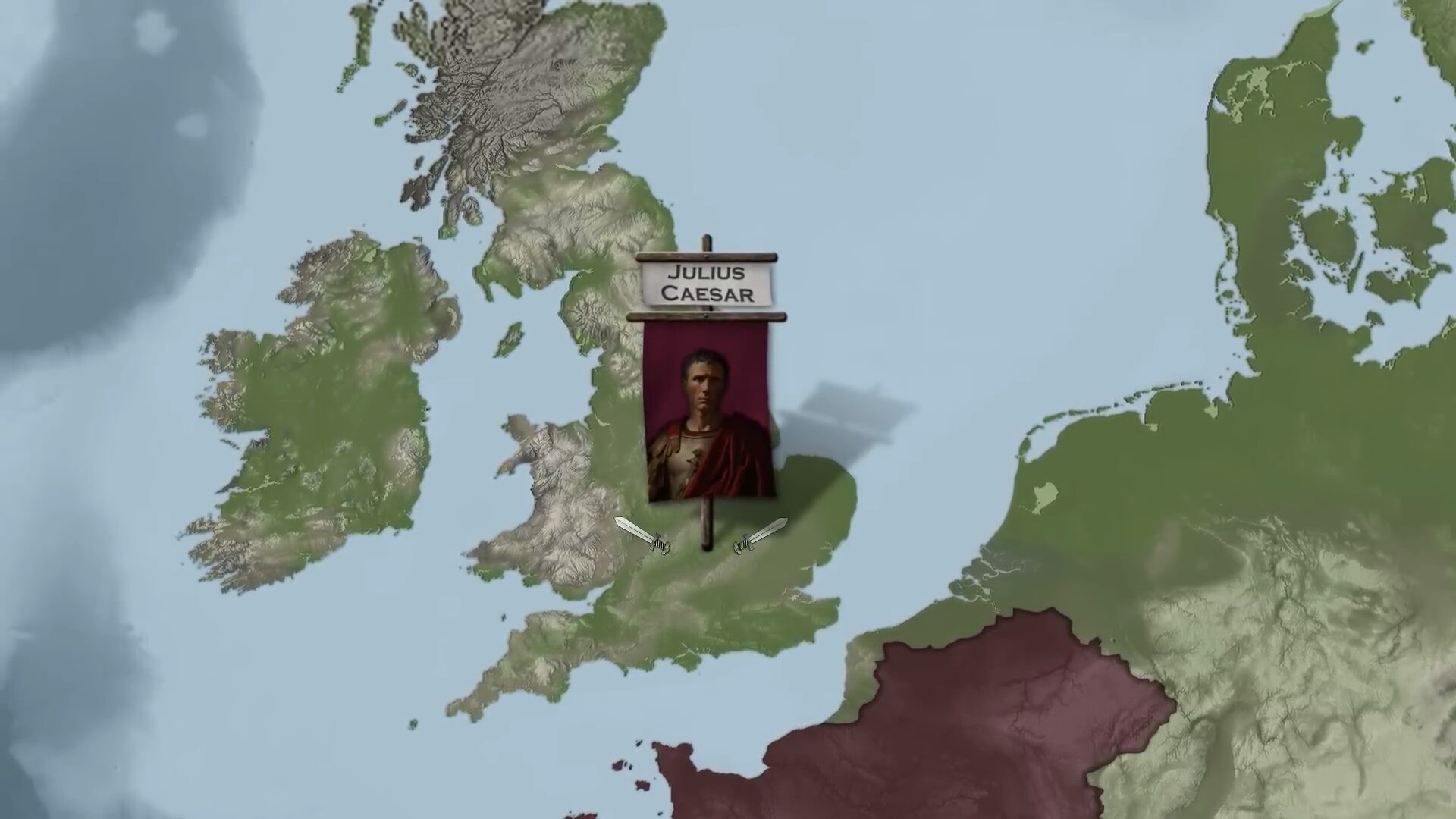
You hold power in Rome, and you secure control of key provinces before you leave the city. With support from your political allies, you gain command over Cisalpine Gaul, Illyricum, and Transalpine Gaul for five years.
This command protects you from legal threats in Rome. It also gives you four legions and a base for further action.
You later extend this command for another five years. You now focus on two clear goals: defeat the tribes in Gaul and move toward Britain.
Appointment to Provincial Command
You arrange your provincial rule before your consulship ends in 59 BC. The Senate grants you authority over large regions north of Italy.
This role keeps you out of reach from political enemies who want to prosecute you. It also places seasoned soldiers under your direct control.
Your position as governor gives you both military strength and political safety. You use both to plan your next campaigns.
Wars in Gaul and Tribal Uprisings
You move against tribes in unconquered parts of Gaul. Step by step, you expand Roman control across the region.
Many tribes resist you. They fight hard, and at times they unite under strong leaders.
Still, they lack unity and preparation. Their forces do not match your organization and discipline.
When revolts break out, you respond with force. You defeat the uprisings and secure the remaining Gallic lands near your borders.
By the end of these campaigns, Rome controls the territory that borders Britain.
Expeditions Across the Channel
By 55 BC, you turn your attention to Britain. You claim that British tribes supported your enemies in Gaul.
You launch an invasion, but you lack full knowledge of the land and conditions. This forces you to withdraw back to Gaul.
You try again. The second effort brings more progress than the first, but it does not secure major gains.
When revolt spreads again in Gaul, you abandon further plans in Britain. You return to suppress resistance and restore order in your provinces.
Fracturing of the Triumvirate and the Road to War
The Loss of Crassus in Parthia
You see the alliance begin to weaken when Crassus dies in 53 BC during his campaign against Parthia. His death removes the third pillar that had balanced power between you and Pompey.
With Crassus gone, the partnership no longer holds the same stability. What once relied on three strong figures now rests on two rivals.
Growing Strain Between You and Pompey
You watch your relationship with Pompey decline after Crassus dies. Support for Pompey increases in Rome, while many senators begin to turn against you.
Pompey gains influence at home as you remain in Gaul. This shift in power changes the political balance.
At the same time, your allies in Rome lose protection. Tribunes who support you face removal, which weakens your position even more.
The Senate Names You a Public Enemy
By early 49 BC, the situation reaches a breaking point. The Senate expels your supportive tribunes and formally declares you an enemy of the state.
You face the risk of losing your command and your chance at a second consulship. Pompey, now dominant in Rome, could block your return to power.
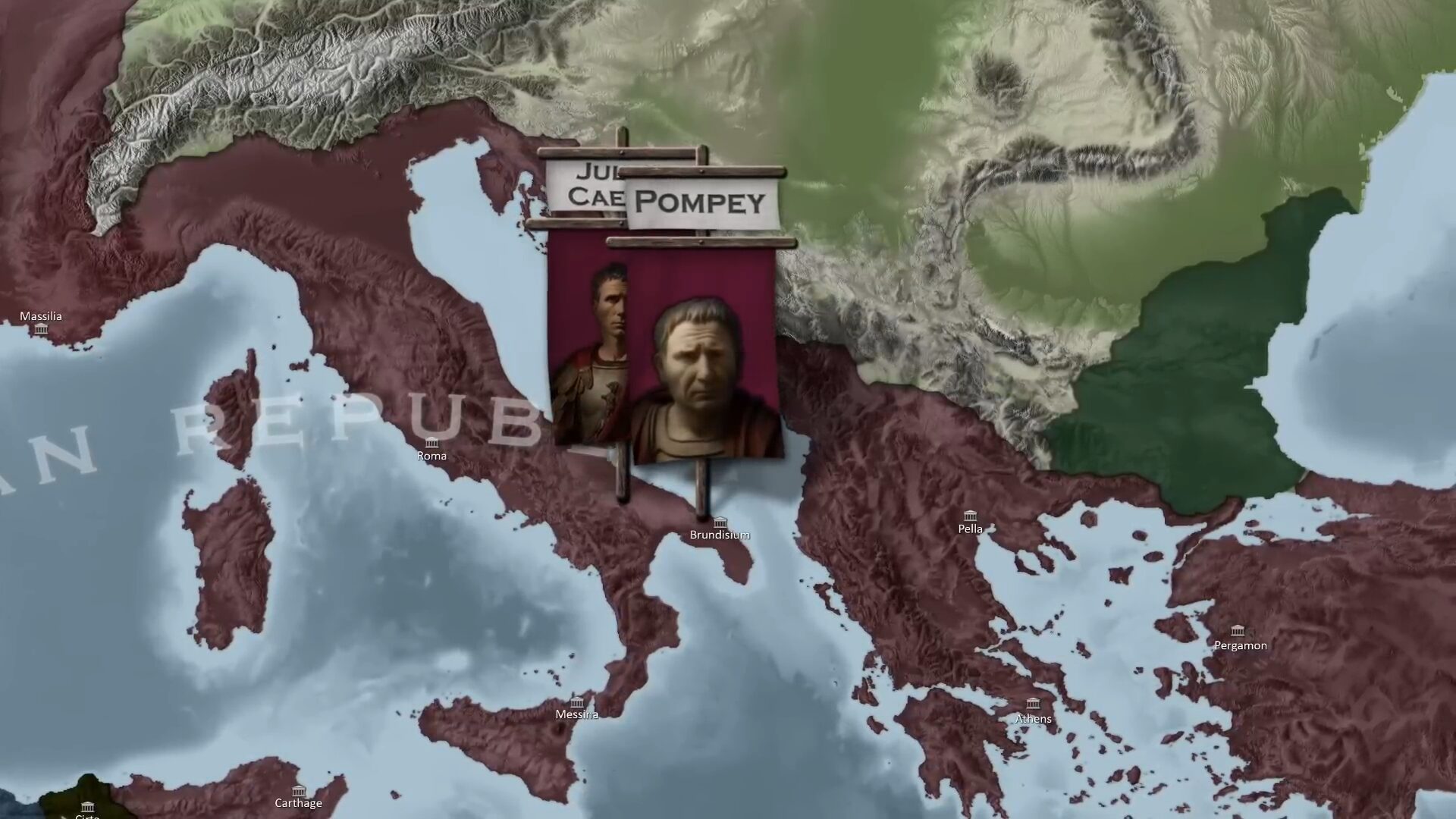
In response, you lead a single legion across the Rubicon. This act begins a civil war.
Many soldiers who once served under you choose to stand with you again. The Senate soon realizes that public support does not fully stand behind them.
The Rubicon Decision and the War That Followed
The Start of Open Conflict
By early 49 BC, the Senate had turned against you. They pushed out the tribunes who supported you and named you an enemy of the state.
You faced a clear choice. If you gave up command, you risked losing your chance at a second consulship and possibly facing charges for your past actions.
So you acted. You led a single legion across the Rubicon River, a boundary that no general could cross with troops. With that step, you began a civil war.
At first, the odds did not seem to favor you. But the reaction in Rome changed everything.
- The public did not rush to defend the Senate.
- Soldiers who had served under you stood by your side.
- Support grew faster than your enemies expected.
Pompey’s Retreat and the Wider Chase
Pompey had gained strong influence in Rome after Crassus died in 53 BC. As your alliance broke apart, his power rose while yours came under threat.
When you advanced, the Senate and Pompey realized the danger. The men who once worked with you now stood against you.
Yet many people did not trust the politicians who opposed you. Your veterans remained loyal, and their support weakened Pompey’s position.
The struggle no longer centered only on Rome. The conflict spread beyond the city as both sides prepared to fight for control of the Republic.
The Campaign in Egypt and Pompey’s End
Crassus was already gone, killed during his campaign in Parthia. That left you and Pompey as the final rivals from the First Triumvirate.
As your relationship collapsed, open war replaced political tension. Pompey stood as your main opponent.
The alliance that once shaped Roman politics had fully broken apart. What began as cooperation between three powerful men ended in direct conflict between two.
Caesar’s Rule as Sole Leader and His Changes
New Honors and Tight Control of the State
You take full control after victory in the civil war. The Senate names you dictator, first for a short term and later for longer periods.
You gather many titles and offices in your own hands. This move reduces the power of other magistrates and weakens the old balance of the Republic.
You no longer share real authority with rivals. Power centers on you, and major decisions depend on your will.
| Action | Effect on Rome |
|---|---|
| Hold multiple top offices | Limits independence of other leaders |
| Extend your command | Keeps you safe from legal attacks |
| Control key provinces | Secures military support |
Many Romans see that the Republic’s old system no longer guides the state. You stand at the center of public life.
Changes to Law and Society
You push a land law during your consulship that transfers public land to poorer citizens. Pompey and Crassus back you in public when opposition rises.
Soldiers fill the city during tense moments. Their presence pressures critics and helps your plans pass.
You secure long-term command in Gaul and nearby regions. This step protects you from prosecution and strengthens your position.
Your campaigns in Gaul expand Roman control. Victory in these regions raises your status and brings wealth and land under Roman rule.
Growing Resistance and Senate Tension
Many senators fear your alliance with Pompey and Crassus. They see how you use force and political deals to win.
After Crassus dies, your bond with Pompey breaks down. The Senate turns against you and declares you an enemy.
Tribunes who support you face removal from Rome. You respond by crossing the Rubicon with a legion, which starts civil war.
At this stage, the Senate no longer trusts you. You no longer trust the Senate. Conflict replaces cooperation.
The Ides of March and the Assassination of Caesar
The Plot Against Caesar and His Ignored Warnings
You watch tension grow as Caesar’s power expands. After he crosses the Rubicon and defeats his rivals in the civil war, many senators fear his control.
Some of these men decide to act. They form a secret group and plan to kill him to stop what they see as a threat to the Republic.
As the Ides of March approaches, you see signs of danger around him. Reports of warnings reach Caesar, yet he chooses to attend a Senate meeting on March 15, 44 BC.
He walks into the Curia despite the risks.
What Happened on March 15, 44 BC
You stand in the Senate house as the conspirators gather around Caesar. They approach him one by one, as if to present a request.
Then the attack begins.
The senators draw their blades and stab him many times. The assault happens quickly and in close quarters.
Caesar falls at the base of Pompey’s statue. His blood stains the floor of the chamber where Rome’s leaders meet.
The Aftermath in Rome
You expect the conspirators to restore order, but chaos follows instead.
The city does not unite behind the killers. Many citizens react with shock and anger when they learn what has happened.
Power does not return smoothly to the Senate. Instead, Rome moves toward more conflict and another round of civil war.
Results and the Fall of the Roman Republic
Public Reaction and Disorder in Rome
You watch Rome split after I cross the Rubicon and start civil war. The Senate brands me an enemy, yet many citizens refuse to defend the politicians who oppose me.
Soldiers who once served under me choose loyalty to their former commander. Tribunes who support me face expulsion from the city.
Fear and tension spread through Rome. Political debate gives way to force, and the Republic’s old rules no longer guide events.
Antony, Octavian, and the Fight for Control
You see the First Triumvirate collapse after Crassus dies in Parthia in 53 BC. His death leaves Pompey and me without balance, and our alliance breaks down.
Pompey gains influence in Rome while the Senate turns against me. When I seek another consulship, conflict becomes unavoidable.
By early 49 BC, the Senate moves openly against me. I respond by leading a legion across the Rubicon, and civil war begins.
Lasting Impact and the Rise of a New System
You witness how personal alliances replace republican tradition. Private deals and military power shape politics more than votes or debate.
My command in Gaul, backed by loyal legions, gives me strength beyond any ordinary magistrate. Governors hold provinces for years, and armies answer to generals instead of the state.
As civil war unfolds, the structure of the Republic weakens beyond repair. Rome moves toward a new form of rule, driven by military authority and individual power rather than shared governance.
