
Approximately 25 kilometers southwest of Rome, near the mouth of the River Tiber, lie the extensive ruins of Ostia Antica, one of the best-preserved ancient Roman cities. Once a major port and commercial center, Ostia connected Rome with the Mediterranean world, receiving shipments of grain, olive oil, wine, building materials, and other essential commodities.
Unlike Pompeii, which was buried suddenly by the eruption of Mount Vesuvius in AD 79, Ostia declined gradually as Rome’s economic and political fortunes changed. Its buildings, streets, warehouses, public baths, temples, and apartment complexes were eventually buried beneath layers of soil and vegetation. Their survival has provided archaeologists with an unusually detailed picture of everyday life in a Roman commercial city.
Ostia is particularly important because its remains reveal more than the monumental architecture associated with emperors and wealthy citizens. They also preserve evidence of the merchants, sailors, laborers, shopkeepers, religious communities, and ordinary residents whose activities sustained the Roman capital.
From Military Settlement to Commercial Power
Ostia’s origins are traditionally associated with Ancus Marcius, Rome’s fourth king, who was said to have founded the settlement during the seventh century BC. According to Roman tradition, the king expanded Roman territory toward the coast and established a settlement at the Tiber’s mouth.
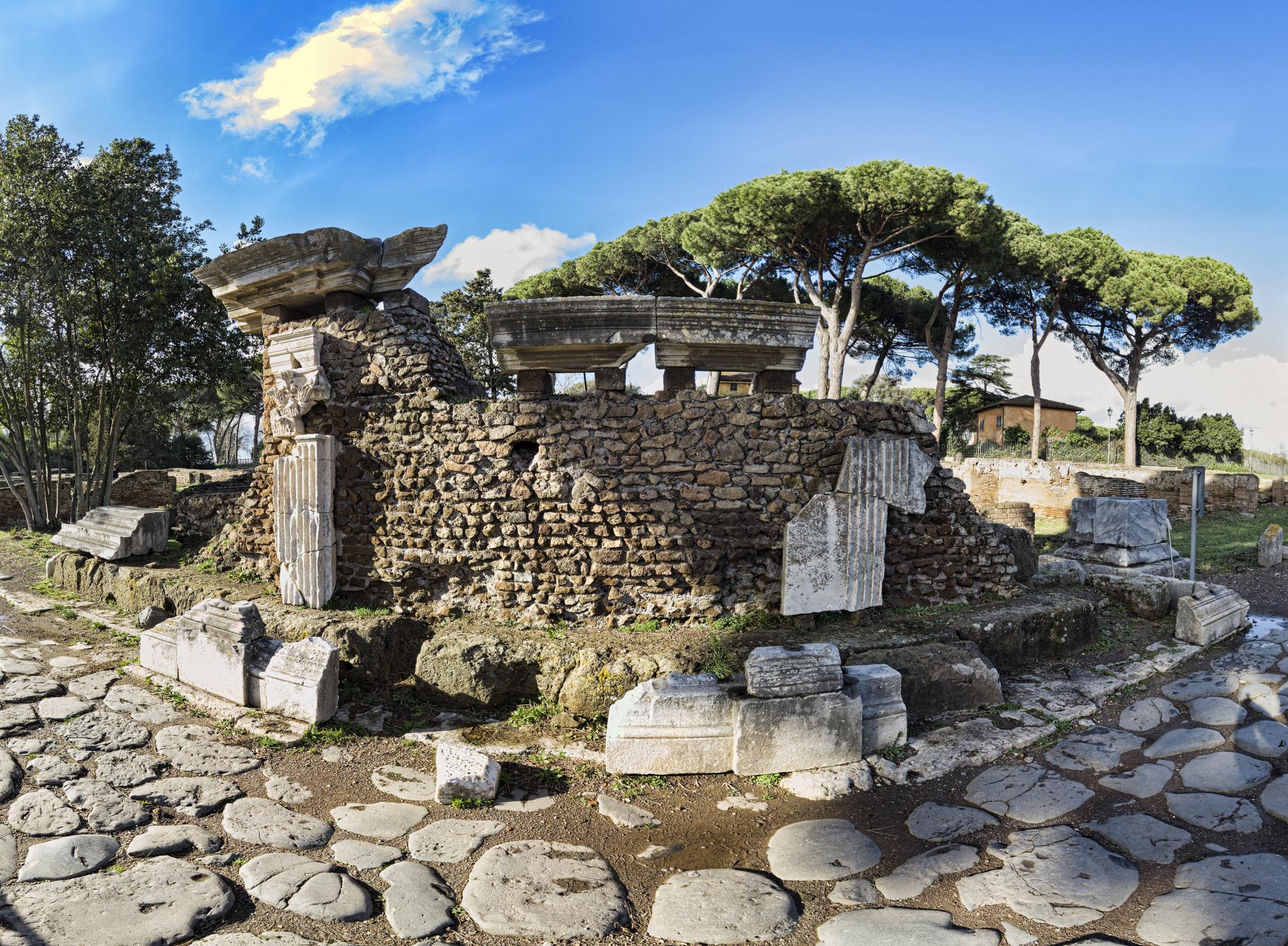
This account, preserved in later Roman historical traditions, cannot be accepted as a verified foundation narrative. Archaeological evidence places the earliest securely identifiable settlement in the fourth century BC, although activity in the area may have begun earlier.
Ostia initially served strategic and military purposes. Its position near the river’s entrance made it valuable for controlling access to Rome and supporting maritime operations. During the First Punic War (264–241 BC), Roman naval power became increasingly important, and Ostia developed into a significant naval and logistical base.
Its commercial importance expanded considerably during the Republic. Ships arriving from different Mediterranean regions brought merchandise that could be transferred to river vessels and transported toward Rome.
As the Roman population increased, so did the demand for imported food. Egyptian grain became particularly important, alongside supplies from North Africa, Sicily, and other Mediterranean territories. Ostia played a major role in this distribution network, although the construction of the imperial harbor complex at Portus under Claudius and Trajan later transformed the region’s maritime infrastructure.
The Necropolises and the Entrance to the City
Approaching the ancient city, visitors encounter tombs and funerary monuments positioned along the roads outside the urban boundaries.
Roman burial practices generally required the dead to be buried outside the pomerium, the sacred boundary of a city. Consequently, roads leading into Ostia were lined with tombs belonging to families, individuals, and members of professional or religious communities.
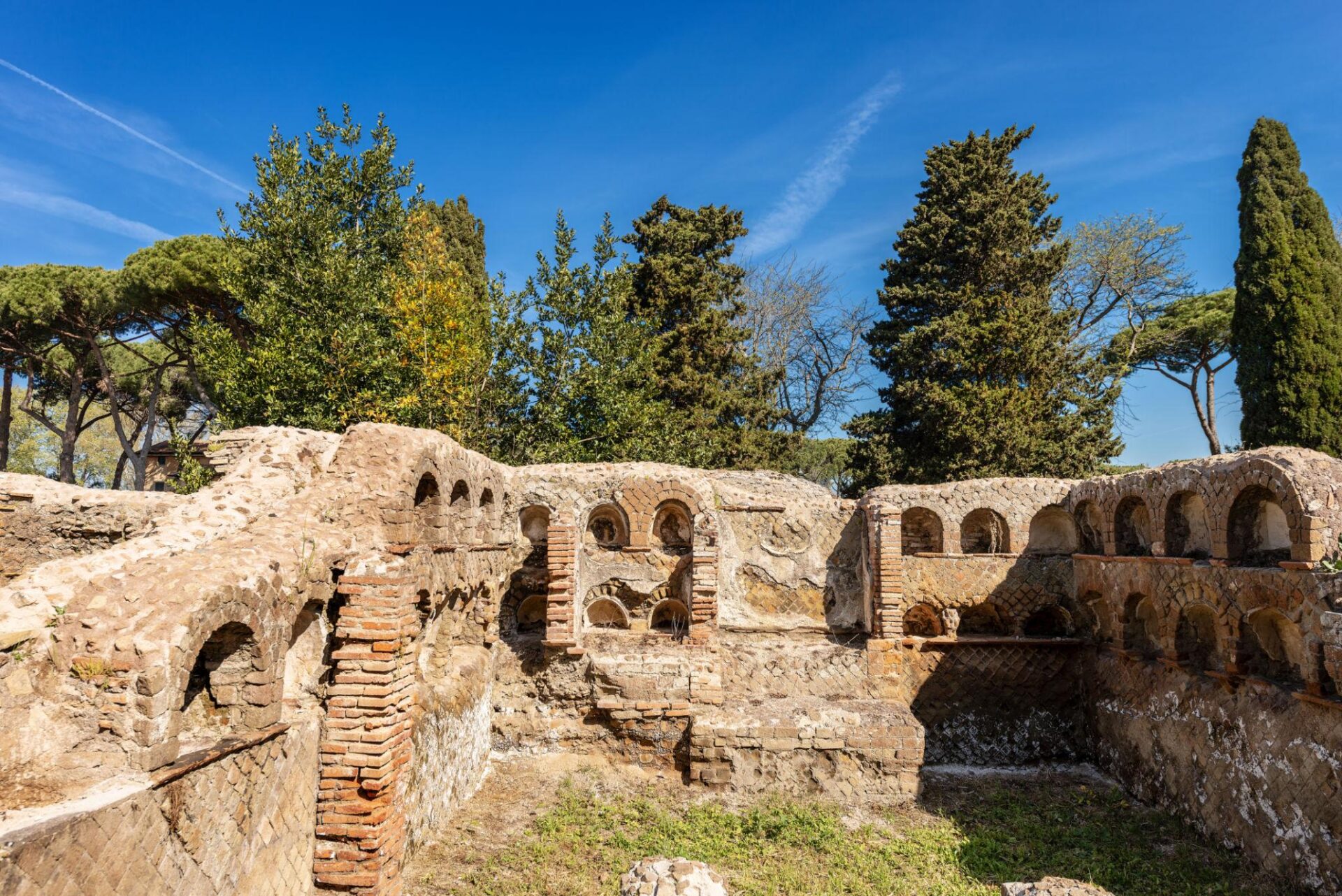
Some funerary structures were relatively modest, while others were elaborate buildings displaying inscriptions, architectural decoration, and niches for cremated remains.
In tombs designed for cremation burials, ashes were placed in containers known as urns, often housed within niches. These monuments provide valuable evidence of family relationships, social status, religious beliefs, and the different communities that inhabited Ostia.
Beyond the necropolises, the ancient entrance routes led into commercial neighborhoods filled with shops, workshops, warehouses, and residential buildings.
The Baths of Neptune: Roman Engineering and Artistic Achievement
One of Ostia’s most impressive public buildings is the Baths of Neptune, a large bathing complex originally constructed in the late first century AD and substantially rebuilt under Emperor Hadrian (AD 117–138). The work was completed in AD 139, during the reign of his successor, Antoninus Pius.
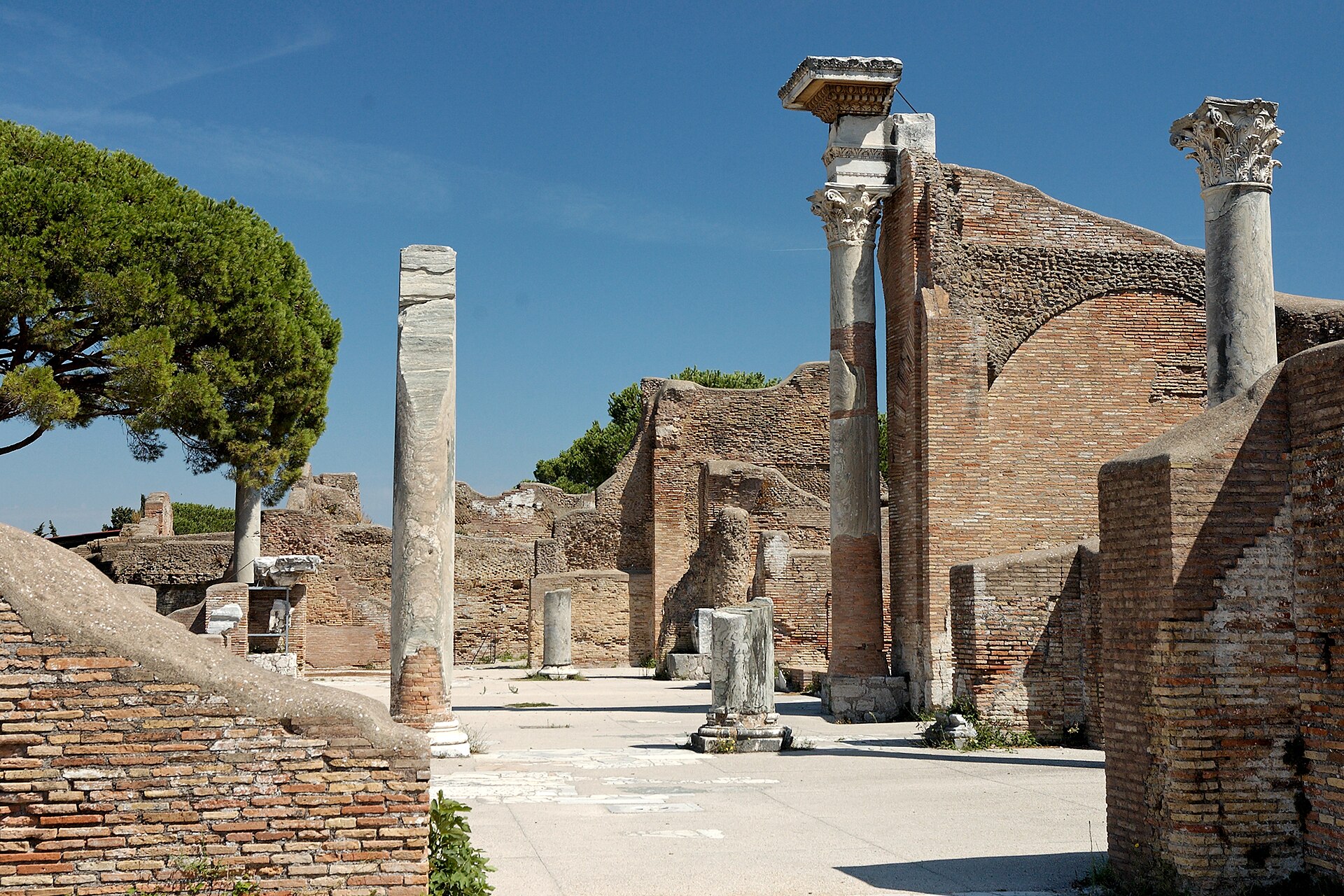
Roman baths were important social institutions. They provided facilities for bathing, exercise, relaxation, and conversation, attracting people from different sections of urban society.
The complex contained rooms for different bathing temperatures, including the frigidarium (cold room), tepidaria (warm rooms), and calidarium (hot room). A gymnasium occupied the western section, surrounded by a marble colonnade.
Its most celebrated features are the black-and-white floor mosaics depicting marine subjects. One shows Amphitrite, the wife of Neptune, riding a seahorse accompanied by Tritons. Another depicts Neptune driving a four-horse chariot across the sea, surrounded by dolphins and other marine creatures.
The frigidarium contains another elaborate composition featuring Scylla, the mythological sea monster, surrounded by marine deities. These mosaics demonstrate the quality of Ostian craftsmanship during Hadrian’s reign and the close relationship between artistic decoration and the building’s function.
The Roman Theater: Entertainment in the Imperial City
A short distance from the Baths of Neptune stands Ostia’s ancient theater, one of the most recognizable monuments in the archaeological park.
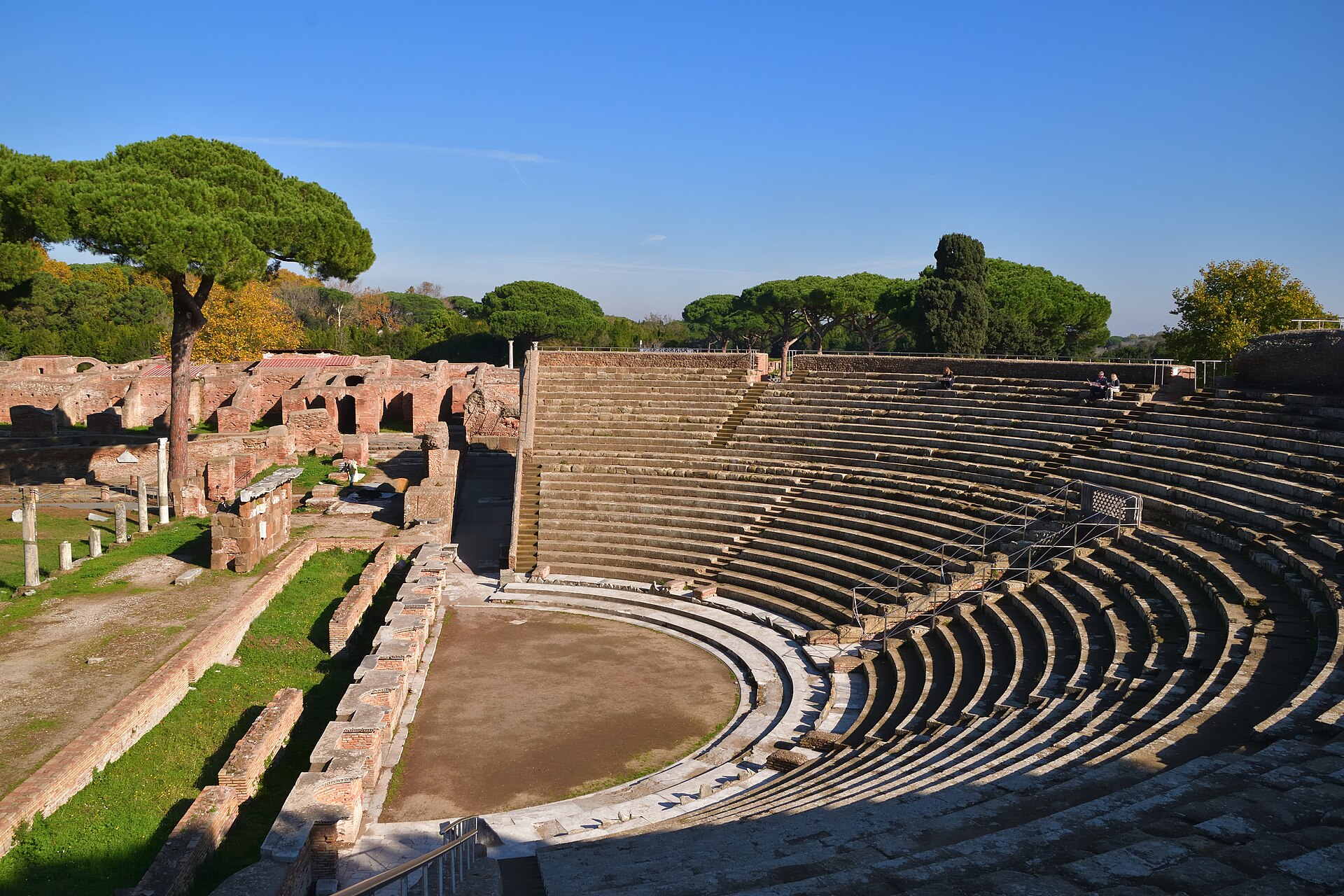
The original structure was constructed during the final years of the first century BC, under Augustus. An inscription mentioning Marcus Agrippa, Augustus’s son-in-law and an important Roman statesman and military commander, provides evidence for its early history.
The theater was subsequently enlarged during the Imperial period, eventually accommodating approximately 4,000 spectators.
Its semicircular seating arrangement, known as the cavea, faced the stage, where dramatic performances and other public entertainments took place. Shops occupied the portico along the exterior, demonstrating how commercial activities were integrated into the theater district.
The building also underwent later architectural modifications. In AD 216, an arch honoring Emperor Caracalla was erected near its entrance.
Fragments of marble decoration and stucco reliefs reveal how elaborate the theater once appeared. Although much of its original architectural ornament has disappeared, surviving elements provide an impression of its former appearance.
The theater remains an important part of Ostia’s archaeological landscape and continues to host performances, connecting its ancient entertainment traditions with modern cultural life.
The Square of the Corporations: A Mediterranean Trading Network
Behind the theater lies the Piazzale delle Corporazioni, commonly known as the Square of the Corporations. It is among the most revealing archaeological sites for understanding the commercial organization of the Roman Empire.
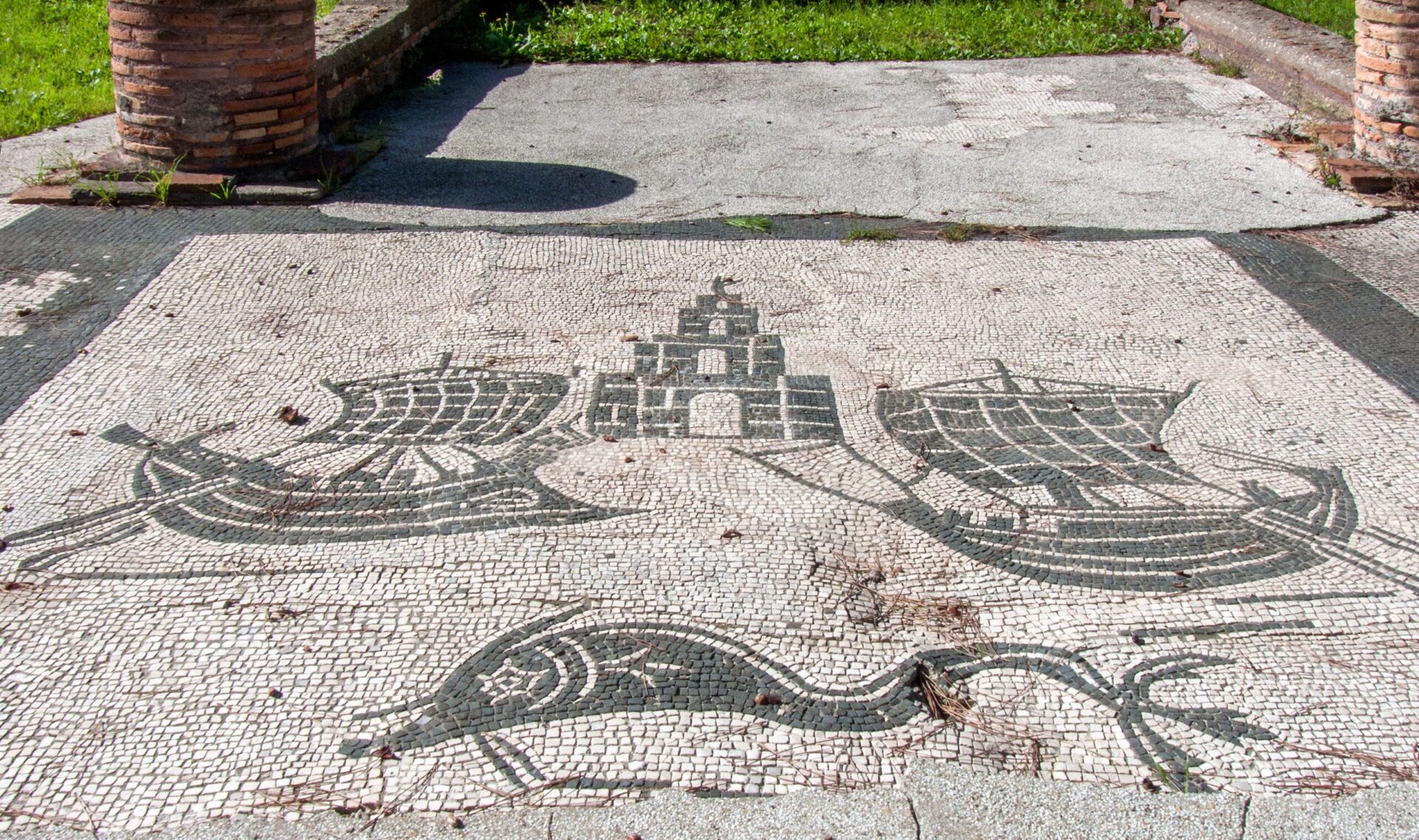
The square was designed alongside the theater during the Augustan period. Porticoes were added under Claudius in the mid-first century AD, while further alterations during the second century transformed the surrounding spaces into individual commercial offices known as stationes.
Their floors were decorated with black-and-white mosaics depicting ships, dolphins, grain measures, elephants, lighthouses, and other maritime imagery.
These decorations were not simply artistic embellishments. In combination with surviving inscriptions, they provide evidence for the merchants, shipowners, and trading associations operating through Ostia.
Some mosaics identify commercial groups connected with ports and cities across the Mediterranean, including locations in North Africa and Sardinia.
The grain-related imagery is particularly significant. Rome depended on imported grain to sustain its enormous population, and Ostia formed part of the logistical network responsible for receiving and distributing these essential supplies.
Other mosaics depict the transportation of goods in ships and the transfer of cargo between larger maritime vessels and smaller riverboats.
One particularly interesting commercial activity involved the saccarii, or sack carriers. These laborers transferred merchandise between ships and warehouses, performing essential work in the movement of food and other commodities.
The square therefore provides a remarkable visual record of the international commercial connections that supported Rome.
At its center stood a temple constructed toward the end of the first century AD. Its precise religious dedication remains uncertain, and identifying it definitively with the Imperial grain supply deity Annona would go beyond the available evidence.
Temples, Religious Traditions, and Imperial Worship
Ostia’s religious landscape reflected the diversity of its population and the different stages of the city’s development.
One notable sanctuary is the Quattro Tempietti, or Four Small Temples. Built on a shared podium, the complex originated in the Republican period, with its surviving structures reflecting later rebuilding and modification.
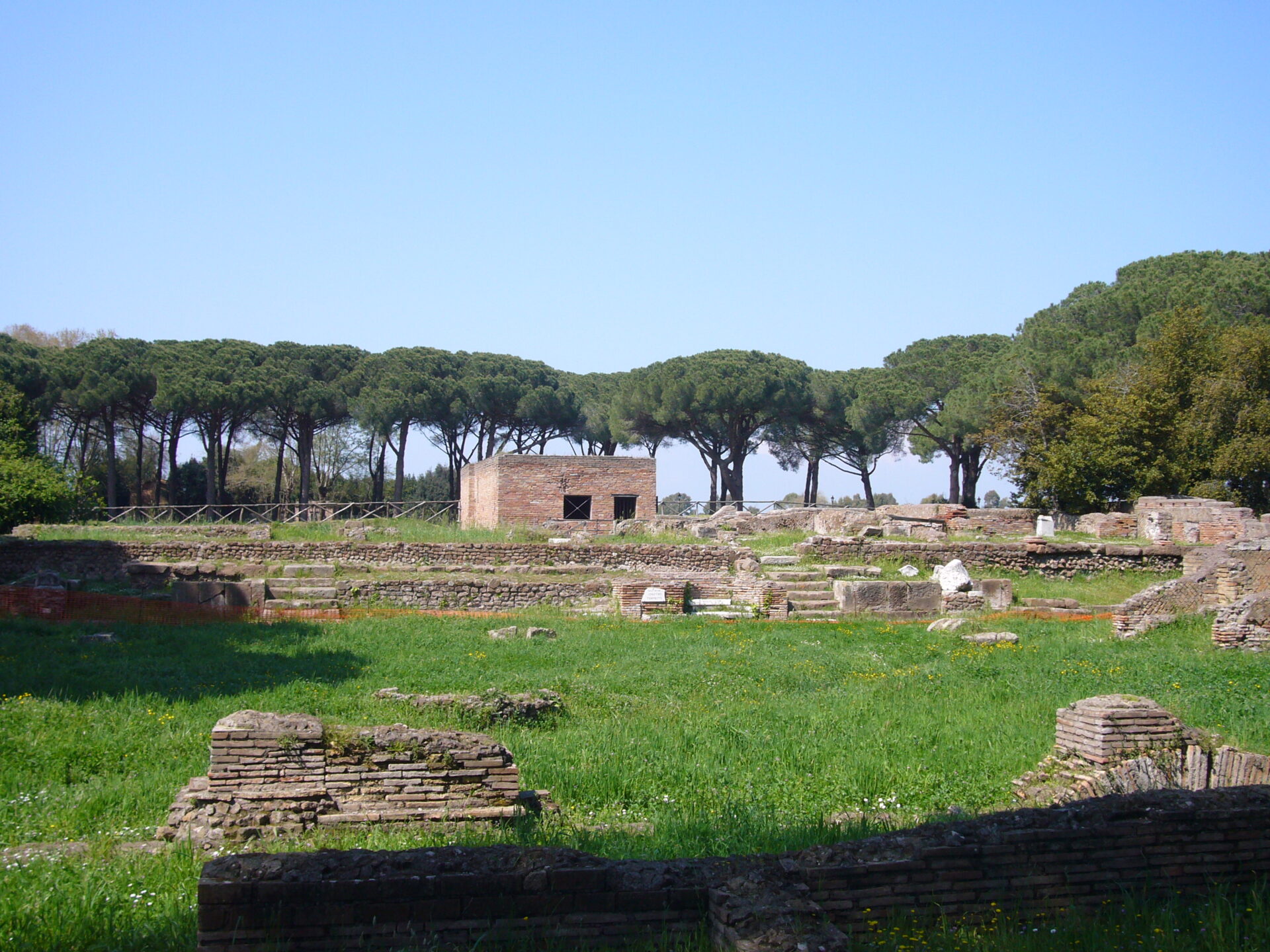
The sanctuary illustrates how religious architecture developed alongside the expanding urban settlement.
Other religious buildings were associated with the Imperial cult, through which the emperor and members of the imperial household received public honors and religious recognition.
The Temple of Roma and Augustus in the Forum area is particularly important in this context. Its dedication connected the city with the imperial ideology that helped unify the Roman territories.
Ostia also possessed numerous smaller religious spaces and shrines. These included sanctuaries associated with traditional Roman deities, as well as cults originating elsewhere in the Mediterranean world.
Such evidence demonstrates that Ostia was not simply a commercial outpost. It was also a religiously diverse urban community in which different traditions coexisted.
Warehouses and the Logistics of Feeding Rome
Behind Ostia’s monumental buildings was an extensive network of warehouses known as horrea. These facilities were essential to the city’s commercial function.
Among the largest was the Grandi Horrea, or Great Warehouses, originally constructed during the reign of Emperor Claudius in the first century AD and subsequently modified.
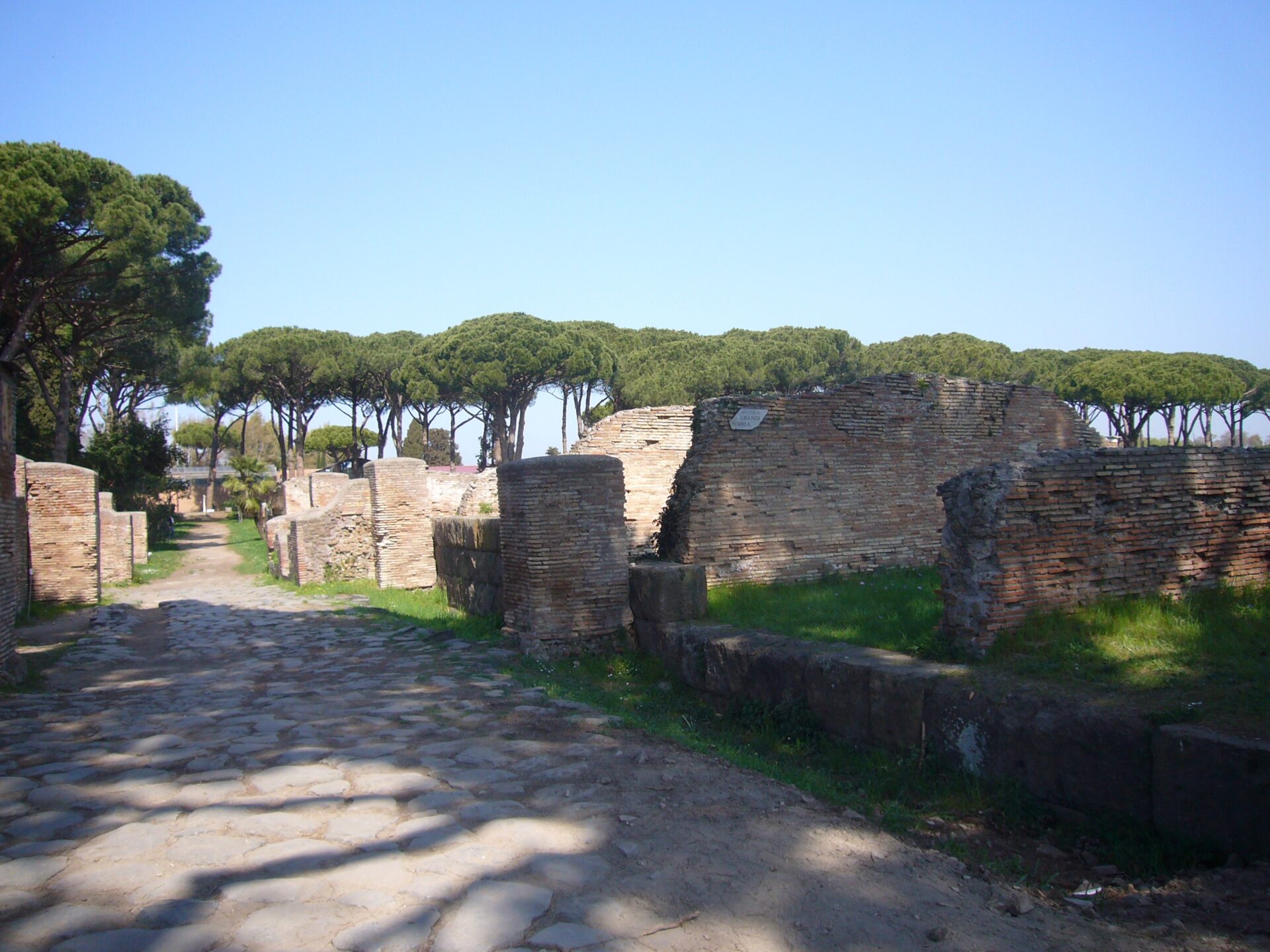
Its arrangement included storage rooms organized around a central area, with multiple wings accommodating the storage and handling of merchandise.
Raised floors helped protect stored commodities from ground moisture and pests, while the building’s substantial organization reflected the scale of the trade passing through Ostia.
Grain was particularly important because Rome depended heavily on imported food. Ships transported supplies from Egypt, North Africa, Sicily, and other agricultural regions to the ports serving the capital.
However, Ostia should not be understood as the sole location where Rome’s imported grain was unloaded and stored. The development of Portus, the imperial harbor complex constructed under Claudius and expanded under Trajan, significantly increased the capacity of the entire port system.
The nearby House of the Millstones provides another perspective on food production. Its rooms contained stone milling equipment used to grind grain into flour.
The complex was initially developed during the second century AD and underwent later modifications, including the installation of a large barrel-vaulted roof.
Together, the warehouses and milling facilities illustrate the infrastructure required to transform imported agricultural commodities into food for urban consumption.
The Synagogue: Evidence of Ostia’s Jewish Community
Among Ostia’s most historically significant religious buildings is its ancient synagogue, constructed around the middle of the first century AD.
It is one of the oldest known synagogue buildings in the western Mediterranean and provides important archaeological evidence for the presence of an established Jewish community in Roman Italy.
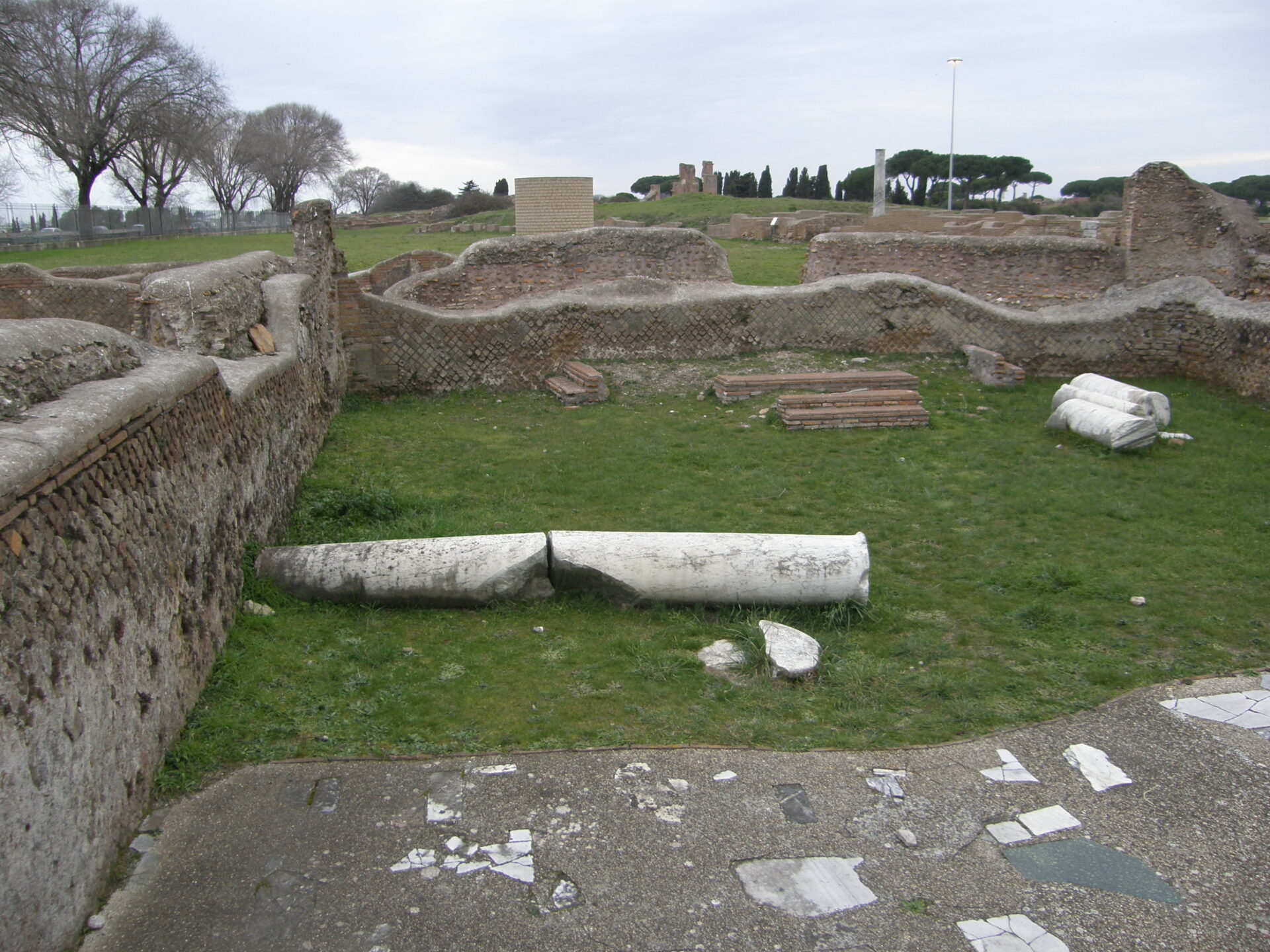
The complex included a main assembly hall, a raised platform known as the bimah, and a shrine that housed the Torah scrolls.
Architectural fragments decorated with the seven-branched menorah, one of the most recognizable symbols of Judaism, survive from the building.
The synagogue underwent substantial reconstruction during the fourth century AD, demonstrating the continued presence of Jewish religious life in Ostia during Late Antiquity.
Its location near the ancient coastline also reflects the relationship between maritime commerce and population movement. Merchants, sailors, and other travelers connected Ostia with communities throughout the Mediterranean, helping create a diverse urban population.
The synagogue is especially valuable because it provides physical evidence of Jewish religious organization outside the eastern Mediterranean during the Roman Imperial period.
Roman Apartment Buildings: How Ordinary People Lived
Perhaps the most valuable aspect of Ostia is its extensive collection of residential buildings.
Unlike many archaeological sites dominated by temples, monumental public structures, and elite residences, Ostia preserves numerous examples of multi-storey apartment buildings known as insulae.
These buildings accommodated a substantial proportion of the urban population and commonly combined commercial and residential functions. Shops and workshops occupied ground-floor spaces, while apartments were arranged on the upper levels.
The House of Diana is one of the best-known examples. Constructed during the Hadrianic period in the first half of the second century AD, it may originally have reached four storeys.
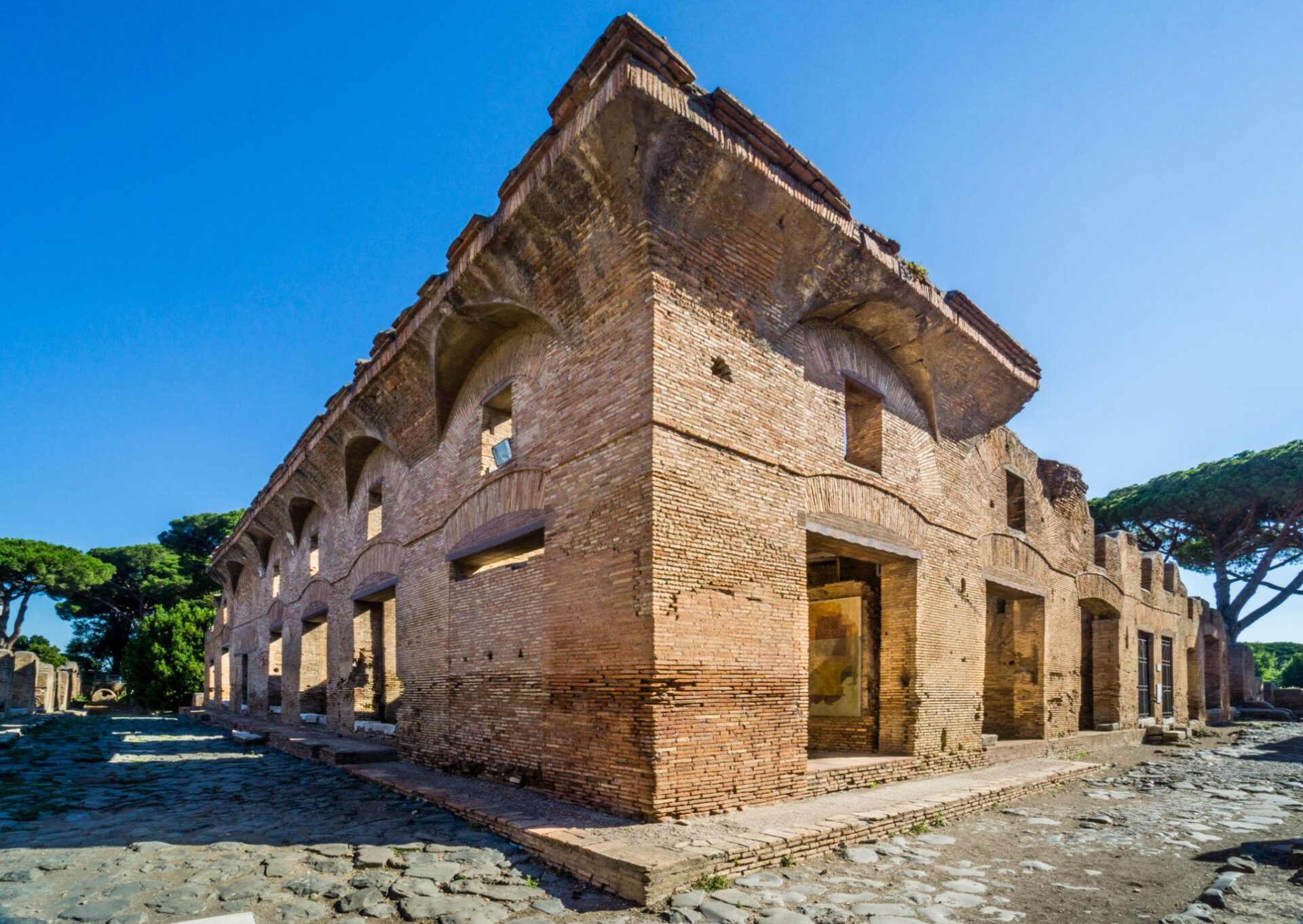
The building contained a central courtyard surrounded by residential rooms, with shops facing the street. Its surviving walls and architectural arrangement offer valuable evidence of urban housing during the Roman Empire.
Another example is the House of the Paintings, whose surviving decorative remains illustrate the importance of painted interiors in residential architecture.
The House of Jupiter and Ganymede provides further evidence of decorative sophistication, with surviving frescoes depicting mythological subjects.
These buildings challenge the popular impression that Roman urban life revolved exclusively around wealthy aristocrats living in expansive houses.
The majority of urban residents did not inhabit luxurious domus. Many instead occupied apartments of varying sizes and standards, often sharing buildings with commercial establishments.
Although the precise living conditions varied, Ostia’s surviving residential architecture provides one of the clearest opportunities to examine ordinary urban life in the Roman world.
The House of the Wine Bar: Everyday Roman Commerce
Another fascinating building is the so-called House of the Wine Bar, which illustrates the everyday commercial activities of Ostia’s inhabitants.
Roman establishments known as thermopolia served prepared food and drinks. They were particularly useful for people who lacked the facilities to prepare meals in their own accommodation.
The surviving interiors of these establishments sometimes preserve counters, storage spaces, painted decorations, and floor mosaics.
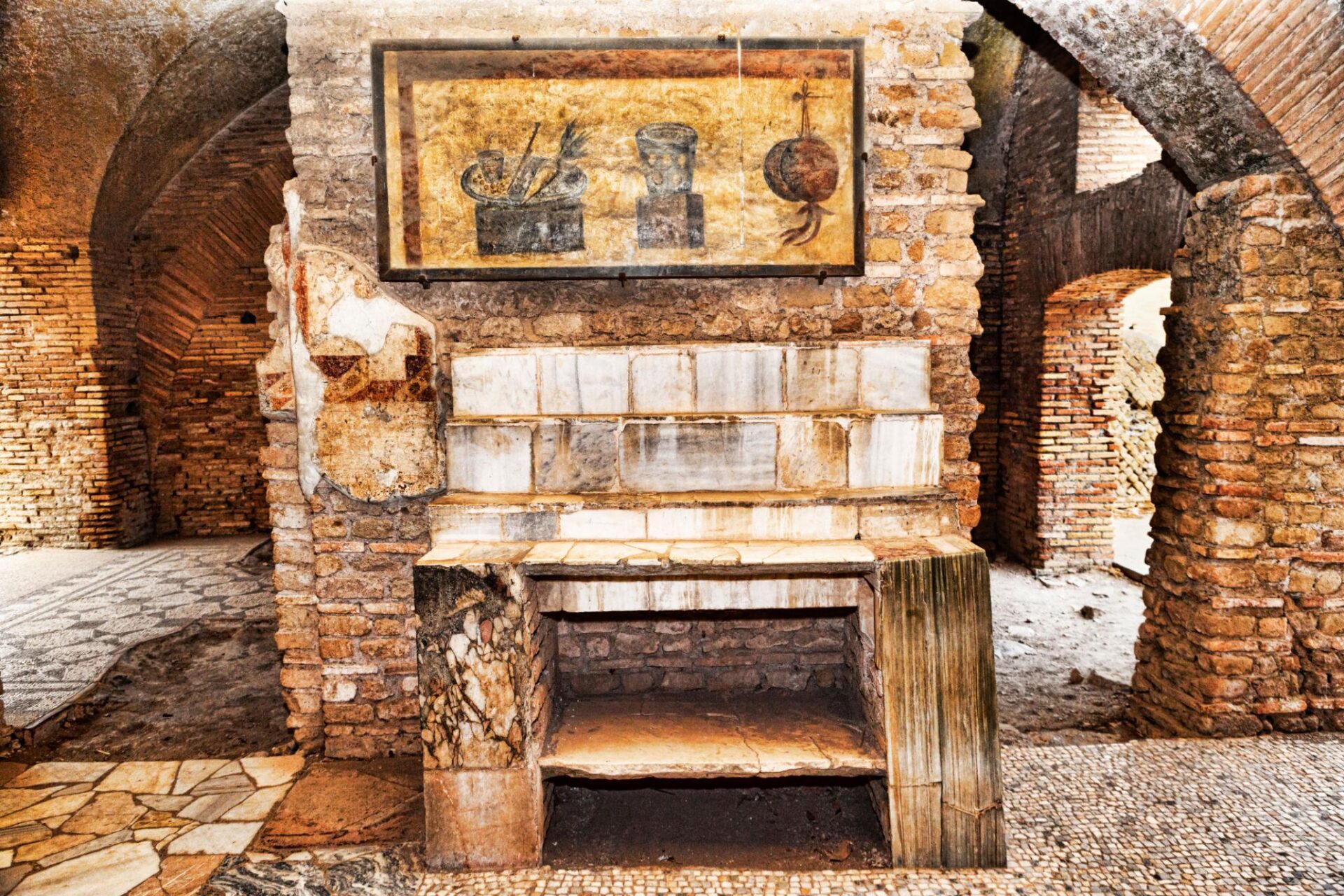
Marble serving counters were especially practical. Some contained recessed spaces for storing containers, while basins and other installations supported food preparation and cleaning.
These establishments provide a glimpse into the social life of Roman neighborhoods. People could purchase refreshments, eat prepared meals, and interact with other residents without visiting an expensive dining establishment.
Their existence also demonstrates how closely residential and commercial activities were integrated into Ostia’s urban layout.
The Forum and the Temple of Jupiter
The Forum was the civic and religious heart of Ostia. Located where the cardo and decumanus, the city’s principal north-south and east-west streets, intersected, it developed into a monumental public square during the Imperial period.
Its most prominent structure was the Capitolium, the principal temple dedicated to Jupiter, Juno, and Minerva, collectively known as the Capitoline Triad.
The existing temple was constructed during the reign of Hadrian, around AD 120, as part of a broader renovation of the Forum.
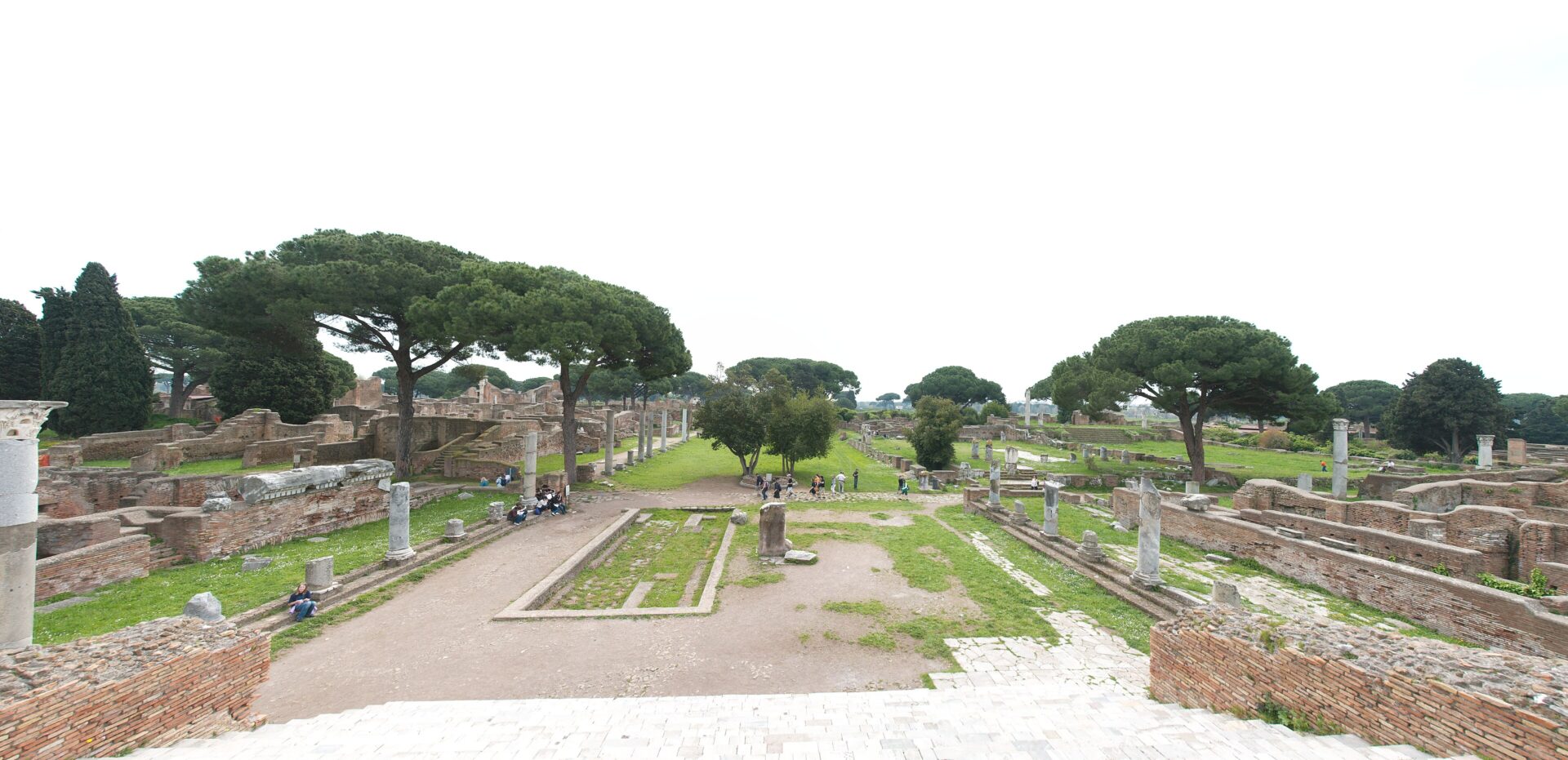
The building stood on a substantial podium, reached by a monumental staircase. Its elevated position emphasized its religious and civic importance.
Opposite the Capitolium stood the Temple of Roma and Augustus, while the surrounding public buildings included the Basilica and the Curia.
The Basilica served administrative and judicial functions, while the Curia was associated with the city’s governing institutions.
Together, these structures demonstrate that Ostia possessed the administrative and religious infrastructure expected of an important Roman municipality.
The Forum was therefore more than a gathering place. It represented the political identity and civic organization of the community.
The Decline and Gradual Abandonment of Ostia
Ostia’s decline did not result from a single catastrophic event. Instead, it developed gradually over several centuries as economic, political, and environmental circumstances changed.
From the middle of the third century AD, the city began losing some of its commercial importance. The expansion of Portus and the relocation of significant maritime activities contributed to this transformation.
The broader economic and political difficulties affecting the Roman Empire also played a role.
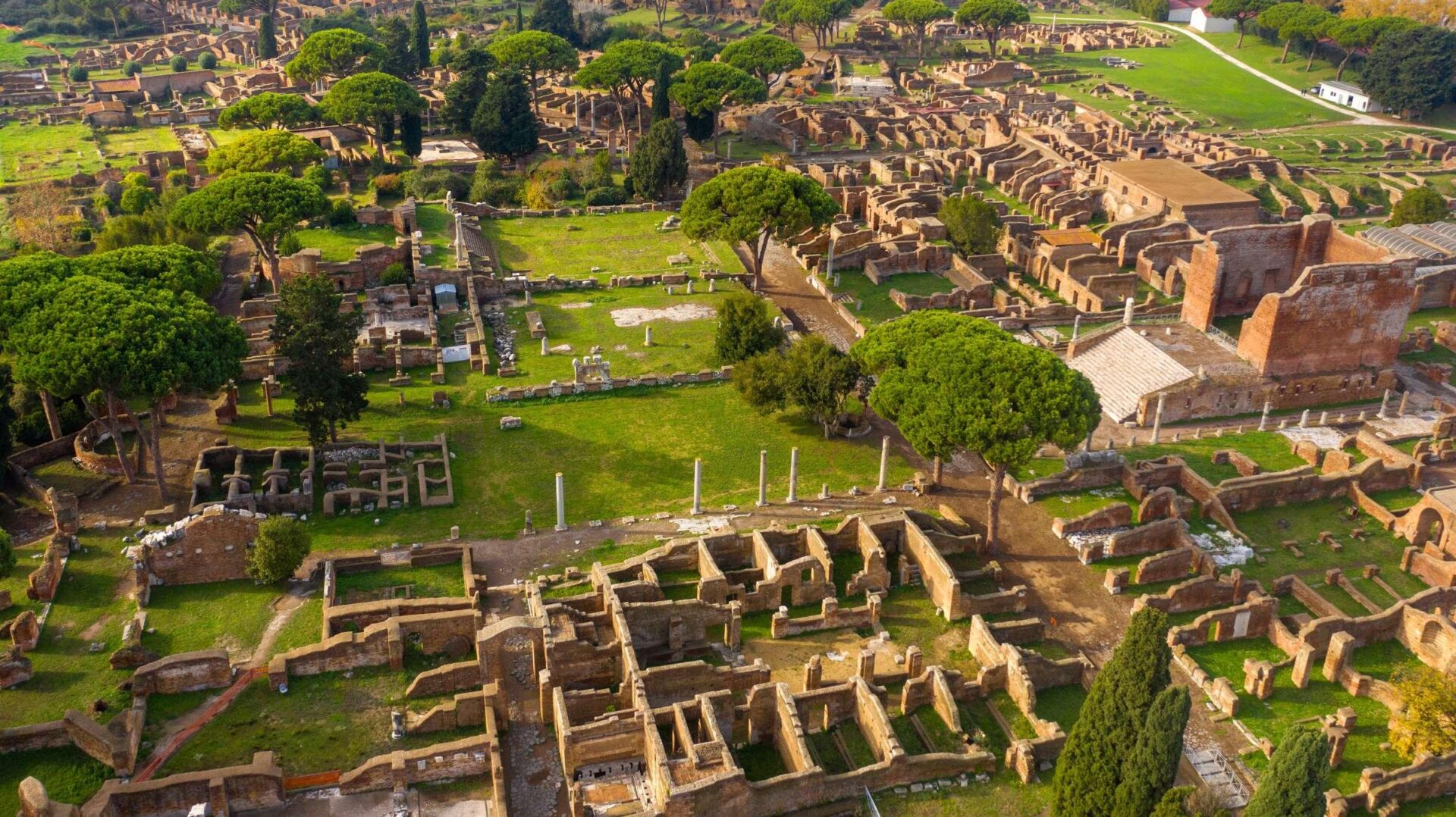
As commercial activity declined, parts of Ostia were gradually abandoned, although some residential and coastal districts remained occupied longer than others.
By approximately the middle of the sixth century, much of the ancient city had fallen into substantial disuse. Some remaining inhabitants relocated toward the area around the church of Santa Aurea, where the medieval settlement of Gregoriopoli eventually developed.
Environmental changes also transformed the landscape.
The Tiber gradually deposited sediment around its mouth, while the coastline shifted farther west. A major flood in 1557 subsequently altered the river’s course, contributing to the transformation of the surrounding countryside.
Over time, abandoned buildings became buried beneath accumulated soil and vegetation. Unlike Pompeii, Ostia was not preserved through a sudden volcanic disaster. Its archaeological remains survived through a much slower process of abandonment and natural burial.
Ostia Antica’s Legacy: A Window into Roman Urban Life
Today, Ostia Antica ranks among the most important archaeological sites for understanding the Roman world.
Its significance extends beyond the preservation of individual monuments. The city offers an unusually comprehensive picture of how a Roman urban community functioned, from its commercial infrastructure and religious institutions to its residential neighborhoods and public entertainment.
The surviving warehouses reveal the complexity of Rome’s food supply. The Square of the Corporations documents commercial relationships across the Mediterranean. The synagogue demonstrates the presence of established religious communities, while the apartment buildings provide evidence of housing conditions far removed from the luxurious residences of Rome’s elite.
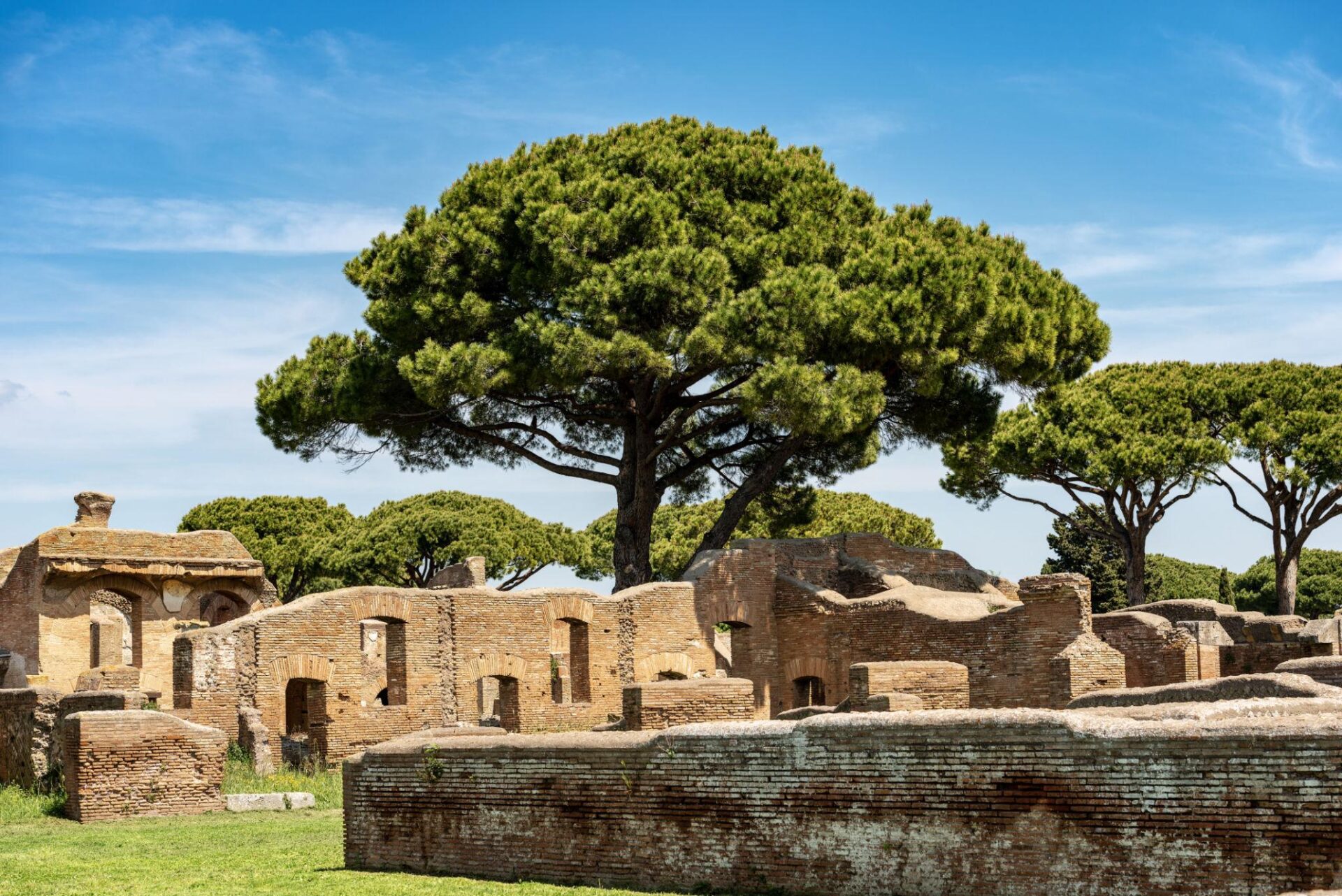
Its archaeological remains also demonstrate how Roman urban planning adapted to economic expansion, population growth, and changing infrastructure.
Ostia’s history is ultimately inseparable from that of Rome itself. As the capital expanded into one of the largest cities of the ancient world, it depended on a vast network of ports, merchants, sailors, laborers, and administrators. Ostia stood at the center of that system for centuries.
Its ruins remain an extraordinary historical resource, allowing modern visitors to explore not just the monuments of the Roman Empire, but the everyday environment in which its inhabitants actually lived.
