
The Roman Empire was not a capitalist economy in the modern sense. Its wealth depended overwhelmingly on agriculture, landownership, and the labor of millions of enslaved people. Most economic activity took place within local communities, and much of the population lived far from the enormous commercial centers that dominated the Mediterranean.
Yet beneath this predominantly agrarian system existed a surprisingly sophisticated financial world. Wealthy Romans could deposit money with professional bankers, lend capital to merchants, finance overseas trade, purchase interests in business ventures, and participate in contracts awarded by the Roman state.
Some of these arrangements bear a striking resemblance to modern financial practices. Others reveal just how different Roman economic life remained from our own.
Understanding how these opportunities worked requires looking beyond Rome itself, because access to financial services depended heavily on geography, wealth, legal status, and social connections.
An Agrarian Empire With an Extensive Commercial Network
Land remained the principal foundation of Roman wealth. Large estates produced grain, wine, olive oil, and other agricultural commodities, while smaller farms supplied local markets. Manufacturing was also important, although production generally relied on workshops and relatively specialized groups of artisans rather than modern industrial systems.
Nevertheless, the Roman Empire possessed an extensive network of towns, cities, roads, and navigable waterways that facilitated commercial activity on a remarkable scale.
Rome, Alexandria, Antioch, Ephesus, and Carthage were among the Mediterranean’s major population and commercial centers. Rome itself may have approached one million inhabitants during the imperial period, while Alexandria and Antioch also supported exceptionally large urban populations.
Most settlements were considerably smaller. However, thousands of towns connected agricultural communities with regional markets, administrative institutions, and commercial networks.
The province of Asia, corresponding broadly to western Anatolia in modern Turkey, provides a particularly interesting example. Archaeological research has estimated an average distance of approximately 24.5 kilometers between its urban centers. This meant that many communities were within relatively accessible reach of a nearby town.
Roads connected settlements across the provinces, while rivers and maritime routes provided additional transportation opportunities. A recently published network study identified approximately 299,000 kilometers of Roman roads within its mapped study area, illustrating the geographical extent of this infrastructure.
The Mediterranean was especially important. Maritime transportation could move substantial quantities of grain, wine, oil, metals, and luxury goods over distances that would have been prohibitively expensive by land.
This commercial network created opportunities for people to accumulate wealth beyond the ownership of agricultural property. It also generated demand for something every expanding economy requires: credit.
Legal Rights: Who Could Participate in Roman Commerce?
Before investing money, an individual needed to establish whether Roman law recognized their ability to own property and enter into legally enforceable commercial agreements.
One important legal concept was ius commercii, the right to engage in certain transactions under Roman civil law. It included the ability to acquire and transfer property through recognized legal procedures and enter into contracts enforceable under Roman law.
Roman citizens possessed extensive commercial rights. Freedmen, formerly enslaved individuals who had obtained their freedom, could also participate in economic life, although their legal and social position was not identical to that of freeborn citizens.
Provincial inhabitants had different legal statuses. Some communities received Latin rights, which included commercium, while other noncitizens conducted business through legal arrangements available to peregrini, the term Romans used for free people who were not Roman citizens.
Foreign merchants were not necessarily excluded from Roman commerce. Traders arriving from beyond the imperial frontiers could participate in regulated exchanges, particularly at designated frontier markets. Their access to Roman territory and commercial facilities, however, was subject to political and military restrictions.
Consequently, participation in the Roman economy was not determined by wealth alone. Legal status, location, and connections could make a considerable difference.
The Simplest Investment: Depositing Money With a Roman Banker
One of the most recognizable financial professions in Roman cities was that of the argentarius, a professional banker who handled money, exchanged coins, maintained accounts, and facilitated payments.
Bankers provided services that went considerably beyond simply storing coins. They could receive deposits, make payments on behalf of clients, extend credit, and lend deposited money to borrowers.
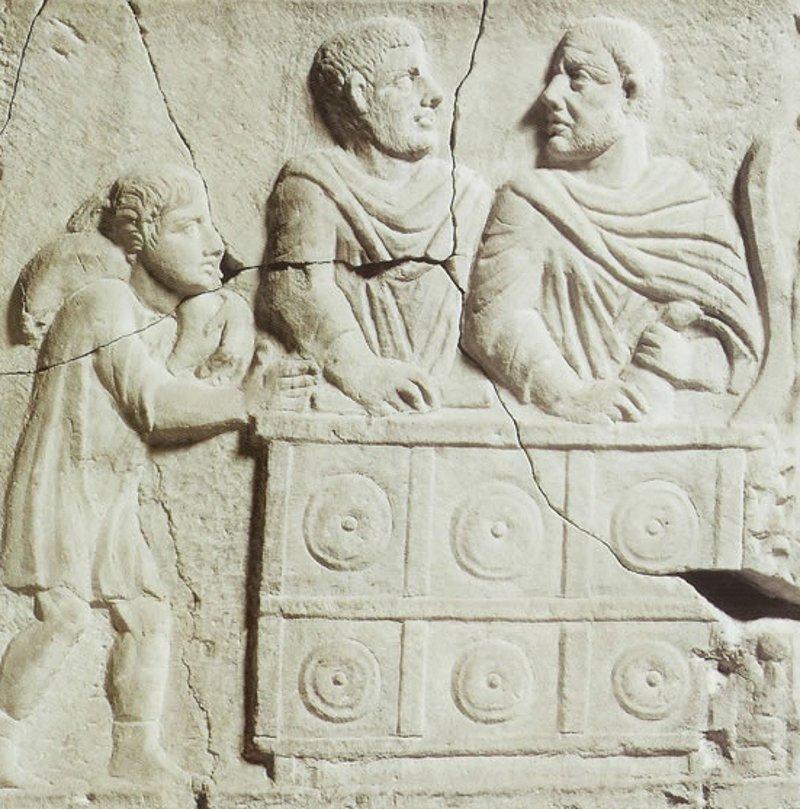
Roman banking arrangements included different kinds of deposits, and an important distinction existed between money held for safekeeping and deposits that bankers could employ in their own financial operations.
In the latter arrangement, the banker could use the deposited funds to provide loans and generate profits. This practice has an interesting parallel with modern deposit banking.
However, it would be misleading to suggest that every Roman bank deposit worked like a modern certificate of deposit. Ordinary deposits did not necessarily earn interest, and interest-bearing lending agreements had their own contractual arrangements.
The banker generally earned money through financial services and the difference between the cost of obtaining capital and the returns generated by lending.
Interest rates varied according to the period, location, borrower, and risk involved. Twelve percent annually, equivalent to one percent per month, became an important reference point in Roman lending practices, although it was not a universal rate for every transaction. Lower rates also existed, and exceptional circumstances could produce considerably higher ones.
Roman bankers operated within a recognizable legal framework. They maintained records of transactions, and surviving documents demonstrate how seriously commercial obligations could be documented and enforced.
The famous archives of Lucius Caecilius Iucundus in Pompeii and the Sulpicii financiers of Puteoli provide particularly valuable evidence of these activities.
Nevertheless, Roman depositors faced risks that modern bank customers would find unfamiliar. There was no central bank, deposit insurance, or general government guarantee protecting private deposits against the failure of an individual banker.
For someone with surplus money, banking offered an opportunity to participate in the wider financial economy without personally operating a commercial enterprise.
Buying Debt: Profiting From Someone Else’s Financial Problems
Roman financial activity also included the buying, transferring, and collecting of debts.
Imagine that a merchant owed another individual 1,000 denarii but was struggling to repay the obligation. Rather than waiting indefinitely, the creditor might agree to transfer the claim to someone else for a lower amount.
A financially powerful buyer could acquire the debt at a discount and subsequently attempt to collect the full outstanding amount.
The difference between the purchase price and the amount successfully recovered represented a potential profit, although the buyer also assumed the risk that the debtor might never pay.
Some of the Roman Republic’s wealthiest political figures became deeply involved in moneylending.
Marcus Licinius Crassus, one of the richest men of his generation, was famous for his extensive financial interests and lending activities. Marcus Junius Brutus, better known for his involvement in the assassination of Julius Caesar, also became notorious for his lending arrangements in the eastern provinces.
Cicero’s correspondence provides particularly revealing evidence of the political influence creditors could exercise over provincial communities and their debtors.
These transactions demonstrate that Roman finance was not simply about depositing money and collecting interest. It could also involve purchasing financial claims, exploiting legal privileges, and using political influence to secure repayment.
For ordinary investors, however, this was a considerably less accessible opportunity. Wealth, reputation, legal assistance, and connections could determine whether debt collection became profitable or disastrous.
The Roman Partnership: Investing Through a Societas
Not everyone interested in expanding their wealth wanted to become a banker or moneylender. Another possibility was to invest directly in a business.
Roman law recognized a commercial arrangement known as a societas, essentially a partnership between two or more individuals.
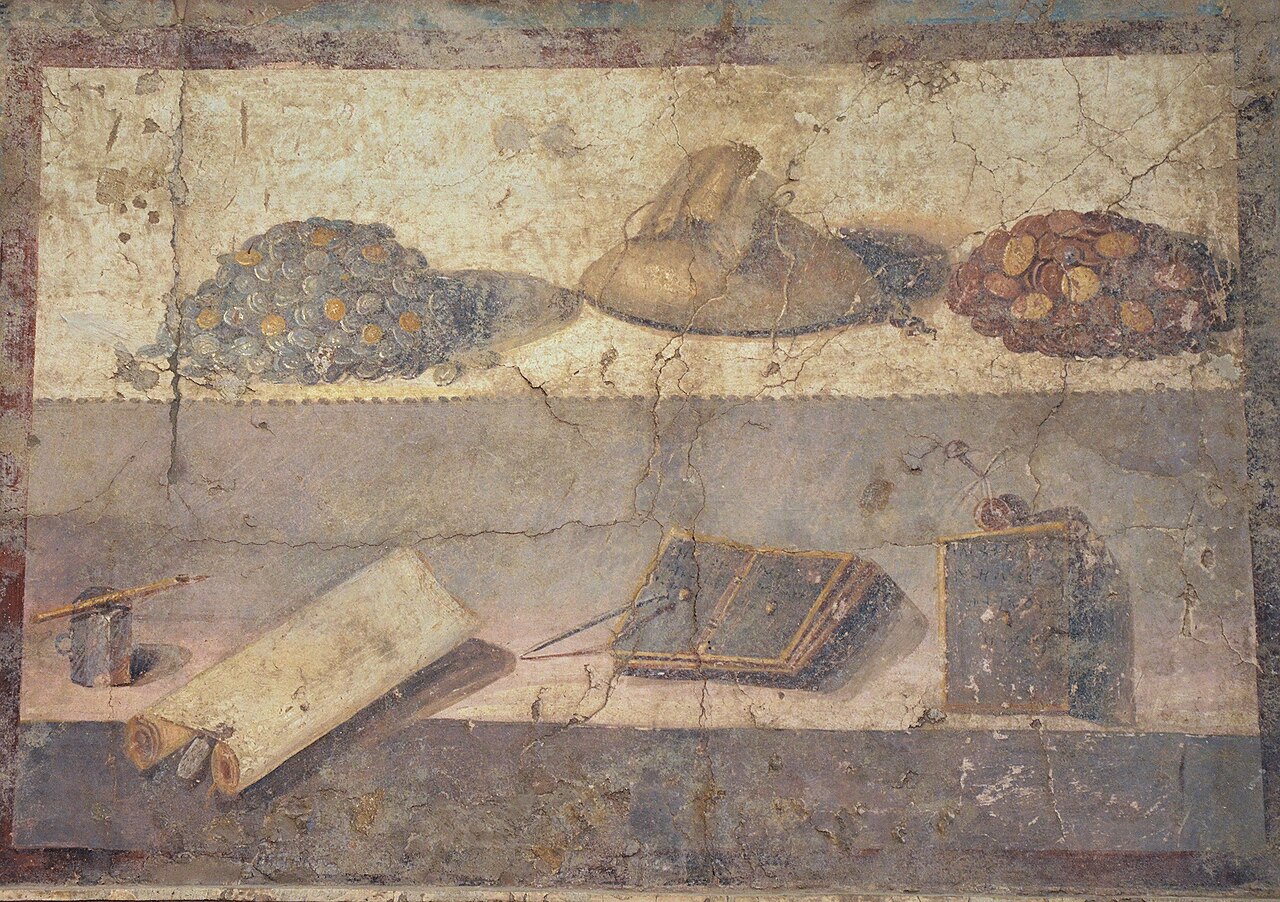
Under this arrangement, participants could combine money, property, labor, or professional expertise to establish and operate an enterprise. They could also agree on how profits and losses would be distributed.
For example, two investors might combine their savings to purchase agricultural land, establish an olive oil business, or open a commercial workshop.
A partnership did not necessarily require every participant to contribute money. One individual could provide the capital while another supplied the expertise and labor required to operate the enterprise.
The arrangement was flexible, making it suitable for ventures of different sizes.
Real estate also offered opportunities for shared investment. Roman insulae, multistory apartment buildings containing residential and sometimes commercial units, could generate rental income for their owners.
Cicero’s surviving correspondence and speeches reveal his extensive involvement in property investments and real estate transactions. His financial activities illustrate how Roman elites could distribute their wealth across several properties and commercial interests.
There was, however, an important difference between a Roman societas and a modern corporation. A partnership generally lacked the independent legal personality and permanence associated with modern incorporated businesses. Its continuation could be affected by the withdrawal, death, or bankruptcy of a partner.
Nevertheless, it provided a practical way for several individuals to pool their resources and undertake commercial ventures that might have been impossible to finance independently.
Investing in Government Contracts: The Societates Publicanorum
For wealthy Romans living in major commercial centers, opportunities could become considerably larger.
During the Roman Republic, the state frequently relied on private contractors known as publicani to undertake activities that its relatively limited administrative apparatus could not easily perform itself.
Their responsibilities included collecting certain taxes and public revenues, operating mines, supplying military forces, and undertaking public works.
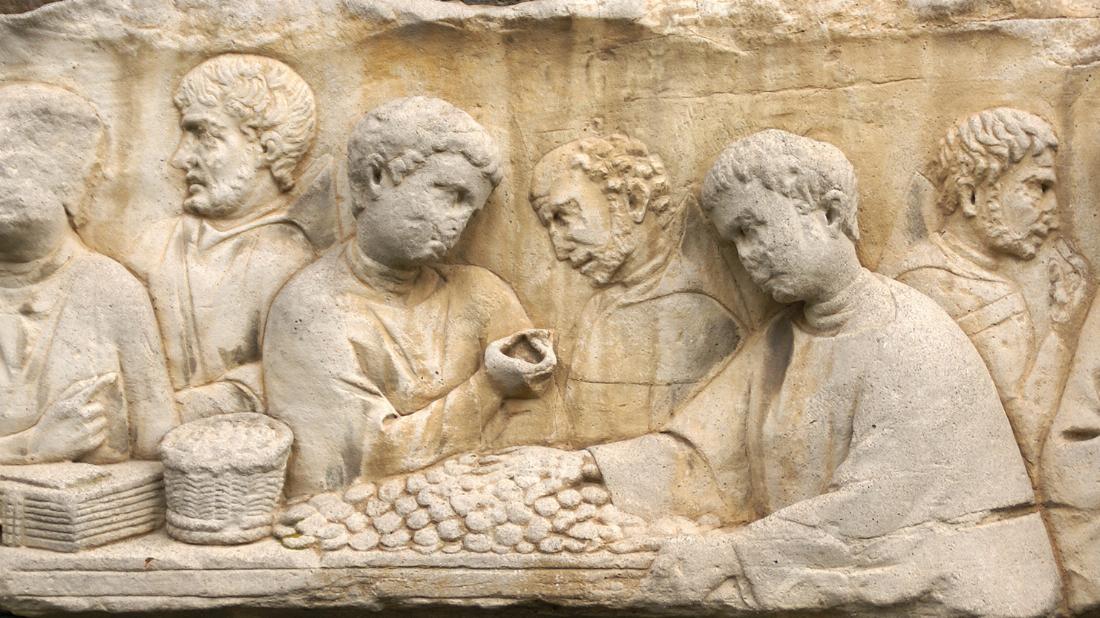
These contractors could organize themselves into larger business associations known as societates publicanorum.
Such ventures frequently required substantial capital. Rather than financing everything independently, wealthy participants could pool their resources and divide the financial returns.
The potential profits were considerable. A company that secured a government contract to collect provincial taxes, for example, could earn money from the difference between the amount it agreed to pay the state and the revenues it subsequently collected.
However, the system also created opportunities for serious exploitation. Tax collectors could impose excessive demands on provincial populations, while their political influence made challenging their practices difficult.
The abuses associated with tax farming became an important issue in Roman provincial administration. Under Augustus, the imperial government increasingly developed more direct methods of taxation, reducing its reliance on private contractors in several areas.
Did Rome Have a Stock Market?
This is where the historical evidence becomes particularly interesting.
Roman sources mention financial interests in public contracting associations, including partes, meaning portions or shares of an enterprise.
Some historians have interpreted these references as evidence that investors could buy and sell stakes in large commercial ventures, potentially at changing market prices.
The Temple of Castor and Pollux in the Roman Forum has also been associated with commercial and financial activities.
However, the comparison with modern stock exchanges remains controversial.
A 2016 study by Geoffrey Poitras and Manuela Geranio challenged the widely repeated interpretation that partes were regularly traded like modern company shares. The authors argued that the surviving primary evidence does not establish the existence of a significant secondary market for these interests.
Roman business associations were not modern public corporations, and their participants faced different legal obligations and restrictions.
Therefore, although the Romans developed sophisticated ways of pooling capital for large commercial ventures, describing these arrangements as an ancient stock exchange would go beyond what the evidence can demonstrate.
Financing Overseas Trade: Pecunia Traiecticia
Perhaps the most exciting investment opportunity available to wealthy Romans involved financing long-distance maritime commerce.
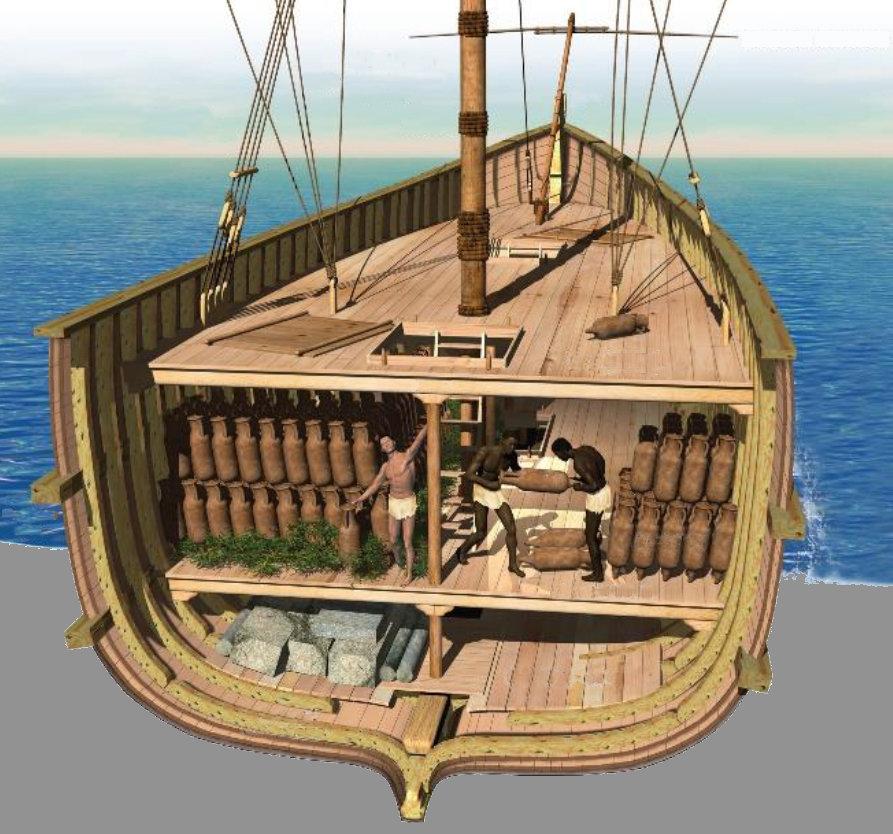
The Romans called this arrangement pecunia traiecticia, meaning money transported across the sea. It was a specialized form of maritime lending that allowed merchants to obtain capital for commercial voyages.
The principle was relatively straightforward. An investor supplied money to a merchant, who used it to purchase cargo, equip a vessel, or cover the expenses associated with an overseas trading expedition.
The merchant then transported the goods to another market, where they could potentially be sold at a considerable profit.
However, maritime commerce was exceptionally dangerous. Ships could encounter storms, pirates, navigational difficulties, or other disasters that resulted in the loss of their cargo.
This is where maritime loans differed from ordinary lending.

Under the appropriate contractual conditions, the lender assumed the risk of the voyage. If the vessel was lost through a covered maritime disaster, the borrower could be released from the obligation to repay the principal.
In exchange for accepting this risk, the investor could demand considerably higher interest than would normally be charged on an ordinary loan.
The Muziris Papyrus: Evidence of International Finance
One of the most extraordinary surviving documents illustrating this financial system is the Muziris Papyrus, an ancient commercial document discovered in Egypt.
Dating to the Roman imperial period, it preserves part of a loan agreement associated with the lucrative trade between the Roman Empire and southwestern India.
Muziris, located in the Malabar region of modern Kerala, was an important destination for Roman merchants seeking pepper, spices, ivory, gemstones, and other valuable commodities.
The surviving document describes a complicated transportation and financial arrangement involving cargo arriving from the Red Sea.
After being unloaded, the goods were transported by camel caravan across the Eastern Desert to Coptos, an important Egyptian trading center. From there, they were shipped along the Nile toward Alexandria, where they entered the customs system.
The document also specifies arrangements allowing the lender to take control of the cargo under particular circumstances if the borrower failed to repay the debt.
This is remarkable evidence of how Roman financial agreements could accommodate complicated international trading operations.
The voyage connected commercial networks extending from India to the Red Sea and Egypt, demonstrating that Roman economic activity was not restricted to the Mediterranean.
It is important, however, not to overstate what the papyrus establishes. Its surviving text does not preserve a complete account of the entire voyage or establish a universal interest rate for maritime investments.
What it does demonstrate is that Roman-era merchants and financiers could organize substantial commercial loans, establish contractual protections, and manage the financial risks associated with international trade.
How Wealthy Romans Managed Their Money
With all these opportunities available, it is reasonable to wonder whether wealthy Romans diversified their investments in ways resembling modern financial portfolios.
A wealthy landowner might possess agricultural estates, rental properties, deposits with bankers, and interests in commercial partnerships. Others could lend money to merchants or finance maritime expeditions.
However, there is no reason to assume that Roman investors followed a standardized investment strategy.
Their decisions depended on personal wealth, political connections, commercial opportunities, and their willingness to accept risk.
There was also an important cultural distinction.
Roman aristocratic society traditionally regarded agriculture and landownership as respectable foundations of wealth. Commercial activities, moneylending, and certain forms of profit-making could attract social criticism, particularly among the senatorial elite.
Yet this did not prevent wealthy Romans from participating in finance. The surviving correspondence of Cicero, the legal writings of Roman jurists, and commercial documents from Pompeii and Egypt reveal an economic world considerably more complicated than traditional descriptions of an agricultural empire suggest.
The Financial Legacy of Ancient Rome
The Roman economy was never a modern capitalist system. It lacked industrial production, modern banking institutions, publicly traded corporations, and the financial infrastructure that supports contemporary investment markets.
Its prosperity also depended heavily on enslaved labor, agricultural production, imperial taxation, and state intervention.
Nevertheless, Roman society developed remarkably sophisticated mechanisms for organizing capital. Professional bankers facilitated payments and lending, partnerships allowed individuals to pool resources, government contractors financed large public operations, and maritime loans distributed the risks of international commerce.
These practices demonstrate that sophisticated financial arrangements did not require modern technology or modern economic institutions.
The most fascinating aspect of Roman finance is not that the Romans invented the modern stock market or banking system, but that they developed practical solutions to many of the same economic problems that investors and businesses still face today: how to raise capital, manage risk, finance expansion, and turn accumulated wealth into additional wealth.
