
You speak at a moment when Roman power in the West is breaking apart. You see Rome sacked, money gone, and old offices failing, while new kings take land once ruled by emperors. Every choice you face feels urgent, because survival now guides policy.
You describe leaders who try to restore order through war, reform, and alliances, while rivals seek control through force and intrigue. You show how pressure from outside enemies and inner power struggles push the West toward collapse, even as the East fights to stay strong and united.
Key Takeaways
- You witness the steady loss of control in the Western Empire.
- You see reform efforts blocked by rivals and invasions.
- You watch power shift east as the West fades.
Life After the Sack of Rome and the Growth of Non-Roman Rule
Effects of the Vandal Occupation
You see the sack of 455 mark a turning point. The Vandals now controlled Africa, the wealthiest western province, and used that power to raid Italy and the islands.
You face constant pressure as Vandal forces strike Sicily, Corsica, and the Italian coast. Each attack weakens your ability to defend the peninsula and protect trade.
New Kingdoms on Former Roman Land
You watch many non-Roman rulers take control across the west. Visigoths, Burgundians, Suebians, and Vandals rule lands that once answered to Rome.
You rely on alliances with these groups to survive. At times, you fight them; at other times, you depend on their support to claim or keep power.
| Region | Dominant Power |
|---|---|
| Africa | Vandals |
| Gaul | Visigoths, Burgundians |
| Hispania | Visigoths, Suebians |
| Italy | Roman generals and foederati |
Breakdown of Systems and Trade
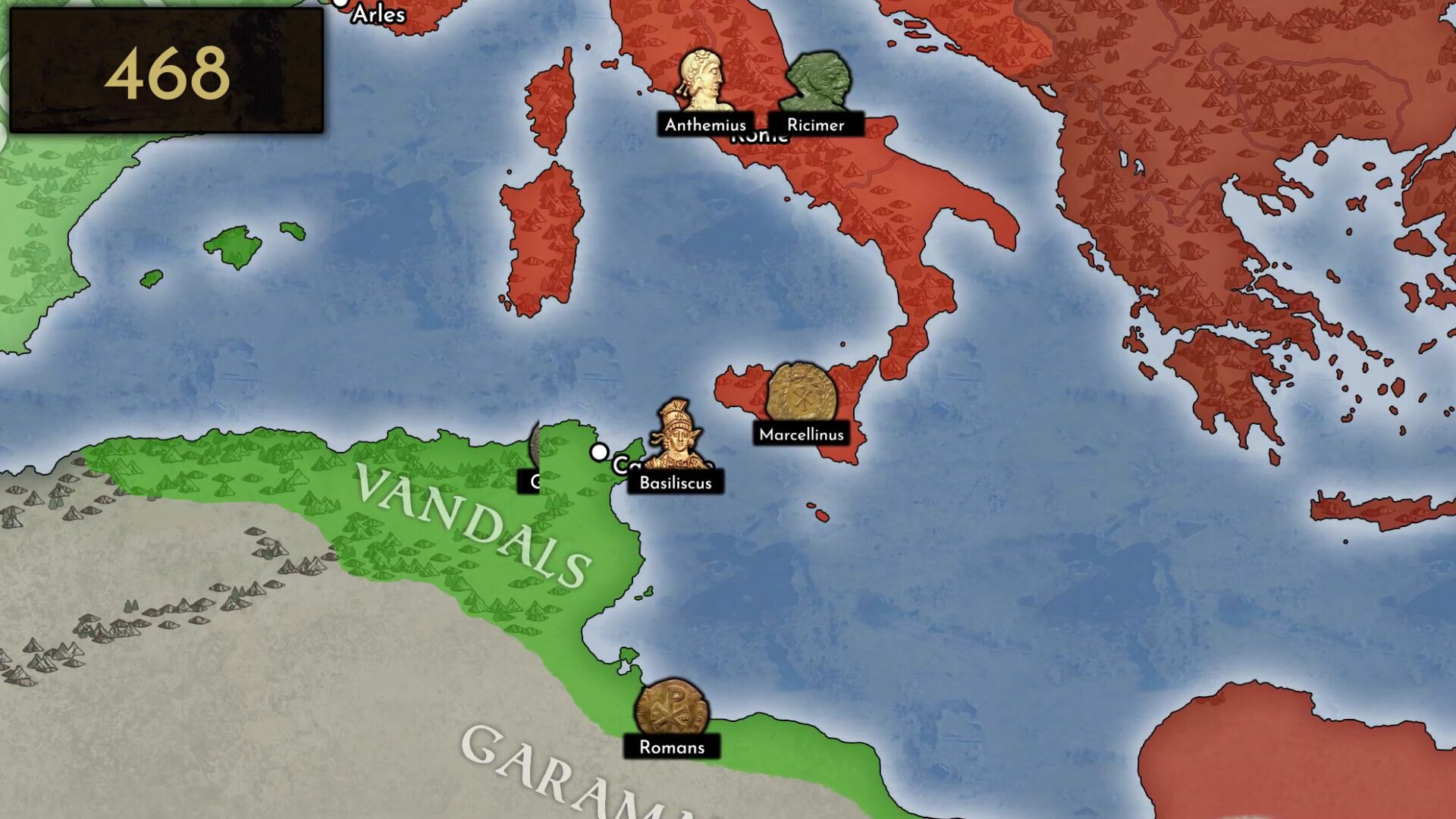
You struggle to govern as Roman offices lose authority. Emperors rise and fall quickly, often replaced by generals or removed by force.
You also face an empty treasury. To pay troops, leaders strip bronze from public buildings, while trade and taxation fail to recover.
- Military leaders overpower civil rule
- Tax systems weaken or collapse
- Cities lose resources and protection
You fight to hold what remains, but every choice becomes a matter of survival.
Power Struggles and the Breakup of the Western Empire
Avitus Takes Power and Loses Support
You see Avitus rise after a short gap in leadership, backed by Visigoth forces. His Gallic roots and favor toward Gallic elites anger leaders in Italy.
You watch his rule weaken as he strips bronze from public buildings to pay Gothic troops. Discontent grows fast, and his position collapses when Majorian and Ricimer turn against him.
Key pressures you face under Avitus:
- Loss of Italian support
- Money shortages
- Dependence on Visigoth allies
Majorian’s Rise and Ricimer’s Grip
You witness Ricimer gain fame by pushing Vandals out of Sicily and Corsica. He earns the title magister militum and builds strong influence.
You then see Majorian defeat invading Alamanni and take the throne with approval from the eastern emperor. As Majorian acts with real authority, Ricimer resents losing control and begins to plot.
| Figure | Role | Source of Power |
|---|---|---|
| Majorian | Emperor | Military skill, reforms |
| Ricimer | General | Army loyalty |
Wars Against Vandals, Goths, and Suebians
You follow Majorian as he drives Vandals from southern Italy and reforms taxes to restore trust. He raises an army, rebuilds a fleet, and secures Gaul by defeating Visigoths and reclaiming key cities.
You see Roman rule restored in Hispania and Suebians beaten soon after. His plan to retake Africa fails when Vandals destroy the fleet, and this setback leaves him exposed to Ricimer’s betrayal.
Majorian’s main actions you observe:
- Secures Italy and Gaul
- Restores control in Hispania
- Fails in the African campaign
Majorian’s Reform Efforts and Military Campaigns
Fair Taxes and Stronger Governance
You pushed for changes that made taxes more balanced and easier to collect. You worked to rebuild trust by giving roles to both Italian and Gallic elites.
You knew the treasury was weak, but you still aimed to restore order inside the state before expanding outward.
Successes in Gaul and Hispania
You raised an army of federati and rebuilt a fleet despite low funds. After crossing the Alps, you defeated the Visigoths and forced them to accept imperial authority.
You then moved north and retook Lugdunum from the Burgundians. In Hispania, your forces restored Roman control and later beat the Suebians in open war.
The Broken Plan to Retake Africa
You set Africa as your main goal because it was the Vandals’ power base. While you prepared the fleet, Geiseric struck first.
His surprise attack destroyed your ships before the campaign could begin. This loss forced you to abandon the African plan and return to Italy.
Plot, Capture, and Death
While you fought abroad, Ricimer grew hostile because he could not control you. Your growing authority reduced his influence as magister militum.
After your return, his plot succeeded. You were captured and then executed, and your gains soon fell apart after your death.
Ricimer’s Power and the Age of Figurehead Emperors
Libius Severus Under Ricimer’s Control
You see Ricimer choose Libius Severus because he wants an emperor he can manage. Severus rules in name, while you watch Ricimer hold real power in Italy.
You note that the eastern emperor does not fully accept Severus. This weak support leaves the western court isolated and unsure.
Key features of Severus’ rule:
- Ricimer directs policy and military moves
- The east withholds full recognition
- Imperial authority stays narrow and fragile
Breakaway of Aegidius and Marcellinus
You watch two generals loyal to Majorian reject Ricimer’s rule. Aegidius breaks away in Gaul, while Marcellinus does the same elsewhere.
You see Ricimer respond by urging the Visigoths to attack Aegidius. At Aurelianum, Roman forces and their Frankish allies stop the invasion, showing that central authority no longer controls events.
| Group | Position | Outcome |
|---|---|---|
| Aegidius | Gaul | Holds ground against Visigoths |
| Marcellinus | Separate command | Acts outside central control |
Shrinking Reach of Western Authority
You notice Vandals resume raids and seize Mediterranean islands. At the same time, no emperor sits on the throne for over a year after Severus dies.
You rule Italy in practice through Ricimer, acting in the name of the eastern Augustus. This gap shows how far imperial rule has faded beyond Italy itself.
Eastern Roman Influence and Military Interventions
Anthemius and the Broken African Campaign
You accept Anthemius after he arrives with backing from Constantinople. With relations restored, you commit eastern money, ships, and troops to strike the Vandals.
You split the operation into three forces. Early gains follow, but a major mistake lets Geiseric ambush the main fleet. Losses force a retreat, and the effort ends.
Leo I Weakens the Power of Aspar
You watch Leo focus on curbing generals who dominate the state. Aspar stands at the center of that problem.
You reduce his reach by shifting support away from his circle. When proof emerges that his son contacts the Persians, Leo acts, and Aspar and his son die in 471.
Creation of a New Palace Guard
You establish a fresh guard unit tied directly to the emperor. The Excubitors answer to the throne, not to old military networks.
You use them to balance power at court. This move limits reliance on entrenched commanders.
Rise of the Isaurians
You recruit heavily from the Isaurian highlands to counter old elites. These soldiers gain trust and influence.
Zeno benefits most from this shift. After exposing treason, he marries into the imperial family and becomes the strongest general in the empire.
Breakdown of Central Power in Western Territories
Short-Lived Rulers: Olybrius, Glycerius, and Nepos
You see power shift fast after Ricimer turned on Anthemius and placed Olybrius on the throne. Olybrius ruled only a few months before dying, leaving no stability behind.
Glycerius followed during renewed Gothic pressure on Italy. He avoided invasion through payments, not force. The eastern court rejected him and backed Julius Nepos, who marched from Dalmatia and forced Glycerius to step aside.
| Emperor | How You See Them Lose Power |
|---|---|
| Olybrius | Dies soon after taking the throne |
| Glycerius | Abdicates when Nepos advances |
| Julius Nepos | Flees Italy after military revolt |
Orestes and the Boy Emperor
You watch Julius Nepos weaken his own position by replacing his general in Gaul with Orestes. That choice backfires when Orestes rebels.
Nepos escapes back to Dalmatia, while Orestes crowns his young son as emperor. Romulus Augustulus holds the title, but you can see real authority never rests with him.
Odoacer Takes Control
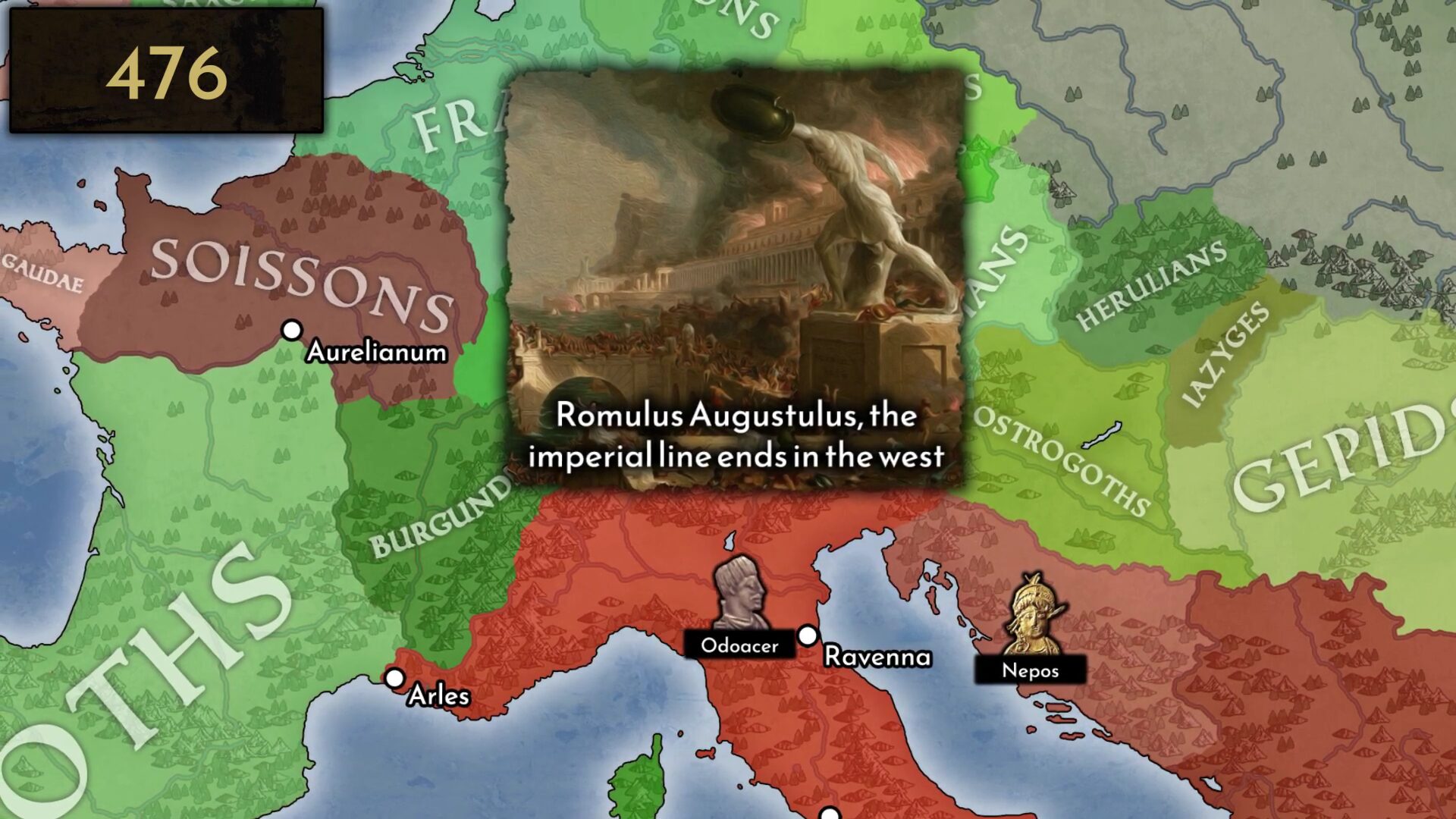
You then witness a final break when Odoacer, a rebel commander, kills Orestes. He removes Romulus Augustulus from office without a fight.
Odoacer sends the imperial regalia to Constantinople and ends the imperial line in Italy. You see him accept eastern authority in name, while ruling Italy himself.
End of Western Imperial Succession
You witness the final break in the western imperial line when power in Italy passes to a new ruler who rejects the old title but keeps order.
Sending the Imperial Symbols East
You see Odoacer remove Romulus Augustulus from office and spare his life.
He sends the imperial regalia to Constantinople to show that Italy no longer needs its own emperor.
- The act ends the line of western succession in Italy
- Odoacer places himself under eastern authority
- The eastern court accepts this change without resistance
Zeno and His Stance on Julius Nepos
You learn that Zeno accepts Odoacer’s rule but sets one condition.
He asks Odoacer to acknowledge Julius Nepos as the lawful western emperor.
Nepos remains in Dalmatia, ruling in name only.
Later, members of his own court kill him, removing the last claimant tied to the old system.
The Passing of Geiseric
You reach the moment when Geiseric dies after fifty years as Vandal king.
His long reign shaped decades of conflict with Rome.
With his death, one of Rome’s most persistent enemies is gone.
Alongside figures like Attila and Alaric, Geiseric secures his place in Roman memory.
Eastern Empire’s Challenges and Consolidation
Rival Gothic Leaders: Strabo and the Amal
You face steady trouble from two Gothic chiefs who refuse to submit. Theodoric Strabo leads Goths in Thrace, while Theodoric the Amal commands a group from Pannonia and knows Constantinople well from his youth there.
You try to pit them against each other, even promising support, but the plan never takes shape. After Strabo backs a revolt and later dies in an accident, some of his followers join the Amal.
Marcian’s Bid for Power
You confront a serious challenge from Marcian, tied to past emperors by blood. He rises against you in the capital, and you crush the attempt and send him to Cappadocia.
He stirs unrest again from exile, but you defeat this second revolt as well and keep control.
Gothic Raids and Greece’s Suffering
You endure direct pressure when Strabo turns his forces toward Constantinople. He fails to take the city, then pulls back and ravages the nearby lands.
With Strabo gone, the remaining Gothic threat shifts south. The Amal spends years raiding Greece, forcing you to manage ongoing damage rather than a clean victory.
Faith Conflicts and the Acacian Divide
Aftereffects of the Chalcedonian Ruling
You see religious tension rise during the struggle for power in the east. Basiliscus loses support because he leans toward monophysite belief. Many people turn against him, not only for taxes, but for this religious stance.
This shift helps you understand why Zeno gains backing. His return brings relief to groups that opposed Basiliscus’ position on doctrine.
Imperial Unity Decrees and Roman Resistance
You watch religion shape loyalty during Zeno’s exile and return. Basiliscus’ religious policy weakens his rule and adds to unrest in the capital.
Zeno benefits from this divide when he comes back to Constantinople. Support grows as opposition to Basiliscus hardens, driven in part by disagreements over belief.
Last Rebellions and the Rise of New Powers
Uprisings Around Illus and the Eastern Throne
You watch power shift in Constantinople after a court plot forces Zeno to flee the city. Basiliscus takes control, raises taxes, and supports monophysitism, which turns many against him.
Illus first hunts Zeno, then switches sides. With that support, you see Zeno return and reclaim the throne. Basiliscus falls, and his rule ends.
Key moves you see
- Zeno leaves the capital to survive
- Basiliscus seizes power and loses support
- Illus helps restore Zeno
The Breakdown of Roman Control in Gaul
You see Roman rule in Gaul weaken after Majorian’s death. Loyal generals break away, and central control fades.
At Aurelianum, Roman forces and their Frankish allies stop a Visigothic attack. Later, Julius Nepos holds Arles for a short time, but his decisions weaken his position.
Signs of collapse
- Local commanders act on their own
- Visigoths and others press Roman borders
- Imperial authority shrinks to small pockets
The Rise of Frankish Influence
You rely on Frankish allies to defend Gallic lands when Roman strength fails. Their support helps stop Visigothic advances.
As Roman command weakens, Frankish leaders gain more control on the ground. You see power shift from imperial offices to regional rulers backed by force.
What changes
- Franks fight as key allies
- Local power matters more than titles
- New kingdoms grow as Rome fades
Theodoric’s Conquest of Italy
Zeno’s Pact with Theodoric
You see Zeno face constant pressure from Gothic leaders inside imperial lands. He tries to control this by playing rivals against each other, including Theodoric of the Amal line. Zeno uses promises and titles to redirect Gothic force away from the eastern provinces.
You understand this approach as a survival tactic, not a sign of strength. Zeno needs distance from unrest more than direct control.
The Fall of Odoacer’s Order
You watch Odoacer rise after killing Orestes and removing Romulus Augustulus from power. He sends the imperial regalia to Constantinople and accepts Zeno as his superior in name. Italy no longer has a western emperor, only a strongman ruler.
You also note that Zeno accepts this setup but still calls for loyalty to Julius Nepos. This uneasy balance leaves Italy politically exposed.
Gothic Power Takes Root in Italy
You track how Gothic groups grow stronger as Roman authority weakens. Many Goths regroup under Theodoric after years of war in the Balkans and Greece. Their movement reflects a shift from raiding toward settlement.
You recognize that Italy becomes the main prize as imperial control fades. Control now depends on armed leadership, not Roman institutions.
The Eastern Roman Revival
Zeno Near the End of His Reign
You face constant threats during your later years as emperor. Court plots force you to flee Constantinople, but harsh taxes and religious moves ruin your rival’s support. You return with renewed backing, remove your enemies, and secure control of the eastern state.
You also deal with repeated Gothic unrest. You try to turn rival Gothic leaders against each other, with limited success. Over time, accidents, internal conflict, and firm responses reduce these dangers.
The Collapse of Imperial Rule in the West
You learn that Italy no longer has a western emperor. Odoacer removes Romulus Augustulus and sends the imperial symbols to your capital. He accepts your authority and rules Italy in your name.
You allow this arrangement but still demand respect for Julius Nepos. After Nepos is murdered, no western court remains. From this point on, you stand as the sole Roman emperor.
The East on the Edge of Renewal
You break the power of generals who once dominated the throne. By replacing them with loyal forces, you strengthen imperial control. The state now relies less on foreign commanders.
You inherit a realm that survives while others fall. With rivals gone and authority centered in Constantinople, the eastern empire enters a period of greater stability and future growth.
