
The Diocletianic Persecution, also known as the Great Persecution, was the Roman Empire’s final major attempt to suppress Christianity through imperial law. Beginning in 303 CE and continuing in parts of the empire until 313, it reversed several decades of relative toleration and subjected Christian communities to the destruction of churches, confiscation and destruction of scriptures, loss of civic status, imprisonment, torture, forced sacrifice, and—depending on province and period—execution.
It was also considerably more complicated than the traditional image of an empire-wide campaign in which every Christian was hunted relentlessly. The persecution was shaped by the political structure of the Tetrarchy, enforced unevenly by different emperors and provincial governors, and repeatedly modified as the imperial succession changed. Modern scholarship emphasizes this regional variation rather than treating the persecution as a single, uniformly executed policy.
The campaign ultimately failed. Christianity survived, the persecuted communities rebuilt themselves, and within a decade one of the emperors who emerged from the ensuing civil wars—Constantine—was actively protecting the religion. By 313, the imperial government had abandoned persecution and formally recognized Christians’ right to worship. The episode therefore stands as one of the most consequential failures of coercive religious policy in Roman history.
Rome and Christianity Before Diocletian
The Roman Empire was not continuously persecuting Christians during the first three centuries of the Christian era. That popular impression largely comes from later Christian literature, which naturally concentrated on episodes of martyrdom.
Roman religious policy was complicated. The state expected participation in public religious practices because sacrifice was connected to civic identity, imperial legitimacy, and the welfare of the community. Yet the empire was capable of accommodating a remarkably wide variety of cults and traditions. Judaism, in particular, possessed long-standing legal and customary accommodations.
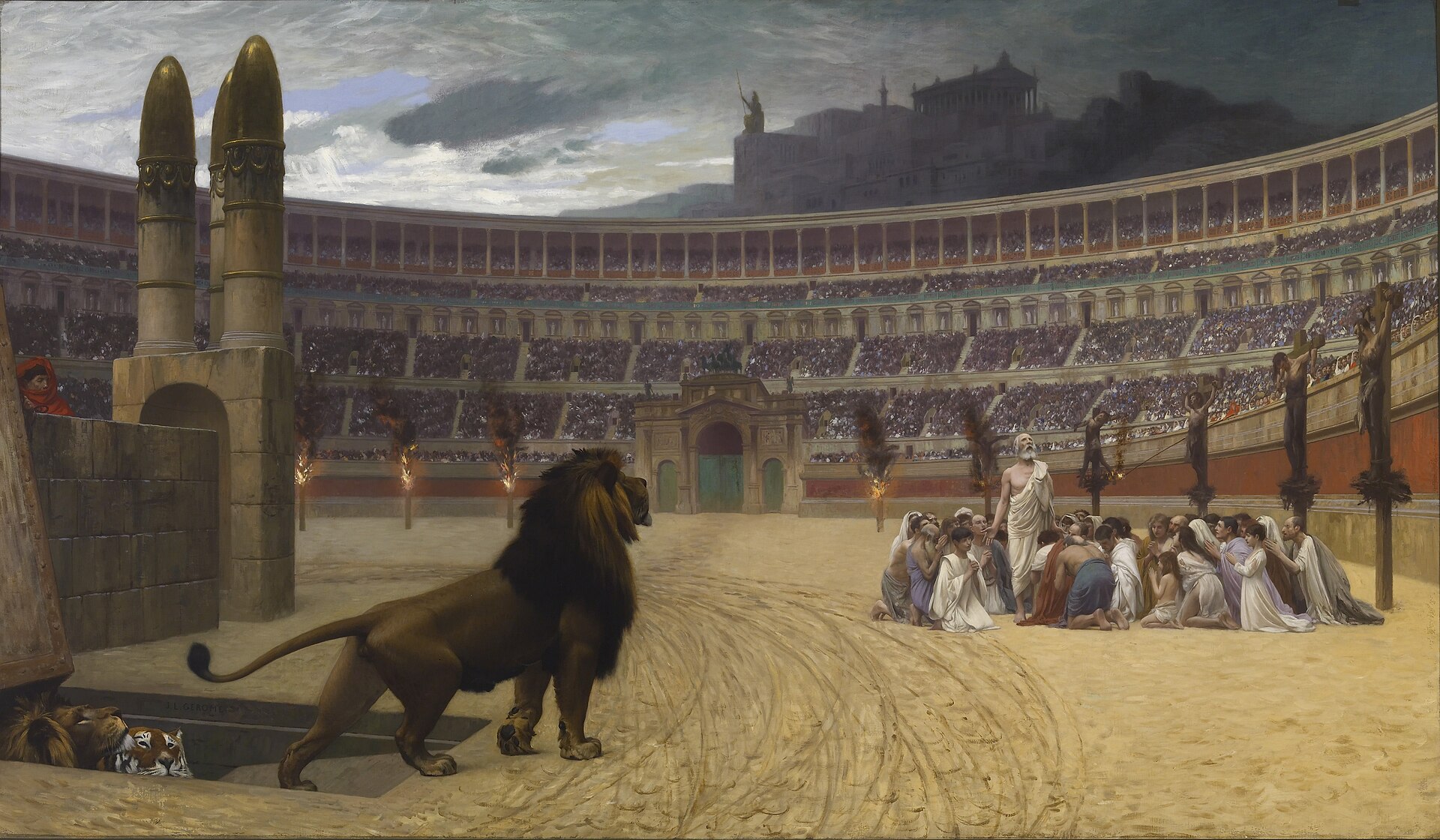
That does not mean that Rome possessed modern religious freedom. Nor was Roman society inherently “tolerant” in the modern sense. Recent scholarship has cautioned against explaining Roman religious policy simply as a natural consequence of polytheism. Roman authorities could coexist with religious difference when it did not appear to threaten political or social order, but that accommodation had limits.
Christianity increasingly presented a difficult case. Christians refused participation in sacrifices to the traditional gods, rejected the cultic dimension of imperial religion, and insisted upon exclusive worship of the Christian God. Christianity also actively sought converts rather than functioning simply as another hereditary ethnic or civic cult.
Consequently, Christians could become conspicuous precisely because they refused practices that Romans regarded as ordinary obligations of communal life.
Nevertheless, before the third century there was no permanent empire-wide statute ordering the extermination of Christians. Persecution was generally episodic, localized, and dependent upon particular political circumstances and officials.
The distinction matters because the Great Persecution represented a major change: the imperial government attempted to impose a coordinated legal program against Christianity across the empire.
From Decius to Diocletian
The first major empire-wide attempt to compel religious conformity came under Decius in 249–251.
Decius required inhabitants of the empire to perform public sacrifices and obtain certificates proving that they had done so. The policy was not necessarily constructed as a narrowly Christian-specific law; rather, it attempted to reinforce traditional religious observance throughout the empire. Christians nevertheless faced a severe dilemma because sacrifice was incompatible with their religious commitments.
The reign of Valerian produced another period of persecution in the 250s. His measures specifically targeted Christian clergy and Christian assemblies more aggressively. But after Valerian’s capture by the Persians in 260, his son Gallienus reversed the policy and granted Christians a prolonged period of relative security.
That period of toleration was enormously important. By the late third century Christianity was no longer a marginal urban movement. Christians existed throughout the Mediterranean world, including among wealthy families, merchants, administrators, soldiers, and members of the imperial household. Churches had become substantial institutions, and Christian communities possessed organized clergy, property, charitable networks, and increasingly sophisticated administrative structures.
The Christian Church had survived earlier imperial attacks and was now considerably more difficult to eliminate.
Diocletian and the Restoration of the Roman State
When Diocletian became emperor in 284, he inherited an empire profoundly transformed by the Third-Century Crisis.
The previous decades had witnessed rapid imperial turnover, civil wars, military rebellions, economic instability, and external invasions. Diocletian’s response was not simply to restore the old system but to construct a much more interventionist imperial government.
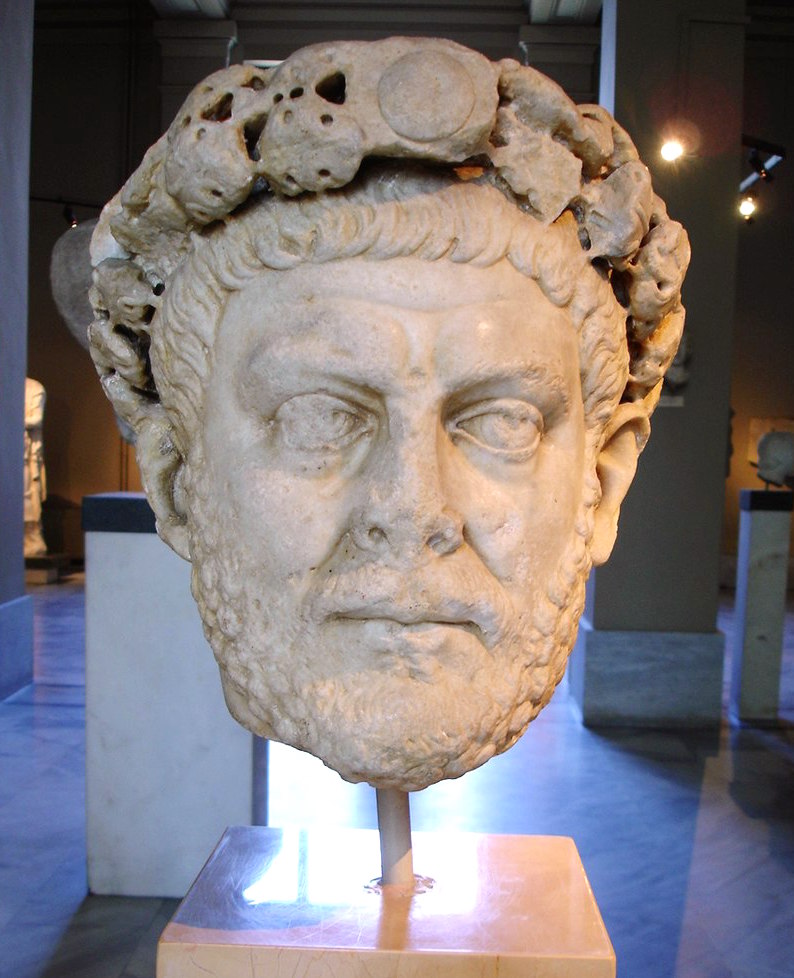
He expanded the bureaucracy, reorganized taxation, strengthened the army, altered provincial administration, and established the Tetrarchy, dividing imperial authority among two senior emperors, or Augusti, and two junior emperors, or Caesares.
His religious policies fit this broader political philosophy. Diocletian presented himself as a restorer of Roman order. The empire’s prosperity depended, in Roman thinking, upon the correct relationship between the state, its citizens, and the gods. The emperor’s responsibility was therefore not merely administrative. Maintaining the pax deorum—the favorable relationship between Rome and its gods—was a political responsibility.
The Tetrarchic government increasingly emphasized traditional Roman religious identity. Yet Diocletian did not immediately launch a general attack on Christianity. For much of the first part of his reign, Christians continued to exist within the imperial system.
The eventual change appears to have resulted from a combination of factors, including the emperor’s religious conservatism, the increasingly visible Christian community, problems within the army, and the influence of his Caesar and later co-Augustus Galerius.
The Road to the Great Persecution
The traditional Christian account, particularly that of Lactantius, places considerable responsibility on Galerius. Lactantius portrays Galerius as the principal advocate of persecution and describes a confrontation between Galerius and Diocletian over the issue.
The exact sequence is difficult to reconstruct. The surviving sources were written from strongly Christian perspectives, particularly Lactantius and Eusebius of Caesarea, and their accounts naturally emphasize the hostility of the persecuting emperors. Nevertheless, the existence of the imperial legislation is independently secure.
Before the general persecution began, Christianity had already encountered pressure within the army. Diocletian’s government also acted against Manichaeism, ordering severe penalties against Manichaeans and the destruction of their religious writings. These measures demonstrate that the imperial government was increasingly concerned with religious groups it regarded as incompatible with Roman religious and political order.
The First Edict: 23 February 303
The first major persecution edict was issued in 303 CE, conventionally dated to 23 February.
Before or around the promulgation of the edict, the Christian church at Nicomedia, one of the principal imperial residences, was demolished. The symbolism was unmistakable. The imperial government was no longer merely punishing individual Christians; it was attacking the institutional infrastructure of the Church.
The first edict ordered the destruction of Christian churches and the confiscation or destruction of Christian scriptures. Christians holding public office could lose their positions, while people of high status could suffer degradation. Members of Christian households could also lose certain legal protections.
The purpose was therefore broader than killing Christians. The government sought to dismantle Christianity as an organized institution. Church buildings were physical centers of Christian identity. Scriptures preserved the religion’s teachings. Clergy maintained its organizational structure. Public officials and members of elite society gave it social legitimacy.
Destroy those foundations, and the state could theoretically force Christianity back into the marginal position it had occupied generations earlier. The policy was an attempt at institutional eradication.
The Subsequent Edicts
The first edict was followed by additional measures during 303 and 304. The second phase concentrated particularly on the Christian clergy. Bishops, priests, deacons and other church officials were arrested. The objective was obvious: remove the leadership of Christian communities.
But imprisonment alone was insufficient. Authorities increasingly attempted to force Christian clergy to sacrifice to the Roman gods. Those who complied could receive release; those who refused could remain imprisoned or face harsher punishment.
A further edict expanded the pressure. The fourth major edict, issued in 304, demanded sacrifice from the population more generally. Refusal could result in imprisonment, torture, or death.
The progression is significant:
Destroy the churches → seize the scriptures → arrest the clergy → compel sacrifice → punish refusal.
The Great Persecution was therefore not a single law but a developing system of coercion. Modern scholarship generally recognizes four major persecutory edicts issued between 303 and 304, although their implementation varied enormously from place to place.
Why Sacrifice Mattered
To understand the persecution, it is necessary to understand what Roman authorities thought they were defending. For Roman officials, sacrifice was not simply private worship.
Public sacrifices demonstrated participation in the religious and political community. The emperor, army, cities, and individuals all had roles within a religious system that connected human society with the gods.
Christian refusal could consequently be interpreted not merely as a theological disagreement but as rejection of civic obligation. This helps explain why imperial officials repeatedly demanded a physical act of sacrifice.
The state did not necessarily need a Christian to become convinced that Jupiter existed. It needed the person to perform the required public ritual. For Christians, however, this was precisely the problem. Sacrifice to another deity was understood as apostasy. The confrontation therefore became unusually difficult to compromise.
The Case of Romanus
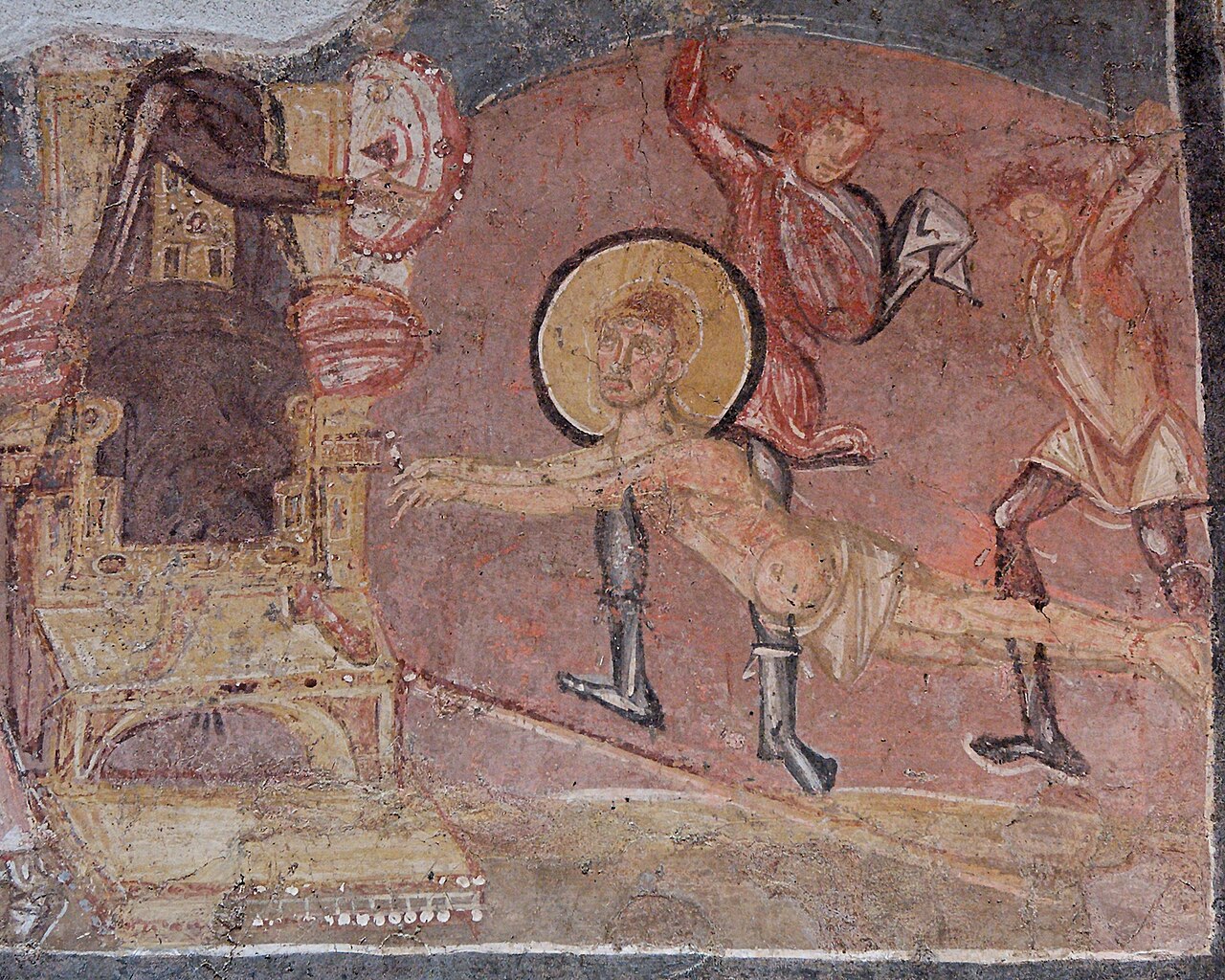
The supplied account of Romanus of Caesarea contains a genuine martyr tradition, but it should not be presented as an unquestionable eyewitness reconstruction of the opening day of the Great Persecution.
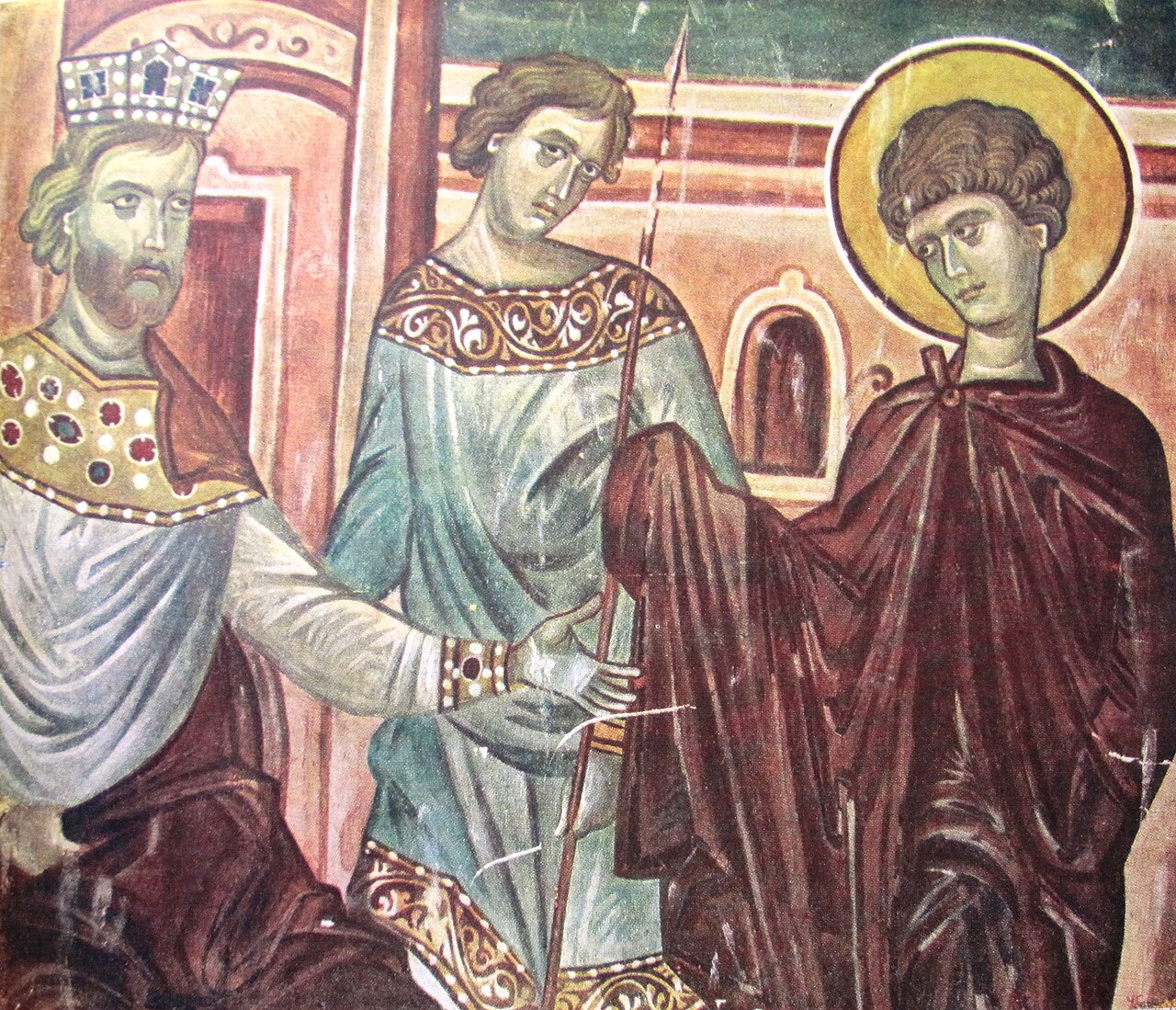
Romanus, a Christian deacon associated with Caesarea in Palestine, was traditionally martyred at Antioch around 303 or 304. Ancient Christian sources describe him challenging Christians who were prepared to sacrifice and subsequently being arrested.
According to the tradition, he was brought before Galerius, whose presence at Antioch is historically plausible. Romanus was tortured and ultimately killed; one prominent tradition says that his tongue was cut out before his final execution.
The account is important because it illustrates the central conflict of the persecution: the imperial government demanded ritual conformity, while Christian martyrs interpreted compliance as betrayal of their faith.
But Romanus should not be described confidently as the man whose interruption of a ceremony directly caused Diocletian to launch the Great Persecution. That narrative compresses several events and traditions into a dramatic scene that the surviving evidence does not establish with that precision.
The Tetrarchy Made the Persecution Uneven
Perhaps the most important fact about the Great Persecution is that it was never enforced uniformly across the Roman Empire.
The Tetrarchy divided effective imperial authority among different rulers.
Diocletian controlled the eastern territories.
Galerius exercised authority over the Danubian and Balkan regions before later becoming Augustus.
Maximian governed much of the western empire.
Constantius Chlorus, father of Constantine, controlled Gaul, Spain and Britain.
Their attitudes toward Christianity differed considerably.
Diocletian and Galerius were much more committed to enforcing the anti-Christian program. Constantius was substantially less enthusiastic.
In Gaul and Britain, the persecution was therefore comparatively limited. Constantius appears to have enforced the initial destruction of churches but did not pursue the later measures with the same intensity found in the East. The evidence indicates that some western authorities were reluctant to implement the most severe provisions.
This regional disparity is crucial.
The Great Persecution was an imperial policy, but the Roman Empire was not a modern centralized state capable of implementing legislation uniformly from Britain to Egypt.
Governors, city councils, military officials, and individual emperors all influenced how imperial orders were executed.
Consequently, the same edict could produce radically different experiences.
A Christian in Britain might lose access to a church building.
A Christian in Egypt or Palestine might face imprisonment, torture, forced sacrifice, or execution.
The East Suffered the Greatest Pressure
The eastern provinces generally experienced the most sustained persecution. This included regions such as Egypt, Syria, Palestine, Asia Minor, and parts of the Balkans.
The density and institutional strength of Christianity in many eastern cities also made the conflict more visible.
Eusebius, who lived in Caesarea in Palestine, provides extensive accounts of executions and imprisonments in the East. His Ecclesiastical History and Martyrs of Palestine are among the principal sources for the persecution. Yet even these accounts must be used critically.
Christian authors had theological reasons for recording martyrdom. Martyrs demonstrated the truth of Christianity, while the defeat of pagan emperors could be interpreted as divine judgment. he sources are therefore invaluable but cannot simply be treated as neutral statistical records.
Modern scholarship stresses that surviving martyr accounts are uneven, sometimes legendary, and incapable of providing a precise empire-wide death toll.
Martyrdom and the Problem of the Traditores
The Great Persecution created a serious internal crisis within Christianity.
Not every Christian chose martyrdom.
Some fled.
Some bribed officials.
Some obtained certificates claiming that they had sacrificed.
Others surrendered Christian scriptures.
Still others actually performed the required sacrifice.
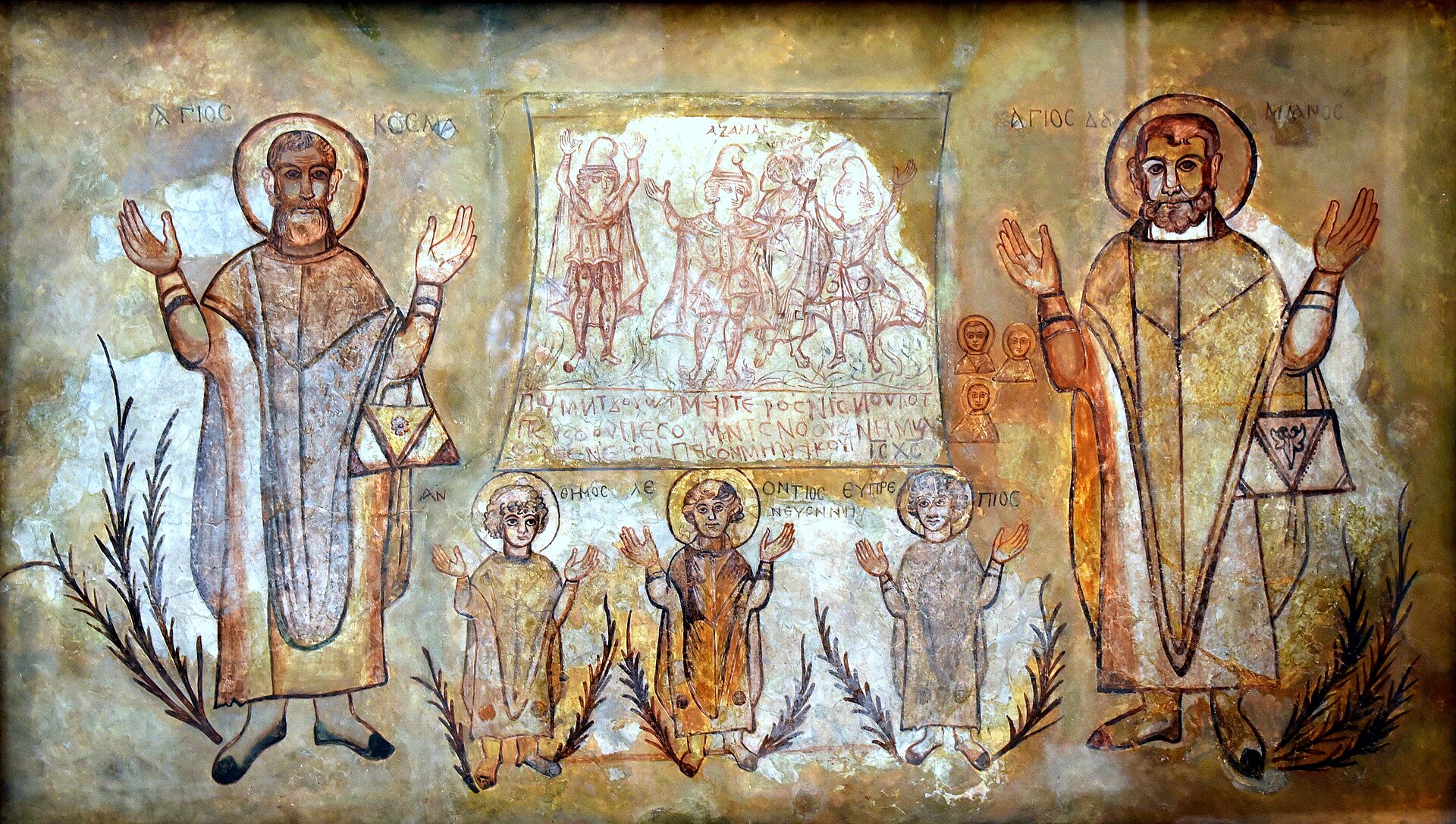
This created a fundamental question once persecution ended:
Could Christians who had compromised under pressure be restored to the Church?
The issue was particularly explosive because Christian communities contained different categories of people who had failed the test of persecution in different ways.
A person who had surrendered a scripture might argue that he had preserved his life and community.
A bishop who had handed over sacred books could be accused of betraying the faith.
Those who had remained imprisoned or accepted death could regard compromise as unacceptable.
The Latin term traditor—literally, someone who “handed over” something—became particularly important in North Africa.
The consequences would outlive the persecution itself.
The Donatist Schism
North Africa experienced one of the most consequential post-persecution disputes.
The Donatist controversy centered partly on whether clergy who had compromised during the persecution could legitimately exercise their ecclesiastical office.
The argument became especially severe after the election of Caecilian as bishop of Carthage.
His opponents maintained that bishops and clergy who had betrayed the Church during the persecution had compromised their authority. The resulting schism developed into Donatism, a movement that established a parallel ecclesiastical hierarchy in North Africa.
This was not simply an argument about individual morality.
It raised a fundamental theological question:
Does the validity of the Church depend upon the moral purity of its ministers?
The Great Persecution therefore produced a consequence the Roman government had not intended.
Instead of destroying Christianity, it generated disputes about what constituted authentic Christianity.
The Donatist schism endured for generations and was still a major religious and political problem in North Africa during the fifth century.
Diocletian Abdicates
On 1 May 305, Diocletian and Maximian abdicated. This was one of the most extraordinary events in Roman imperial history.
Diocletian had ruled for approximately two decades and had transformed the imperial system. He retired to his enormous palace at Spalatum, near modern Split in Croatia, where he famously cultivated his gardens. His retirement did not end the persecution immediately.
The new imperial arrangement elevated Galerius and Constantius Chlorus to the rank of Augusti while appointing Maximinus Daia and Severus as Caesars. The succession system quickly began to unravel.
The Tetrarchy had been designed to provide orderly succession, but Roman political culture remained deeply attached to dynastic legitimacy and military loyalty. The result was another succession crisis.
Constantine Enters the Story
When Constantius Chlorus died in 306, his son Constantine was proclaimed emperor by his troops.
Constantine’s rise transformed the religious question.
The young emperor controlled territories where persecution had been comparatively restrained, and he quickly adopted a policy favorable to Christians.
The political situation became increasingly complicated as rival emperors competed for control of the empire.
In Italy, Maxentius seized power in 306 and eventually controlled Rome.
Constantine’s conflict with Maxentius culminated at the Battle of the Milvian Bridge in 312.
Constantine’s victory transformed his political position and became central to the later Christian interpretation of his reign.
Whatever the precise nature of Constantine’s conversion experience, his subsequent policy was unmistakable: Christianity was no longer to be treated as an enemy of the Roman state.
Galerius Ends the Persecution in 311
The persecution did not simply collapse after Constantine’s victory.
In the East, Galerius remained a major imperial power.
By 311, however, he was gravely ill. In his final months he issued a decree ending the persecution in his territories.
The Edict of Serdica, usually dated to April 311, is preserved principally through Lactantius and Eusebius.
Its language is revealing.
Galerius did not suddenly declare that Christianity had always been legitimate. Instead, he acknowledged that the government’s attempt to compel Christians to return to traditional religious practices had failed.
Christians were permitted to exist again, provided they maintained public order and prayed for the welfare of the emperor and state.
This was therefore toleration rather than full religious equality.
The persecution had failed, but the Roman state had not yet embraced Christianity.
Maximinus Daia Continues the Struggle
Galerius’s death in 311 did not immediately end persecution everywhere.
His successor in the East, Maximinus Daia, continued anti-Christian policies in portions of his territory.
Under Maximinus, pressure on Christians continued in Egypt, Palestine, and Asia Minor.
This is one reason the chronology of the Great Persecution is more complicated than simply saying “303–305.”
The first major persecution edicts originated under Diocletian in 303–304, but persecution continued under later rulers until 311–313 depending on region.
The broader episode is therefore best understood as a decade-long sequence of changing imperial policies, rather than a single uninterrupted campaign.
The So-Called Edict of Milan
In 313, Constantine and Licinius reached an agreement concerning religious policy.
Traditionally this is called the Edict of Milan.
Strictly speaking, historians increasingly emphasize that the famous “Edict of Milan” was not a single imperial edict promulgated from Milan in the conventional sense. Constantine and Licinius met at Milan, agreed upon religious policy, and instructions were subsequently issued to officials. The surviving formulation is preserved principally in Lactantius and Eusebius.
Its significance, however, is not in doubt. The policy granted Christians and others freedom to practice the religion of their choice and ordered the restoration of property confiscated during the persecution. That was substantially more comprehensive than Galerius’s 311 settlement. The state was no longer merely permitting Christians to exist.
It was affirmatively restoring the legal position of the Church.
Maximinus Daia’s Defeat
The final collapse of persecution in the East followed the military defeat of Maximinus Daia by Licinius in 313.
Maximinus fled toward Asia Minor and died later that year.
With his defeat, no emperor remained capable of sustaining the systematic persecution of Christians.
The Great Persecution was effectively over.
The sequence had taken roughly a decade:
303 — persecution begins under Diocletian
304 — universal sacrifice measures intensify
305 — Diocletian abdicates
306 — Constantine becomes emperor
311 — Galerius ends persecution in his territories
312 — Constantine defeats Maxentius
313 — Constantine and Licinius establish comprehensive religious toleration
313 — Maximinus Daia is defeated
This was not merely the end of one persecution.
It marked the collapse of the Roman state’s last serious attempt to reverse Christianity’s institutional expansion.
Did the Persecution Fail?
By the standards of its stated objective, unquestionably.
The imperial government had attempted to dismantle Christian institutions, destroy scriptures, remove clergy, strip Christians of legal privileges, and compel participation in traditional sacrifice.
Christianity survived all of it.
Indeed, the persecution may have strengthened several aspects of Christian identity.
Martyrs became exemplars of religious commitment. Communities developed narratives of endurance. The memory of those who had died rather than sacrifice became central to Christian culture.
But martyrdom alone did not preserve Christianity.
The overwhelming majority of Christians did not become martyrs.
Some fled. Some concealed their faith. Some complied temporarily. Some obtained certificates without sacrificing. Some surrendered scriptures. Some genuinely sacrificed and later sought readmission.
That complexity is essential.
The survival of Christianity cannot be explained by a simple narrative in which heroic martyrs alone defeated the Roman state. The Church survived because millions of ordinary Christians continued practicing their religion under radically different circumstances.
The persecution also failed because Roman government itself was fragmented.
Diocletian’s Tetrarchy permitted different emperors to enforce the same policy with different degrees of enthusiasm. Once political power shifted toward Constantine and Licinius, the legal environment changed rapidly.
The Great Persecution and the Transformation of the Empire
The irony of the Great Persecution is profound.
Diocletian believed that restoring traditional Roman order would strengthen the empire.
Instead, the persecution became one of the last major confrontations between the traditional religious system and Christianity.
Within a generation, the political balance had reversed.
Constantine became Christianity’s most powerful patron. Churches received imperial support. Confiscated property was restored. Christian bishops acquired unprecedented political influence. Imperial involvement in Christian disputes became increasingly direct.
By 324, Constantine had defeated Licinius and become sole ruler of the Roman Empire.
Christianity had moved from persecuted religion to favored imperial faith.
But Constantine’s reign did not immediately make Christianity the exclusive religion of the empire. The transformation was gradual, and traditional cults remained active for decades.
The significance of the Great Persecution therefore lies not in the simplistic idea that Rome instantly became Christian in 313.
Rather, 313 marked the legal and political collapse of systematic imperial persecution and opened the way for Christianity’s transformation from a tolerated minority religion into a central institution of the Roman state.
A Failed Attempt to Restore the Old Rome
The Great Persecution makes sense only when placed within Diocletian’s larger program.
Diocletian had inherited an empire weakened by civil war and political instability. His answer was greater hierarchy, stronger administration, religious traditionalism, and a more visibly sacralized monarchy.
Christianity represented an increasingly difficult contradiction within that system.
Its followers owed ultimate allegiance to one God.
They could not participate fully in traditional sacrifice.
They possessed their own institutions, clergy, scriptures, and communities.
And by the early fourth century they were numerous enough that suppressing them required state-wide intervention.
Diocletian’s government therefore attempted something unprecedented in scale: to use the administrative machinery of the late Roman state to reverse a religious transformation that had already become deeply embedded in Roman society.
It failed.
The reason was not that the Roman state lacked power.
It was that Christianity had already become too socially and geographically established, while the imperial system itself was divided by competing rulers whose priorities differed.
