
One of the most famous traditions concerning an evocatio is associated with the destruction of Carthage in 146 BC. The evidence, however, is much later than the event itself, and scholars continue to debate whether the ritual was actually performed during the Third Punic War. Macrobius preserves a formula said to have been used against Carthage in which the Romans addressed whichever god or goddess protected the city.
Military historians can point to many reasons for Rome’s extraordinary success: disciplined armies, effective logistics, adaptable commanders, political institutions, strategic alliances, and an exceptional ability to absorb and reproduce the strengths of defeated enemies. Yet an ordinary Roman citizen might have offered a very different explanation. For many Romans, Rome’s victories were ultimately evidence that the Republic maintained the favor of the gods.
Roman religion was fundamentally practical. The Romans believed that the prosperity of the state depended upon maintaining a correct relationship with the divine world. This relationship was expressed through cultus, a system of rituals, sacrifices, ceremonies, vows, festivals, and offerings performed according to established rules. Roman public religion placed enormous emphasis on correct ritual action. Sacrifices, vows, ceremonies, and other rites had to be performed according to established conventions, although personal belief and religious emotion also formed part of Roman religious life.
This worldview helps explain one of the most intriguing religious practices associated with Roman warfare: the evocatio.
Calling the Enemy’s God to Rome
The Latin term evocatio can be translated as “calling forth” or “summoning.” It referred to a ritual in which a Roman commander, acting in a religious capacity, called upon the deity believed to protect a besieged enemy city. The commander effectively invited that deity to abandon the city and transfer its protection to Rome.
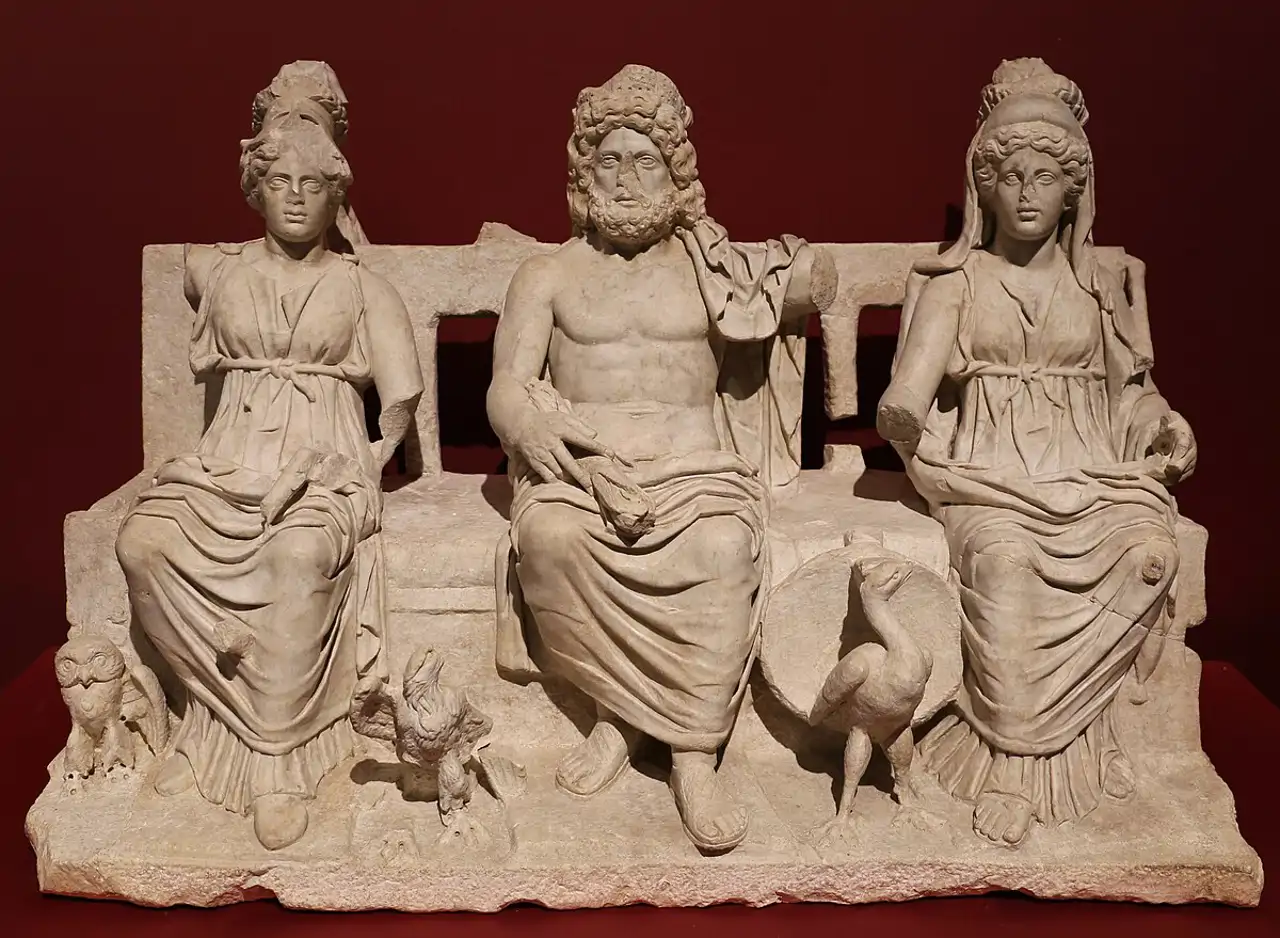
The promise was significant. If the deity accepted the invitation and Rome captured the city, the Romans pledged to provide the god with a new home, generally a temple in Rome that would equal or surpass its former sanctuary. The deity’s cult could then continue in its new location.
To modern observers, this can sound like a strange mixture of theology, diplomacy, and contract law. To the Romans, however, it was entirely logical. If the gods were real, powerful, and capable of influencing human affairs, then a victorious state had every reason to secure their goodwill.
The evocatio also reveals something important about Roman attitudes toward foreign religions. Romans did not necessarily assume that their gods were the only genuine divinities. Foreign gods could be regarded as real and powerful even when their identities and rituals differed dramatically from those practiced at Rome.
Rome’s religious system was therefore remarkably capable of incorporation. Conquering a people did not necessarily mean eliminating its gods. Instead, Rome could absorb foreign deities into its own religious landscape, giving them new temples and integrating their worship into the expanding Republic.
Religion as a Contract
Roman religious practice was highly structured. A general might make a vow to construct a temple if the gods granted victory. The promise was conditional: victory would justify fulfillment of the vow, while defeat could render the obligation irrelevant.
This transactional character is particularly visible in the evocatio. The Roman commander was not simply begging a foreign deity for assistance. He was offering a better arrangement.
The message was effectively: abandon the city that is about to fall, come to Rome, and you will receive an honored place within a victorious community. In return, the Romans would provide a temple, sacrifices, ceremonies, and continued recognition of the deity.
The arrangement also made strategic sense. Roman leaders understood that religion and warfare were not separate spheres. Divine favor could influence morale, political legitimacy, and the confidence of soldiers and civilians alike.
Veii: The Earliest Recorded Example
The earliest surviving account associated with an evocatio comes from the siege of Veii in 396 BC. Veii was one of Rome’s most formidable Etruscan rivals, and its eventual conquest represented a major turning point in Roman expansion.
According to the later historian Livy, the Roman commander Marcus Furius Camillus addressed the goddess Juno Regina, the city’s protecting deity, before the final assault. He invited her to leave Veii and come to Rome, promising her a temple worthy of her status.
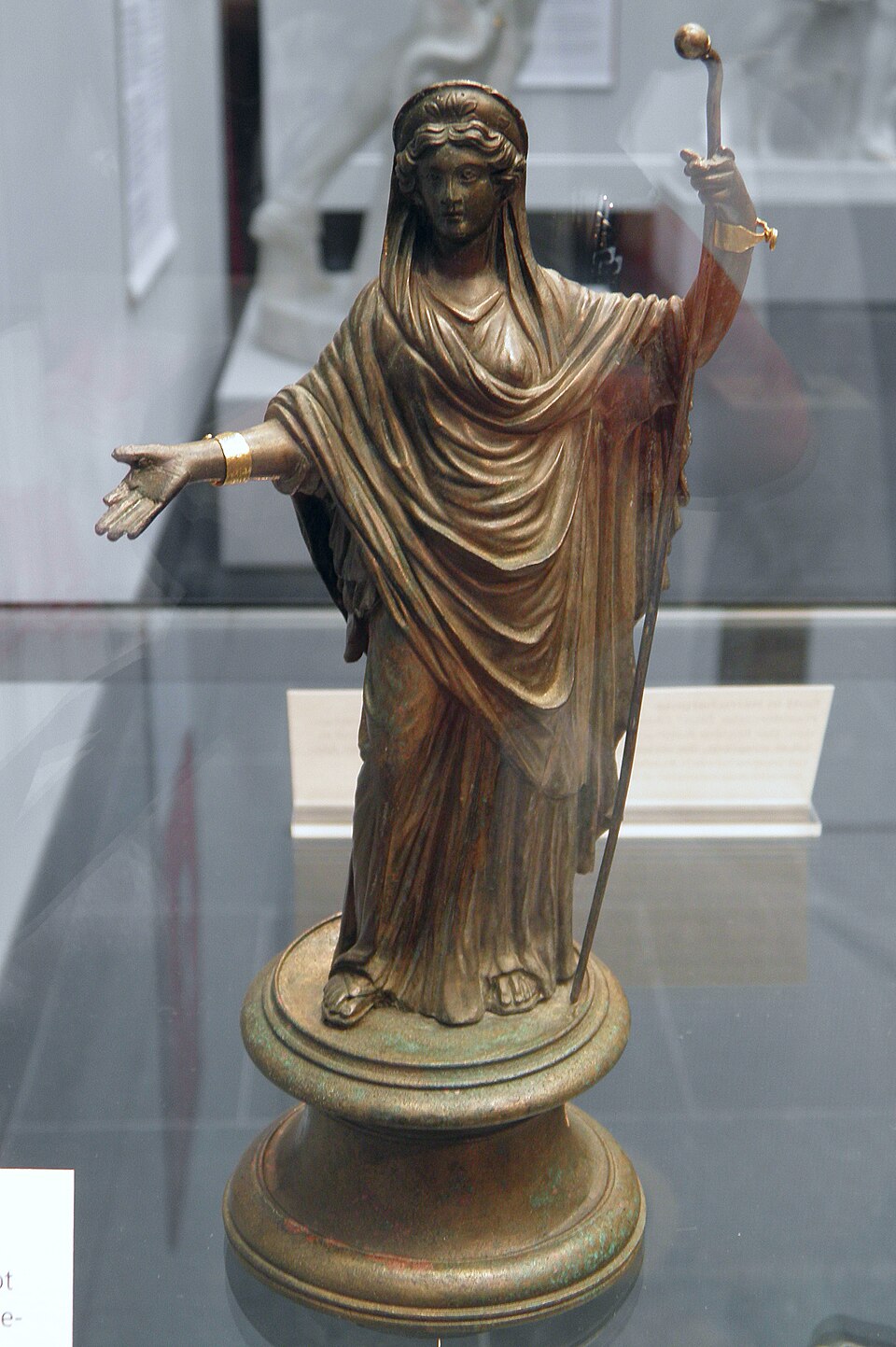
After the city’s capture, the statue of Juno was transported to Rome with great care and reverence. The episode illustrates the principle behind the ritual: Rome did not merely defeat an enemy city; it sought to acquire the allegiance of its divine protector.
For Romans, this could be interpreted as proof that the gods themselves had chosen Rome.
Carthage and the Third Punic War
The most famous example occurred during the siege of Carthage.
When Rome surrounded the city during the Third Punic War, the Romans performed an evocatio directed toward the divine protector or protectors of Carthage. Significantly, the surviving formula does not simply name a specific deity. Instead, the Roman commander appeals to whichever god or goddess was responsible for protecting Carthage and its people.
This ambiguity was deliberate.
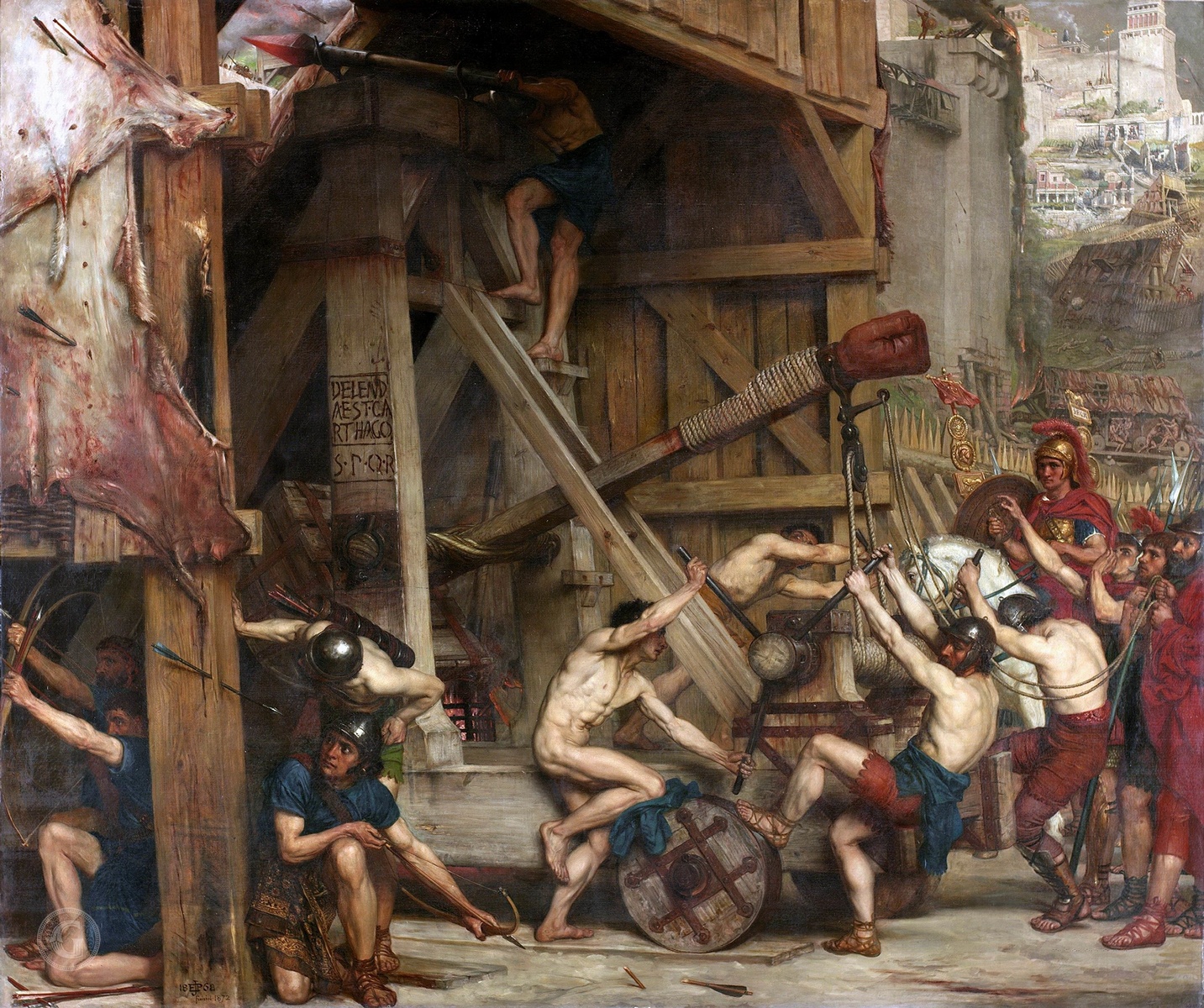
Roman religious practice placed enormous importance on precision. If the Romans incorrectly identified the deity protecting the city, they risked failing to address the actual divine power. By leaving the deity unnamed, the ritual could encompass whichever supernatural protector truly held responsibility for Carthage.
The commander asked the deity to abandon Carthage, its temples, sacred places, and people, and to transfer its favor to Rome. In exchange, the Romans promised temples and religious celebrations.
The Carthaginian deity involved is often associated with Tanit, a major goddess of Carthaginian religion who was later interpreted through Roman religious categories in connection with Juno. The precise identity remains uncertain, however, which is precisely why the wording of the ritual is so revealing.
The Romans did not need to fully understand a foreign god in order to acknowledge its power.
Psychological Warfare
The evocatio may also have had psychological implications, although there is little evidence showing how enemy populations reacted to the ritual—or even whether they knew it had been performed.
Ancient Mediterranean societies commonly associated cities with divine protectors. A city’s safety was not simply a matter of walls, soldiers, and supplies. Its survival could be understood as evidence that its gods continued to favor it.
Imagine being a Carthaginian citizen during the siege. Roman armies had surrounded your city. Food and resources were becoming scarce. The enemy was relentlessly attacking the defenses. Then you learned that the Romans were publicly calling upon the deity protecting your city to abandon you.
Even if the ritual were dismissed as Roman superstition, it could still introduce uncertainty.
What if the gods were actually turning against Carthage?
That possibility could undermine morale at precisely the moment when defenders needed absolute confidence. The Romans therefore attacked their enemy on two levels: physically with armies and psychologically through the enemy’s religious worldview.
Whether Carthaginians actually believed the Roman ritual had succeeded cannot be established. The surviving evidence is too limited. Nevertheless, the potential psychological effect would have been significant in a culture where divine favor was considered a genuine force in human affairs.
What We Can—and Cannot—Know
The historical evidence for the evocatio is frustratingly incomplete. Surviving accounts identify only a handful of examples, and most descriptions were written long after the Republican period in which the ritual supposedly occurred.
The sources are therefore insufficient to establish exactly how frequently the ritual was performed, precisely what procedures were followed in every case, or how consistently Roman commanders adhered to a single formula.
The known examples should not necessarily be treated as a complete list. Many religious ceremonies in the Roman world were never recorded, and ordinary rituals rarely attracted the attention of ancient historians unless they became connected with an important military or political event.
What survives is nevertheless enough to demonstrate the underlying principle: Roman warfare could include deliberate attempts to manipulate the religious loyalties of conquered or besieged communities.
A Window Into the Roman Mind
The evocatio is fascinating because it challenges modern assumptions about ancient warfare. Rome’s victories were not understood exclusively in terms of manpower, weapons, organization, or strategy. Military success existed within a much larger religious framework.
To the Roman mind, defeating Carthage was not merely a demonstration of military superiority. It could also be interpreted as confirmation that the gods had favored Rome.
That belief strengthened the Republic’s confidence and helped reinforce the legitimacy of its expansion. Religious ritual, political authority, military power, and psychological warfare could operate simultaneously.
The evocatio therefore tells us much more than how Romans attempted to win sieges. It reveals a society in which divine forces were woven into nearly every aspect of public life. Foreign gods were acknowledged rather than automatically dismissed. Religious practice was treated with the precision of law. Military commanders could function as religious intermediaries. And even an enemy’s supernatural protector could potentially become an ally.
The destruction of Carthage in 146 BC marked the end of Rome’s greatest western rival, but the story of the evocatio offers another way to understand Roman expansion. Rome did not simply conquer territories and populations. It also sought to incorporate the religious worlds of the people it defeated.
For a civilization convinced that its prosperity depended upon maintaining pax deorum—the proper relationship between Rome and the gods—leaving even one divine power unaccounted for was an unacceptable risk.
The evocatio was therefore perfectly Roman: part ritual, part political calculation, part psychological weapon, and entirely consistent with a worldview in which the fate of nations could depend upon keeping the gods on their side.
