
What Students Can Learn About Leadership from the Roman Empire
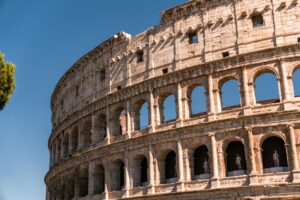
Most students encounter Rome the same way: a chapter in a textbook, a documentary on late-night cable, or a passing reference in a professor’s lecture about Western civilization. It registers and moves on. But there is something worth pausing on here, because the Roman Empire was not just a historical event. It was one of the longest-running experiments in organized human leadership ever attempted, and it left behind a record detailed enough to actually study with intention.
That is a different framing than most students use. And it changes what you take from it.
Why Rome Still Has Something to Say
Leadership lessons from ancient Rome tend to get packaged into motivational content — Marcus Aurelius quotes on Instagram, Ryan Holiday bestsellers, Stoic philosophy rebranded for productivity culture. That version of Rome is fine, but it skips the complexity. The real lessons are messier and more interesting.
Consider Augustus. He inherited a republic that had just collapsed into civil war, consolidated power without publicly dismantling democratic institutions, and ruled for over 40 years. Political scientists at institutions including Princeton and Oxford have spent careers analyzing how he managed legitimacy, projecting continuity while fundamentally changing the structure beneath it. Students in political science or business programs who want to understand how organizations shift without fracturing should study him more carefully than most curricula suggest.
Caesar is the more famous name, but Caesar failed at the political management Augustus mastered. That contrast alone is a semester’s worth of case study material.
Students writing research papers on Roman leadership or political history who need professional academic support can pay for research paper at KingEssays and receive well-sourced, university-standard work that holds up under scrutiny.
What the Romans Actually Practiced
When researchers look at Roman Empire leadership qualities across the republic and imperial periods, a few consistent patterns emerge that hold up against modern leadership frameworks.
| Roman Practice | Modern Equivalent |
| Cursus honorum (structured career progression) | Leadership development pipelines in corporations |
| Senate deliberation | Board governance and stakeholder consultation |
| Triumph ceremonies | Public accountability and recognition rituals |
| Provincial governorship | Rotational assignments for executive development |
The cursus honorum is particularly worth understanding. It was a sequenced set of public offices a Roman citizen had to hold before reaching senior positions: quaestor, aedile, praetor, consul. Each stage required demonstrated competence at the previous level. There was no shortcutting it, at least not officially.
Students who think seriously about what students can learn from history on a practical level will recognize this structure immediately. Many modern organizations now build similar pipelines, but fewer make them explicit or hold people accountable to them. Rome made it public, institutional, and non-negotiable.
For students managing coursework alongside leadership responsibilities, EssayPay provides academic writing support that helps maintain quality on both fronts without sacrificing one for the other.
The Failure Cases Matter As Much As the Successes
Most leadership content focuses on the winners. The more instructive material is in the failures.
Nero is an obvious case, but the late-republic senators who blocked every reform until the system imploded are more relevant for students in democratic institutions. Cicero understood what was happening. He wrote about it with painful clarity. He still could not build the coalition necessary to stop it. That is not a personal failure. It is a systems problem, and it still shows up in every large institution students will ever work in.
Ancient Roman leaders and their strategies get lionized or demonized in equal measure, but neither framing is particularly useful. The more honest question is: what structural conditions enabled or constrained their decisions? That question applies whether someone is analyzing Julius Caesar or trying to lead a student government committee through a budget dispute.
Student Leadership Skills Examples from the Roman Model
Translating Roman practice into student leadership skills examples requires some specificity. Here is what actually transfers.
Delegation without abdication. Roman commanders gave significant battlefield authority to tribunes and legates. They were not micromanagers. But they remained accountable for outcomes. Students leading group projects often do one or the other: delegate and disappear, or control everything. Rome modeled a functional middle path that most modern leadership training still struggles to articulate clearly.
Public communication as a discipline. Roman leaders trained in rhetoric from childhood. Cicero, Caesar, Augustus: all of them understood that persuasion was not a soft skill, it was the primary mechanism through which power operated. Students who treat public speaking as optional are underestimating the thing Rome built an entire civilization on.
Building through networks, not just merit. The Roman system ran on patronage. Patrons supported clients, clients built loyalty, loyalty produced political capital. It was transactional, but it was also functional. Students who wait to be recognized on merit alone often miss how institutions actually work. Building relationships is not manipulation. It is how things get done in every sector.
Long-term thinking under short mandates. Roman consuls served one-year terms. They had to accomplish meaningful things in constrained windows while keeping an eye on a reputation that would outlast the term itself. Students in elected roles face exactly the same pressure, and Rome offers a better case study on managing it than most student leadership guides.
What the Empire’s Decline Actually Teaches
The fall of Rome is overused as a metaphor and underused as a genuine case study. Edward Gibbon spent six volumes on it. More recently, historians including Peter Heather and Bryan Ward-Perkins reframed the collapse as a systems failure rather than a moral one. The empire did not fall because people stopped being virtuous. It fell because the administrative and fiscal systems could no longer sustain the structural demands placed on them.
For student leaders, that framing is directly applicable. Organizations do not usually fail because of bad intentions. They fail because the systems holding them together stop working and nobody catches it early enough. Spotting that before it becomes a crisis is one of the hardest and most important things any leader can develop, at any level.
Students who engage seriously with what students can learn from history as a practical discipline, rather than an academic exercise, will find Rome full of material that business schools and leadership courses have not fully mined. The Roman Senate did not write the Harvard Business Review. But it ran a civilization for centuries across three continents, navigating succession crises, military overextension, economic pressure, and political collapse in real time. That record deserves considerably more than a footnote in a humanities survey course.
