
Rome in 4 Days
Day 1: Capitoline Museums, Trevi Fountain, and First Impressions
Planning a Trip to Rome – Decisions Before Departure to “Rome in 4 Days”
For the first time, we decided to travel somewhere without our kids. After eight years, we finally gathered the courage to take that step. Several destinations were under consideration, but very quickly, only one remained — Rome.
Then I realized something: I had no clear idea how to fit everything I wanted to see into just four days. Planning a trip to Rome can easily turn into an endless list of must-see attractions. The Colosseum, the Vatican, the Pantheon, the Roman Forum, museums, squares… everything feels essential. How to explore Rome in 4 days? And yes, I’m a historian by profession.
Luckily, my wife, as the voice of reason, made it clear she had no intention of walking 35 kilometers a day. The smartest solution between wanting to see all and not dying of exhaustion? Limit ourselves to a maximum of two major attractions per day.
So we built our plan accordingly: Rome in 4 days and 3 nights, with no more than 15 kilometers of walking per day.
This way, the city doesn’t become a race; it becomes an experience. There’s time for walking, coffee, getting lost in the streets, and most importantly, for feeling how Rome actually lives today, not just in antiquity.
Why We Skipped the Vatican?
We also made what might seem like an unusual decision: we skipped the Vatican this time.
The reason is simple. We like to explore at our own pace, to stay longer in some places and less in others. The massive crowds and strict schedules dictated by Vatican visits simply didn’t fit our travel style. We wanted to experience Rome slowly, without rushing. That’s also the reason why we didn’t hire any tour guides.
Travel Preparation – Small Things That Make a Big Difference When You Experience Rome in 4 Days
One of the best decisions we made was to buy tickets in advance. If there’s one thing I try to avoid in life, it’s waiting. And in Rome, with around 200,000 tourists per day, everyone wants to see the same things as us. So I bought all tickets ahead of time — some even a month in advance (more on that when I cover Day 3).
Flights
We booked:
- Morning flight from Belgrade with Air Serbia
- Evening return from Rome with Wizz Air
This combination gave us maximum time in Rome.
Total cost: about €200 per person, including additional carry-on luggage. I know these aren’t very helpful informations for someone who is not from Serbia, but I am trying to calculate the whole cost of the trip.
Accommodation – Where to Stay in Rome
Next came accommodation — and I’m genuinely proud of this choice.
First, keep in mind:
City tax in Rome is about €7 per person per night
The options are endless, from questionable hostels with shared bathrooms to luxury stays straight out of movies. I like comfort, but I also like not overpaying. The key factor? Proximity to public transport.
Instead of staying in the historic center, we chose an apartment:
Caffarella Vacanze is located in a neighborhood where locals actually live.
Why This Location Worked Perfectly?
The Caffarella area is home to the upper middle class. The apartment was located across from a kindergarten, with a grocery store in the same building.
Right next to it is a massive 200-hectare park, at the end of which lies the ancient Via Appia. The park itself is full of historical sites.
- Extremely safe neighborhood
- Bus stop: 3 minutes away
- Metro: 7–8 minutes away
- Small shopping center: 15-minute walk
- Cafés and restaurants: everywhere
Staying in a local neighborhood gives you a completely different perspective. In the morning, you see Romans going to work, kids heading to school, and cafés filled with locals quickly drinking espresso, not tourists. I know, we are the tourists.
And yes — prices are much lower than in the city center.
We also booked an airport transfer via Booking:
€7 per person → drops you at the central station.
Roma Termini – The First Challenge
I slept through the flight. Arrival at the airport is straightforward; just follow the crowd. The real adventure begins at Roma Termini. This is a massive hub where:
- Intercity trains
- Metro lines
- Buses
- Tourists from all over the world
…all collide.
If it’s your first time in Rome, expect to feel overwhelmed for the first 10 minutes.
One interesting detail: many people will try to help you. However, those who are too friendly are often the ones to avoid.
Best rule:
Ask only official staff or at the information desks.
We had already checked which metro station we needed, and after some confusion finding the right corridor, we reached the metro gates.
How to Use Public Transport in Rome?
Public transport in Rome is actually very simple once you get used to it.
You can buy tickets at:
- Metro machines
- Tabacchi shops (marked with “T”)
- Newsstands
- ATAC app
The most common ticket:
BIT ticket (€1.50) — valid for 100 minutes across metro, buses, and trams.
Even easier:
Just tap your contactless card at the metro gates or on buses.
If you plan multiple rides per day, daily tickets exist — but for us, single tickets were enough.
Capitoline Museums – The Perfect Start
After surviving Termini, we arrived at our accommodation, and everything was excellent.
The room was spacious and bright. Our host, Simona, even left small gifts to make us feel at home and allowed early check-in so we wouldn’t lose time.
Since we saved time, we headed straight back into the city.
Day 1 plan: one major attraction — the Capitoline Museums.
We bought tickets in advance and skipped the line. Entry times are fixed, so pay attention when booking.
Always buy tickets from the official website!
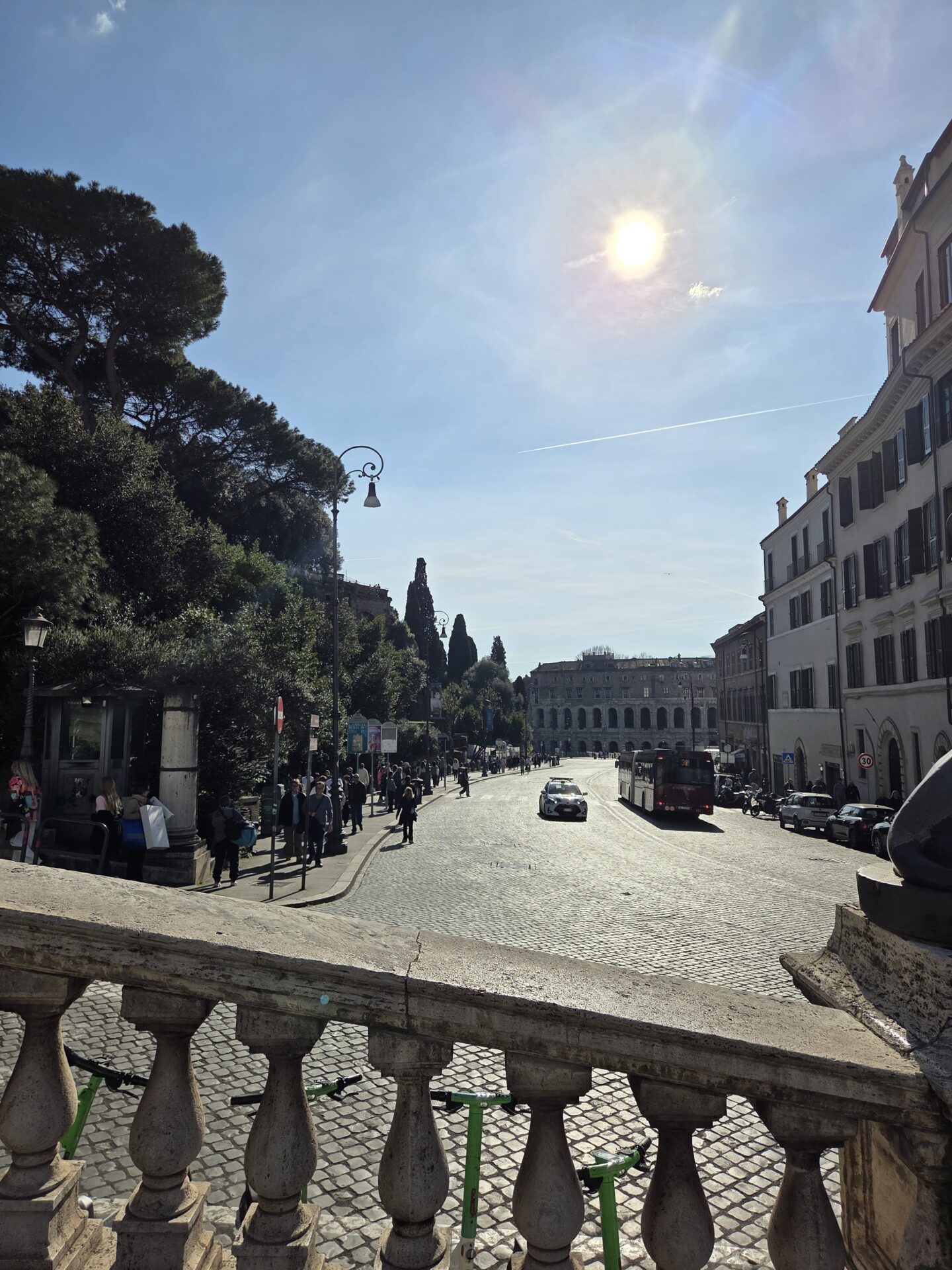
Located on Capitoline Hill, this museum stands on what was once the political heart of ancient Rome.
Even just walking up the stairs and reaching the square is an experience — and then you realize the entire square is part of the museum.
Highlights
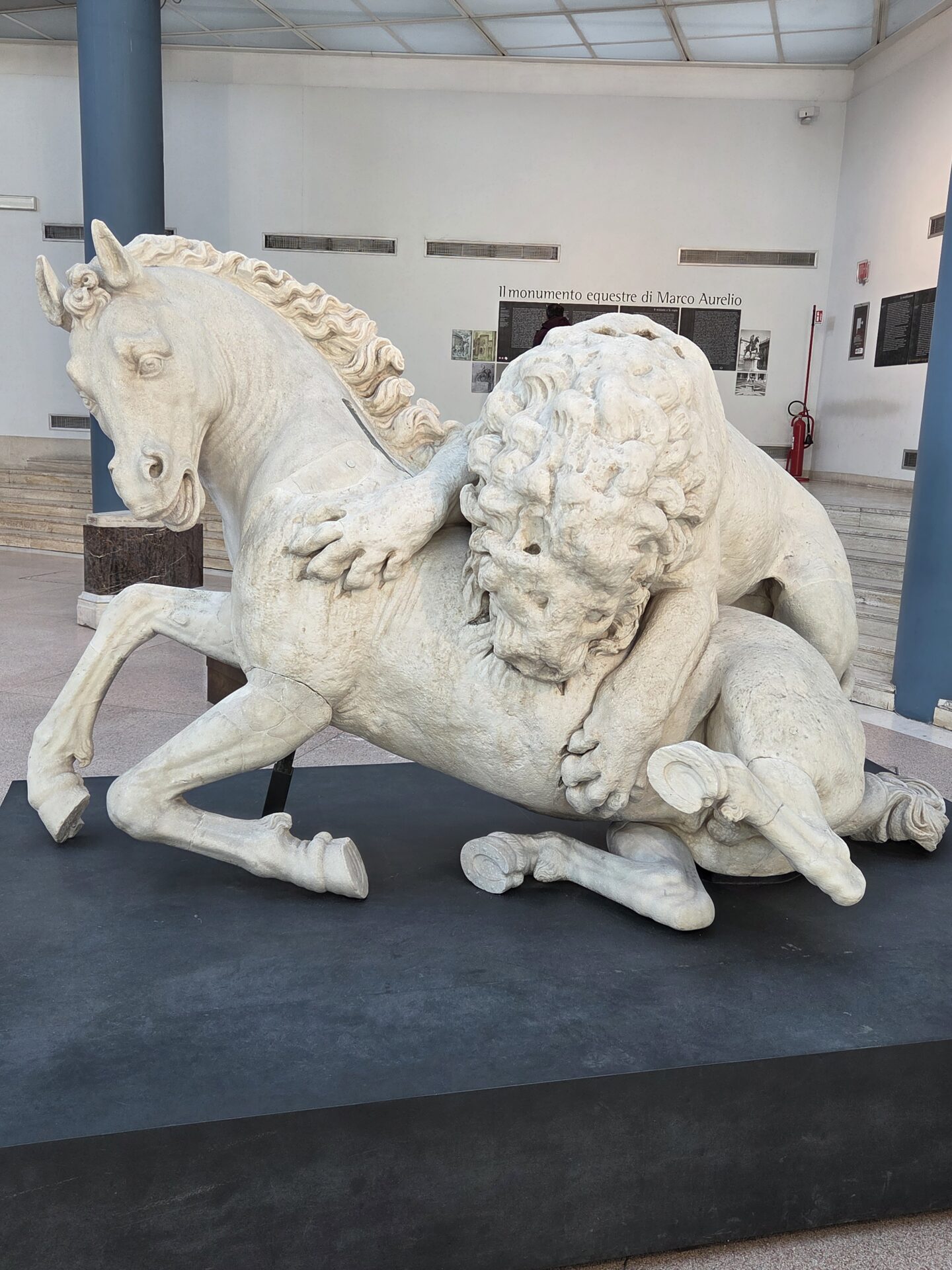
- Statue of Emperor Marcus Aurelius
- The Capitoline Wolf
- Fragments of Constantine’s colossal statue
The Terrace View
One detail many tourists don’t expect is the terrace overlooking the Roman Forum, one of the most beautiful views of ancient Rome.
There’s also a café:
- €6 if you sit at a table
- Much cheaper at the bar
We chose to sit and enjoy it.
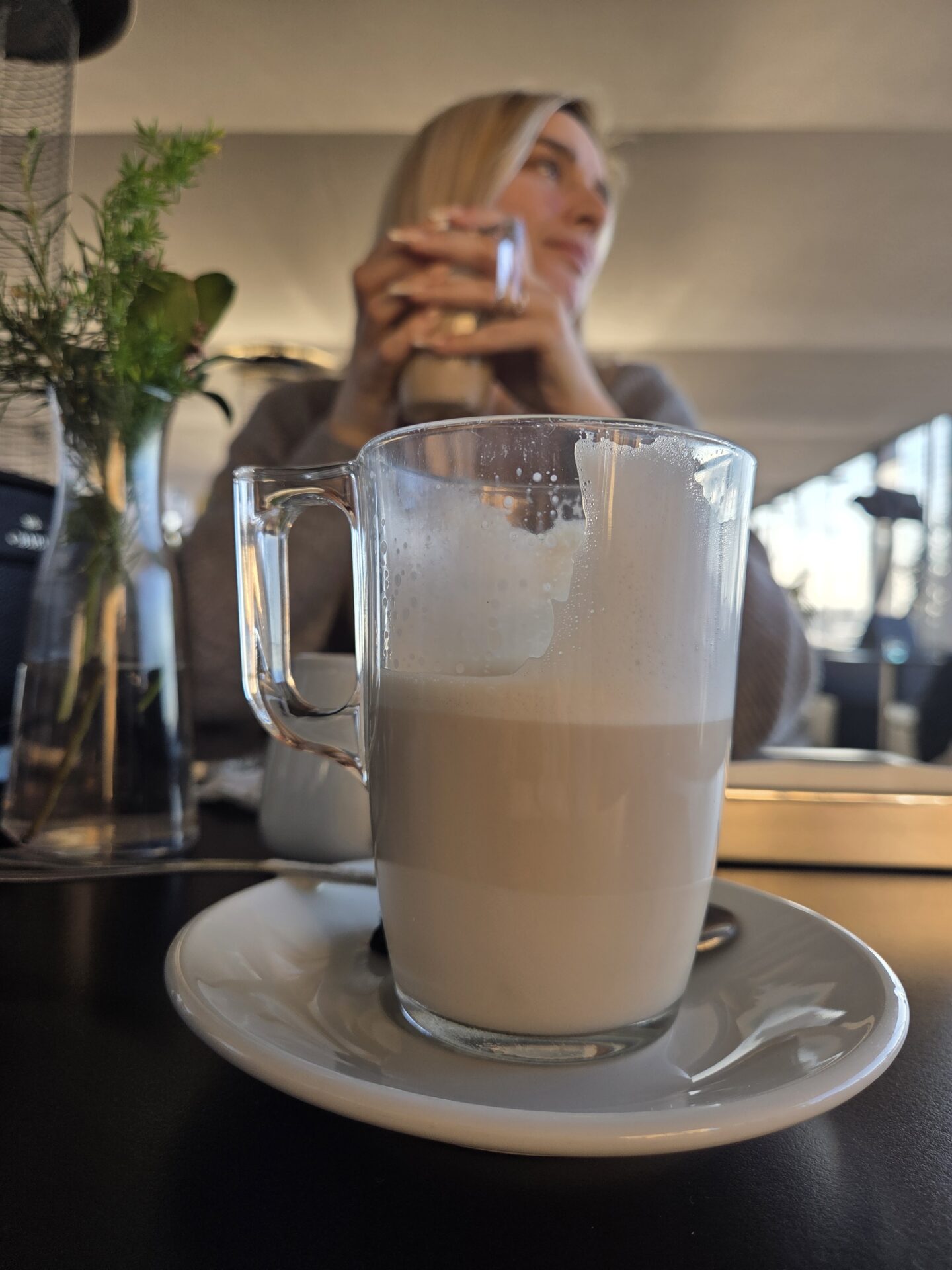
Ironically, we didn’t take a single photo of the view…
But I photographed my coffee six times.
During our visit, there was also an exhibition called “Cartier and Myths”, featuring handcrafted jewelry.
We didn’t manage to see the entire museum — our legs gave up —, but we spent about 3.5 hours there and saw the highlights.
Trevi Fountain – Beauty and Chaos
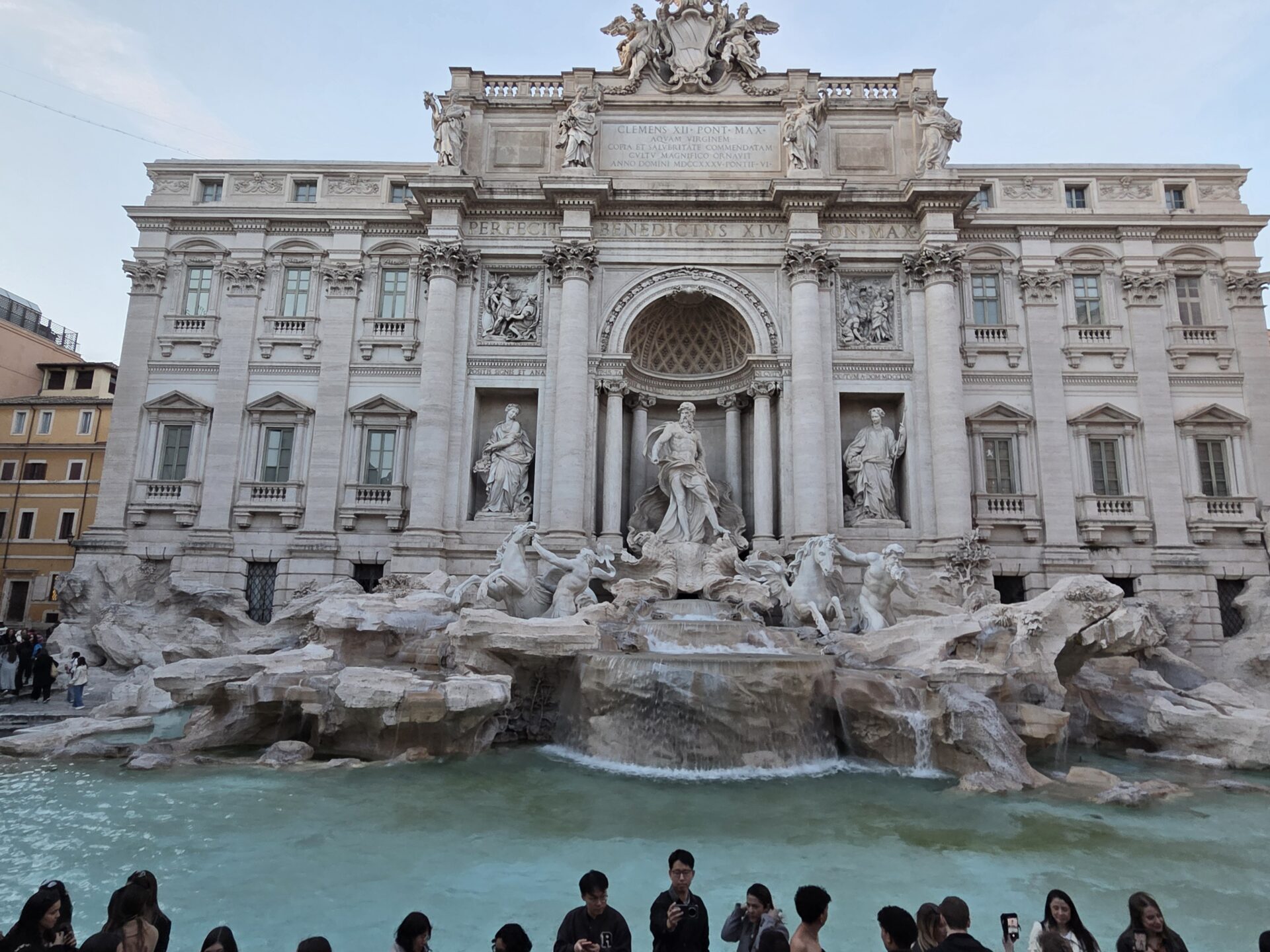
After the museum, we walked through the streets toward one of the most famous landmarks in Europe — the Trevi Fountain.
It looks impressive even when packed — which is almost always the case.
New Rule (Since February 2026)
- €2 fee to access the immediate fountain area
- Free viewing from the square
The line is manageable, but the crowd is still intense.
Of course, we followed the tradition of throwing a coin.
That led to an unexpected problem: we had no coins. So we ended up buying magnets just to get change.
Some practical notes:
- No card payments
- Staff are pushing visitors to move quickly
- Still very crowded
The fountain itself is beautiful — but the overall experience around it… not so much. Once again, don’t throw your card into the fountain.
Spanish Steps – Worth It?
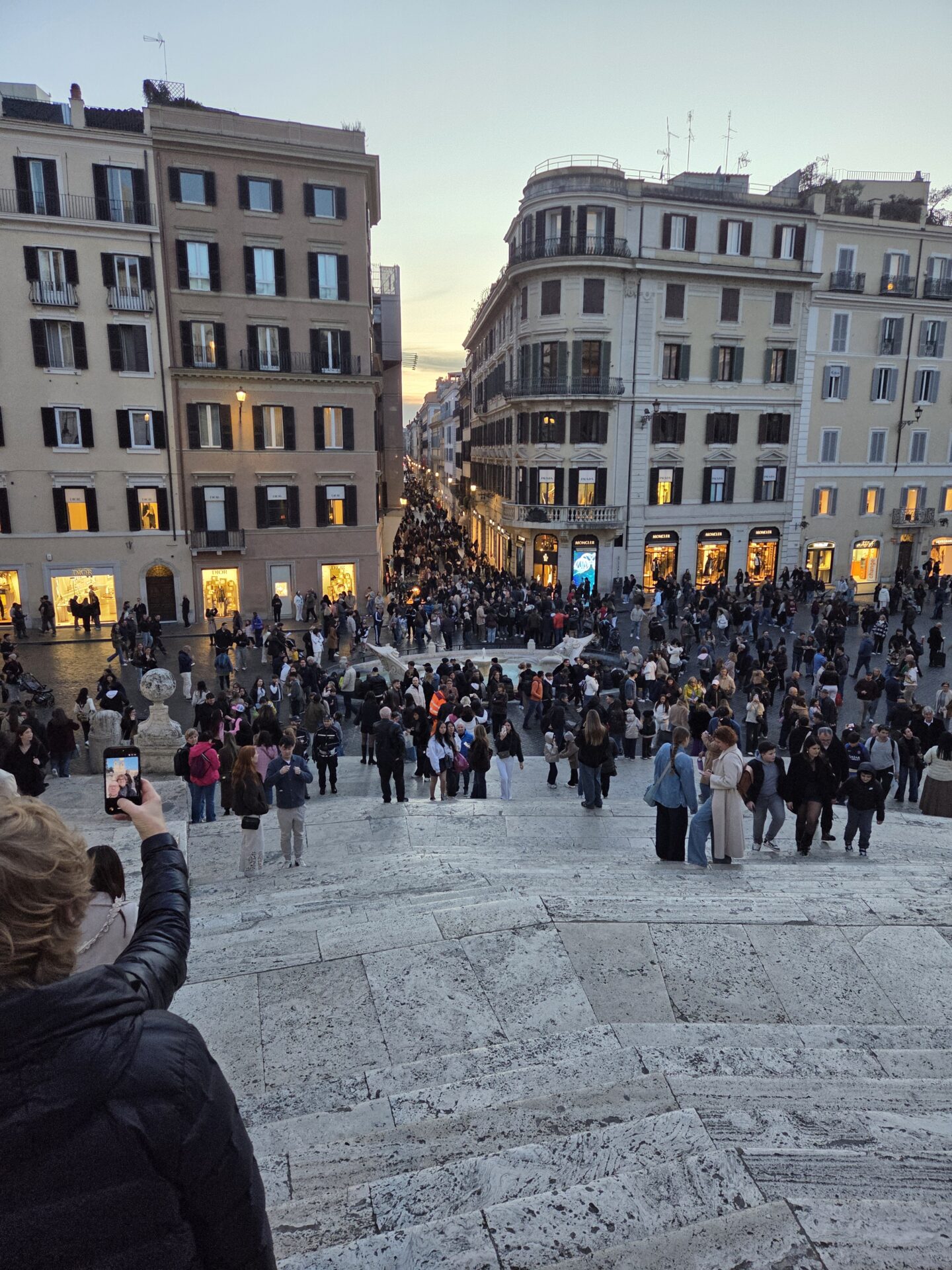
We finished the day at the Spanish Steps, connecting Piazza di Spagna with Trinità dei Monti.
The internet says:
- Unique atmosphere
- Street performers
- Lively vibe
My honest opinion?
Just stairs.
Nice view from the top, but nothing special.
To make things worse:
- The metro station was closed
- More walking required
My wife was “thrilled“ that I dragged her there.
She was right. Luckily, this took only half an hour or so, from our “4 Days in Rome” adventure.
Day 1 in Rome – Final Impression
The first day in Rome was a mix of:
- Learning how the city works
- First walks through its streets
- First contact with ancient history
We’re not nightlife people, and exhaustion hit us before 10 PM — probably a mix of early flight and long walking.
Dinner?
Simple supermarket sandwiches — surprisingly excellent, especially the salmon ones.
And here’s something unexpected:
Groceries are cheaper than in Serbia.
As for Rome…
Usually, we end the first day of our trips by asking:
“Where are we going next?”
This time, we asked:
“When are we coming back to Rome?”
And this was just Day 1 of our “Rome in 4 days” adventure.

Hello, my name is Vladimir, and I am a part of the Roman-empire writing team.
I am a historian, and history is an integral part of my life.
To be honest, while I was in school, I didn’t like history so how did I end up studying it? Well, for that, I have to thank history-based strategy PC games. Thank you so much, Europa Universalis IV, and thank you, Medieval Total War.
Since games made me fall in love with history, I completed bachelor studies at Filozofski Fakultet Niš, a part of the University of Niš. My bachelor’s thesis was about Julis Caesar. Soon, I completed my master’s studies at the same university.
For years now, I have been working as a teacher in a local elementary school, but my passion for writing isn’t fulfilled, so I decided to pursue that ambition online. There were a few gigs, but most of them were not history-related.
Then I stumbled upon roman-empire.com, and now I am a part of something bigger. No, I am not a part of the ancient Roman Empire but of a creative writing team where I have the freedom to write about whatever I want. Yes, even about Star Wars. Stay tuned for that.
Anyway, I am better at writing about Rome than writing about me. But if you would like to contact me for any reason, you can do it at contact@roman-empire.net. Except for negative reviews, of course. 😀
Kind regards,
Vladimir