
The Pax Romana, or “Roman Peace,” was one of the most consequential periods in ancient history. Beginning with the establishment of Augustus’ principate in 27 BCE and conventionally lasting until the death of Marcus Aurelius in 180 CE, it marked an era of relative political stability, economic expansion, infrastructure development, and cultural achievement across much of the Roman Empire.
The term does not mean that Rome abandoned warfare. Imperial armies continued to conquer territory, suppress rebellions, defend frontiers, and fight foreign powers. Instead, the Pax Romana describes a period in which Rome generally avoided the prolonged, empire-wide civil wars that had destabilized the late Republic. Imperial authority became more firmly established, trade networks expanded, and provincial communities became increasingly integrated into a vast Mediterranean political and economic system.
Its origins lay in the violent collapse of the Roman Republic, while its eventual erosion exposed the difficulties of governing an enormous empire dependent on military loyalty, political succession, and the resources of its provinces.
The Collapse of the Roman Republic
For centuries, Rome operated as a republic whose political institutions included annually elected magistrates, a Senate, and popular assemblies. According to Roman tradition, the monarchy ended in 509 BCE, when Lucius Junius Brutus helped overthrow the last king, Tarquinius Superbus. The republic that followed was never a modern democracy, but its institutions distributed political authority among competing magistrates and elite families.
As Rome expanded across the Mediterranean, however, military success placed increasing pressure on this political system. Conquest brought wealth, enslaved labor, provincial revenues, and new territories to administer, but it also intensified competition among ambitious aristocrats. Generals acquired personal followings among their soldiers, while disputes over land, citizenship, debt, and political power repeatedly produced unrest.
The first century BCE became particularly destructive. In 60 BCE, Julius Caesar, Pompey the Great, and Marcus Licinius Crassus formed an informal political alliance conventionally known as the First Triumvirate. Their cooperation helped each man advance his interests, but it depended on personal relationships rather than durable constitutional arrangements.
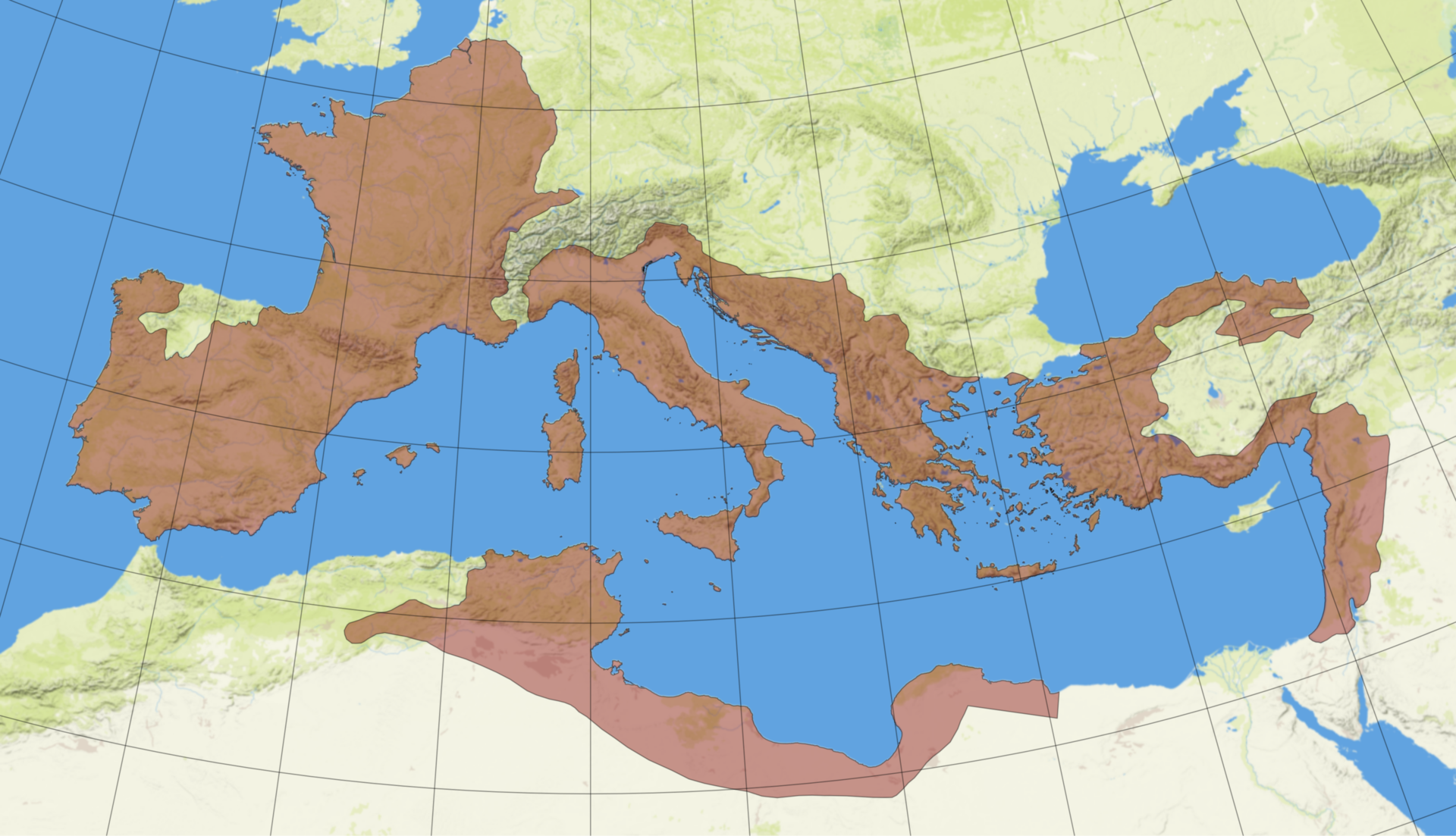
Crassus died during the Roman campaign against Parthia in 53 BCE, weakening the alliance. Caesar and Pompey subsequently became rivals, and their confrontation escalated into civil war after Caesar crossed the Rubicon River with his army in 49 BCE. Caesar defeated Pompey’s forces and emerged as Rome’s dominant political figure.
His victory did not restore republican government. Caesar accumulated extraordinary powers, including a dictatorship for life, provoking fears that he intended to establish a monarchy. On March 15, 44 BCE—the Ides of March—a group of senators assassinated him, believing that his death might restore the republic.
Instead, the assassination triggered another struggle for power. The institutions of the republic remained in place, but the political consensus required to make them function had largely disintegrated.
Augustus and the Establishment of Imperial Rule
With his rivals eliminated, Octavian became the undisputed ruler of the Roman world. Yet he understood that openly declaring himself king would risk reviving the political hostility that had contributed to Caesar’s assassination.
In 27 BCE, Octavian received the honorific title Augustus from the Senate. The settlement that followed preserved the outward forms of the republic while concentrating decisive authority in his hands. Augustus retained control over important military provinces and the legions stationed within them, while exercising extensive influence over appointments, legislation, and public administration.
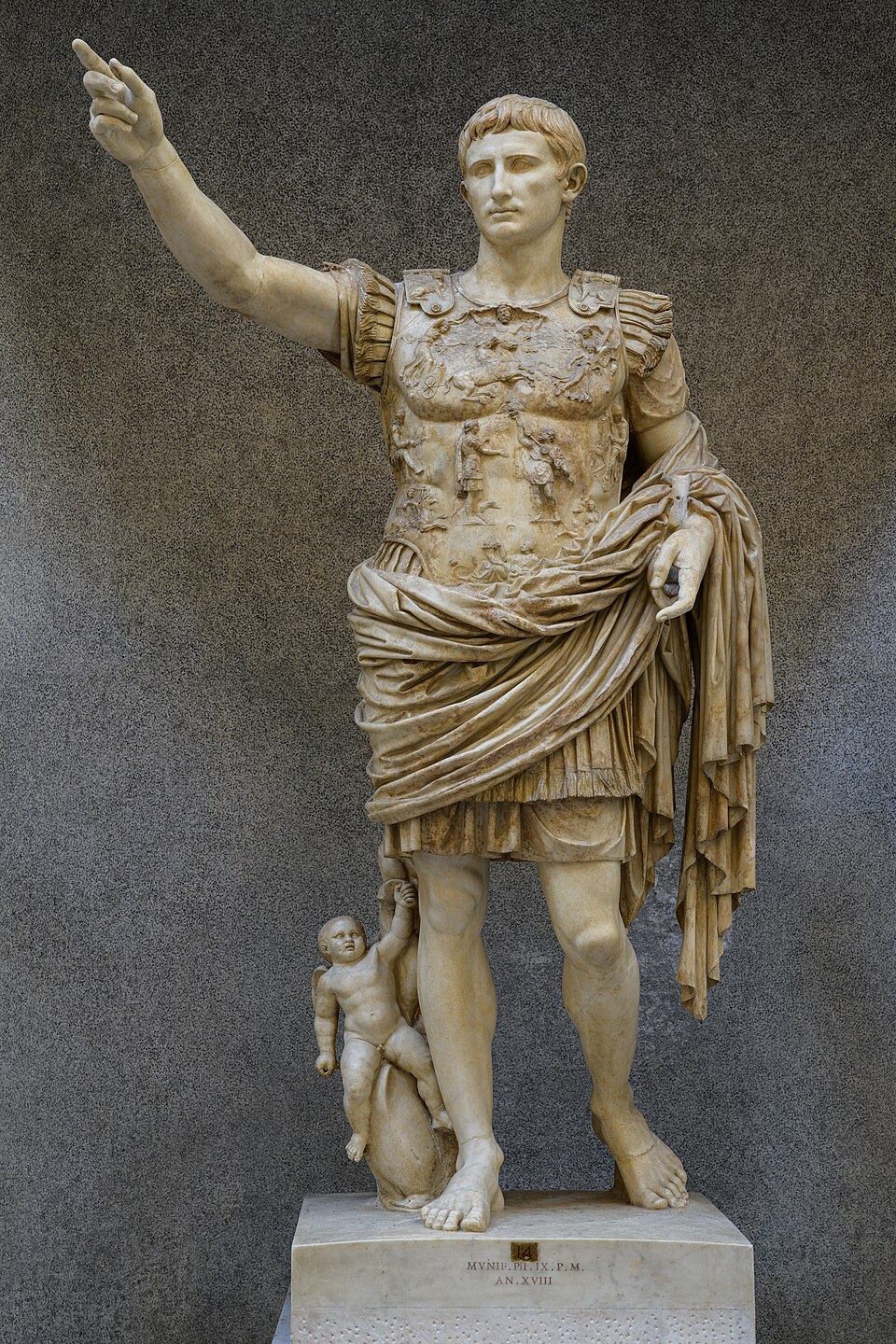
He did not formally abolish the Senate or proclaim himself king. Instead, he presented his position as a restoration of republican government, even as the balance of power had fundamentally changed. His authority rested on a combination of constitutional arrangements, prestige, control of the armed forces, and the political advantages created by victory in civil war.
This system, commonly called the principate, established the foundations of the Roman Empire. Augustus’ achievement was not simply to win the struggle for supremacy but to create a political structure capable of surviving beyond his personal rule.
Building the Foundations of the Pax Romana
Augustus inherited a state exhausted by decades of internal conflict. His government needed to restore public order, stabilize military service, secure provincial revenues, and convince Rome’s political elite that the new regime offered a more reliable alternative to civil war.
Military reform was central to this effort. Augustus established a more permanent professional army, regularized veterans’ retirement arrangements, and reorganized the legions. Traditionally, his settlement left the empire with approximately 28 legions, although their number changed over time. Veterans received discharge benefits and, in many cases, land or cash payments, reducing the likelihood that demobilized soldiers would become a source of political instability.
Augustus also established the Praetorian Guard, an elite force responsible for protecting the emperor and his immediate circle. Although designed to safeguard imperial authority, the Guard would eventually become an influential political institution in its own right.
Administrative reform strengthened Rome’s ability to govern distant territories. Provincial responsibilities were organized between imperial and senatorial jurisdictions, while taxation, censuses, and local administration helped the government maintain revenue and monitor populations. Augustus also invested in roads, public buildings, religious institutions, and urban improvements, presenting his regime as a restoration of Roman order and tradition.
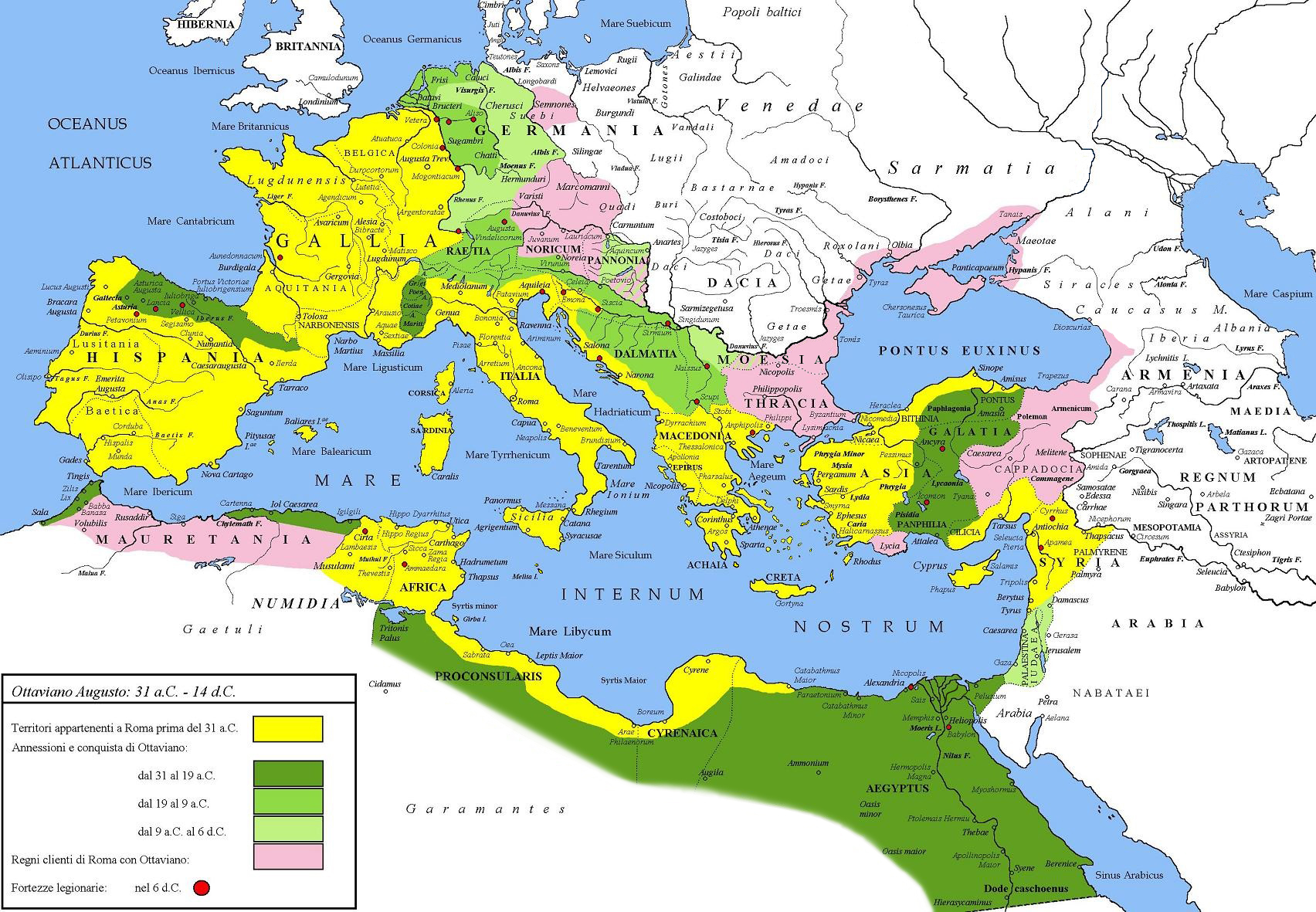
Peace was therefore both a political objective and a source of legitimacy. After years of civil war, many Romans had compelling reasons to accept a more concentrated form of government if it offered security and predictable administration.
That security, however, depended on military strength. Augustus continued campaigns in Spain, the Balkans, and other frontier regions. Roman expansion under his rule extended imperial control, but the catastrophic defeat of three legions under Publius Quinctilius Varus in the Teutoburg Forest in 9 CE demonstrated that conquest had limits. Rome did not permanently incorporate the territory east of the Rhine in the way it had incorporated many western provinces.
The Pax Romana was thus never a condition of universal peace. It was a system of imperial order sustained by armed force, provincial administration, economic integration, and the suppression or containment of challenges to Roman authority.
The Economic and Cultural Achievements of the Roman Peace
The Pax Romana provided conditions in which commerce, construction, literature, and the arts could develop across a large and interconnected territory. Although prosperity was unevenly distributed, the empire benefited from extensive trade networks, relatively standardized systems of administration, and infrastructure that connected distant provinces to major urban centers.
Trade, Agriculture, and Urban Development
The Mediterranean Sea functioned as the empire’s principal commercial highway. Grain from Egypt and North Africa supplied Rome and other cities, while wine, olive oil, pottery, metals, textiles, and luxury goods circulated through maritime and overland routes. Roman merchants also participated in longer-distance trade with regions beyond imperial frontiers, including Parthia, Arabia, and parts of South Asia.
Roads supported the movement of troops, officials, merchants, and travelers. Ports, bridges, aqueducts, and public buildings strengthened the infrastructure of urban life. These projects also demonstrated imperial authority, linking local prosperity with the political ambitions of Rome.
Agriculture remained the foundation of the Roman economy. Large estates, small farms, enslaved labor, tenant farming, and regional specialization all contributed to production. The benefits of economic expansion were substantial for some landowners and commercial groups, but prosperity did not eliminate poverty, social inequality, or dependence on enslaved people.
The empire’s economic integration also had limits. Transportation remained expensive, regional markets differed considerably, and most communities continued to depend heavily on local agricultural conditions. Nevertheless, the relative stability of many provinces facilitated commercial exchange on a scale that would have been difficult to sustain amid constant civil war.
Architecture, Literature, and Roman Identity
The Pax Romana coincided with major achievements in Roman architecture and literature. Augustus famously promoted the transformation of Rome through monumental construction, religious restoration, and public works. His building program helped communicate the legitimacy of the new imperial order.
Roman engineering developed sophisticated solutions for transporting water, constructing roads, and erecting large public structures. Concrete, arches, and vaults enabled ambitious architectural projects, while amphitheaters, theaters, baths, temples, and forums became defining features of Roman urban life.
Literature also flourished during the Augustan period. Virgil composed the Aeneid, an epic connecting Rome’s origins to the legendary Trojan hero Aeneas. Horace produced poetry addressing Roman identity, political change, and moral values, while Ovid explored mythology and human behavior in works such as Metamorphoses.
These cultural achievements were not simply by-products of peace. Augustus and later emperors actively sponsored literature, architecture, religious observances, and public spectacles. Culture helped communicate Roman identity and legitimize imperial authority, even as writers sometimes exposed the tensions and contradictions of the political system.
The Pax Romana therefore represented more than a reduction in internal conflict. It also created a durable environment for the exchange of ideas, artistic innovation, and the development of institutions that influenced later European and Mediterranean societies.
The Five Good Emperors and the High Point of Imperial Power
Nerva: Restoring Political Stability
Nerva became emperor in 96 CE following the assassination of Domitian. An experienced senator, he sought to reduce political tensions and improve relations between the emperor and the Senate.
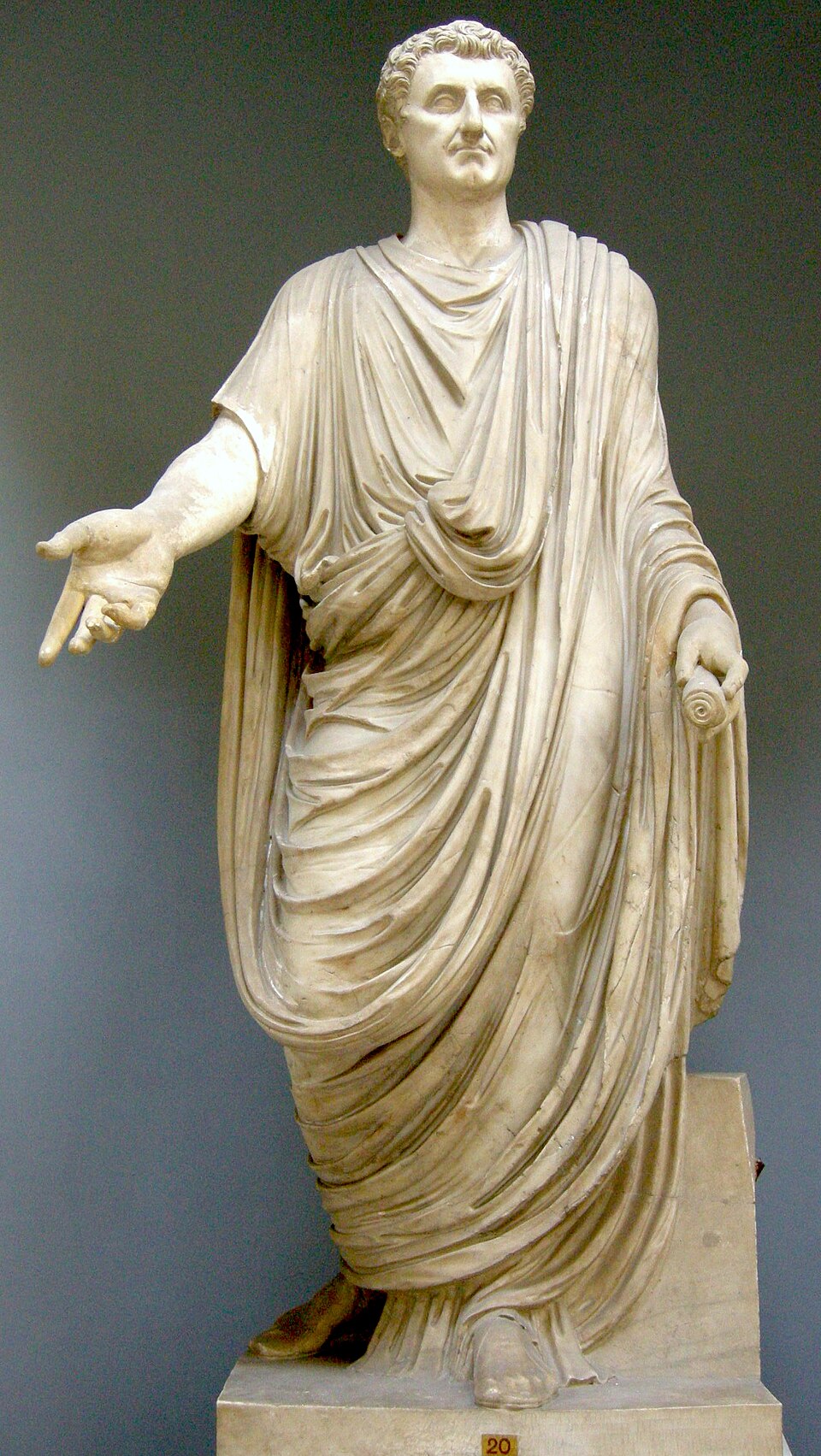
His reign was brief, and his authority faced challenges from elements of the military. In 97 CE, Nerva adopted Trajan, an influential general, as his successor. The decision strengthened his position and helped secure an orderly transfer of power when he died in 98 CE.
Trajan: Rome’s Greatest Territorial Extent
Trajan ruled from 98 to 117 CE and is remembered for combining military success with extensive public works and administrative initiatives.
His campaigns against Dacia, a region north of the Danube, brought new territory and valuable mineral resources under Roman control. Further eastern campaigns temporarily extended Roman authority into Armenia and Mesopotamia. Under Trajan, the empire reached its greatest territorial extent, although some eastern acquisitions proved short-lived.
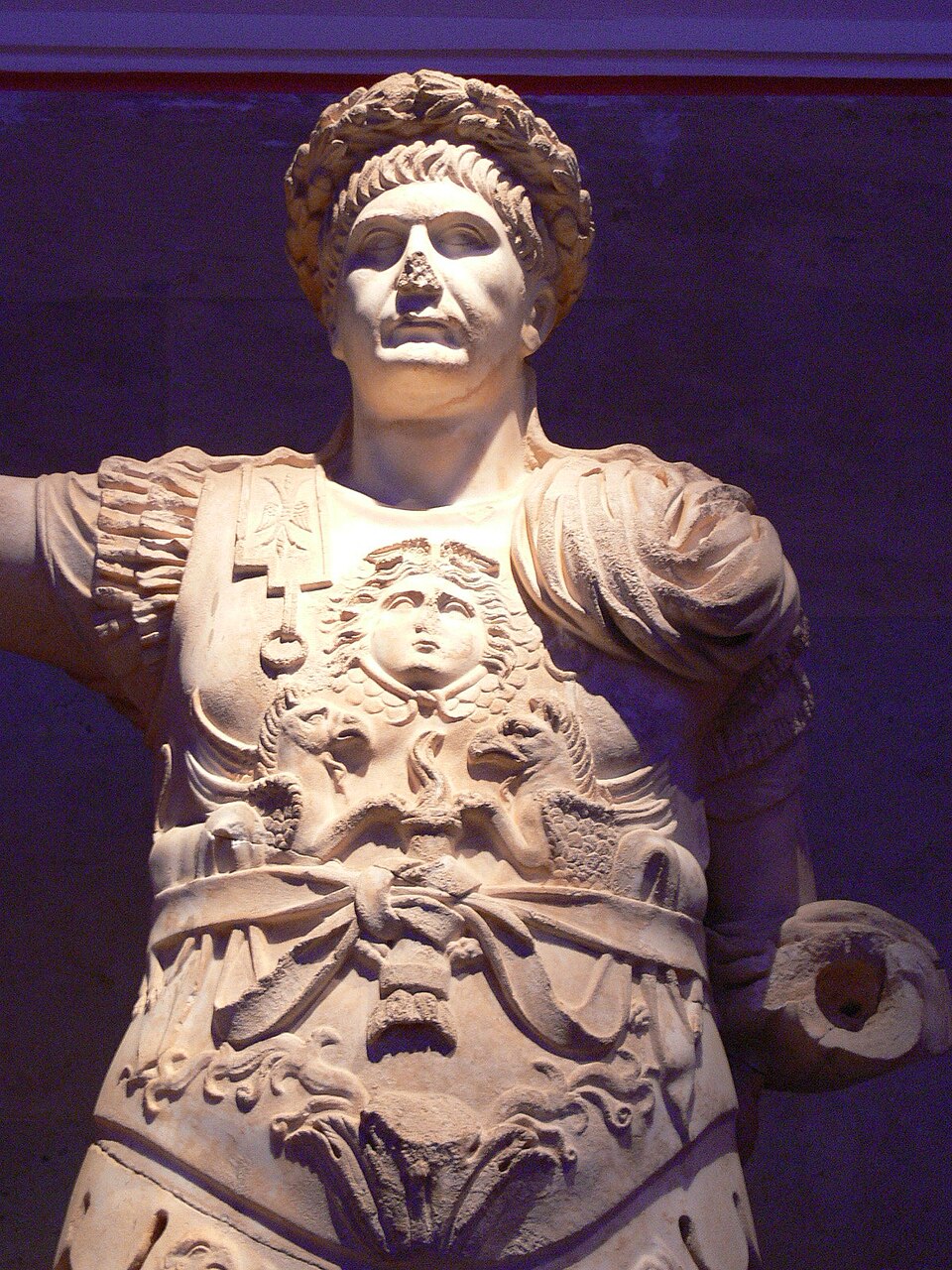
Trajan also invested in roads, bridges, ports, and monumental architecture. His Column in Rome commemorated the Dacian Wars through an elaborate spiral relief depicting military operations and imperial authority.
Yet expansion carried substantial costs. Campaigns required manpower, supplies, and continuing military commitments. Trajan’s achievements illustrate both the opportunities available to a powerful empire and the difficulties of maintaining distant conquests.
Hadrian: Consolidation Instead of Expansion
Hadrian, who succeeded Trajan in 117 CE, adopted a different strategic approach. Rather than attempting to preserve every eastern conquest, he withdrew from much of the territory acquired during Trajan’s final campaigns and concentrated on securing more defensible frontiers.
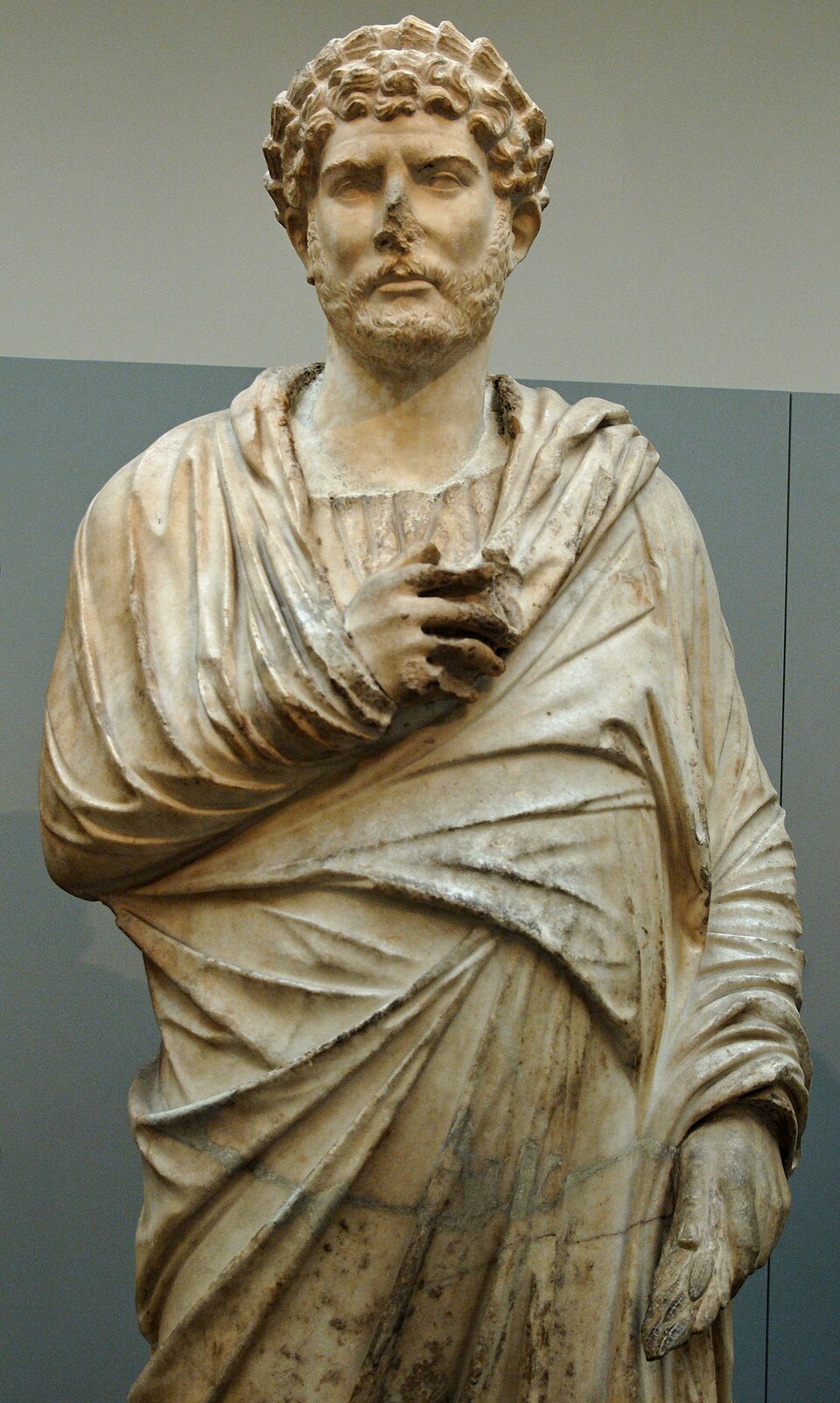
His reign saw the construction of Hadrian’s Wall in Britain, a major frontier system intended to regulate movement and reinforce Roman control. Hadrian also traveled extensively throughout the provinces, inspecting military installations, supporting construction projects, and overseeing administration.
His policies reflected an important shift in imperial strategy: maintaining the territory Rome could effectively govern was often more valuable than acquiring additional land.
Antoninus Pius: Stability Through Administration
Antoninus Pius ruled from 138 to 161 CE. His reign is often characterized by administrative continuity and relative military stability. Compared with Trajan, he placed less emphasis on major territorial expansion and focused instead on maintaining the empire’s existing institutions and frontiers.
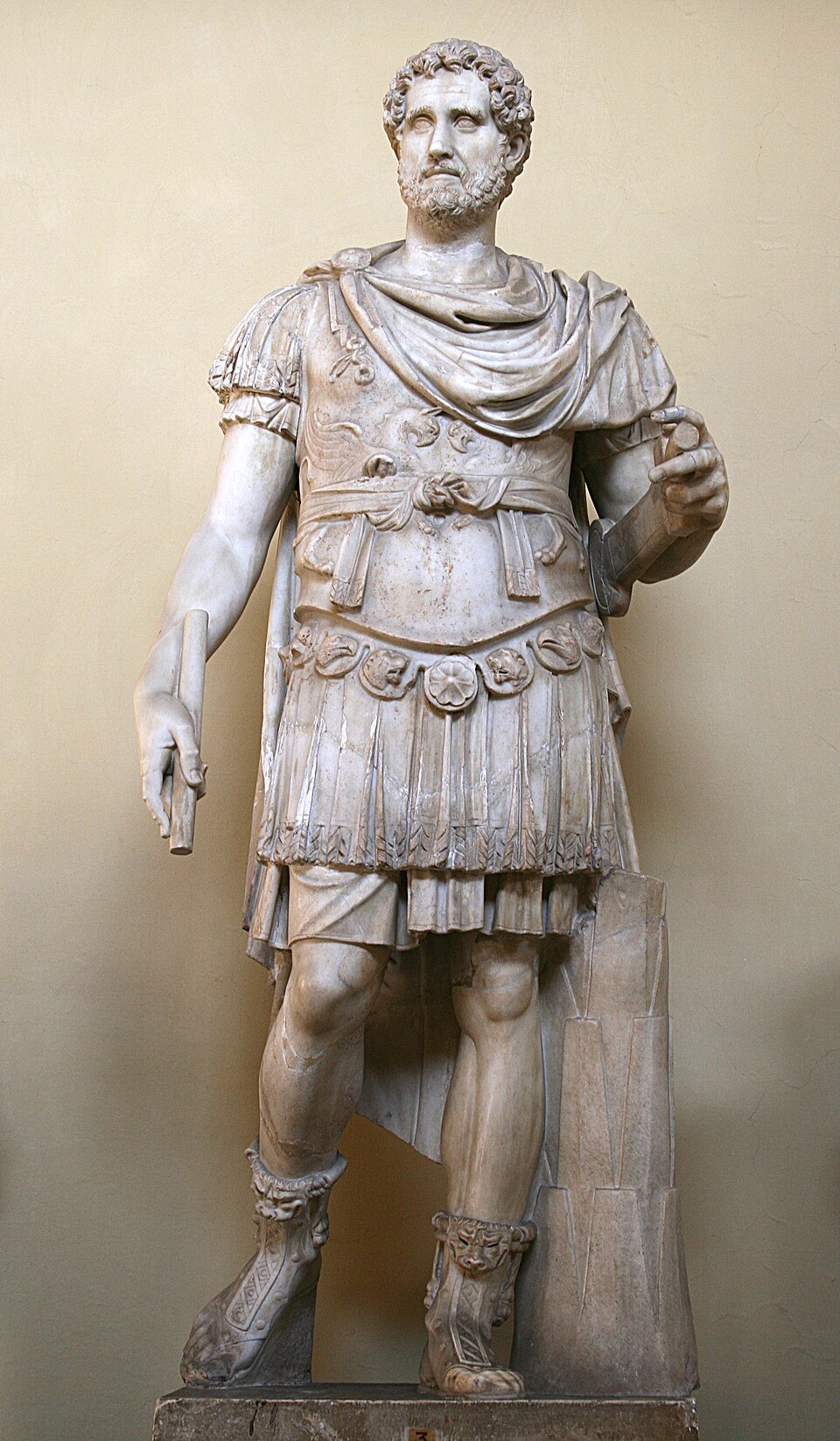
This period was not entirely free from military activity or provincial unrest, but it demonstrated the advantages of a government able to sustain itself without continuous large-scale conquest.
Marcus Aurelius: The Limits of Imperial Stability
Marcus Aurelius became emperor in 161 CE and initially ruled alongside Lucius Verus. Their reign began with war against Parthia, followed by renewed conflict along the Danube frontier.
The eastern campaigns ended in Roman victory, but returning troops were associated with a devastating epidemic commonly called the Antonine Plague. Its precise cause remains uncertain, although smallpox and measles have both been proposed. The outbreak caused significant mortality and placed additional pressure on the empire’s military and economic systems.
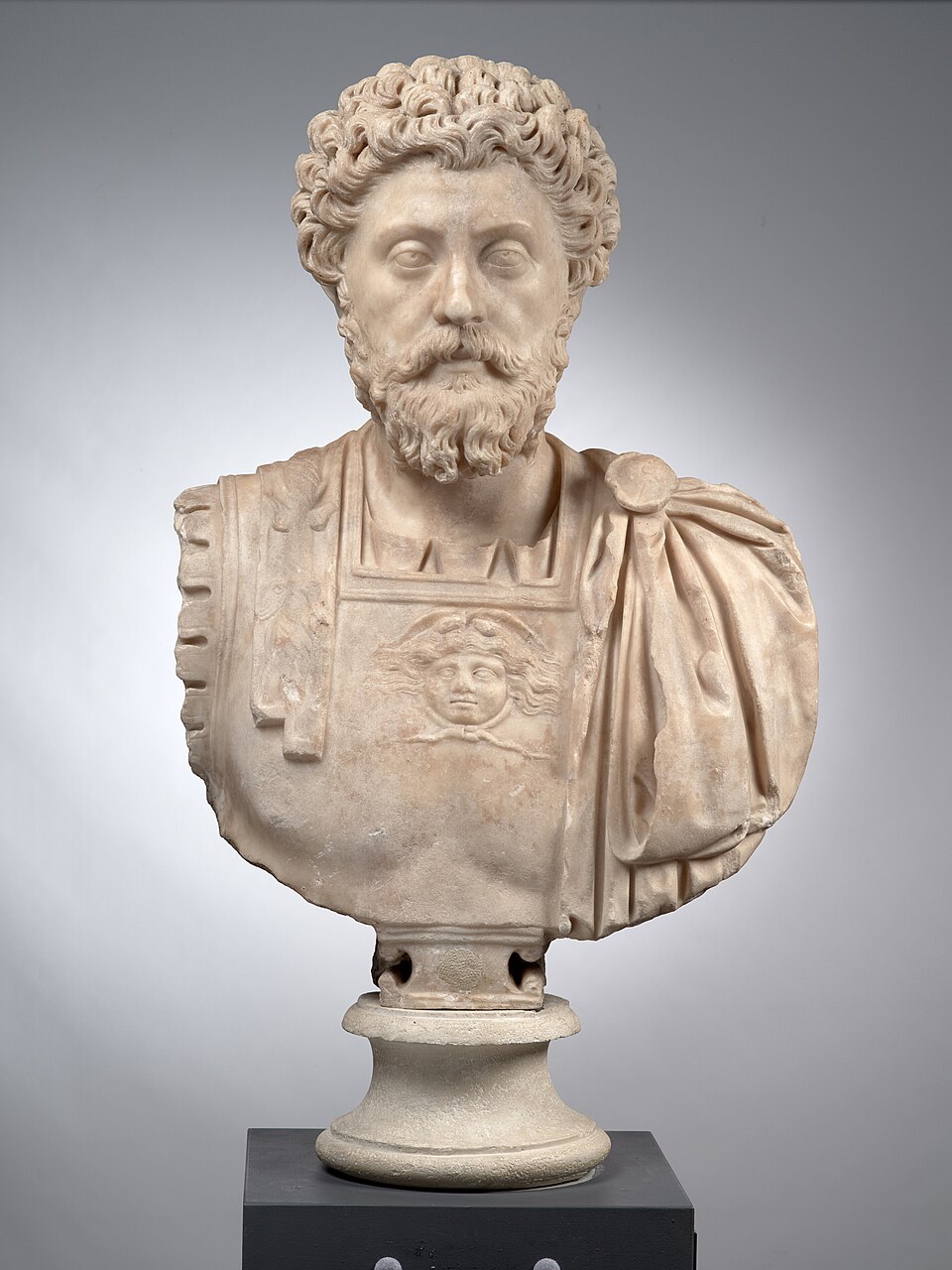
Marcus Aurelius subsequently spent much of his reign confronting Germanic and other groups along Rome’s northern frontier. He is remembered both as a military ruler and as a Stoic philosopher, particularly through his work Meditations.
His reign exposed the growing difficulty of protecting an immense territory against simultaneous military, demographic, and economic pressures. When Marcus Aurelius died in 180 CE, his son Commodus succeeded him. Unlike his immediate predecessors, Marcus did not secure the succession through the adoption of an unrelated adult heir; Commodus had already been elevated as his successor.
The transition marked the conventional end of the Pax Romana, although the empire remained powerful and would continue to prosper in some regions for generations.
Why Did the Pax Romana End?
The end of the Pax Romana cannot be attributed to a single emperor, battle, or economic crisis. It was a gradual change in the political and military conditions that had supported the empire’s relative stability.
The Problem of Imperial Succession
The Roman Empire never developed a universally accepted constitutional system for choosing each new emperor. Imperial power could pass through adoption, hereditary succession, senatorial recognition, or military acclamation. These methods sometimes worked together, but they could also conflict.
The succession arrangements associated with the Five Good Emperors helped maintain continuity because several rulers adopted capable successors when they lacked suitable biological heirs. This pattern was not a formal rule, however, and it did not guarantee competent government.
Marcus Aurelius’ decision to succeed himself through his biological son was not inherently illegitimate, but Commodus’ accession exposed the risks of relying on hereditary succession without effective institutional safeguards. Commodus’ reign ended in 192 CE with his assassination, followed by another violent struggle for power.
Military Pressure and the Cost of Expansion
The empire’s vast territory required permanent armies, fortified frontiers, roads, supply networks, and a dependable tax system. Even during periods of relative stability, defending these borders demanded substantial resources.
Trajan’s expansion demonstrated the strategic advantages of conquest, while Hadrian’s withdrawals showed the costs of holding distant territory. By Marcus Aurelius’ reign, prolonged campaigning along the Danube and the effects of epidemic disease placed considerable pressure on Roman resources.
These difficulties did not mean that the empire was destined to collapse. Rome retained considerable military, administrative, and economic capacity. However, the demands of frontier defense increasingly competed with other imperial priorities.
Commodus and the Breakdown of Political Consensus
Commodus ruled from 180 to 192 CE. His reign is traditionally associated with the end of the period of relative stability represented by the Five Good Emperors.
His relationship with the Senate deteriorated, court politics became increasingly unstable, and his assassination in 192 CE triggered a succession crisis. The following year, known as the Year of the Five Emperors, demonstrated how quickly a disputed succession could undermine imperial unity.
Nevertheless, Commodus did not single-handedly destroy the Roman Empire. Nor did the Pax Romana’s conventional end mark the immediate beginning of an uninterrupted decline. The empire continued to recover, expand, and adapt under later rulers. Its most severe systemic crisis would come during the third century, when repeated civil wars, invasions, and financial disruption threatened the imperial structure itself.
The Pax Romana ended, therefore, not because Rome suddenly became incapable of governing, but because the political arrangements and external conditions that had sustained its relative stability became increasingly difficult to reproduce.
The Historical Legacy of the Pax Romana
The Pax Romana remains an important example of how political stability can encourage economic integration, cultural production, and institutional development. Under Augustus and his successors, Rome transformed a state devastated by civil war into an empire capable of administering territories across Europe, North Africa, and western Asia.
Its achievements were substantial: extensive infrastructure, interconnected commercial networks, enduring architectural monuments, and literary works that continue to shape historical and cultural understanding. Roman law and administrative practices also influenced later political traditions, although their subsequent development varied considerably across regions and historical periods.
Yet the term “Roman Peace” must be understood from the perspective of the society that produced it. Imperial stability coexisted with conquest, slavery, punitive taxation, and the violent suppression of resistance. The destruction of Jerusalem in 70 CE, the revolt of Boudica in Britain during 60–61 CE, and the Bar Kokhba revolt in Judaea during 132–136 CE demonstrate that Roman order could be profoundly violent for the communities subjected to it.
The empire’s peace was consequently not a universal peace among equals. It was an imperial system in which Rome maintained dominance through military power, political institutions, economic relationships, and cultural influence.
The Pax Romana’s significance lies in this combination of stability and coercion. It demonstrated the capacity of a centralized state to sustain a vast interconnected world, but it also revealed the vulnerabilities of a political order that depended heavily on the competence of individual rulers, the loyalty of armies, and the successful management of imperial succession.
The Roman Empire would endure for centuries after the death of Marcus Aurelius. However, the particular combination of political continuity, territorial power, and relative internal stability that characterized the Pax Romana proved difficult to maintain indefinitely.
The Pax Romana was not an age without war. It was an age in which Rome became sufficiently powerful and politically organized to prevent war from repeatedly destroying the imperial system from within.
