
The equites were far more than Roman cavalrymen. Over the course of nearly a millennium, the term evolved from describing men who served on horseback into identifying one of the most important social and administrative orders in the Roman world. Their history reflects a fundamental transformation in Roman society: as Rome expanded from a city-state into a Mediterranean empire, military status increasingly gave way to wealth, political influence, commerce, and imperial service.
The equestrian order ultimately became a critical layer between the senatorial aristocracy and the wider citizen population. Its members served as officers, financiers, contractors, provincial administrators, imperial procurators, and senior military commanders. Their importance was therefore not simply that they rode horses. It was that Rome eventually developed an entire class of wealthy, capable men whom the state could deploy across its expanding administrative and military system.
From Cavalrymen to a Social Order
The Latin equites means, broadly, “horsemen” and derives from equus, meaning horse. In Rome’s early military organization, cavalry service was closely associated with wealth and status because maintaining a horse and suitable equipment was expensive.
The early cavalry was predominantly drawn from Rome’s wealthier citizens. Members of the equites equo publico—literally, “horsemen with a public horse”—received state support for their mounts. The censors played an important role in regulating this group, including determining who retained the privilege of a public horse.
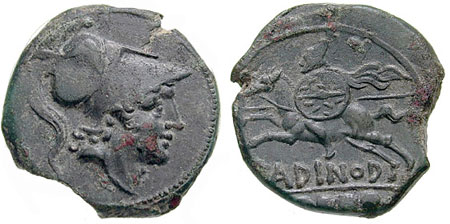
But the Roman military system changed dramatically as the Republic expanded.
Rome increasingly relied on allied and later auxiliary cavalry rather than expecting its own citizen elite to provide the bulk of battlefield horsemen. By the second century BCE, Italian cavalry was playing a reduced role in Roman warfare, while non-Roman auxiliary cavalry became increasingly important.
This did not make the equites irrelevant. Instead, their significance increasingly shifted from the battlefield to Roman society, commerce, courts, and government.
The Rise of the Equestrian Order
By the middle and late Republic, eques could refer not merely to a cavalryman but to a member of a distinct social order.
This transformation was closely connected to wealth. The equestrian order was defined by a property qualification, although the exact threshold changed over time and should not be reduced to a single fixed figure applicable throughout Roman history.
Under Augustus, the minimum property qualification for formal equestrian status was conventionally set at 400,000 sestertii, while senators were required to possess at least 1 million sestertii. This is an important correction to the figures in the source material: the commonly cited Augustan equestrian threshold was not 100,000 denarii. The monetary terminology also matters because a denarius was conventionally valued at four sestertii.
The equites therefore occupied a distinctive position in Roman society. They were wealthy enough to belong to Rome’s upper classes but were institutionally differentiated from senators.
They were not simply a modern “middle class.” Some were extremely wealthy, and their economic activities could include banking, commerce, tax contracting, shipping, landholding, and other enterprises. Their wealth and business interests became especially significant during the later Republic.
Equites and the Roman Economy
The equestrian order became deeply associated with Roman commercial life.
This was partly the result of legislation restricting senators from participating directly in certain forms of large-scale commerce. The distinction encouraged wealthy non-senators to occupy economic spaces that senators were increasingly constrained from entering.
Equestrian businessmen could participate in the publicani, contractors who bid for state contracts and undertook activities including tax collection and the management of public resources. These contractors could become enormously influential because Rome governed territories whose financial systems were too extensive for the central government to administer through a modern-style bureaucracy.
The state therefore relied heavily on private contractors and wealthy intermediaries.
This relationship produced both opportunity and controversy.
Tax farming, for example, could be lucrative for contractors but burdensome for provincial populations. The resulting political conflicts became an important part of the late Republic’s struggle over who controlled Rome’s courts and provincial administration.
The Equites and the Courts
The political importance of the equites became particularly visible during the reforms of Gaius Gracchus in the second century BCE.
Gracchus sought to reduce senatorial control over the courts that prosecuted provincial governors for extortion. He arranged for equites to serve as jurors in the relevant courts, replacing senators. The measure transformed the equestrian order into a significant political counterweight to the Senate.
This did not mean that the equites were uniformly opposed to senators or constituted a unified political party. Roman politics was considerably more complicated than a simple division between “senators” and “equites.”
Nevertheless, control of the courts gave wealthy equestrians substantial institutional influence.
The arrangement also demonstrated something fundamental about Roman government: wealth could translate into political power even without membership in the Senate.
From Republic to Empire
The transformation of the equites accelerated under Augustus.
The new imperial system required administrators capable of governing provinces, managing state finances, supervising military resources, and operating the emperor’s increasingly complex governmental machinery.
The Senate remained the prestigious center of Rome’s traditional aristocracy, but the emperor needed another pool of personnel.
The equestrian order provided it.
Augustus and his successors increasingly used equestrians for positions that demanded administrative expertise rather than traditional senatorial prestige. Over time, a recognizable equestrian career structure developed, particularly during the early and high Roman Empire.
A man could begin with relatively junior military or administrative appointments and progress through increasingly important posts.
This was not a modern civil service in the bureaucratic sense. Roman administration remained heavily dependent on personal status, patronage, wealth, military experience, and imperial favor. Nevertheless, the equestrian order provided the imperial government with a large pool of men who could be assigned specialized responsibilities.
Soldiers, Officers, and Commanders
The connection between equites and the military never completely disappeared.
Equestrians could serve as military officers and commanders, while the imperial army increasingly provided professional careers independent of the old Republican citizen cavalry system.
The distinction is important: the imperial equestrian order should not be confused with a permanent cavalry corps.
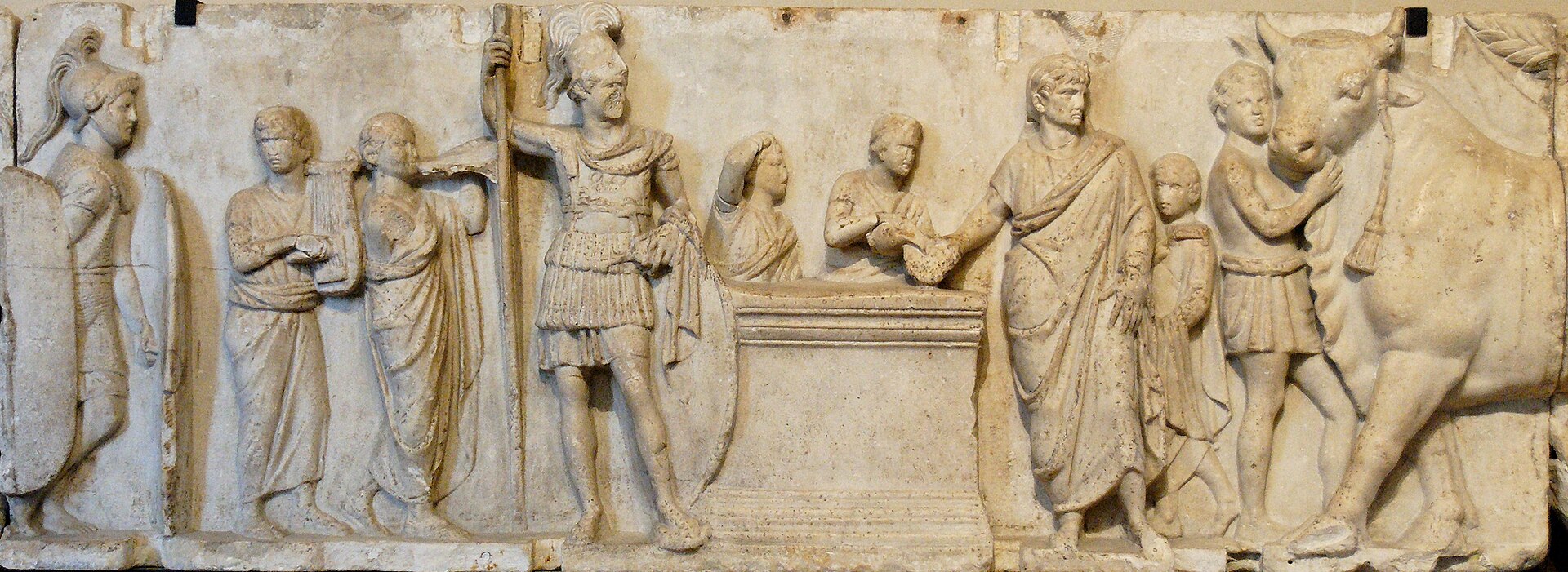
An eques was not necessarily a cavalryman.
By the imperial period, an equestrian might command troops, govern a province, administer imperial finances, or perform another official function without fighting as a mounted soldier.
Some of the empire’s most important military commands were eventually associated with equestrians. The prefect of the Praetorian Guard, for example, was normally drawn from the equestrian order and could become one of the most politically powerful officials in the empire.
Similarly, equestrians could command auxiliary forces and hold important provincial military positions.
The old association between wealth, military service, and public responsibility had therefore evolved into something considerably broader.
Provincial Administration
Perhaps the greatest contribution of the equites to the imperial system was administrative.
Rome eventually governed territories stretching from Britain and the Rhine to North Africa, Syria, Egypt, and the eastern Mediterranean. Managing such an empire required thousands of officials, officers, financial administrators, clerks, contractors, and governors.
Senators continued to govern the most prestigious provinces and hold the highest traditional magistracies. But equestrians increasingly filled the administrative positions beneath and alongside them.
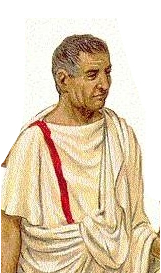
Some became procurators, officials responsible for aspects of imperial finance and administration.
This allowed emperors to exercise greater control over taxation, property, imperial revenues, and other resources without relying exclusively on the senatorial aristocracy.
The system also gave the emperor a means of balancing competing elite interests.
An emperor who relied entirely on senators would have been dependent on the very aristocratic class whose political power he was attempting to manage. Equestrian officials offered an alternative source of administrative talent and imperial loyalty.
Egypt: A Special Case
The importance of the equestrian order is especially clear in Roman Egypt.
After the annexation of Egypt by Augustus in 30 BCE, the province was placed under an equestrian prefect, rather than an ordinary senatorial governor.
This reflected Egypt’s exceptional importance.
It was one of the Roman world’s richest territories and a major source of grain for Rome. The emperor therefore maintained particularly close control over the province.
The equestrian prefect combined military, judicial, and administrative responsibilities, making the office one of the most important positions available within the equestrian career structure.
Egypt demonstrates why the equites became so valuable to the imperial state: they could serve as the emperor’s representatives in territories where political control, military security, and financial administration were inseparable.
The Equites as a Bridge Between Elites
The equestrian order occupied an unusual position in Roman society.
They were not senators, yet many possessed enormous wealth.
They were not ordinary citizens, yet their status did not depend exclusively on aristocratic ancestry.
They were not simply soldiers, although military service remained an important route through the equestrian career system.
Their importance lay precisely in this flexibility.
The emperor could draw upon equestrians for positions requiring financial knowledge, military competence, administrative ability, or personal loyalty. This created an additional layer of elite personnel between the Senate and the enormous population of the empire.
The equites consequently became one of the mechanisms through which Rome transformed an aristocratic Republican government into a much more complex imperial administration.
Why Were the Equites So Important?
The equites mattered because Rome eventually needed more than soldiers and politicians. It needed administrators.
The Roman Empire possessed no modern ministries, professional civil service, or centralized bureaucratic state in the contemporary sense. Instead, its government depended on networks of senators, equestrians, military officers, local elites, contractors, freedmen, and other officials.
The equestrian order was one of the most important components of that system.
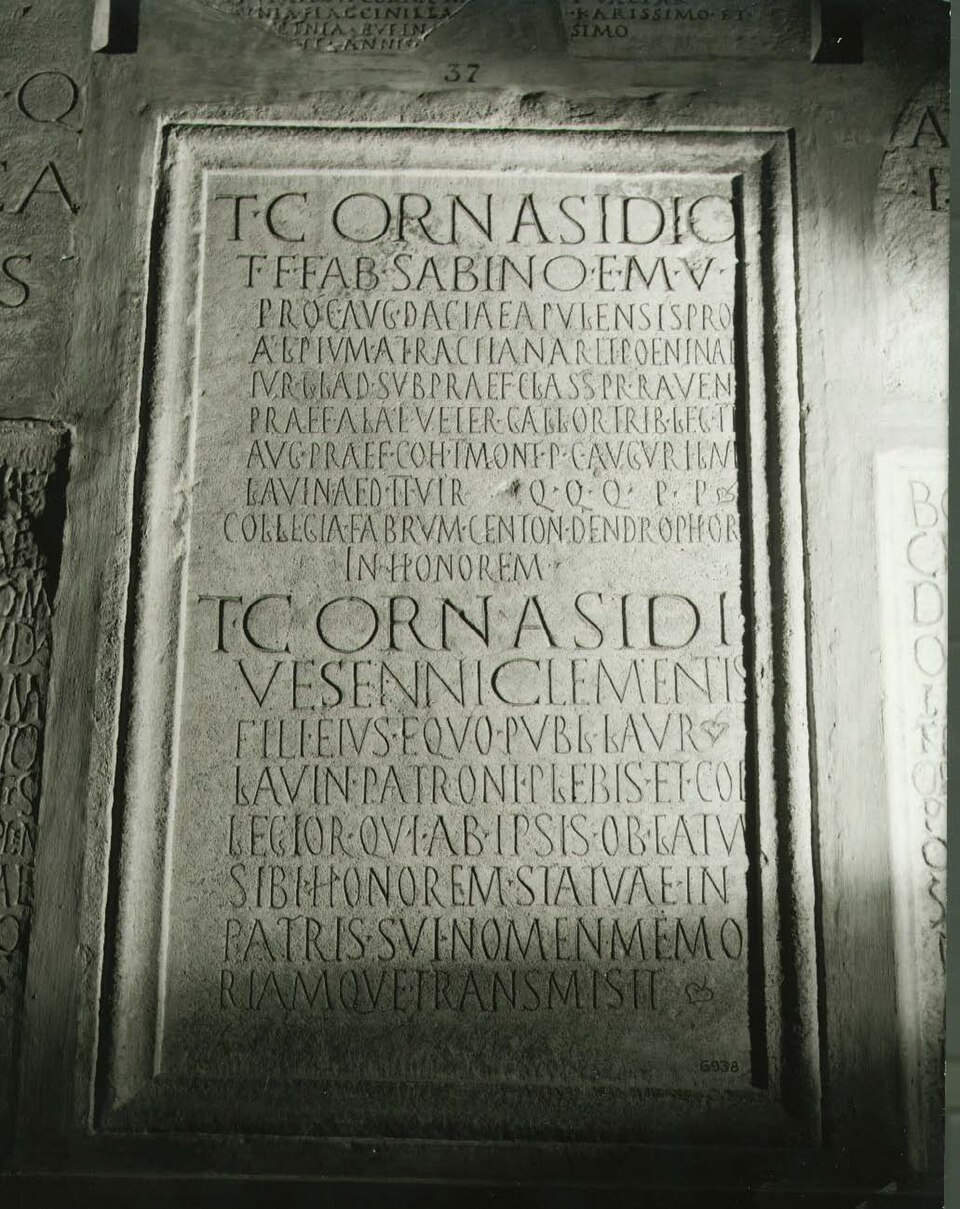
Its members helped collect and manage revenues, administer imperial property, command troops, govern strategically important territories, supervise state operations, and execute imperial policy.
Their emergence also reveals the broader transformation of Rome itself.
The Republic had been built around a relatively small citizen community in Italy. The Empire governed an enormous multicultural territory whose administration could no longer depend solely on the traditional aristocratic magistracies of the Roman Republic.
The equites helped fill that gap.
A Class That Outgrew Its Name
The greatest irony of the equites is that their name preserved their oldest identity long after their original military function had ceased to define them.
They began as horsemen.
They became wealthy citizens.
They became businessmen, financiers, contractors, jurors, officers, provincial administrators, and imperial officials.
By the imperial period, an eques did not have to spend his career in the saddle. His importance could instead lie in managing the machinery of a state that stretched across three continents.
The equestrian order was therefore not merely an auxiliary component of Roman power. It was part of the institutional evolution that allowed Rome to govern an empire vastly more complicated than the Republic that preceded it.
Understanding the equites makes Roman history clearer because it reveals something often hidden behind emperors, senators, and legions: Rome’s durability depended not only on conquest, but on the people capable of administering what conquest created.
The equites were among those people, and their transformation from cavalrymen into an imperial service elite was one of the clearest examples of how Roman society adapted to the demands of empire.
