
Roman military supremacy rested on more than disciplined legionaries, engineering, and battlefield tactics. The empire also depended on something less visible but equally important: information.
Roman commanders operated without satellites, radio communications, aerial reconnaissance, or accurate modern maps. An army could be only a few miles from its opponent and remain unaware of its presence. Roads could become impassable, water sources could determine an army’s route, and an apparently harmless valley could conceal an ambush.
Consequently, reconnaissance and intelligence became essential components of Roman warfare. Over time, Rome developed a layered system that combined conventional scouting with specialized reconnaissance, espionage, courier duties, and imperial surveillance.
The Praecursatores: The Army’s Forward Screen
The praecursatores operated closest to the main army. Generally mounted troops selected for reconnaissance duties, they moved ahead of the marching column and screened its immediate surroundings.
Their responsibilities were practical as much as military. They examined roads, crossings, terrain, water sources, forage, obstacles, and possible defensive positions. They also watched for enemy scouts, deserters, informants, and ambush parties.
Once a route had been selected, these troops could help secure it by removing obstacles, clearing vegetation, and identifying potential threats. Light infantry and archers could reinforce them when resistance was expected.
Their work directly affected Roman mobility. A poorly chosen route could delay an army, exhaust its animals, restrict its supply train, or expose the column to attack.
The Exploratores: Reconnaissance Beyond the Army
The exploratores operated farther from the main force and provided commanders with information about the wider operational environment.
Unlike the short-range screen maintained by the praecursatores, exploratores could undertake extended missions lasting days or longer. They investigated roads, settlements, fortifications, geography, enemy positions, and troop movements.
Their reports were especially valuable because Roman armies often operated in unfamiliar territories. Without modern cartography, commanders depended heavily on firsthand observation and information supplied by scouts and local guides.
Experienced scouts could infer the presence and approximate size of an enemy force from subtle clues. Smoke and campfires could reveal a stationary army, while dust clouds could indicate the movement of large bodies of troops.
Selecting the Roman Camp
Reconnaissance was also fundamental to one of the most routine aspects of Roman campaigning: selecting the army’s next camp.
A suitable location needed level ground, access to water, defensible terrain, visibility over the surrounding area, and sufficient resources for construction and supply. Scouts could identify these characteristics before the main column arrived.
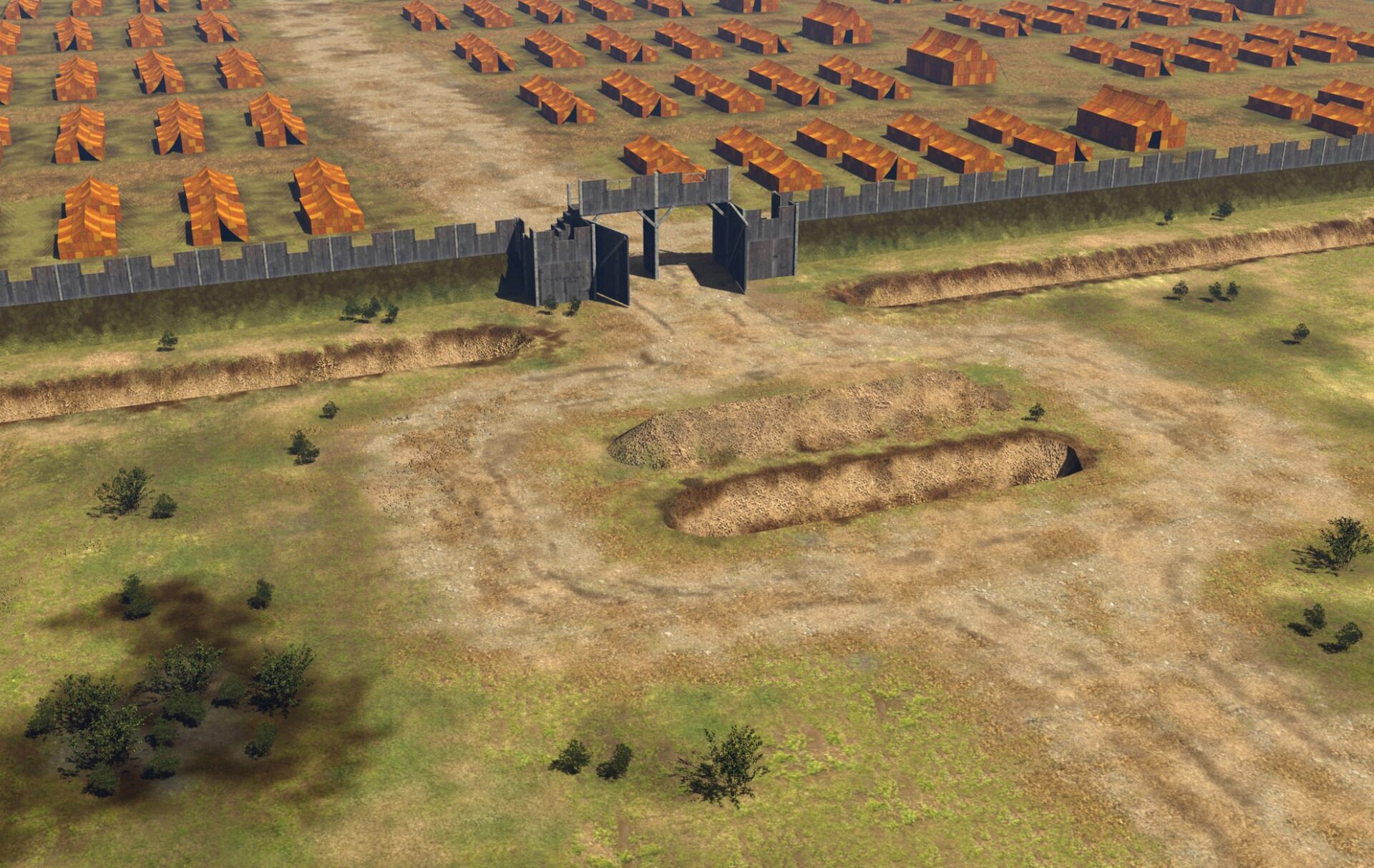
The information allowed Roman engineers and soldiers to begin establishing a fortified marching camp rapidly. This system transformed temporary camps into predictable defensive installations and provided an important layer of security against surprise attacks.
Intelligence During the Punic Wars
Rome’s intelligence capabilities developed considerably as its wars became more geographically ambitious.
The Punic Wars were particularly important. Carthage possessed extensive maritime connections, commercial networks, overseas military experience, and access to information across the Mediterranean. Hannibal exploited intelligence and deception alongside conventional military operations, repeatedly catching Roman forces at a disadvantage.
Rome survived these setbacks and gradually adapted. Commanders increasingly recognized that battlefield strength was insufficient without reliable information about an opponent.
Roman operations in Spain during the Second Punic War demonstrate this evolving approach. Commanders employed infiltration, deception, reconnaissance, and surprise attacks against Carthaginian positions. By the later Republic, intelligence had become an established component of Roman operational planning.
The Speculatores: Rome’s Covert Agents
The speculatores occupied a more ambiguous but important position within Roman military intelligence.
The Latin term could encompass several duties, and ancient sources do not always distinguish cleanly between scouts, messengers, reconnaissance personnel, and covert operatives. Nevertheless, the evidence demonstrates that Roman commanders used agents for missions extending beyond conventional battlefield reconnaissance.
A speculator could be tasked with gathering information about an enemy army, commander, city, fortress, or region. Depending on the circumstances, the operation could last hours, days, or considerably longer.
Disguise and Infiltration
Covert intelligence required concealment. Roman agents could abandon military equipment and assume civilian identities appropriate to their surroundings.
Possible disguises included merchants, refugees, locals, deserters, diplomats, or enemy soldiers.
The objective was not necessarily to penetrate an enemy headquarters. Often, valuable information could be gathered indirectly from civilians, marketplaces, travelers, and camp followers.
This approach was particularly useful because military information circulated through civilian populations. The presence of troops, unusual movements, shortages, requisitions, rumors, and preparations for war could all reveal an army’s intentions.
The Deserter Problem
Deserters represented both an intelligence opportunity and a security threat.
A genuine deserter could provide information about an enemy’s strength, morale, organization, plans, and defenses. At the same time, an apparent deserter could actually be an enemy spy attempting to penetrate the Roman camp.
Roman military writers therefore recognized the danger of accepting intelligence without verification. Information obtained from a single source could be deliberately misleading, incomplete, or fabricated.
This produced an enduring principle of military intelligence: information must be evaluated, not merely collected.
Espionage, Sabotage, and Deception
Roman intelligence operations could extend beyond observation.
Scouts and covert agents could identify weak points in enemy defenses, interfere with supply lines, disrupt communications, and provide information necessary for ambushes or surprise attacks.
Deception was equally important. Roman commanders used false movements, concealment, feigned retreats, misinformation, and surprise approaches throughout their military history.
These operations demonstrate that ancient warfare was not simply a contest between armies meeting in open battle. Much of the struggle occurred before the armies actually engaged.
Tiberius Claudius Maximus and the Dacian War
One of the clearest pieces of evidence for the operational importance of Roman scouts comes from the monument of Tiberius Claudius Maximus.
Maximus served as an explorator during the Dacian Wars under Emperor Trajan. His funerary monument records his involvement in the pursuit of Decebalus, the Dacian king.
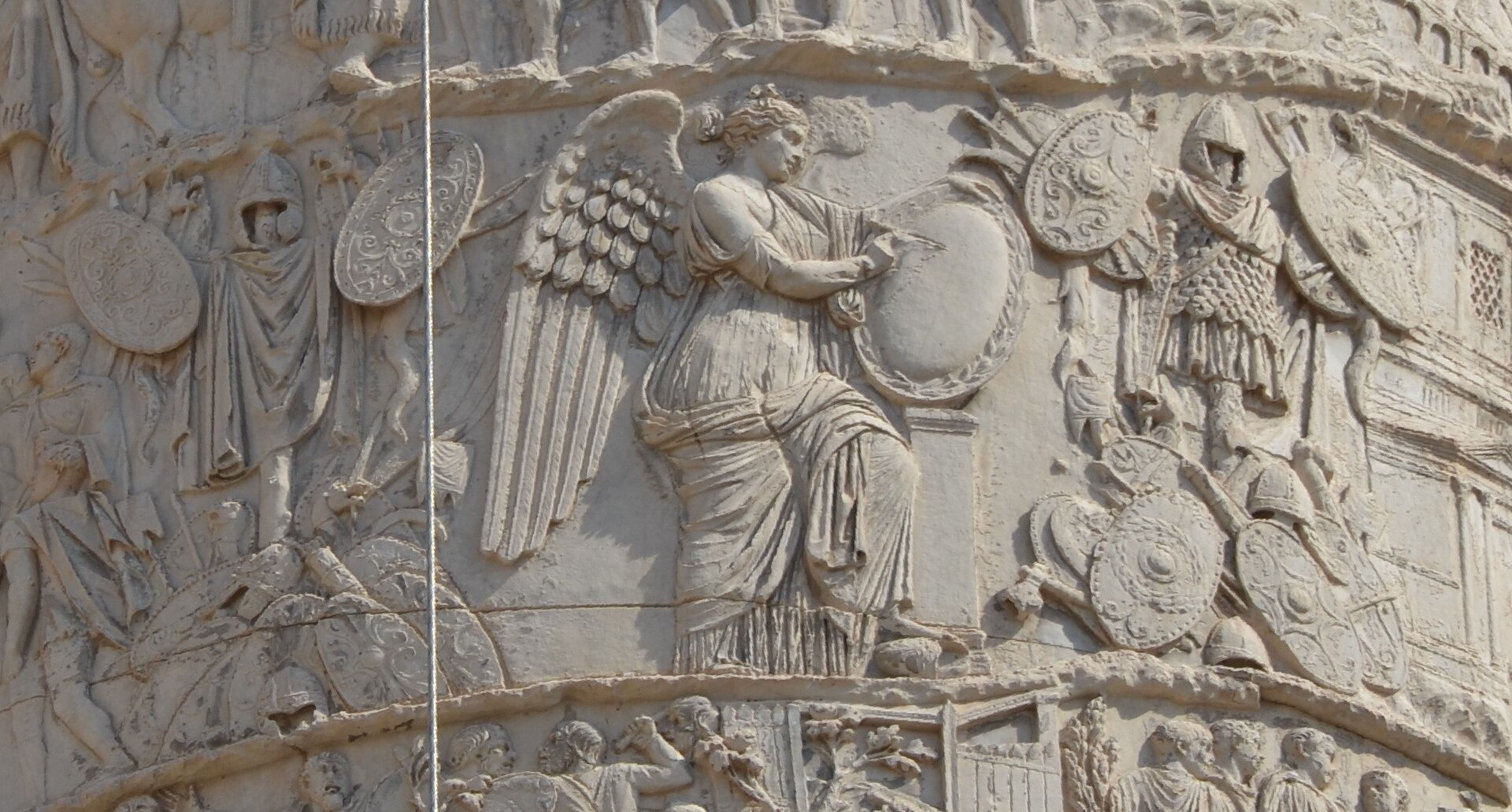
After Decebalus’ defeat and suicide in AD 106, Maximus claimed to have reached the dying king, severed his head, and carried it back to Trajan. The monument portrays the episode as the culmination of an exceptional military career.
The episode illustrates the potentially aggressive role of Roman reconnaissance personnel. Exploratores were not simply observers; when circumstances demanded, they could participate directly in high-value operations.
The Frumentarii: From Grain to Imperial Intelligence
The frumentarii present a more complicated story.
Their name derives from frumentum, the Latin word for grain, and their earliest functions were closely connected with military logistics and grain transportation. Roman armies depended on enormous quantities of food, making the movement and administration of grain a major military responsibility.
By the second century AD, however, evidence increasingly connects frumentarii with courier and intelligence duties.
Their logistical responsibilities gave them an ideal reason to travel across the empire. A soldier officially moving supplies or carrying communications could cross provincial boundaries without necessarily attracting the suspicion associated with an obvious spy.
The Castra Peregrina
The frumentarii maintained a headquarters in Rome known as the Castra Peregrina, located on the Caelian Hill.
The organization consisted of soldiers detached from their legions and placed into specialized service. Inscriptions indicate a military hierarchy involving centurions and senior officers.
Their existence illustrates an important characteristic of Roman administration: personnel could be temporarily removed from their normal military assignments and placed into specialized imperial service.
The Castra Peregrina was therefore not necessarily a secret intelligence headquarters in the modern sense. Much of the empire’s information remained decentralized, passing through provincial governors, military commanders, couriers, archives, and administrative offices.
Couriers and the Imperial Communication Network
Communication was inseparable from intelligence.
Information had little value if commanders could not transmit it quickly enough. Rome therefore maintained an extensive communications infrastructure that connected military installations, provincial administrations, and the imperial government.
Frumentarii became associated with this system and could transport messages over considerable distances.
Their movement through the empire also helped connect military intelligence with civilian administration. Reports from soldiers, governors, merchants, informants, and scouts could ultimately contribute to the broader picture available to Roman authorities.
Domestic Surveillance and Political Security
The frumentarii eventually became associated with duties extending well beyond military logistics.
Ancient sources describe emperors using them to investigate individuals, intercept correspondence, gather information, and monitor potential political threats. Some accounts also associate them with arrests and other coercive activities.
These reports must be treated carefully. The surviving sources often portray imperial security services through political and moral narratives, making it difficult to determine how frequently particular activities occurred.
Nevertheless, their reputation demonstrates that the Roman state possessed personnel capable of conducting surveillance and sensitive enforcement operations.
Assassination and Covert Violence
Several ancient accounts associate frumentarii with killings and political assassinations.
The evidence is less conclusive than it is for their courier, logistical, and arrest functions. In some cases, the identity of the agents involved is uncertain, while later writers may have attributed politically motivated killings to imperial personnel without providing detailed evidence.
It is therefore more historically accurate to describe assassination as a documented association rather than an established routine function of every frumentarius.
The distinction matters because the surviving evidence does not support the idea of a Roman organization whose primary purpose was assassination.
Law Enforcement and Arrests
Frumentarii were also used as agents of enforcement.
Ancient and Christian sources describe them pursuing individuals wanted by authorities and carrying out arrests. During periods of religious persecution, Christian writers in particular remembered frumentarii as representatives of imperial authority.
Their military status made them useful for tasks that required personnel capable of traveling across provincial jurisdictions and acting on official orders.
They could also be employed in more mundane administrative roles, demonstrating just how flexible the organization had become.
Why the Frumentarii Were Abolished
By the third century AD, the reputation of the frumentarii had deteriorated substantially.
Ancient authors associate them with corruption, intimidation, false accusations, and abuses of authority. Their expanding responsibilities had transformed an organization originally connected with military logistics into a much broader instrument of imperial administration and security.
Emperor Diocletian ultimately abolished the frumentarii during his administrative reforms at the end of the third century.
Their disappearance did not mean that Rome abandoned intelligence gathering. Instead, their functions were redistributed among newer and more tightly regulated institutions, including the agentes in rebus.
A Layered Intelligence System
Roman military intelligence is best understood as a layered system rather than a single centralized spy agency.
Praecursatores provided immediate reconnaissance and security around the marching army.
Exploratores extended the army’s observational reach and gathered information about terrain, enemy movements, and distant positions.
Speculatores performed a broader range of specialized reconnaissance, communication, and covert assignments.
Frumentarii connected military logistics and imperial communications with intelligence, surveillance, and enforcement duties.
The boundaries between these categories were not always rigid. Terminology changed over time, units evolved, and individual soldiers could perform multiple functions depending on the circumstances.
The Intelligence Advantage
Rome’s greatest military achievement was not simply its ability to defeat enemies in battle. It was its ability to organize enormous armies, move them across difficult terrain, sustain them for extended campaigns, and coordinate operations across vast distances.
Information was fundamental to every one of those capabilities.
A scout who discovered an ambush could save an army. A guide who identified a water source could determine its route. An informant who revealed an enemy’s intentions could prevent a surprise attack. A courier who delivered a report in time could allow a commander to change his plans before circumstances became irreversible.
Roman intelligence therefore operated as an invisible extension of the legion.
The empire had no satellites watching the battlefield and no electronic communications network carrying instant reports. Instead, it relied on human observation, local knowledge, mounted reconnaissance, informants, couriers, deception, and disciplined administrative systems.
That human intelligence network was imperfect and frequently decentralized, but it provided Rome with something every successful military power requires: knowledge before action. Across centuries of warfare, the ability to see beyond the battlefield helped turn Roman armies from powerful fighting forces into highly adaptable instruments of imperial expansion.
