
Roman engineering is often remembered through its surviving successes: the Pantheon, Colosseum, aqueducts, roads, bridges, and monumental harbors. Yet Roman engineering was also defined by projects that proved too ambitious, politically vulnerable, or strategically unnecessary to finish. Three unfinished undertakings—the proposed diversion of the Tiber, Nero’s Corinth Canal, and the Roman settlement at Waldgirmes—illustrate the limits of imperial engineering and the dependence of infrastructure on political stability.
Diverting the Tiber
Rome’s relationship with the Tiber was fundamentally contradictory. The river made the city’s growth possible by providing a transport artery between Rome and the Mediterranean, but its periodic flooding repeatedly damaged the urban fabric. Ancient sources preserve numerous accounts of inundations, including the exceptionally severe flood of 54 BC described by Cassius Dio. Modern scholarship has identified dozens of historically recorded Tiber floods between the fourth century BC and late antiquity.
The problem was not merely water damage. Floods could disrupt commercial activity, damage buildings and warehouses, interfere with the movement of grain, and undermine the infrastructure on which Rome’s enormous population depended. The Tiber was simultaneously an economic asset and a persistent hydraulic threat.
Julius Caesar contemplated an exceptionally ambitious response. Suetonius records that among Caesar’s numerous planned public works was a scheme to alter the Tiber, while Plutarch provides a more detailed description: Caesar intended to divert the river below Rome into a new channel that would curve toward Circeii before reaching the sea at Terracina. The objective was not simply flood control but the creation of a safer and more efficient route for merchant shipping approaching Rome.
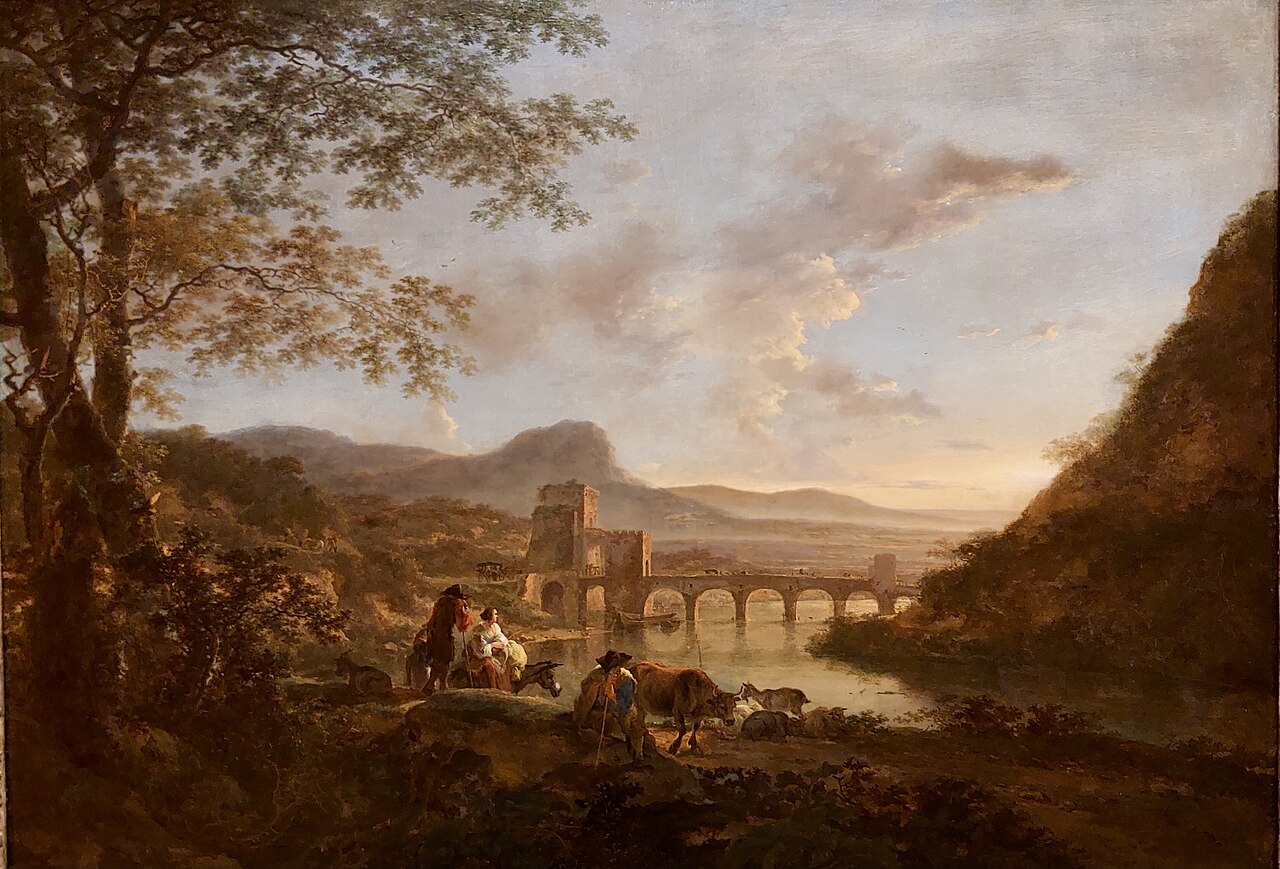
The scale of such an undertaking would have been extraordinary. It would have required excavation through difficult terrain, management of a major river system, and the construction of an artificial watercourse capable of handling the Tiber’s highly variable discharge.
Caesar’s assassination in 44 BC ended the project before construction could begin. Augustus adopted more practical hydraulic measures rather than attempting the complete rerouting of the river. Later, following another major inundation during the reign of Tiberius, the Senate considered measures to control the Tiber’s tributaries. These proposals included diverting or damming parts of the river system, but opposition from communities whose own water supplies and agricultural systems would have been affected helped prevent implementation.
Rome therefore continued to coexist with the Tiber rather than conquer it. Permanent large-scale flood control came only in the modern era, when embankments were constructed during the nineteenth century.
Nero’s Corinth Canal
The Isthmus of Corinth presented a different engineering problem. Ships traveling between the western and eastern Mediterranean normally had to navigate around the Peloponnese, adding distance and exposing vessels to the dangerous waters around Cape Malea.
The alternative was to cross the narrow Corinthian isthmus. The Greeks had already developed the Diolkos, a stone-paved transport route over which vessels or, more commonly, their cargoes could be hauled between the Corinthian and Saronic gulfs. It was an impressive logistical solution, but it was labor-intensive and unsuitable as a modern-style navigable waterway.
The concept of excavating a canal had therefore existed for centuries. Julius Caesar reportedly considered it, and Caligula also investigated the possibility. Suetonius specifically lists cutting a canal through the Isthmus among Caesar’s unrealized projects.
Nero was the first Roman emperor to turn the concept into a major construction project. In AD 67, he ceremonially inaugurated the excavation and reportedly participated in the opening work. His engineers approached the isthmus from both sides, while shafts were driven into the terrain to investigate its geological structure. Excavations extended more than a kilometer inland from the eastern coast and roughly two kilometers from the western side, while a central cutting was also attempted. Archaeological and historical evidence indicates that the planned canal followed essentially the same route as the modern Corinth Canal.
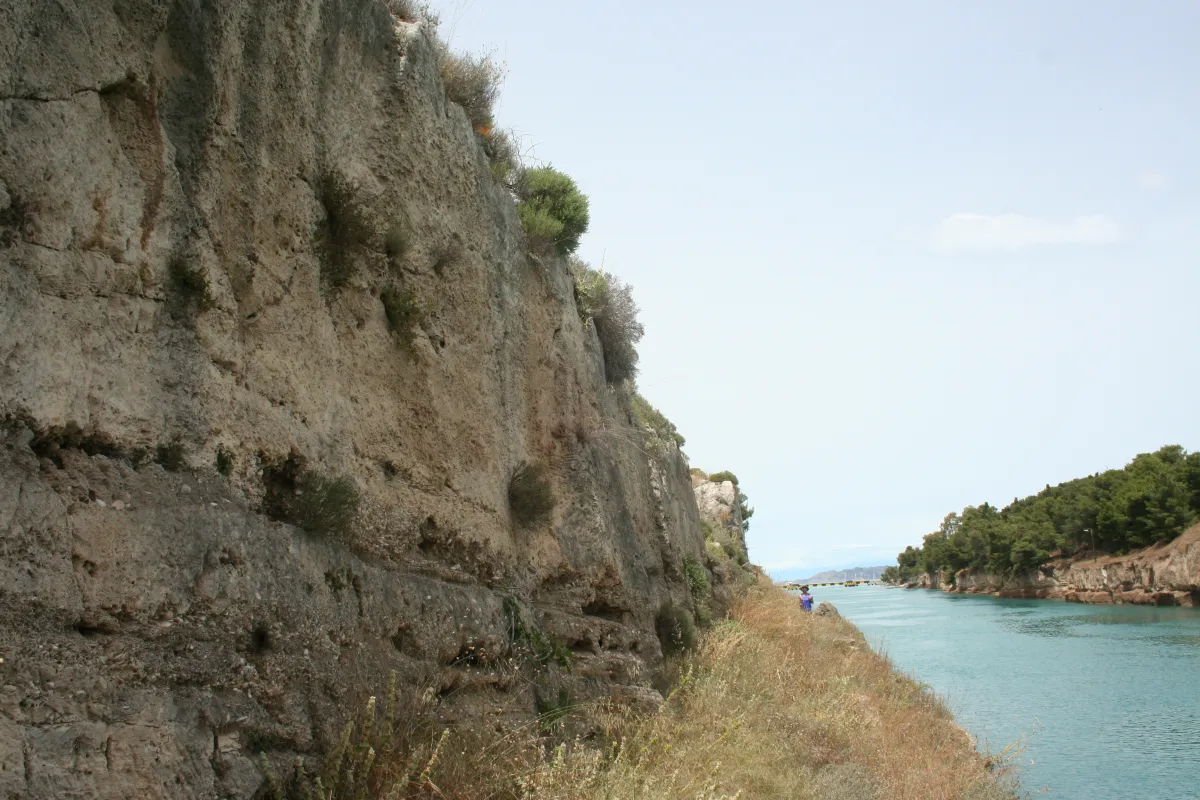
One important detail requires clarification. The traditional account that Nero’s workforce consisted of 6,000 Jewish prisoners compresses events that occurred under different emperors. Josephus records that Vespasian subsequently sent 6,000 Jewish captives to the Isthmus to continue the canal works in AD 67. The labor force therefore cannot simply be characterized as 6,000 prisoners working from the beginning of Nero’s excavation.
The project ultimately failed because of the political crisis following Nero’s death. The excavation stopped before the isthmus was breached.
The canal became a symbol of imperial ambition exceeding practical limits. Nearly eighteen centuries later, engineers returned to the same basic route. The modern Corinth Canal was finally completed in the nineteenth century after extensive excavation, explosives, and industrial machinery. Its completion demonstrated just how formidable the geological problem confronting Nero’s engineers had been.
Waldgirmes: A Roman City Beyond the Rhine
The most revealing unfinished Roman project was not a canal or river diversion but a city.
During Augustus’ expansion into Germania, Roman forces advanced east of the Rhine toward the Elbe. The campaign was accompanied not only by military installations but by attempts to establish a permanent Roman administrative and commercial presence.
At Waldgirmes in modern Hesse, archaeologists uncovered the remains of a substantial civilian settlement dating from approximately 4 BC to the early first century AD. Unlike a conventional legionary fortress, Waldgirmes was fundamentally an urban foundation. Its streets were laid out according to Roman principles, and the settlement contained workshops, warehouses, Roman-style residences, drainage infrastructure, and evidence of sophisticated water management. Archaeological research places the settlement’s foundation around 4 BC and its abandonment roughly by AD 16.
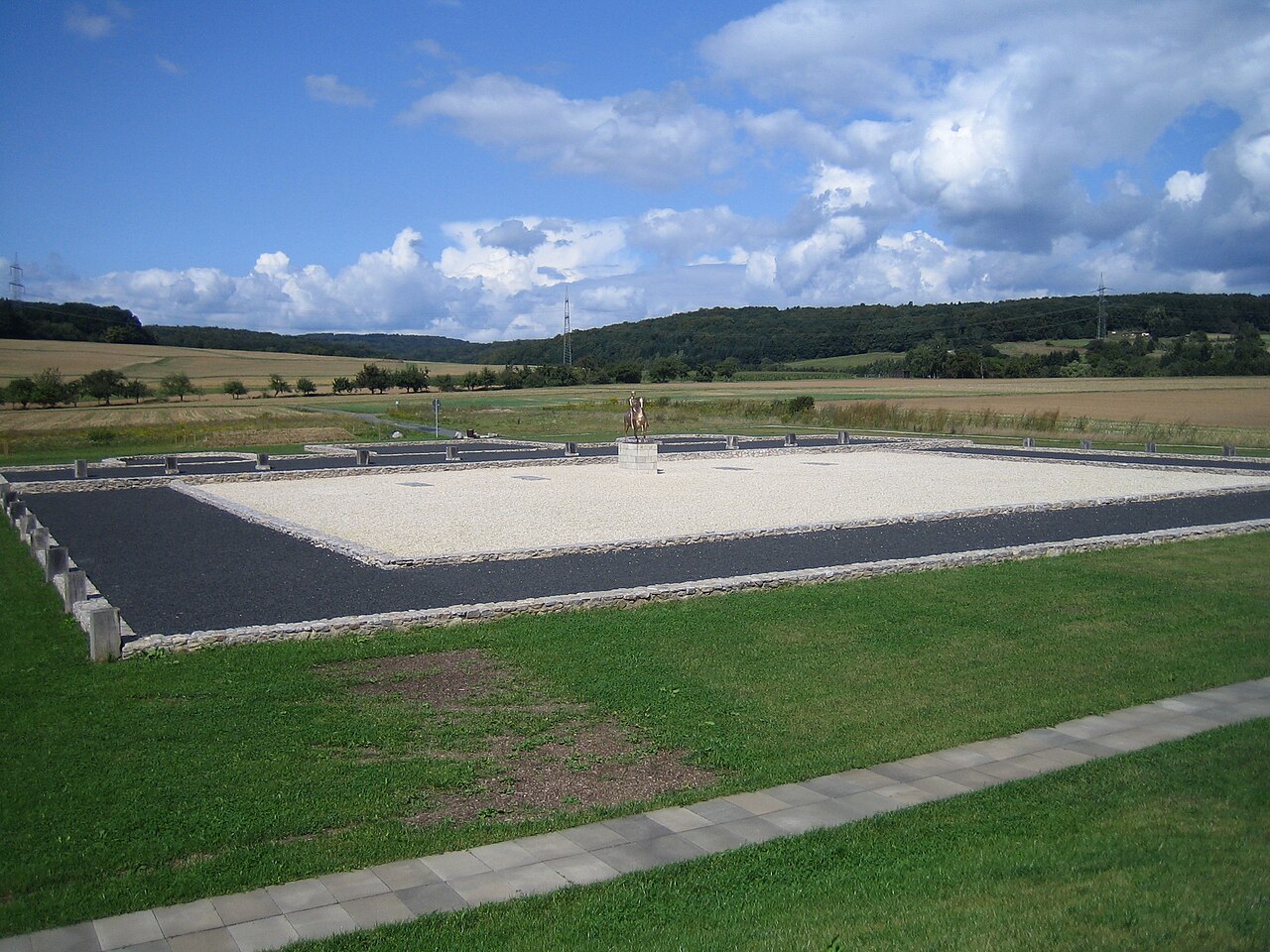
Its central forum provides the strongest evidence of the settlement’s intended importance. Archaeologists discovered foundations for multiple monumental statues, including evidence of a life-sized equestrian monument. The most spectacular surviving fragment is a gilded bronze horse’s head discovered in a well. Dendrochronological evidence dates the well’s wooden structure to approximately 4 BC.
The settlement’s existence demonstrates that Rome’s Germanic strategy involved more than temporary military conquest. The Romans were attempting to establish the institutional and commercial infrastructure required to transform conquered territory into a Romanized landscape.
That strategy collapsed after the defeat of Publius Quinctilius Varus in the Battle of the Teutoburg Forest in AD 9. Rome abandoned its forward position east of the Rhine, and Waldgirmes was subsequently deserted. Archaeological evidence indicates that buildings were destroyed or burned, while the monumental statuary was dismantled. The gilded horse’s head was thrown into a well, where it remained until its rediscovery in the modern period.
Waldgirmes is particularly significant because it represents an urban project interrupted not by engineering failure but by strategic collapse. The Romans possessed the technical ability to construct the settlement. What they could not guarantee was the political and military environment necessary for it to survive.
The Limits of Roman Engineering
These three projects reveal three different reasons why Roman mega-projects failed.
The Tiber diversion was defeated by political assassination and the enormous hydraulic complexity of modifying a major river. Nero’s Corinth Canal was undermined by the collapse of the political regime that had sponsored it and the extraordinary difficulty of excavating through the Corinthian ridge. Waldgirmes failed because Rome’s broader attempt to establish permanent control beyond the Rhine collapsed after military defeat.
None of these failures demonstrates a lack of Roman engineering ability. In fact, the opposite is true. Each project required an advanced understanding of surveying, excavation, hydraulics, logistics, labor organization, and infrastructure.
The decisive limitation was often not technology. It was continuity.
Roman engineers could design projects on a colossal scale, but those projects depended on emperors, armies, taxation, labor, political authority, and strategic circumstances remaining aligned for years or decades. When those foundations disappeared, even technically achievable projects could become abandoned ruins.
The surviving monuments of Rome therefore tell only half the story. The unfinished canal at Corinth, the unrealized diversion of the Tiber, and the abandoned city of Waldgirmes reveal the other half: an empire capable of extraordinary engineering, but still constrained by geography, politics, warfare, economics, and time.
