
A Monument Built for Emperor Hadrian
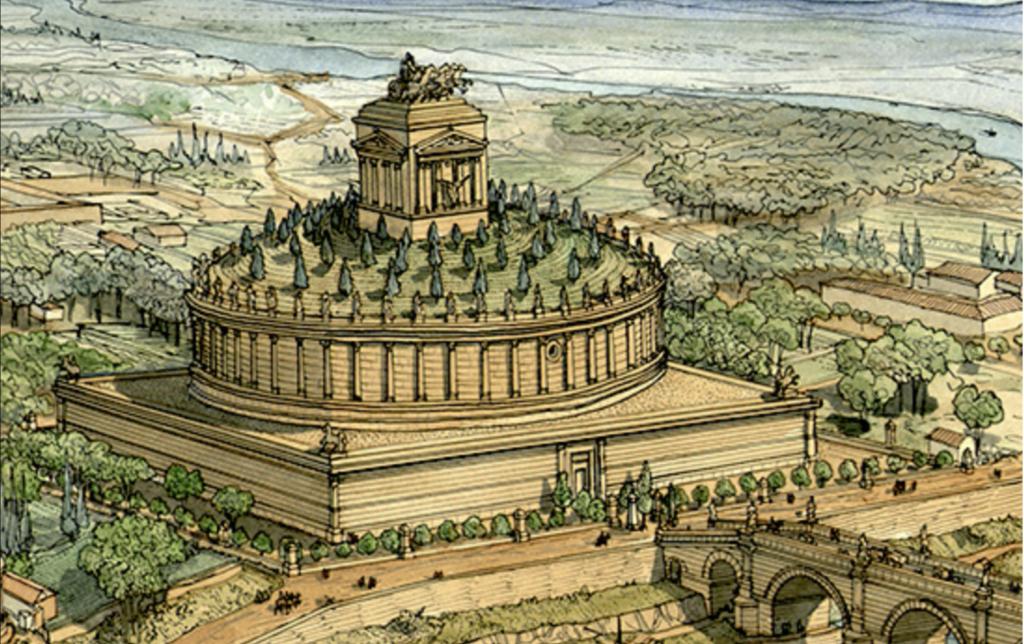
Construction of Hadrian’s mausoleum began around AD 135 and was completed in AD 139, shortly after the emperor’s death in AD 138. His successor, Antoninus Pius, oversaw its completion.
Hadrian intended the structure to serve as his dynastic burial monument, recalling the earlier Mausoleum of Augustus, which stood on the opposite side of the Tiber. However, Hadrian’s monument was distinguished by its enormous cylindrical upper structure, substantial square base, and lavish architectural decoration.
The original building was considerably more elaborate than the fortress visible today. Its exterior incorporated marble and travertine, while sculptures and other decorative elements emphasized its imperial character. Ancient descriptions and surviving architectural evidence suggest that the monument originally featured a monumental mound-like upper section, possibly crowned by a sculptural representation of Hadrian.
The precise appearance of its uppermost levels remains uncertain because much of the original decoration has disappeared.
Inside, a spiral ramp provided access to the central burial chamber, where the emperor’s ashes were placed in an urn. The monument subsequently received the remains of several members of the imperial family, including later emperors of the Antonine dynasty.
From Imperial Mausoleum to Military Fortress
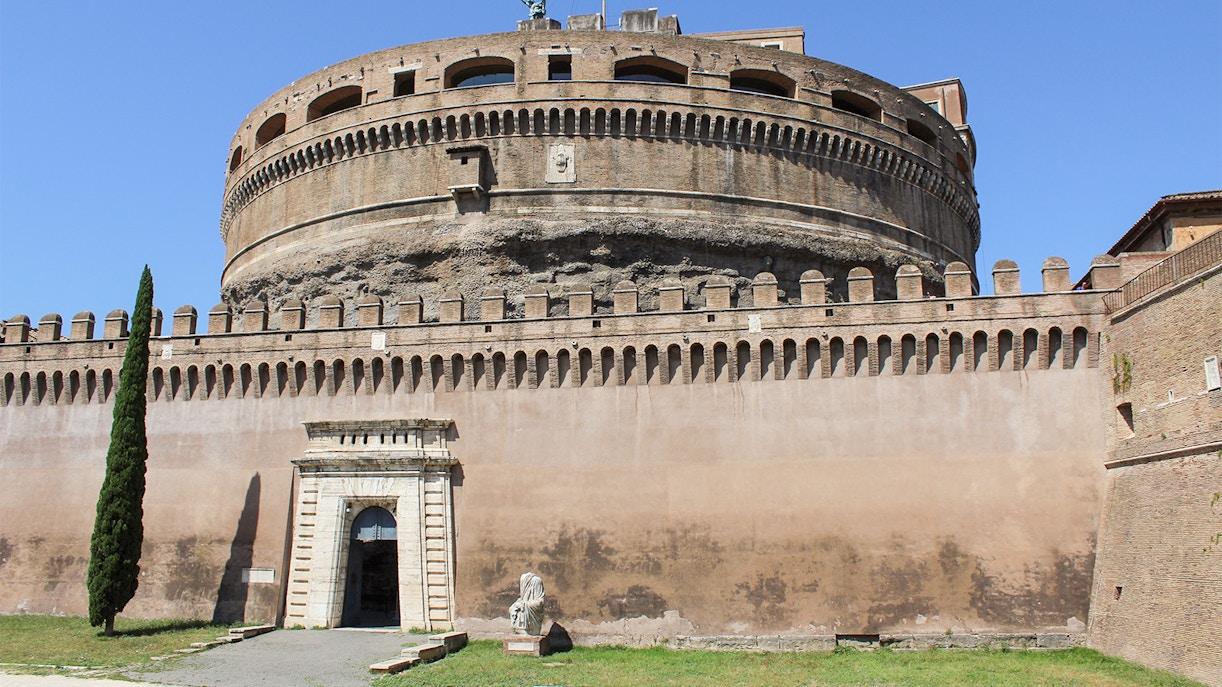
The decline of Roman imperial authority transformed the mausoleum’s purpose. During late antiquity, the building acquired increasing military importance because of its strategic position beside the Tiber and its proximity to important routes into the city.
Rome suffered repeated attacks during the fifth and sixth centuries. The Visigothic sack of AD 410 and the Gothic Wars of the sixth century contributed to the monument’s transformation into a fortified defensive position.
During the siege of Rome in AD 537–538, Ostrogothic forces attacked the city while Byzantine troops defended it. According to the historian Procopius, defenders used statues from the mausoleum as projectiles against the besiegers. This episode illustrates how the building’s original artistic decoration was sacrificed to its military function.
Over subsequent centuries, additional fortifications transformed the ancient tomb into a formidable stronghold. Its strategic importance continued to increase as Rome’s political and religious authorities changed.
The Vision of Saint Michael and the Monument’s New Name
One of the most famous episodes associated with Castel Sant’Angelo dates to AD 590, during the pontificate of Pope Gregory I, commonly known as Gregory the Great.
According to medieval Christian tradition, Rome was suffering from a devastating plague following a major flood of the Tiber in AD 589. Gregory organized religious processions through the city, carrying an image of the Virgin Mary in an appeal for divine intervention.
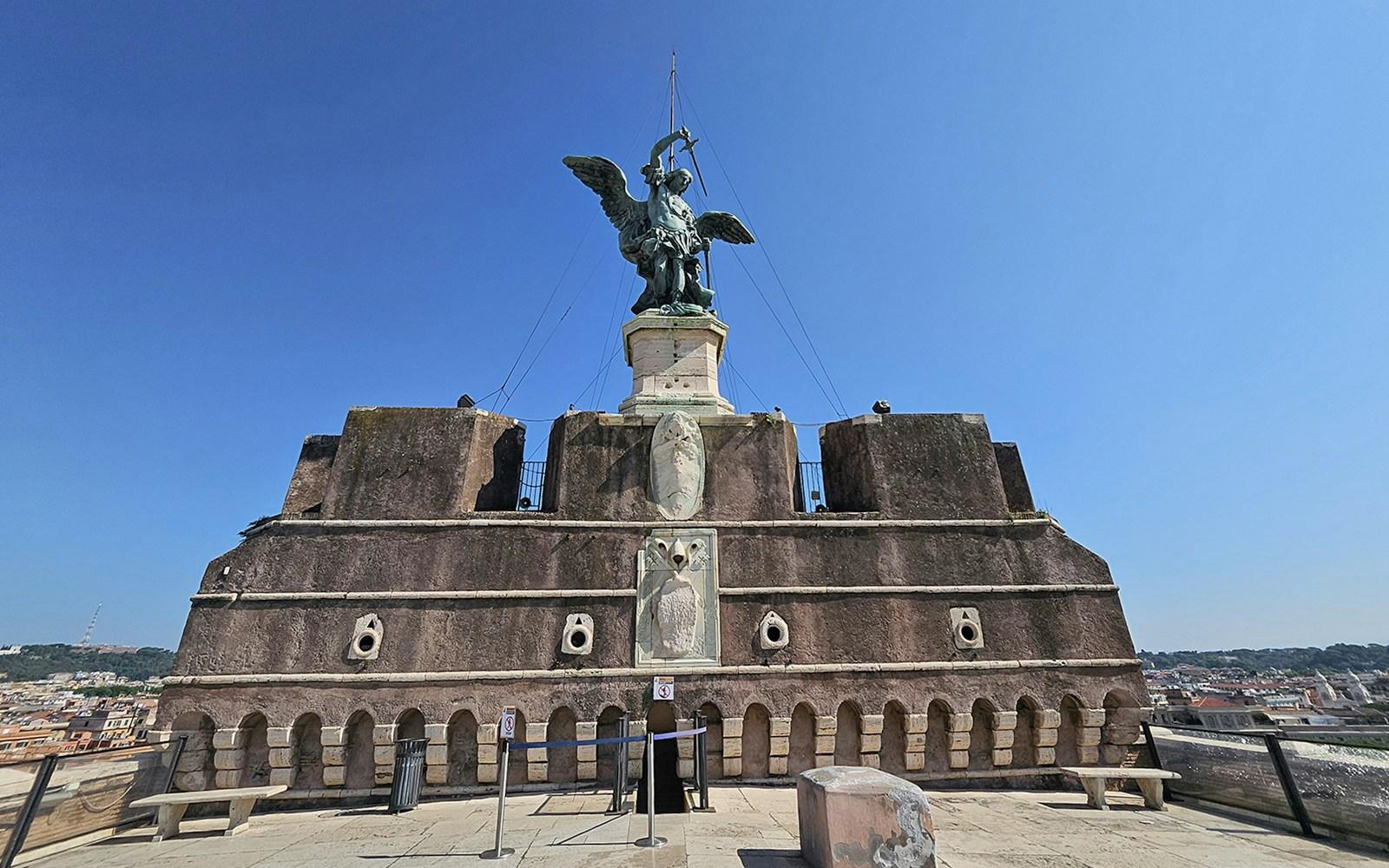
During the procession, the pope reportedly witnessed the Archangel Michael standing above Hadrian’s mausoleum, sheathing his sword. The vision was interpreted as a sign that the plague would end.
Although the story became central to the monument’s Christian identity, it should be understood as a religious tradition rather than a historically verifiable supernatural event.
A chapel dedicated to Saint Michael was subsequently associated with the monument, and the ancient mausoleum gradually became known as Castel Sant’Angelo, meaning Castle of the Holy Angel. The present rooftop statue of the archangel commemorates this tradition, although the sculpture visible today dates from the eighteenth century.
The Passetto di Borgo: A Secret Route to Papal Safety
As the papacy became increasingly influential in medieval Rome, Castel Sant’Angelo developed into one of its most important defensive installations.
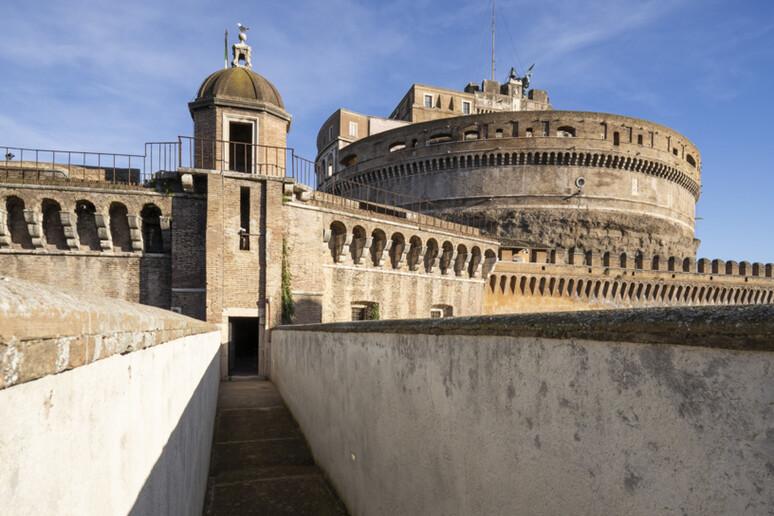
Its proximity to the Vatican made it particularly valuable. Pope Nicholas III, who held office from 1277 to 1280, was associated with the construction and development of the Passetto di Borgo, a fortified elevated passage connecting the Vatican area with the castle.
The corridor allowed popes to reach the fortress without crossing exposed city streets during periods of political unrest.
Its most famous use came during the Sack of Rome in May 1527. The invading imperial army of Holy Roman Emperor Charles V, composed largely of mutinous and unpaid troops, overwhelmed the city’s defenses. Pope Clement VII escaped from the Vatican through the Passetto and took refuge inside Castel Sant’Angelo.
The episode demonstrated the monument’s continuing military importance. What had originally protected the remains of Roman emperors now offered protection to the head of the Catholic Church.
Renaissance Transformation: A Fortress Becomes a Papal Palace
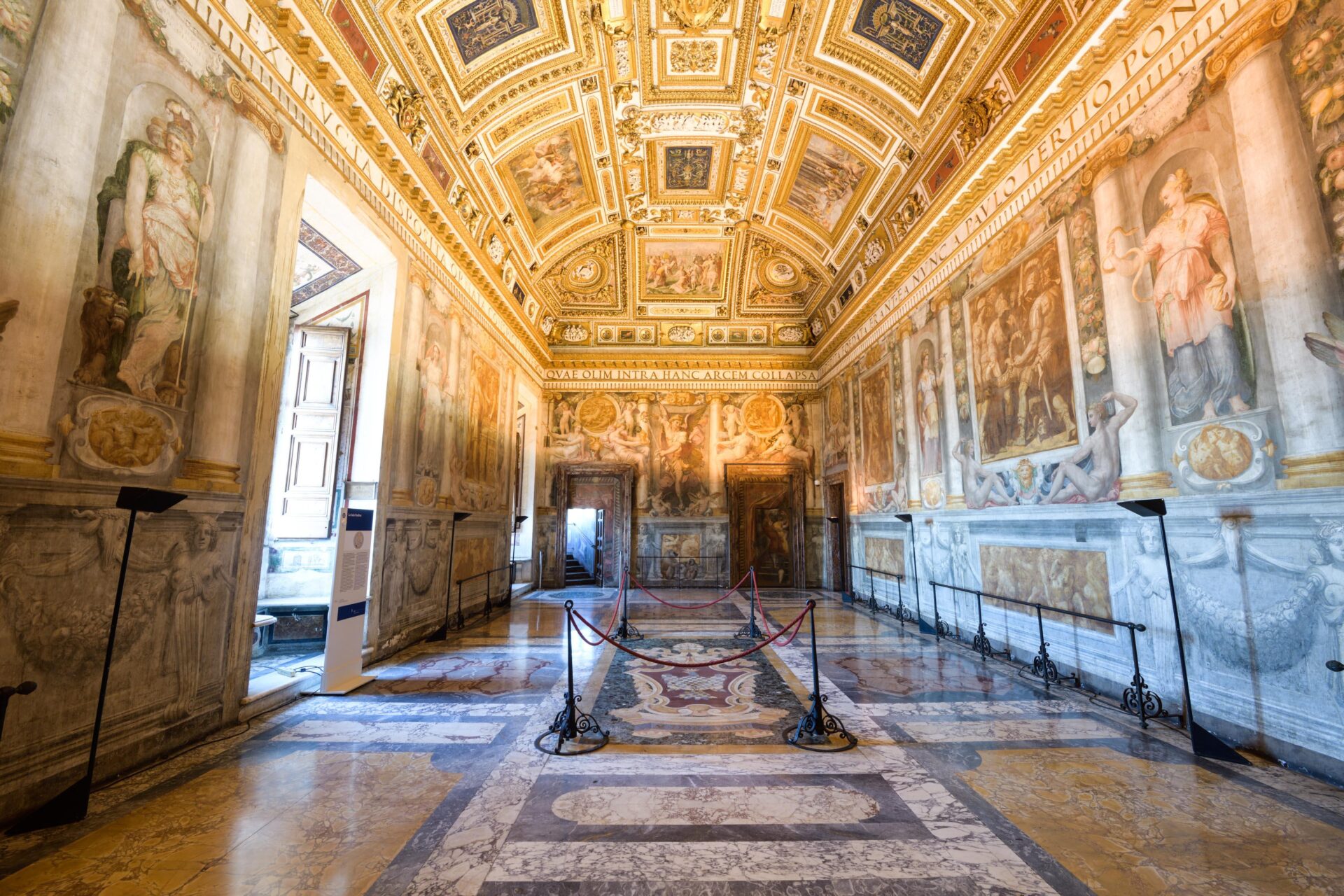
During the Renaissance, Castel Sant’Angelo underwent extensive architectural and artistic renovations. Its defensive role remained essential, but successive popes also transformed parts of the fortress into luxurious residential and ceremonial spaces.
Pope Alexander VI (1492–1503), from the Borgia family, strengthened the castle’s military defenses, including its bastions, while improving its residential facilities. Later, Pope Paul III (1534–1549) commissioned particularly elaborate apartments decorated with frescoes, ornamentation, and classical architectural motifs.
The Renaissance fascination with ancient Roman art also influenced the castle’s interior decoration.
One important source of inspiration was the Domus Aurea, the enormous palace complex built by Emperor Nero after the Great Fire of AD 64. Its underground rooms were rediscovered during the late fifteenth century, attracting artists who explored their surviving wall paintings.
The decorative style they encountered became known as grotesque, characterized by elaborate combinations of human figures, animals, plants, and fantastical architectural elements.
Related ornamental designs appeared in Renaissance interiors throughout Rome, including rooms within Castel Sant’Angelo. The result was an unusual combination of ancient Roman architectural foundations, medieval military engineering, and Renaissance artistic expression.
The Baroque Bridge of Angels
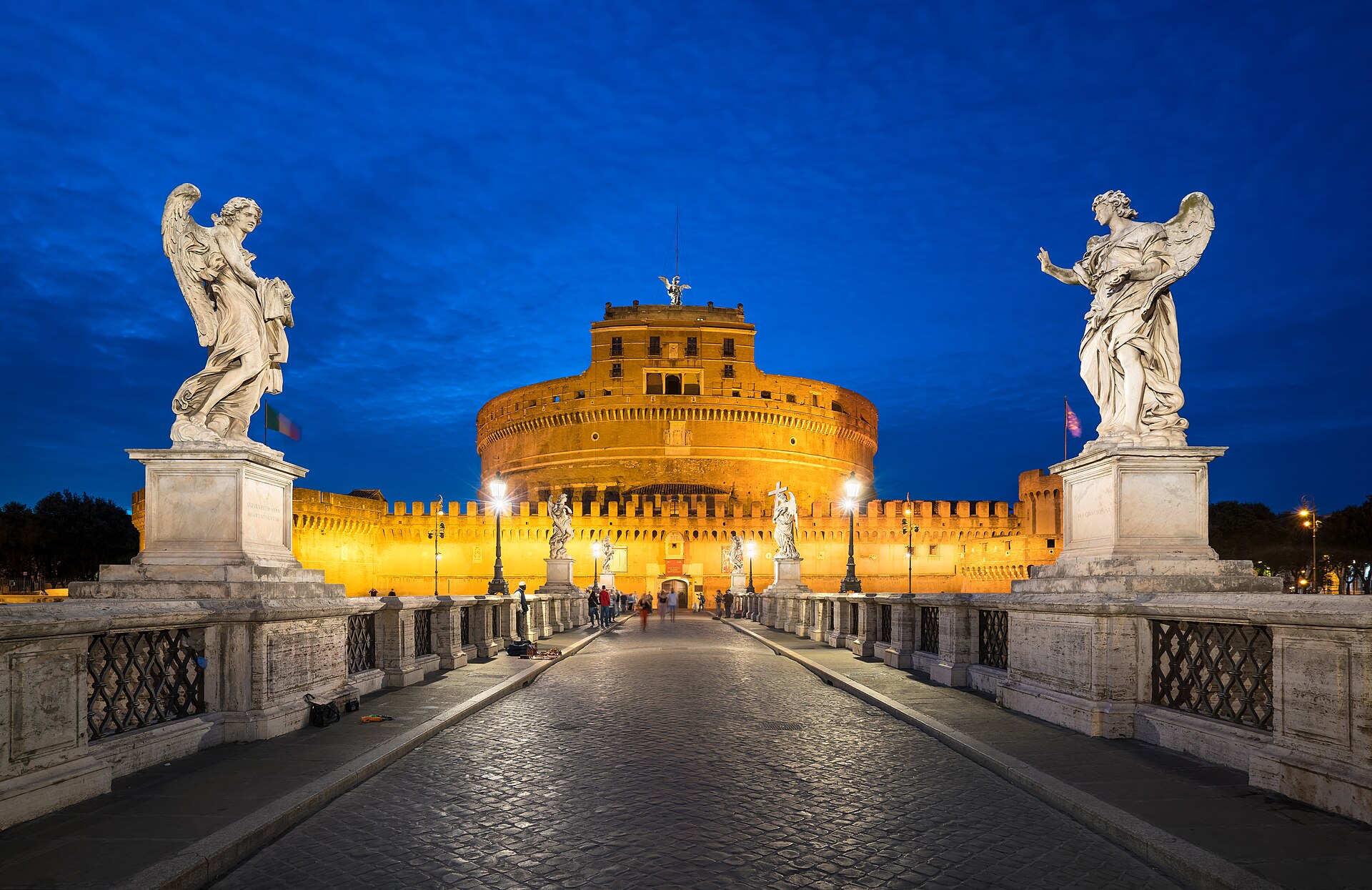
The artistic transformation of the monument extended beyond its walls to the bridge spanning the Tiber.
Originally constructed under Hadrian as the Pons Aelius, the bridge provided a monumental approach to the emperor’s mausoleum. It was later renamed Ponte Sant’Angelo, reflecting the Christian identity of the castle.
In the seventeenth century, Pope Clement IX commissioned Gian Lorenzo Bernini to oversee the bridge’s Baroque sculptural decoration. The project produced a series of ten angels carrying instruments associated with the Passion of Christ, including the cross, crown of thorns, and spear.
Bernini designed the angels, while members of his workshop executed much of the sculpture. Two angels personally sculpted by Bernini were subsequently preserved in the church of Sant’Andrea delle Fratte.
The sculptures transformed the bridge into a religious and artistic approach to the castle, reinforcing its association with Christian pilgrimage and papal authority.
Above the fortress, another angel sculpture completes the monument’s transformation. The bronze Archangel Michael, created by Flemish sculptor Peter Anton von Verschaffelt and installed in 1753, depicts the figure sheathing his sword, recalling the medieval legend of Pope Gregory’s vision.
Prison, Political Stronghold, and the Modern Italian State
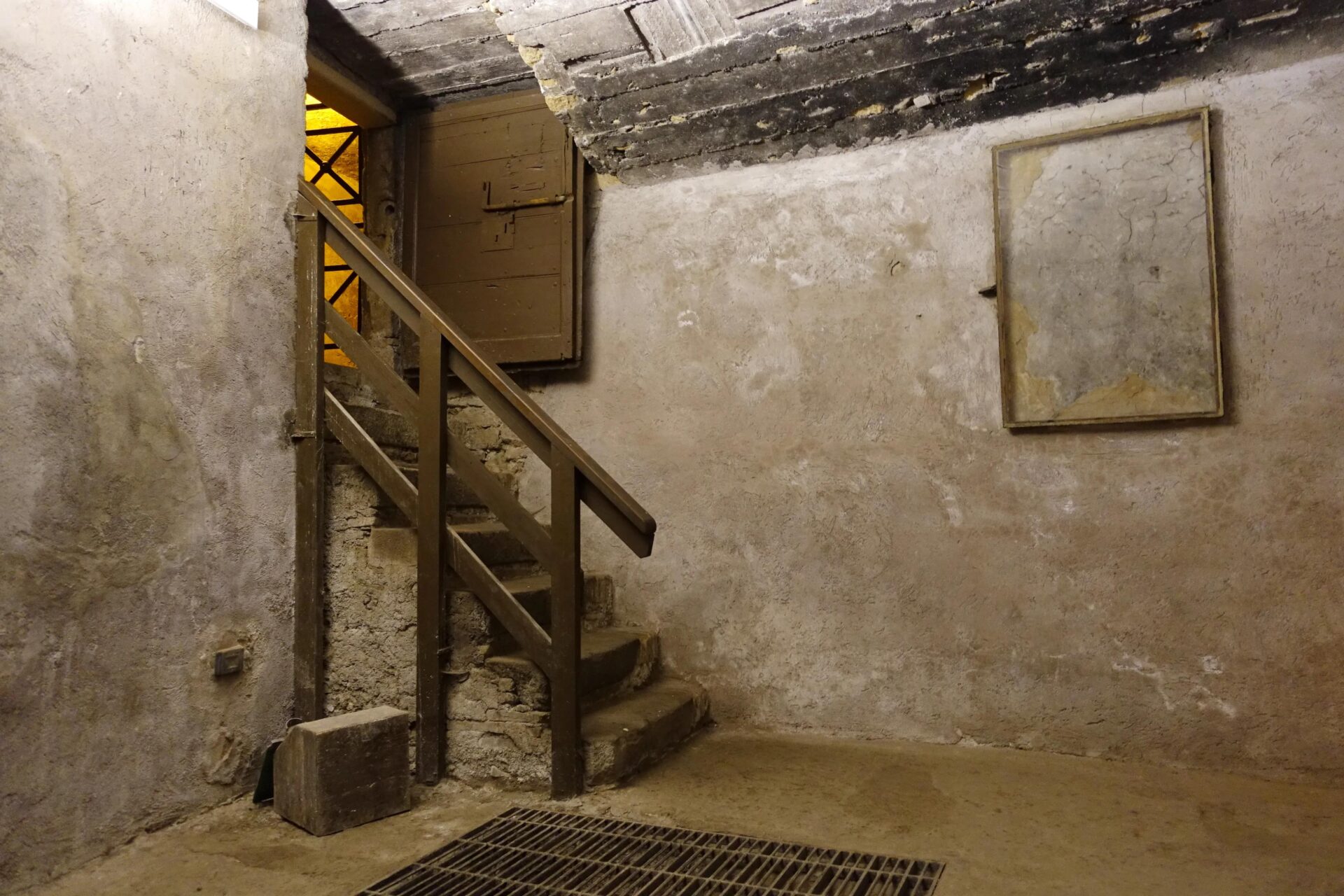
From the seventeenth century onward, Castel Sant’Angelo gradually lost much of its importance as a papal residence. Its function increasingly shifted toward military administration and imprisonment.
The fortress became a political prison, holding individuals accused of crimes against papal authority. Its reputation as a place of confinement became an important part of its later history.
The building also witnessed the political upheavals that accompanied the unification of Italy. In 1870, following the capture of Rome by Italian forces, Castel Sant’Angelo passed into the possession of the Italian state. It subsequently served military purposes, including use as a barracks and military prison.
In 1925, the monument officially became the Museo Nazionale di Castel Sant’Angelo (National Museum of Castel Sant’Angelo). Conservation and restoration work helped preserve its architectural remains, historic interiors, and artistic collections.
Castel Sant’Angelo Today: A Monument to Rome’s Layered History
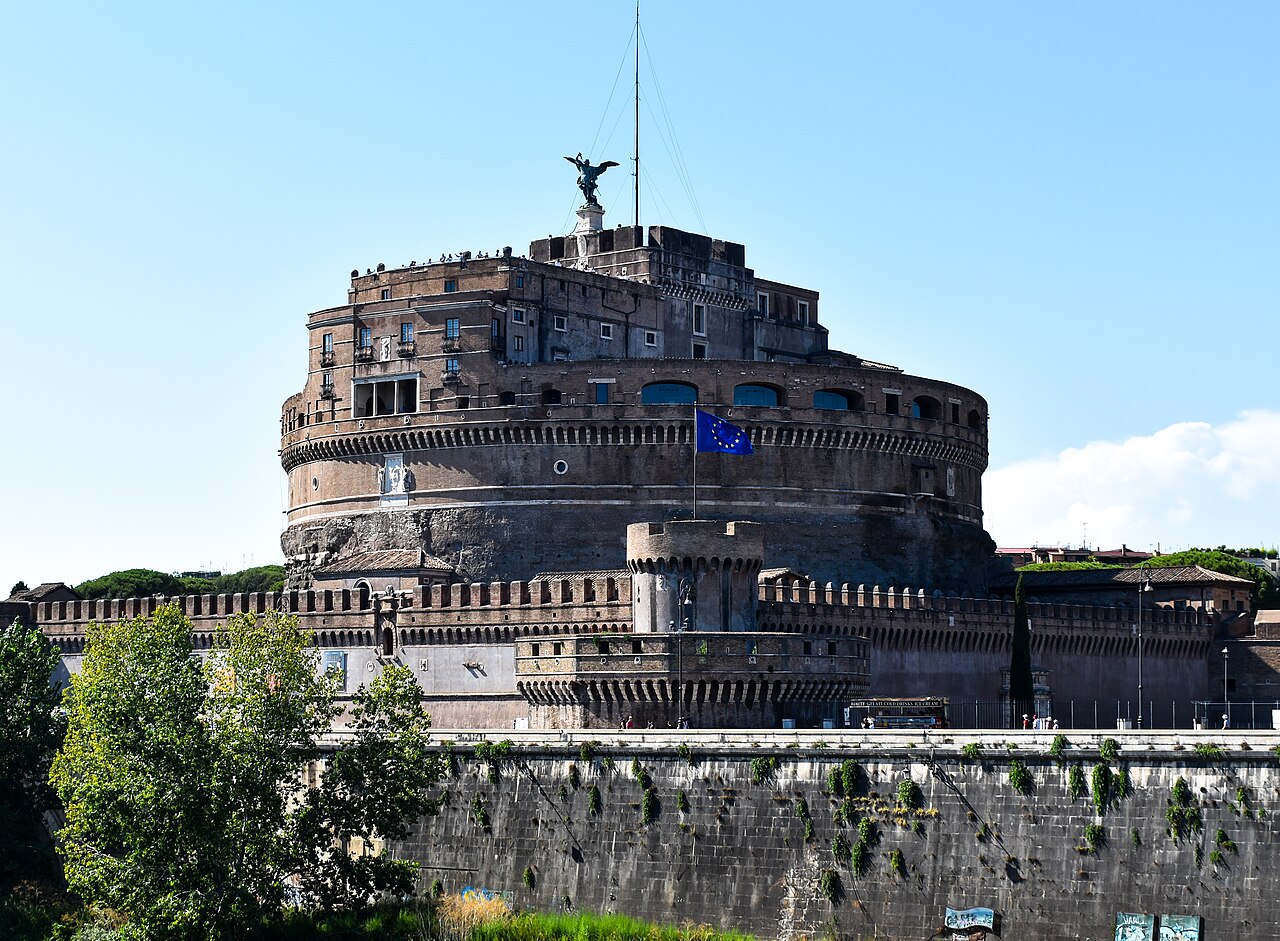
Today, Castel Sant’Angelo is among Rome’s most recognizable historic landmarks. Visitors can explore its ancient architectural foundations, medieval fortifications, Renaissance apartments, prison spaces, and panoramic terraces.
Its relationship with nearby St. Peter’s Basilica remains particularly significant. Together with the Passetto di Borgo and Ponte Sant’Angelo, the monument forms part of a historic landscape that illustrates the close relationship between Rome’s imperial past and the development of papal authority.
The building’s survival is especially remarkable because it was never simply preserved as an ancient monument. Its continued usefulness as a fortress, residence, prison, and defensive stronghold ensured that successive generations maintained and modified it rather than abandoning it.
Castel Sant’Angelo ultimately tells the story of Rome itself: a city where ancient imperial monuments acquired new meanings through medieval Christianity, Renaissance artistic ambition, Baroque religious expression, and modern conservation. Its architecture remains a physical record of nearly two millennia of political, cultural, and religious change.
