
The Pyramid of Cestius is one of the most striking monuments surviving from ancient Rome. Standing beside the Porta San Paolo and the Protestant Cemetery, its sharply angled marble-covered faces look more at home in the Nile Valley than in the Roman landscape. Yet the monument is unmistakably Roman: it was built as a funerary monument for Gaius Cestius, a wealthy Roman magistrate and member of the Septemviri Epulonum, one of Rome’s four major priestly colleges.
Built between approximately 18 and 12 BC, the pyramid illustrates the cultural transformation of Rome following its conquest of Egypt. Its form reflects the contemporary Roman fascination with Egyptian imagery, while its engineering, inscriptions and interior decoration remain firmly rooted in Roman traditions.
A Roman Pyramid in the Age of Augustus
Gaius Cestius commissioned the pyramid as his tomb during the early imperial period. The monument measures approximately 29.6 meters on each side of its square base and rises about 37 meters, giving it a much steeper profile than the great pyramids of Giza.
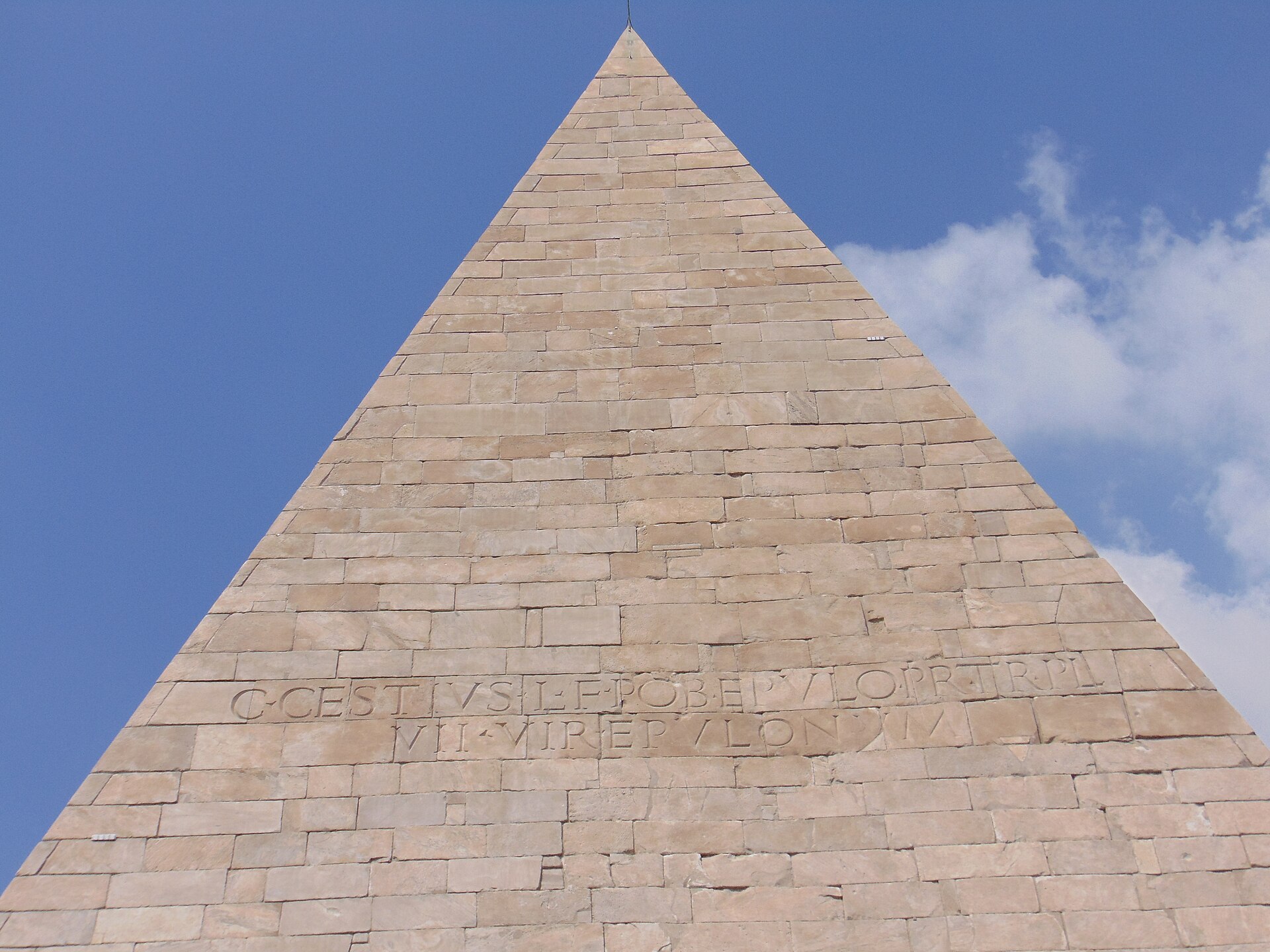
Its construction was remarkably rapid. An inscription on the southeastern face records that the monument was completed in only 330 days, in accordance with Cestius’ will. The inscription also names two individuals involved in its completion: his heir Lucius Pontius Mela and Pothus, a freedman.
The pyramid was constructed from brick-faced concrete, a standard Roman building technique, over a travertine foundation. Its exterior was then faced with white marble slabs, producing the brilliant, monumental appearance that distinguished it from ordinary Roman tombs.
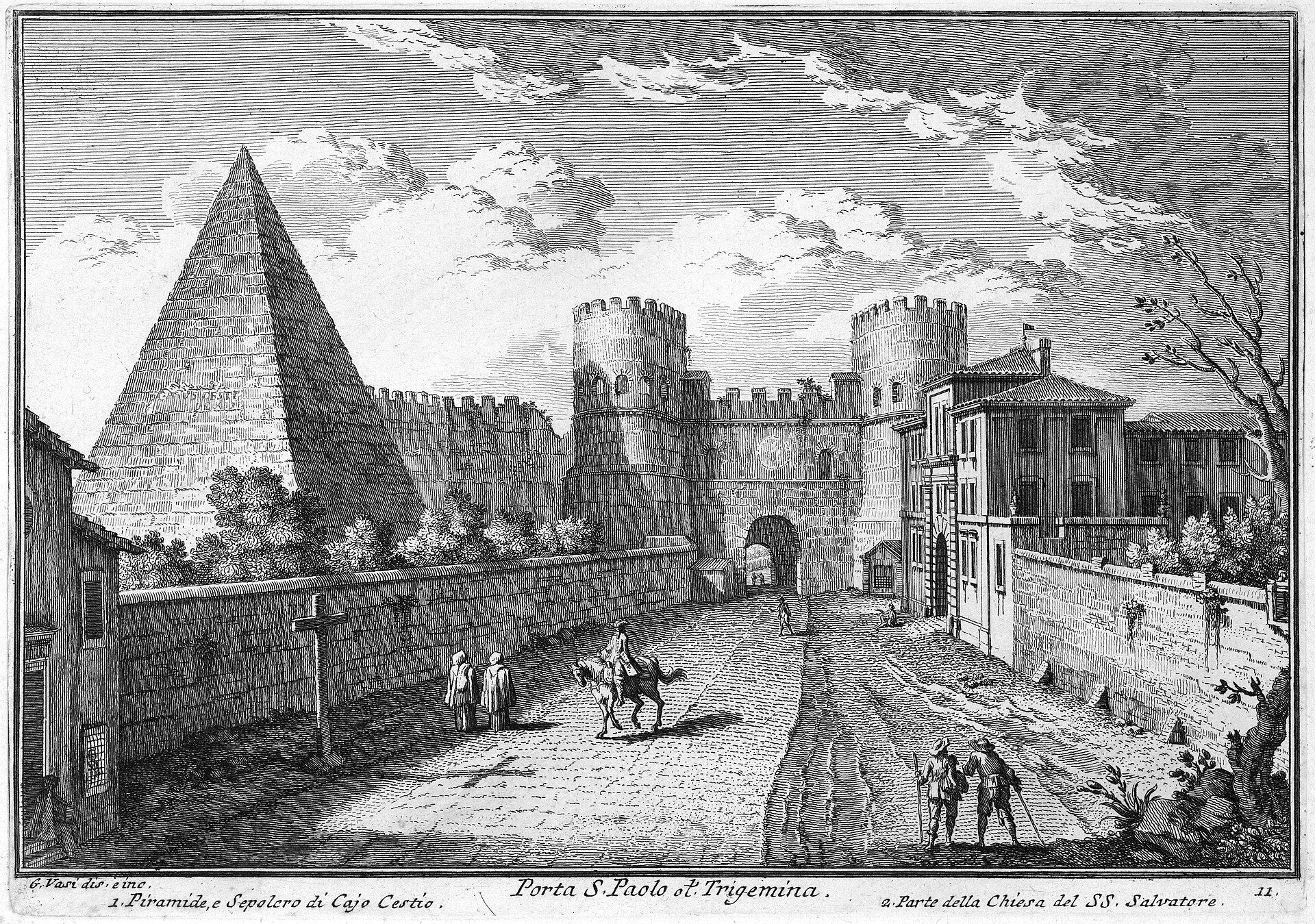
The choice of a pyramid was highly unusual in Rome, but its timing is significant. Rome had annexed Egypt in 30 BC following the defeat of Mark Antony and Cleopatra. Egyptian monuments, religious imagery and architectural forms subsequently became fashionable among Rome’s elite. Augustus himself incorporated Egyptian obelisks into Rome’s monumental landscape.
However, the Pyramid of Cestius was probably not directly modeled on the pyramids of Giza.
Why Does It Look Like a Nubian Pyramid?
The monument’s unusually steep sides are more consistent with the pyramids of Nubia, particularly those associated with the Kingdom of Meroë, than with the comparatively broad profiles of the major pyramids at Giza.
This connection is especially intriguing because Rome had fought a campaign against the Kingdom of Kush in 23 BC, only a few decades before Cestius’ tomb was constructed. Roman forces invaded Nubian territory after conflict along Egypt’s southern frontier, and the campaign resulted in the capture of the city of Napata.
There is no surviving evidence proving that Cestius personally participated in the campaign. Nor can the pyramid’s design conclusively be identified as a monument celebrating the Roman victory. Nevertheless, the chronological and stylistic connection has made a Nubian influence a compelling interpretation.
The monument therefore represents more than an imitation of a foreign architectural form. It reflects how Roman elites could appropriate Egyptian and African imagery and transform it into a distinctly Roman expression of status, wealth and commemoration.
The Tomb Inside the Pyramid
Behind the pyramid’s imposing exterior is a surprisingly small burial chamber.
The chamber measures approximately 5.95 meters long, 4.10 meters wide and 4.80 meters high, with a barrel-vaulted ceiling. Unlike later monumental mausoleums designed around elaborate internal spaces, Cestius’ tomb was fundamentally a sealed chamber enclosed within the pyramid.
Its walls were decorated with Roman frescoes. When the monument was excavated in the seventeenth century, the paintings were recorded by the artist and antiquarian Pietro Santo Bartoli. Only fragments survive today.
The surviving evidence indicates that the decoration belonged to the highly fashionable Third Style of Roman painting, which developed during the Augustan period. The contrast is revealing: the exterior adopted an Egyptianizing monumental form, while the interior followed contemporary Roman decorative conventions.
There was originally no conventional external entrance into the burial chamber. The tomb was sealed after burial and was subsequently plundered, probably during antiquity. When investigators entered the chamber during excavations in the 1660s, no substantial funerary objects remained.
Cestius and His Monument
The inscriptions provide unusually detailed information about the tomb’s owner.
The principal inscription identifies him as:
Gaius Cestius, son of Lucius, of the Pobilia tribe, praetor, tribune of the plebs and septemvir of the Epulones.
The Septemviri Epulonum were responsible for organizing and overseeing important public religious banquets. Membership in the college was therefore a significant religious and political distinction.
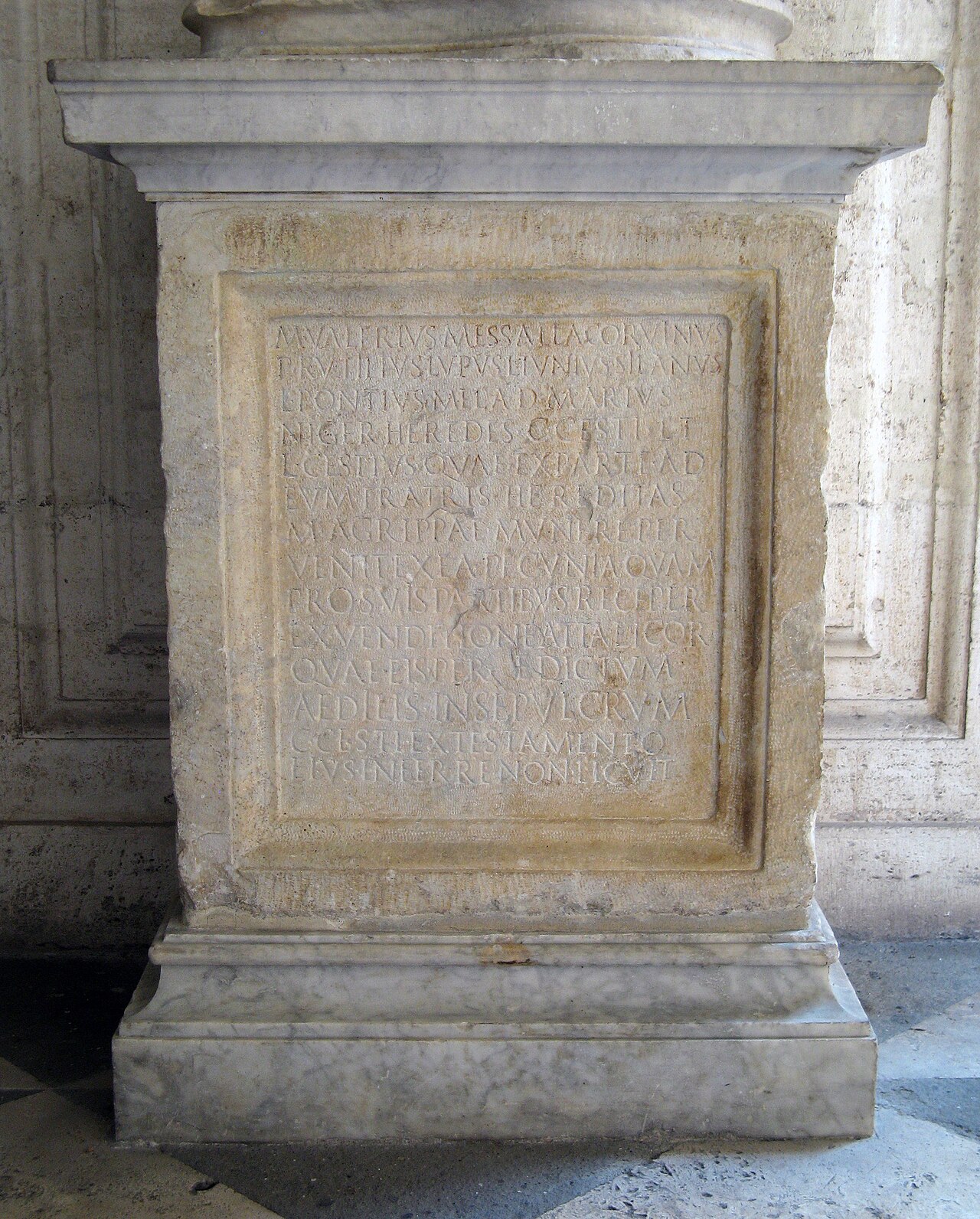
Cestius’ tomb was also connected to his family and inheritance. Excavations beside the pyramid uncovered two marble statue bases bearing inscriptions identifying several of his heirs, including Marcus Valerius Messalla Corvinus, Publius Rutilius Lupus and Lucius Junius Silanus.
The inscriptions reveal an unusual complication involving Cestius’ will. He had apparently intended valuable textiles known as attalici to be placed inside his tomb. An edict issued by the aediles prohibited this practice, so the heirs instead sold the textiles and used the proceeds to fulfill other provisions associated with the monument.
From Open Countryside to City Landmark
When Cestius died, his pyramid did not stand in the middle of a densely populated city.
Roman law and custom restricted burials within the urban area, meaning the monument was constructed outside the contemporary city boundary. It stood near the Via Ostiensis, an important road leading from Rome toward Ostia.
Rome subsequently expanded around it.
By the third century AD, the pyramid was surrounded by the rapidly growing city. Its greatest transformation came between 271 and 275 AD, when Emperor Aurelian ordered the construction of the massive Aurelian Walls.
Rather than demolishing the pyramid, Roman engineers incorporated it directly into the defensive circuit. The pyramid effectively became part of the wall’s fortification system, forming a prominent triangular projection.
This decision had an enormous consequence for its survival.
The structure that had originally been built as a private funerary monument was now physically integrated into Rome’s military defenses. Destroying it would have compromised the surrounding fortifications. As a result, the pyramid survived while countless other Roman monuments were dismantled, quarried or buried beneath later construction.
The Lost Pyramid of Romulus
Cestius’ pyramid was not unique in ancient Rome.
Another enormous pyramid, traditionally called the Meta Romuli, stood near the Vatican between the Vatican Hill and the Mausoleum of Hadrian. Medieval Romans eventually associated the two monuments with Rome’s legendary founders, Romulus and Remus.
The Pyramid of Cestius consequently became known as the Meta Remi, or Tomb of Remus, while the Vatican pyramid was associated with Romulus.
Those identifications were incorrect.
The true identity of the Pyramid of Cestius was eventually recovered through its surviving inscriptions. The Meta Romuli did not survive the Renaissance. It was dismantled in the sixteenth century, and its marble was reused in the construction of St. Peter’s Basilica.
Cestius’ pyramid therefore became the sole surviving ancient Roman pyramid within Rome.
Rediscovery and Restoration
By the medieval period, vegetation and later construction had obscured parts of the monument, while its original purpose had largely been forgotten.
The decisive archaeological investigation came under Pope Alexander VII in the 1660s. Excavations cleared the monument, exposed its inscriptions and provided access to the burial chamber. The investigators also discovered the remains of the monument’s external sculptural decoration, including the bases for bronze statues.
A later inscription dated 1663 records the restoration.
Modern conservation has continued that effort. Restoration of the pyramid’s exterior and interior was undertaken in the twenty-first century, including major work beginning in 2013 to address deterioration of its marble cladding and water infiltration threatening the surviving frescoes.
A Monument That Preserved Its Own History
The Pyramid of Cestius is remarkable not simply because it is a pyramid in Rome, but because its surviving fabric preserves an unusually complete record of an individual Roman’s ambitions.
Its inscriptions identify Cestius, his political and religious offices, the people responsible for completing his tomb and the extraordinary speed of its construction. Its architecture reveals the Augustan fascination with Egypt and the wider Mediterranean world. Its interior demonstrates that the Egyptianizing exterior did not require an Egyptian interior: Roman artistic conventions remained dominant within.
Most importantly, the pyramid’s incorporation into the Aurelian Walls transformed its fate. A monument originally erected outside Rome became part of the city’s defensive infrastructure and consequently survived into the modern era.
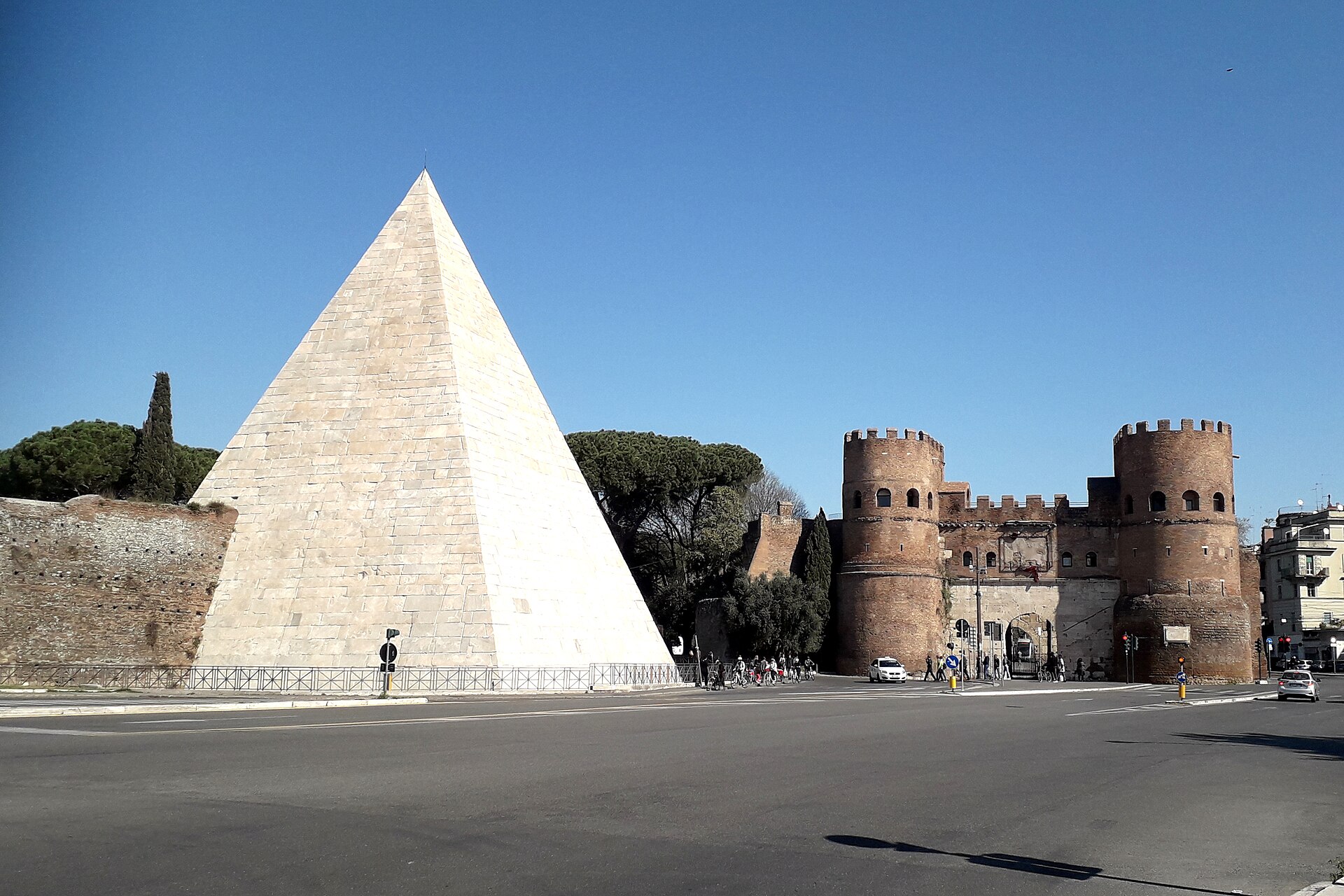
Today, beside Porta San Paolo, the Pyramid of Cestius remains an extraordinary collision of Roman engineering, Egyptianizing architecture, Augustan-era social ambition and later urban fortification. It is a monument that looks foreign to Rome at first glance, yet almost every aspect of its history reflects the changing character of Rome itself.
