
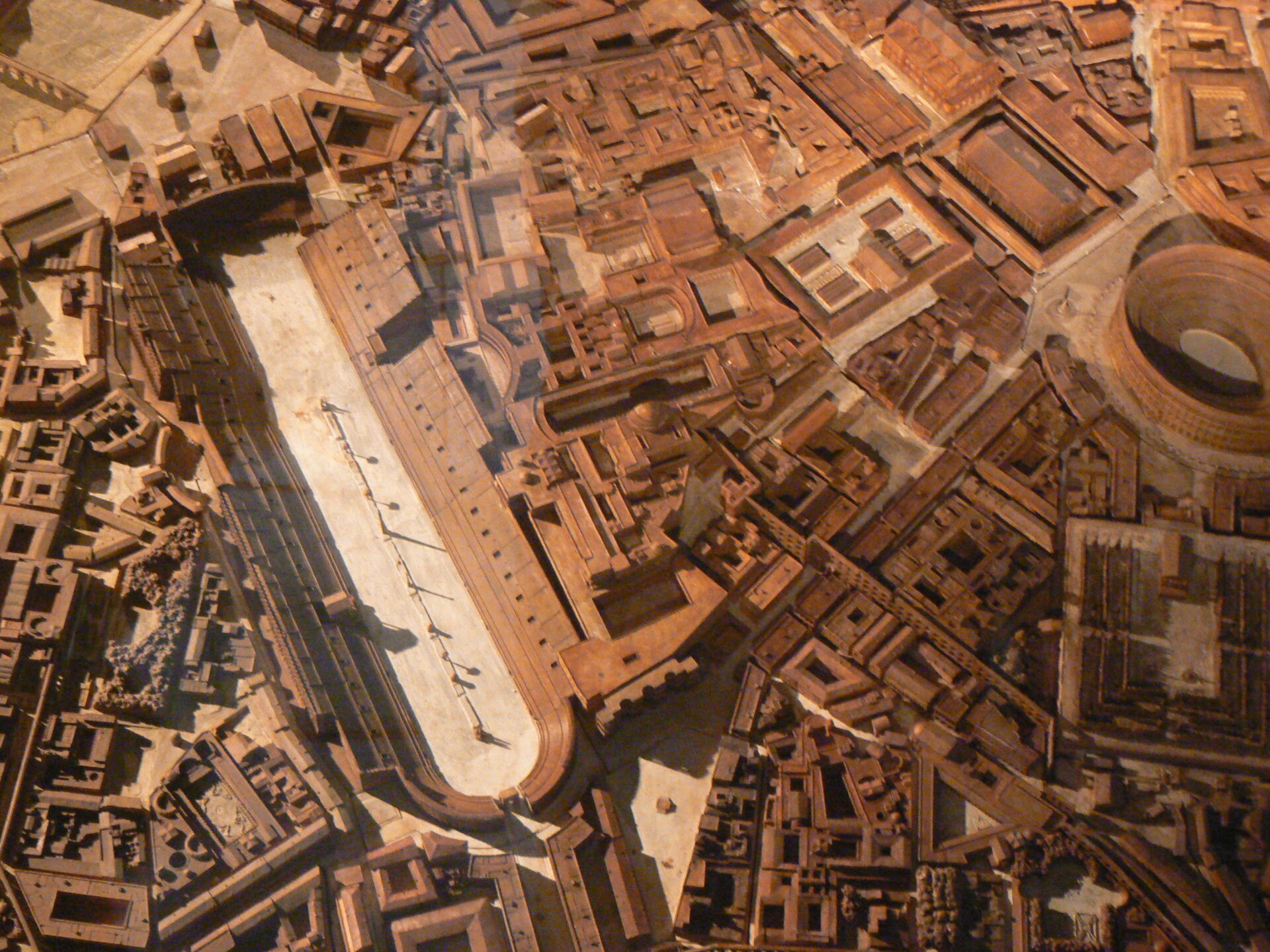
The Circus Maximus was ancient Rome’s principal venue for chariot racing and one of the largest entertainment complexes of the ancient world. Located in the valley between the Palatine and Aventine Hills, it eventually developed into a monumental complex capable of holding an enormous audience. Its functions extended beyond racing to animal hunts, religious ceremonies, and triumphal processions, but chariot racing remained its defining attraction.
Origins and Development
Roman tradition links the valley to the earliest religious games of Rome, including celebrations associated with Consus, an agricultural deity later connected with the site. Chariot racing itself was established during the regal period and was influenced by Greek and wider Italic traditions.
The games, or ludi, were closely associated with religious festivals. The Ludi Romani, dedicated to Jupiter Optimus Maximus, became one of the most important annual events.
Early spectators watched from temporary wooden structures. The Circus gradually became more permanent under Roman rulers. Julius Caesar initiated major construction, and Augustus continued the development. Fires and flooding repeatedly damaged the complex, including the devastating fire of AD 64 under Nero. Subsequent emperors rebuilt and expanded it, with the monumental form developed under Trajan representing its most substantial phase.
The Track and Starting Gates
At its mature stage, the Circus Maximus was approximately 600 meters long and more than 100 meters wide, while the racing course measured roughly 540 by 80 meters.
Twelve starting stalls, or carceres, occupied the western end. They were arranged in a staggered configuration so that the chariots converged after leaving the gates rather than starting from identical parallel positions.
A mechanical system allowed the gates to open simultaneously. After the initial convergence point, the competitors raced without separate lanes for seven laps around the circuit.
A typical racing program could include numerous races. By the imperial period, 24 races in a day were possible, while some imperial spectacles were conducted on an exceptional scale.
The Charioteers
The principal drivers, known as aurigae, frequently came from enslaved or freed backgrounds. Successful competitors could nevertheless become extremely wealthy and achieve celebrity status.
The most common racing chariot was the four-horse quadriga. It was designed for speed and maneuverability rather than safety. Charioteers wore helmets and limited protective equipment, but the risks remained severe.
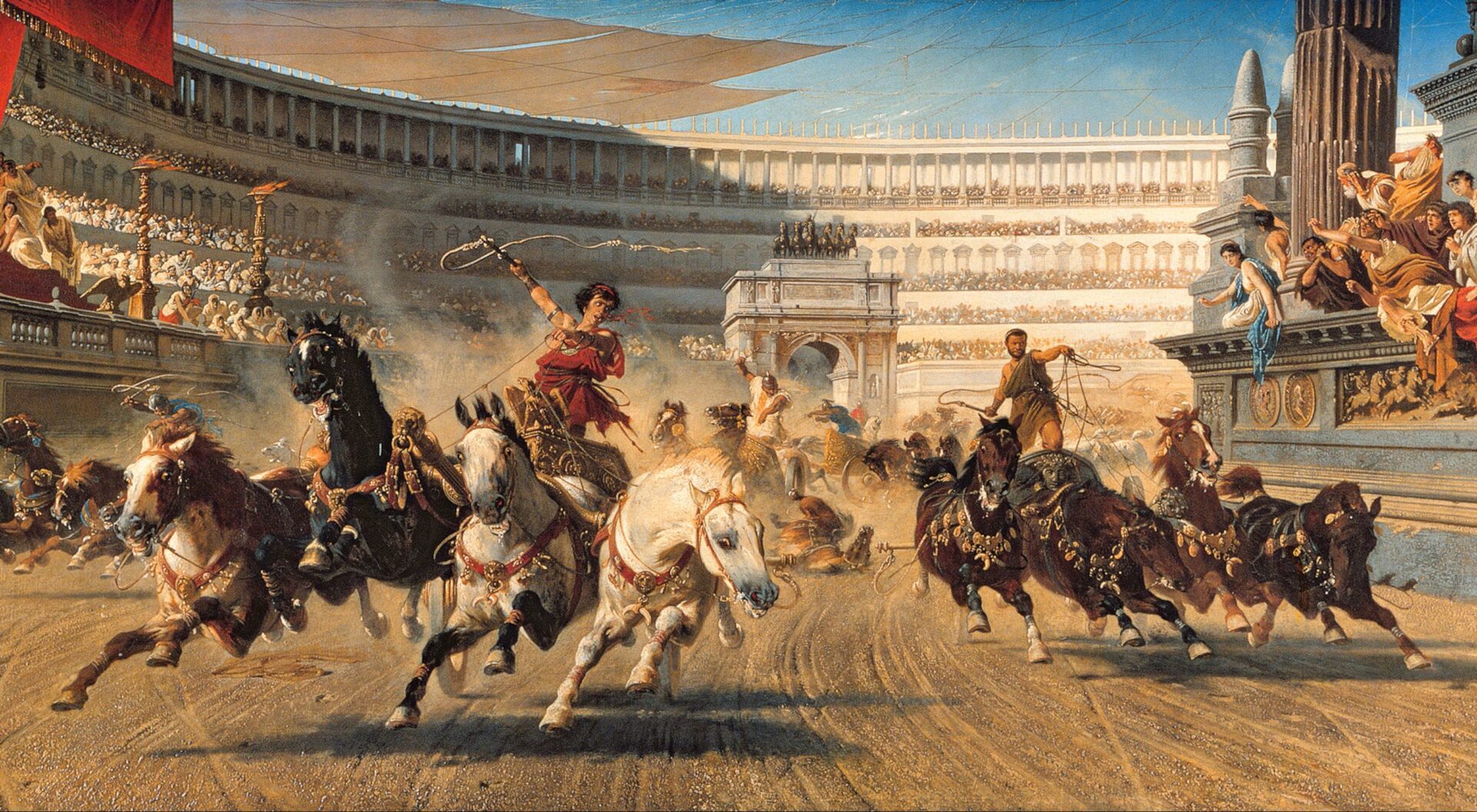
Drivers were commonly secured to the reins, creating a serious hazard during crashes. They carried knives to cut themselves free if they were thrown from the chariot or became entangled with the horses.
The greatest danger came at the turns. Drivers attempted to maintain the tightest possible line around the metae, or turning posts, while avoiding competitors and wreckage. Roman writers referred to major crashes as naufragia, or “shipwrecks.”
The Spina
The chariots raced around the central barrier known as the spina. It served both a practical and monumental purpose.
The spina contained statues, religious monuments, columns, obelisks, and mechanisms for counting laps. At either end stood the metae, marking the critical turning points.
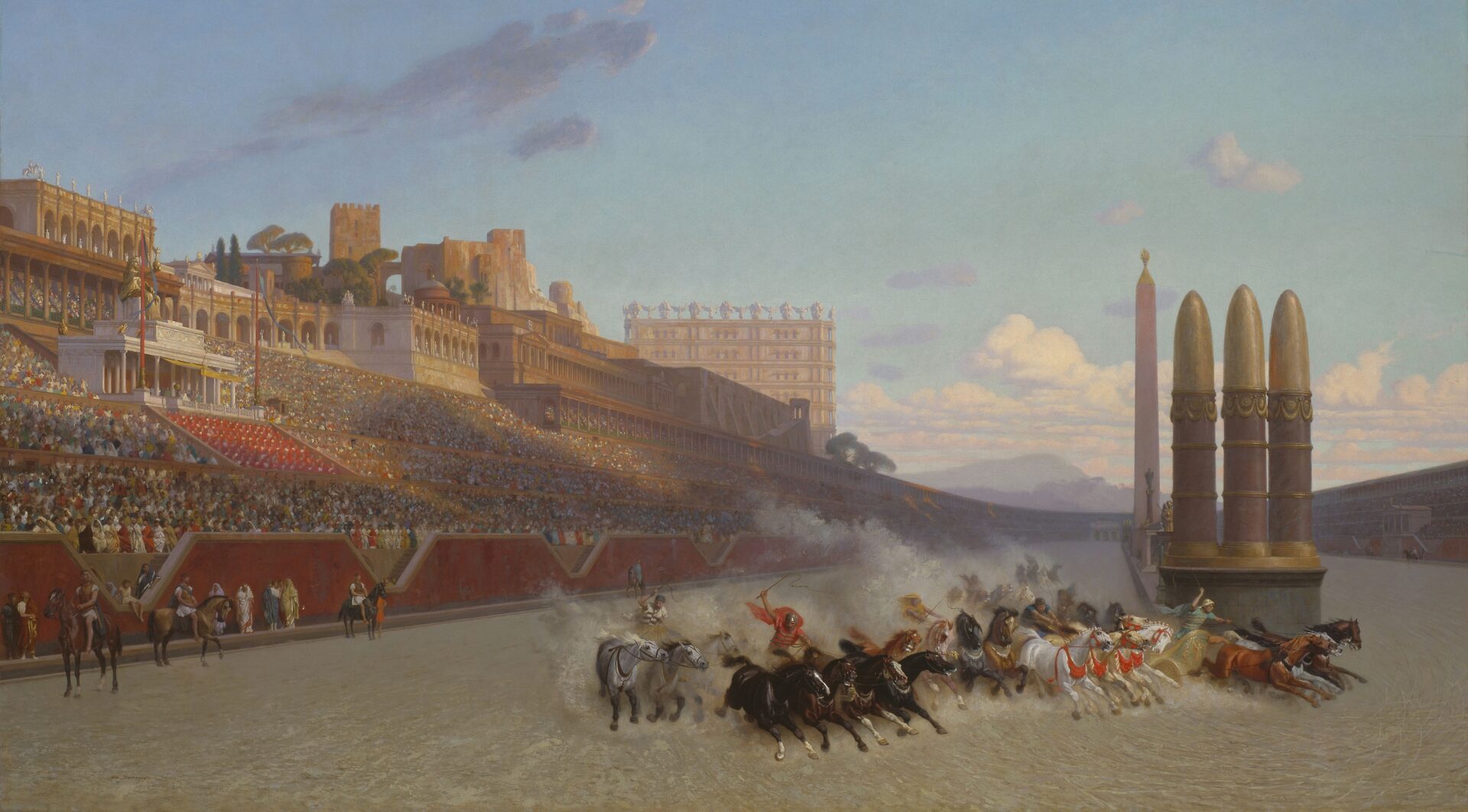
Lap counters included seven eggs, traditionally associated with Castor and Pollux, the Dioscuri and patrons of horsemen. Seven dolphins were later added, linking the races with Neptune and providing another method of counting completed laps.
The spina also displayed major monuments associated with Roman religion and imperial authority. Augustus placed an Egyptian obelisk there after the Roman conquest of Egypt. Constantius II later added a second obelisk in AD 357.
The Race Day
The racing program began with a ceremonial procession, or pompa, involving religious and political figures. Magistrates occupied an elevated position above the starting gates, while the emperor watched from the imperial seating area associated with the pulvinar.
The race began when the presiding magistrate dropped the mappa, a white cloth that served as the starting signal.
Once the gates opened, the chariots accelerated toward the first convergence point. The race then became a seven-lap contest in which drivers fought for position, particularly around the dangerous turns.
Track personnel also played important roles. Mounted assistants associated with the factions could encourage or assist their team’s competitors, while attendants helped manage dust and maintain the racing surface.
The Four Factions
Roman chariot racing was organized around four major factions: the Reds, Greens, Blues, and Whites.
The factions developed large and intensely loyal followings. Their colors became central to the identity of both teams and spectators. Successful charioteers became celebrities whose popularity could rival that of gladiators.
The faction system also required a substantial organization behind each team, including horses, trainers, grooms, drivers, and support personnel.
Wealth and Mortality
Chariot racing offered exceptional financial rewards to successful drivers. Gaius Appuleius Diocles, one of the best-documented charioteers of the Roman Empire, accumulated an extraordinary fortune during his career. His surviving inscription records 1,462 victories in 4,257 races and prize earnings exceeding 35 million sesterces.
Not every successful driver survived long enough to enjoy retirement. Martial recorded the death of Scorpus, a celebrated charioteer credited with more than 2,000 victories, at approximately 26 years of age.
His death illustrates the fundamental danger of the sport. Drivers could achieve enormous fame and wealth, but every race exposed them to potentially fatal crashes.
A Political and Religious Institution
The Circus Maximus was not simply a Roman sports stadium. Its architecture connected racing with religion, political authority, and imperial power.
The presence of temples, shrines, gods, obelisks, and the emperor’s viewing position made the races part of a larger public ritual. The games demonstrated the state’s ability to organize enormous spectacles while giving rulers an opportunity to reinforce their relationship with the population.
Its scale also made the Circus one of the most important spaces for mass entertainment in Rome. Thousands of spectators gathered to follow faction rivalries, celebrate successful drivers, and witness the high-risk competition.
Legacy
The Circus Maximus developed over centuries from a temporary racing ground into Rome’s largest monumental entertainment complex. Fires, floods, reconstruction, and imperial expansion repeatedly altered its appearance.
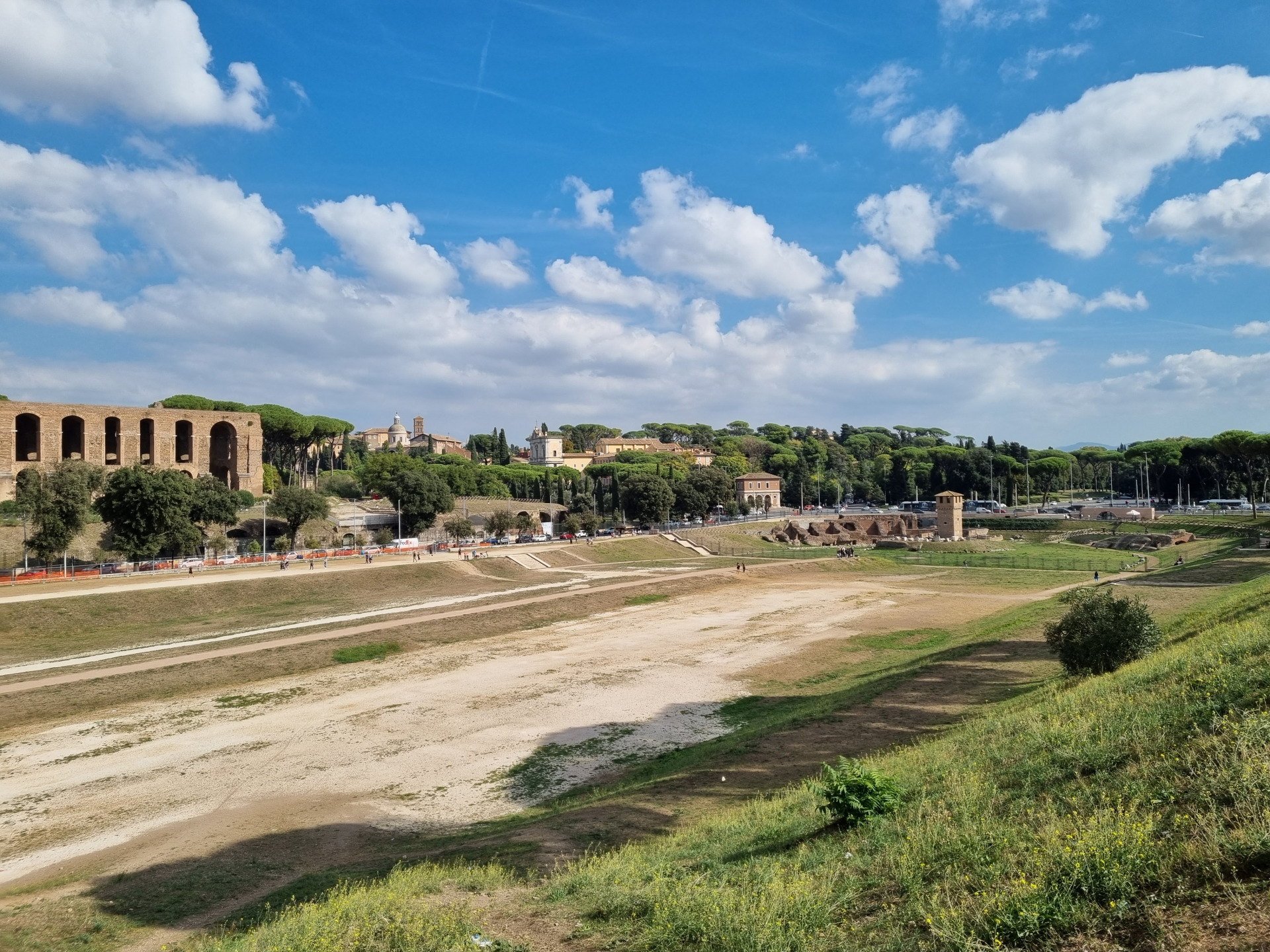
Most of its ancient superstructure has disappeared, but the surviving archaeological remains and enormous footprint still reveal the scale of the complex.
Chariot racing at the Circus Maximus combined speed, mechanical skill, animal control, religious ceremony, political theater, and extreme physical danger. For centuries, it stood at the center of Roman popular entertainment and became one of the clearest expressions of the scale and organization of Roman public life.
