
Few military formations in ancient history were as closely associated with political power as the Praetorian Guard. Created from the tradition of commanders’ personal bodyguards and transformed by Augustus into a permanent imperial institution, the cohortes praetoriae were intended to protect the emperor. Over the next three centuries, however, their proximity to the throne gave them an influence that extended far beyond the battlefield. The men entrusted with protecting Rome’s emperors eventually acquired the ability to determine which men would occupy the imperial throne—and which would not.
The Guard’s origins lay not in the Imperial period but in the military traditions of the Roman Republic. A praetorian cohort was originally an escort attached to a commander and derived its name from the praetorium, the commander’s headquarters or tent. Roman generals could surround themselves with experienced soldiers who served as a personal security force, particularly during the civil wars that destroyed the Republic. Augustus formalized this tradition after his victory over Mark Antony and Cleopatra.
In 27 BC, at the beginning of the new political order, Augustus established a permanent Praetorian Guard consisting initially of nine cohorts. The original force probably numbered at least 4,500 men, although its organization and strength changed repeatedly during the Imperial period. Augustus also maintained other personal bodyguards, including Germanic troops, meaning that the Praetorian Guard was not simply the emperor’s only security force.
From Legionary Discipline to Imperial Guard
The Roman army’s effectiveness depended heavily on discipline. Legionaries endured demanding marches, weapons training, fortification work and strict regulations. Their commanders relied upon a hierarchy of centurions and junior officers to maintain order within the ranks.
Among these officers were optiones, normally the second-ranking officers within a century and assistants to the centurions. They helped maintain formation, discipline and administration. They were not, however, simply military policemen responsible for punishing careless legionaries. Discipline was distributed throughout the Roman command structure, with centurions exercising particularly important authority over their men.
The same organizational discipline extended to the Roman marching camp. A legion did not simply stop wherever it became tired. Camps were normally laid out according to a standardized plan, with defensive ditches, ramparts, gates, streets and designated areas for headquarters and units. At the center stood the principia, the headquarters complex, while the commander’s headquarters itself was the praetorium. The term therefore referred to the commander’s headquarters rather than exclusively to a location where “officers and nobles” lived.
The Praetorian Guard’s name ultimately reflected this association with the commander’s headquarters.
Augustus Creates a Permanent Imperial Guard
Augustus understood the political danger of allowing large numbers of soldiers to remain permanently inside Rome. The Republican tradition discouraged generals from bringing their armies into the city, a principle that had helped distinguish civilian Rome from the military authority of a provincial commander.
The Praetorians occupied an unusual position. Several cohorts were stationed in and around Rome, while others were initially dispersed in neighboring Italian towns. This arrangement allowed Augustus to maintain an armed force capable of protecting him without openly turning Rome into a military camp.
In 2 BC, Augustus established the office of praefectus praetorio, or Praetorian Prefect, to command the Guard. Two prefects were initially appointed, both drawn from the equestrian order and directly responsible to the emperor. The position subsequently became one of the most powerful offices in the Roman state.
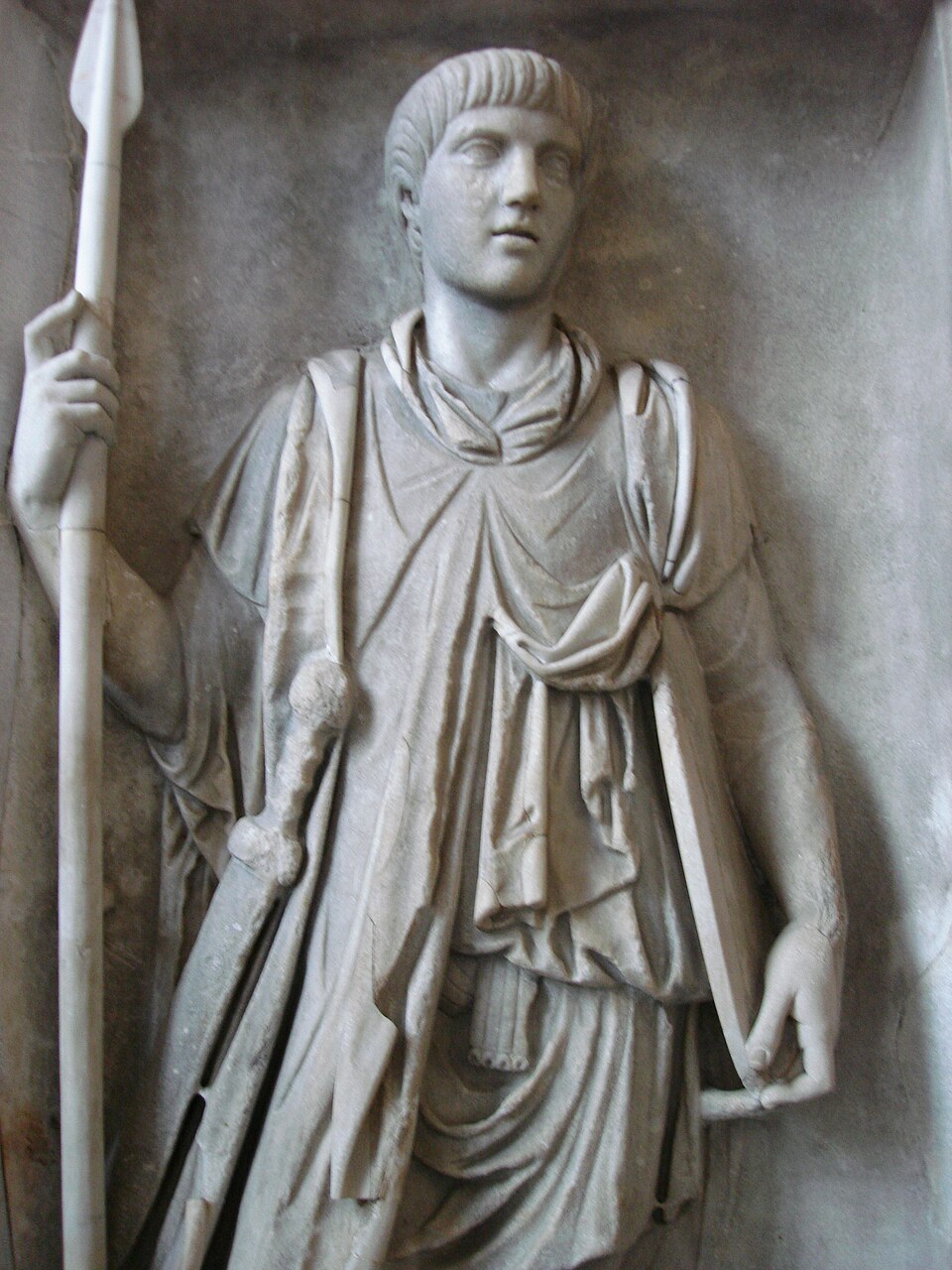
The Guard’s privileges made it attractive to ambitious soldiers. Praetorians generally received considerably higher pay than ordinary legionaries and served for a shorter period. A reform in AD 5 established a 16-year term for Praetorians, compared with 25 years for legionaries. They also enjoyed superior conditions and equipment.
It is therefore misleading to suggest that every Praetorian first had to complete 16 years as an ordinary legionary before being admitted. The 16 years represented the Praetorian term of service itself, and recruitment practices varied over time. Candidates were generally selected from soldiers considered suitable for the prestigious formation, with Italians and men from highly Romanized communities particularly favored during the early Empire.
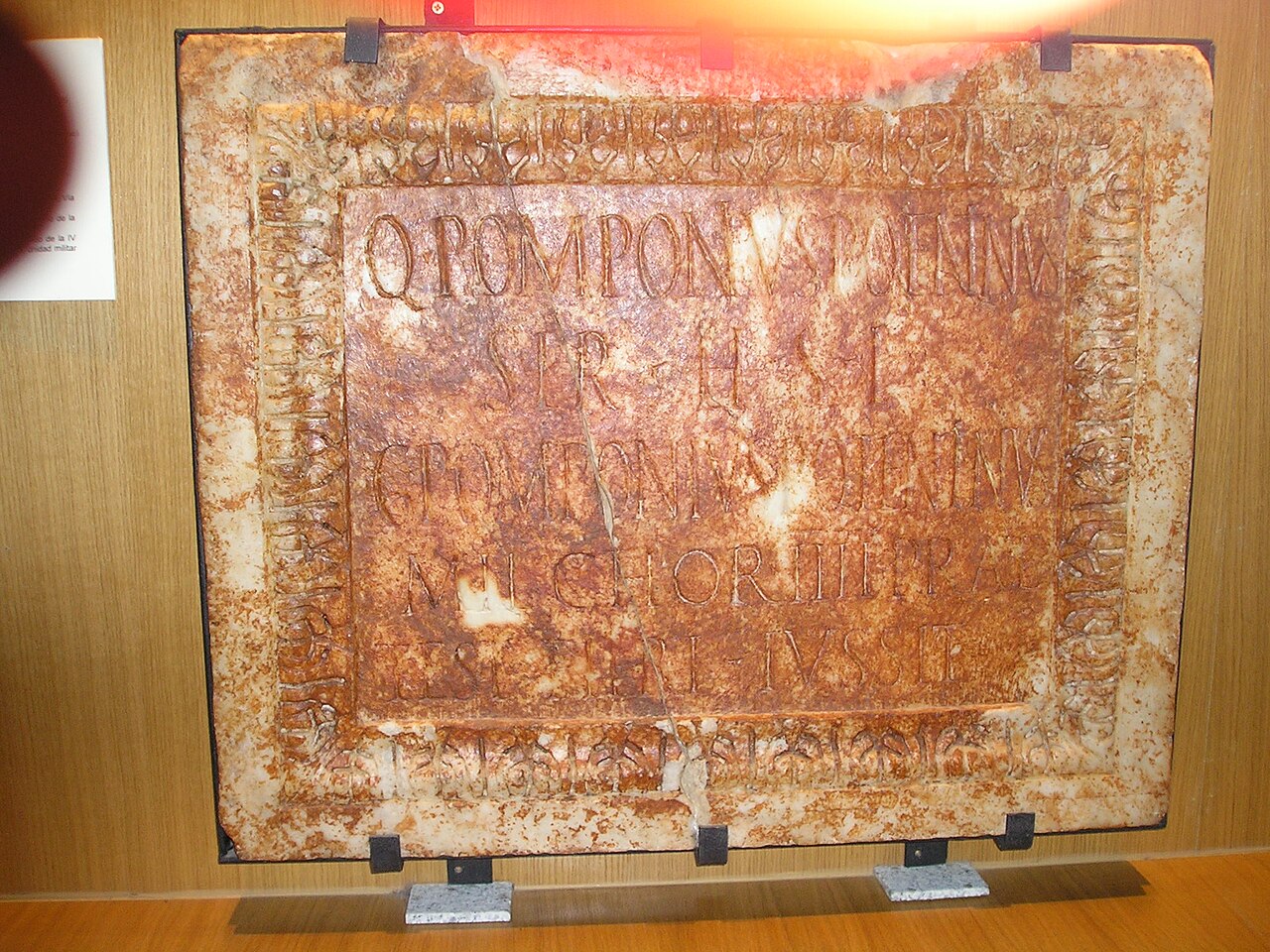
A surviving bronze military diploma from AD 248 provides direct evidence for Praetorian service. Issued to a Praetorian named Victor at the completion of his service, it demonstrates the formal status and privileges associated with membership in the Imperial Guard.
The Castra Praetoria
The Guard became still more powerful when its scattered cohorts were concentrated in a permanent fortress.
During the reign of Tiberius, the Praetorian Prefect Lucius Aelius Sejanus persuaded the emperor to consolidate the Guard in the castra praetoria, constructed around AD 23 on the northeastern outskirts of Rome. Concentration transformed the Praetorians from a collection of elite detachments into a powerful military presence capable of responding rapidly to events in the capital.
The decision also had profound political consequences. Thousands of armed and highly trained soldiers now lived together immediately outside Rome. Their proximity to the imperial palace gave the Praetorian Prefect enormous leverage, particularly when the emperor was absent.
Sejanus demonstrated just how much authority that position could generate. As Tiberius withdrew increasingly from day-to-day government, Sejanus became a central figure in imperial politics. Yet his power ultimately proved temporary. In AD 31, Tiberius turned against him, and Sejanus was arrested and executed.
The Guard itself survived.
The Elite of the Elite
The Praetorians were not simply palace sentries. They were trained soldiers who could perform combat operations, accompany the emperor on campaign and serve as a military reserve. Their organization changed repeatedly. Tiberius expanded the Guard, Vitellius dramatically enlarged it during the civil wars of AD 69, and later emperors reorganized its strength. Under Domitian, the Guard was reduced to ten cohorts, although the actual strength of each cohort and the effective total varied.
The frequently cited figure of approximately 8,000 men therefore should not be treated as a permanent maximum or standard establishment. The Guard’s strength fluctuated according to imperial policy, political circumstances and military requirements.
The Praetorians also possessed specialized formations. Among them were the speculatores Augusti, an elite group associated with reconnaissance, dispatches, special assignments and the emperor’s immediate security. They should not simply be described as “commanders of the Guard.” The Guard’s principal commanders were the Praetorian Prefects.
Another important mounted formation was the equites singulares Augusti, an imperial cavalry body associated with the emperor and his field army. Its strength varied over time, reaching roughly 1,000 men in later periods.
How Different Were the Praetorians?
Ancient and modern representations often portray the Praetorians in dramatically different uniforms from ordinary legionaries. The reality was more complicated.
They certainly possessed distinctive equipment and privileges. Their shields could differ from the rectangular scutum normally associated with legionary infantry, and their armor and standards reflected their special status. But the idea that the entire Guard wore a standardized dark uniform with purple clothing is not supported by the surviving evidence.
Purple had strong associations with imperial authority and wealth, but that does not mean Praetorians routinely wore purple uniforms as a standardized feature of their service. Their real distinction was institutional: better pay, privileged service conditions, proximity to the emperor and access to one of the most politically important military commands in the Empire.
Caligula and the Praetorian Guard
The contradiction at the heart of the Praetorian Guard became unmistakable under Caligula.
The emperor depended upon the men responsible for his security, yet his relationship with the Guard deteriorated. According to Suetonius, members of the Praetorian officer corps were involved in the conspiracy that culminated in Caligula’s assassination in AD 41. Cassius Chaerea, a tribune of the Praetorian Guard, played a leading role in the attack. Suetonius specifically describes how Caligula had repeatedly humiliated Chaerea, contributing to his hostility toward the emperor.
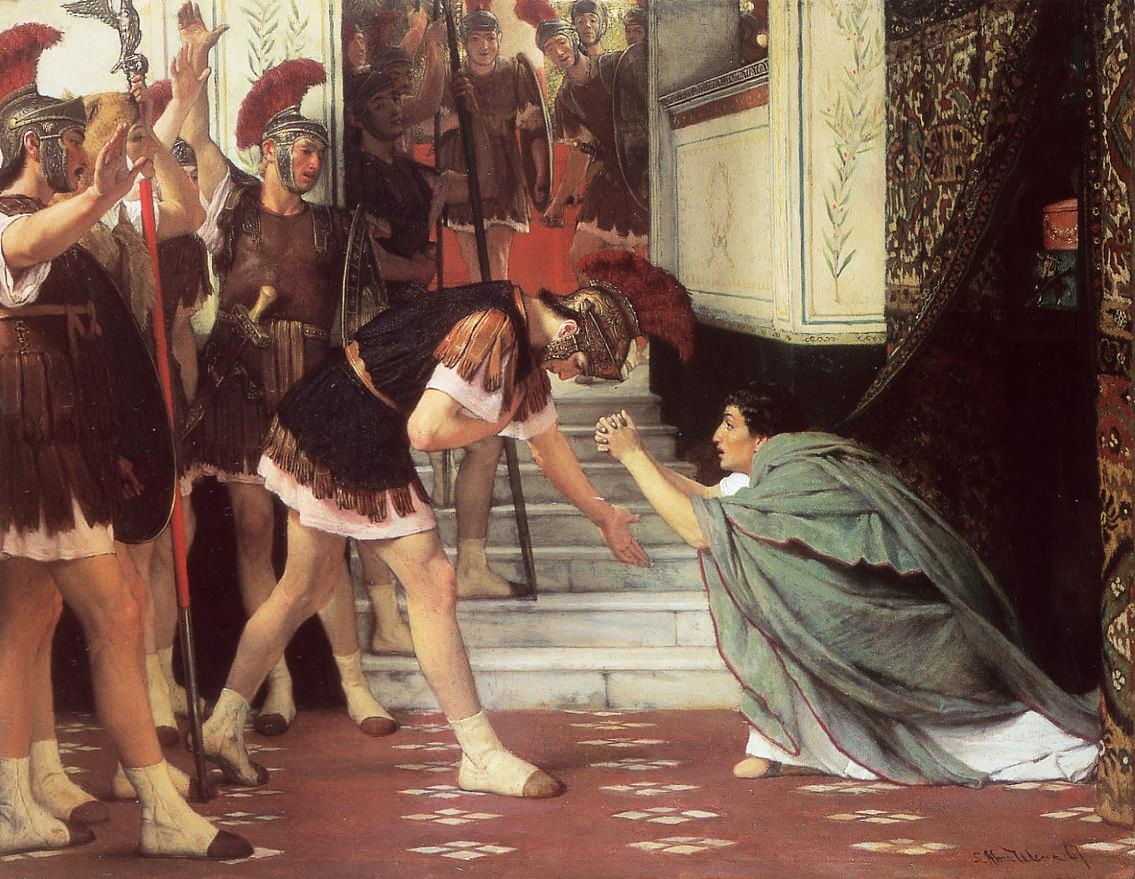
The killing demonstrated a fundamental weakness in the imperial security system: the men closest to the emperor were also among the few people capable of reaching him.
The Guard did not act as a single political machine in every crisis, and individual Praetorians could oppose conspirators. During Caligula’s assassination, for example, German bodyguards loyal to the emperor attacked some of the conspirators and killed several people in the ensuing confusion.
Nevertheless, the Guard had crossed an important threshold. It had demonstrated that imperial protection could become imperial coercion.
From Protectors to Kingmakers
The political influence of the Praetorians increased dramatically during the succession crises of the second and third centuries.
They participated in the violent politics surrounding several emperors, sometimes supporting legitimate successions, sometimes backing usurpers and sometimes eliminating rulers they no longer supported. Their influence became particularly visible during the crisis of AD 193.
After the assassination of Emperor Pertinax, the Guard famously became involved in the elevation of Didius Julianus, an episode that ancient sources portray as a notorious example of military interference in succession. Pertinax’s death demonstrated that an emperor could be removed by the very force established to protect him.
The Guard’s political power was not unlimited, however. It depended upon the wider military and political structure of the Empire. Provincial legions remained the foundation of imperial military power, and emperors who lost the support of the frontier armies could face enormous challenges regardless of the attitude of the Praetorians.
The Guard itself eventually produced an emperor. In AD 217, Praetorian Prefect Macrinus became involved in the assassination of Caracalla and subsequently assumed the imperial throne. The institution created as the emperor’s bodyguard had now provided one of the men who could replace him.
The Praetorian Guard in War
Despite its political reputation, the Guard was a genuine military formation.
Praetorians accompanied emperors on campaign and fought in major military operations. During periods of civil war they could become some of the most valuable troops available to an imperial claimant because of their training, equipment and experience.
Their battlefield role became increasingly important as the Empire entered the unstable third century. The Guard could serve as a strategic reserve or elite formation rather than remaining permanently confined to Rome. This military capability was one reason its political influence could not simply be ignored.
The Guard was therefore neither merely a palace police force nor simply a group of ceremonial bodyguards. It was an elite military organization whose proximity to the emperor gave its commanders extraordinary political leverage.
Constantine and the End of the Guard
The Praetorian Guard’s final political crisis came during the civil war between Constantine and Maxentius.
The Praetorians supported Maxentius, who controlled Rome. On October 28, AD 312, Constantine defeated Maxentius at the Battle of the Milvian Bridge. The victory placed Constantine in control of Rome and removed the political regime that the Guard had supported.
Constantine subsequently disbanded the Praetorian Guard and dismantled the castra praetoria as a military institution. The surviving Praetorians were removed from their traditional role, bringing an end to an organization that had existed in one form or another for more than three centuries.
This was not simply the elimination of an old military unit. Constantine was removing an institution whose concentrated military power had repeatedly interfered in imperial succession.
The emperor did not eliminate the concept of an imperial bodyguard. Roman emperors continued to rely on specialized guards and elite household troops, but the old Praetorian Guard was gone.
The Legacy of the Praetorians
The history of the Praetorian Guard illustrates one of the central contradictions of the Roman Empire. An emperor required soldiers close enough to protect him from assassination, rebellion and political violence. Yet the closer those soldiers stood to the throne, the greater their ability to influence the emperor himself.
The Praetorians were created from an older Roman tradition of elite military protection. Augustus transformed that tradition into a permanent imperial institution. Successive emperors expanded, reorganized and rewarded the Guard, turning it into a privileged corps of highly experienced soldiers. But those privileges also created a political constituency whose interests could diverge from those of the emperor.
At its best, the Guard was an elite military formation capable of protecting Rome and campaigning alongside its emperor. At its most dangerous, it became a force capable of determining who occupied the imperial throne.
That contradiction ultimately defined the Praetorian Guard. The soldiers sworn to defend the emperor became powerful enough to threaten him, and the institution established to secure imperial authority eventually became one of the institutions an emperor had to destroy to secure his own power.
When Constantine abolished the Guard in AD 312, the Praetorian era ended. Its legacy, however, survived in the Roman practice of maintaining specialized troops around the imperial court—a reminder that in Rome, the distance between protecting political power and possessing it could be extraordinarily small.
