
For all its roads, bridges, ports, and engineering achievements, the Roman Empire was a surprisingly slow world to travel through. Movement depended heavily on a person’s wealth, social status, the purpose of a journey, and whether the journey took place inside a crowded city or across the provinces. Rome possessed an extensive transportation network, but it lacked anything resembling modern mass transit. For most ordinary Romans, especially within the capital, walking remained the principal means of getting around.
Walking Through Ancient Rome
Rome was an enormous city by ancient standards. By the late first century AD, its built-up area extended across a territory whose perimeter has been estimated at roughly 20 kilometers, although the precise extent of the urbanized area depends on how its suburbs are defined. Moving from one district to another could therefore consume considerable time.
The problem was intensified by the city’s streets. Many were narrow, congested, and poorly suited to the simultaneous movement of pedestrians, animals, carts, and wheeled vehicles. Julius Caesar‘s municipal legislation of 45 BC prohibited ordinary wagons from using Rome’s streets during the daytime, broadly from sunrise until the tenth hour, while allowing specific exceptions for construction, public works, religious functions, triumphs, and other authorized activities. The restriction continued in various forms under the early Empire.
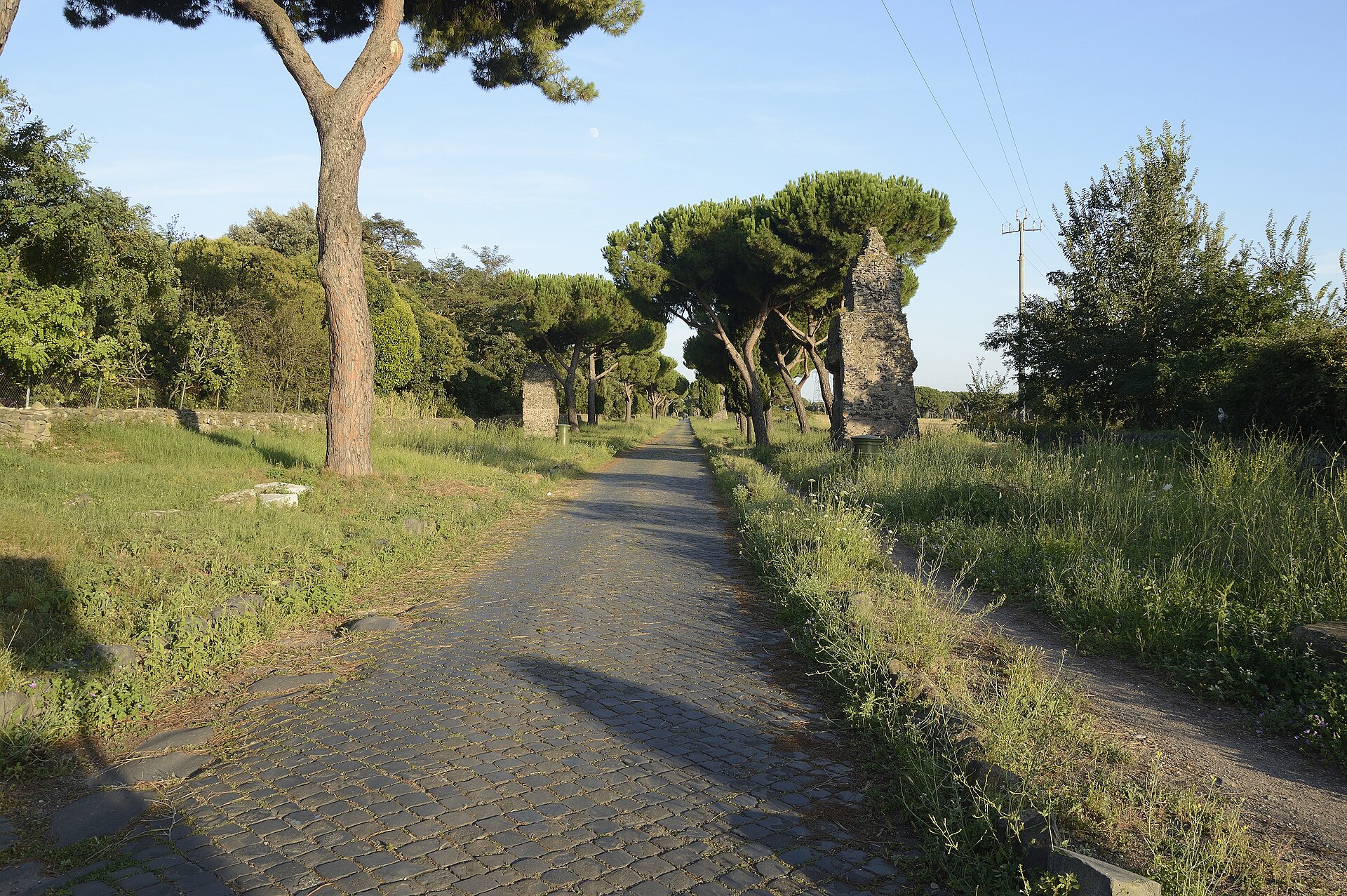
This does not mean that all wheeled transport was forbidden for personal purposes, as is sometimes claimed. Rather, urban traffic was heavily regulated according to time and purpose. Commercial carts frequently entered the city at night, when pedestrian traffic was lighter. The result was a peculiar rhythm in which Rome could be relatively accessible to pedestrians during the day while becoming deafeningly noisy after dark as wagons delivered goods through the streets.
For the ordinary inhabitant, walking was therefore not merely economical; it was the normal method of urban transportation.
The Lectica: Transport for the Elite
The principal alternative for wealthy Romans was the lectica, a covered litter carried by slaves. It allowed an affluent passenger to sit or recline while bearers navigated the crowded streets on foot.
A standard litter required several bearers, commonly six or eight depending on its construction and circumstances. Their task demanded considerable coordination. Carrying a person through narrow, uneven streets without excessive jolting required practiced movement and physical endurance. A wealthy Roman could therefore transform a journey that would otherwise require walking into a relatively comfortable private conveyance.
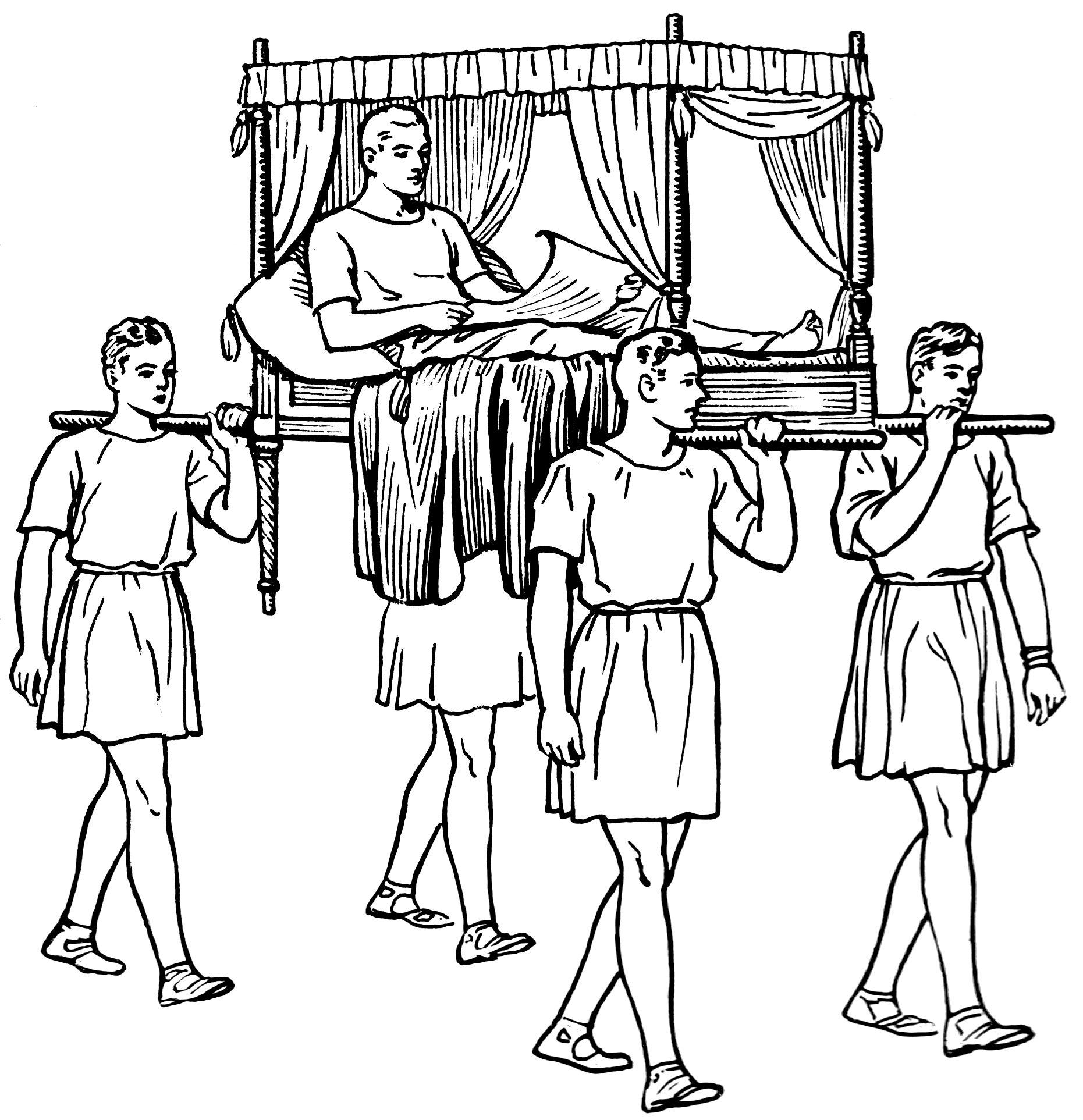
The lectica also became a conspicuous expression of status. Wealthier Romans could afford larger and more elaborate litters, equipped with curtains, cushions, bedding, and other comforts. Juvenal’s satire famously presents an elite litter as a miniature traveling chamber in which its occupant could read, write, or even sleep while being carried through Rome.
A smaller sedan chair was also used, while later Roman forms of litter transport included the basterna, which could be drawn by animals rather than carried entirely by human bearers.
The social implications were significant. A litter was not simply ancient Rome’s equivalent of a taxi. It visibly demonstrated that its occupant possessed enough wealth to command a team of enslaved people whose labor could be devoted to his personal mobility.
Transport Beyond Rome
The transportation system looked very different outside the capital. Throughout Italy and the provinces, animals provided much of the practical infrastructure of overland commerce.
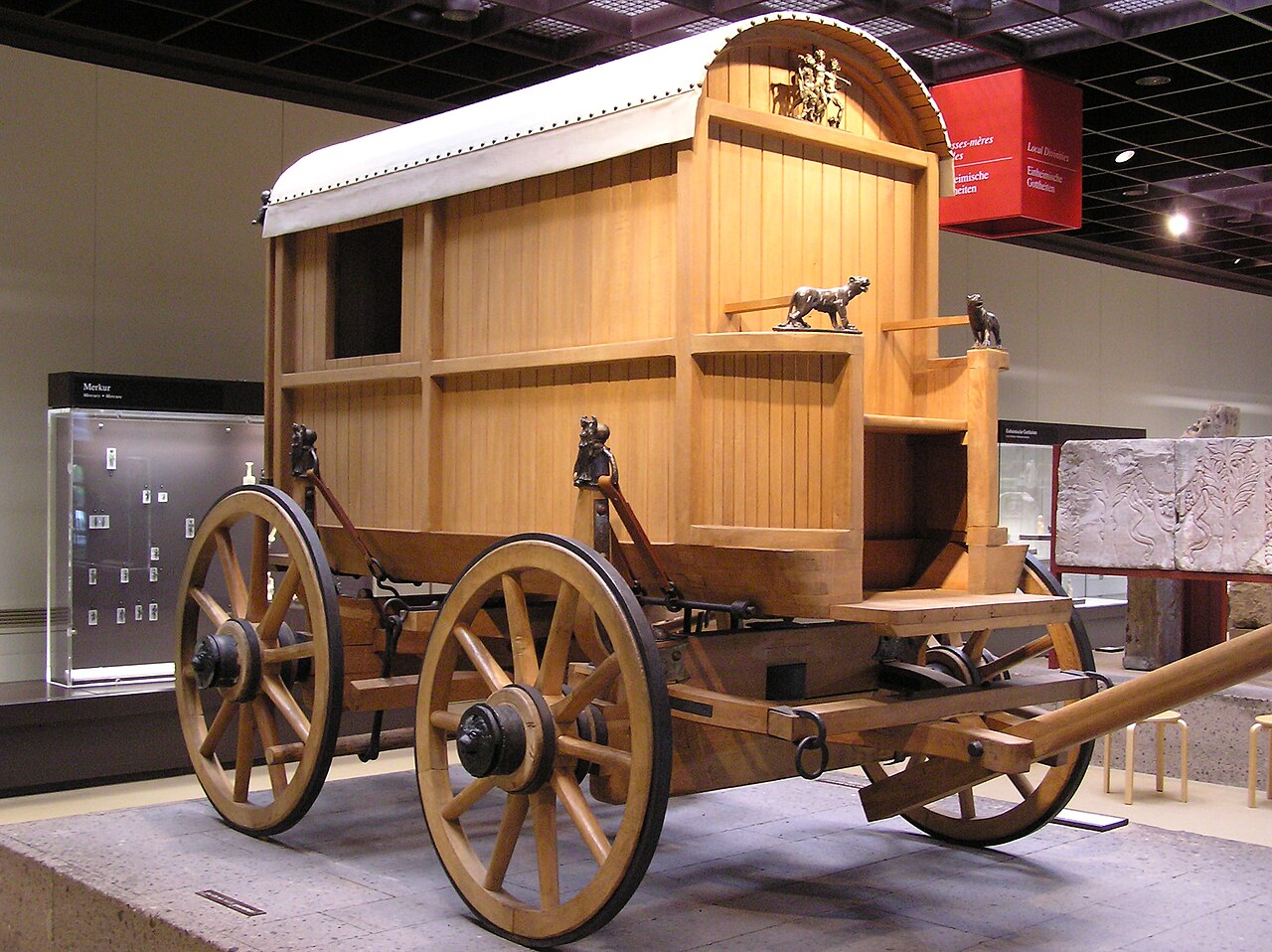
Donkeys and mules were particularly valuable because they could negotiate roads and terrain unsuitable for large wagons. Camels were important in certain eastern and North African regions, where their endurance made them effective pack animals. Heavier loads were commonly transported by wagons drawn by oxen.
These methods were slow. A loaded pack train moved at little more than walking speed, while ox-drawn wagons were slower still. The practical limitation was not simply the speed of the animals but the cost of feeding them, maintaining roads and vehicles, paying handlers, and moving relatively modest quantities of cargo over long distances.
The economic consequences were enormous. Overland freight could become extraordinarily expensive as distance increased. Evidence from the Edict of Maximum Prices issued by Diocletian in AD 301 provides valuable information about regulated transportation charges. Modern calculations based on the edict indicate that transporting grain over several hundred kilometers by wagon could add an amount comparable to, or even exceeding, the original value of the cargo.
That helps explain one of the fundamental principles of Roman logistics: bulk commodities traveled by water whenever geography allowed it.
Why Water Transport Dominated Long-Distance Trade
Ships were vastly more efficient than wagons for moving large quantities of cargo. The Mediterranean effectively functioned as the Roman Empire’s great transportation highway.
The clearest illustration is grain. Rome depended heavily on imported grain, particularly from Egypt and North Africa. Grain from Alexandria could be transported to Rome by sea at a freight rate that was extraordinarily low compared with equivalent overland movement. Diocletian’s tariff records a rate of 16 denarii per castrensis modius for the Alexandria-Rome route. Depending on the assumptions used for ancient weights and the exact interpretation of the tariff, the voyage covered roughly 2,700 kilometers by the practical maritime route.
The comparison is striking. A commodity could travel thousands of kilometers across the Mediterranean for a freight charge that was lower than the cost of moving it a few hundred kilometers by wagon. Roman economic geography was therefore shaped by rivers, canals, and coastlines as much as by roads.
This was particularly important for the imperial grain supply. Rome’s population could not be fed efficiently by relying on overland transport from distant provinces. Maritime and river transport made large-scale provisioning possible.
The Limits of Roman Shipping
Sea transport was cheaper, but it was hardly reliable by modern standards.
Roman merchant ships depended principally on wind, and sailing could be interrupted by calms, contrary winds, storms, mechanical failures, and navigational difficulties. The Mediterranean also had a pronounced seasonal rhythm. Long-distance commercial sailing was considerably more hazardous during the winter, when storms and unfavorable weather made voyages dangerous.
Ships themselves varied enormously in size, and surviving evidence does not support a single universal “average” cargo capacity for Roman merchant vessels. Some were relatively small coastal freighters, while others could carry hundreds of tons. The famous Madrague de Giens wreck, for example, demonstrates the existence of large-scale bulk carriers during the late Republic.
Voyage times were consequently unpredictable. A favorable voyage could be remarkably fast, while adverse winds could leave a vessel effectively stationary for days. The comparison with modern air travel therefore illustrates the transformation of transportation technology more than it provides a meaningful measure of Roman efficiency.
The Roman merchant was not purchasing speed. He was purchasing capacity at a cost that made long-distance bulk commerce economically possible.
The Cursus Publicus
The Roman state developed a different solution for one particular problem: moving people, documents, and official information quickly across the Empire.
Under Augustus, the imperial government established what became known as the cursus publicus, a state-supported transportation and communications system. It was not a public postal service in the modern sense. Ordinary private travelers could not simply purchase a ticket and use the imperial network at will.
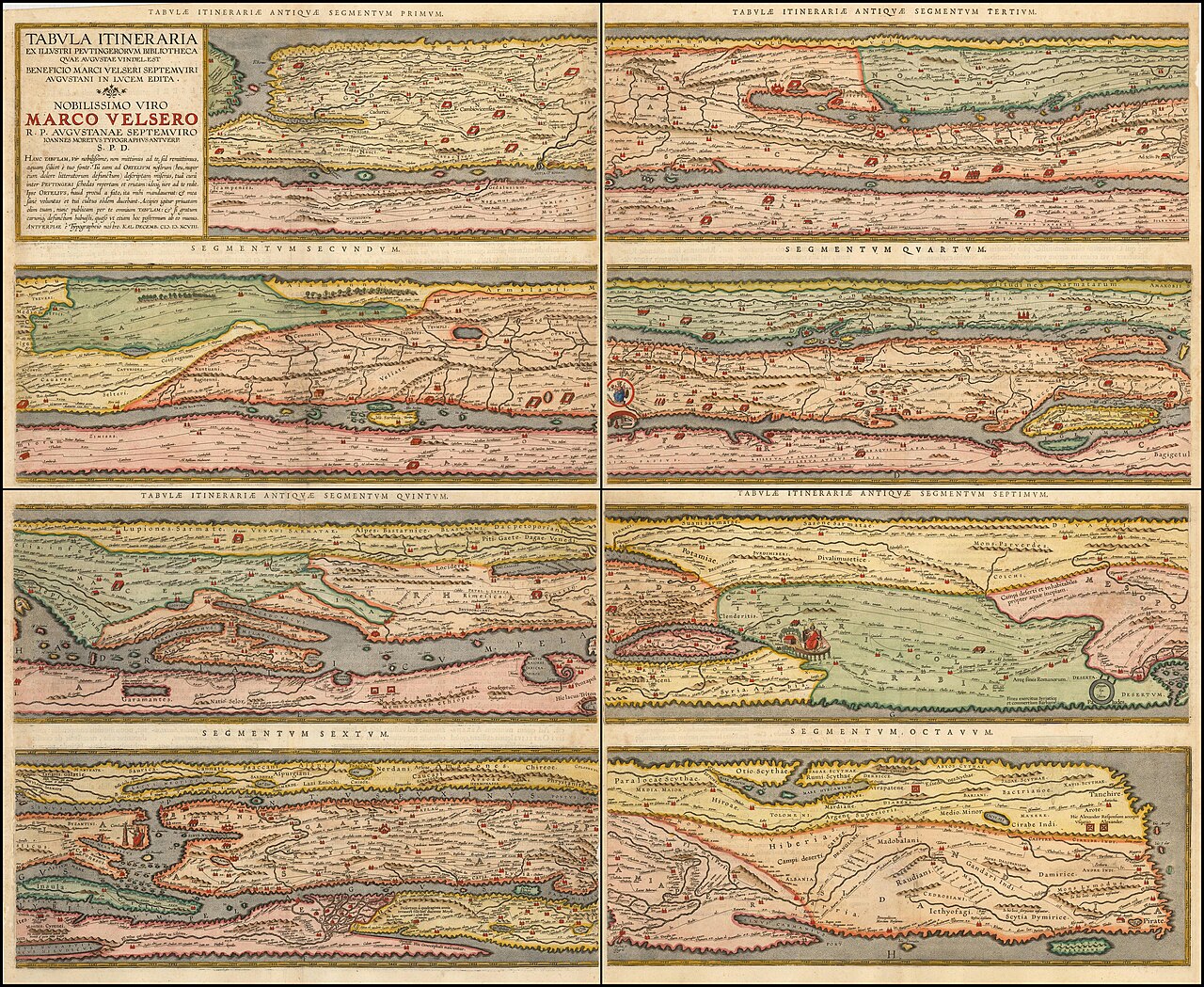
Instead, authorized users traveled with official documentation permitting access to state transportation resources. The system could provide riding horses, pack animals, wagons, and other forms of transport according to the nature of the journey.
The primary purpose was administrative and governmental. Official correspondence, military communications, officials, and eventually selected high-value cargoes could move through the system more rapidly than ordinary commercial travelers.
The network depended upon stations placed along major roads. Mutationes provided fresh animals, allowing a traveler to continue without waiting for exhausted mounts to recover. Larger mansiones offered accommodation and more extensive facilities. The spacing varied according to terrain and route rather than conforming to one universal distance, although stations were generally positioned at intervals compatible with a day’s travel or a change of animals.
This infrastructure transformed the Roman road network into more than a collection of paved routes. It created a logistical system through which the imperial administration could move information and personnel across enormous distances.
The Human Infrastructure Behind Roman Mobility
None of this transportation operated automatically. Roman mobility depended upon a vast labor force.
Drivers, muleteers, sailors, dockworkers, stablemen, blacksmiths, carpenters, veterinarians, porters, and slaves all contributed to the movement of people and goods. The cursus publicus similarly required personnel to maintain animals, equipment, and stations.
The Roman transportation system therefore rested on a combination of technology and organized human labor. Roads provided the physical infrastructure, animals supplied the motive power, ships moved bulk cargoes, and thousands of workers kept the entire system functioning.
Roman engineers could build roads capable of crossing mountains and bridges capable of spanning major rivers, but infrastructure did not eliminate the basic limitations of ancient transport.
A Slow Empire That Moved Enormously
The Roman Empire was not a fast society. A person walking across Rome could spend hours moving between districts. A wagon carrying grain overland became progressively more expensive with every additional mile. A merchant ship could be delayed by weather for days. An official traveling across the provinces depended on carefully maintained stations and fresh animals.
Yet the Roman world was extraordinarily mobile by ancient standards.
The empire connected Britain with Syria, Egypt with Gaul, and North Africa with Italy through an integrated network of roads, rivers, ports, and sea lanes. Its transportation system was not designed around speed alone. It was designed around the economical movement of particular things: people, information, armies, taxes, grain, luxury goods, and administrative authority.
That distinction explains the apparent contradiction at the heart of Roman mobility. For an individual Roman, transportation could be slow, uncomfortable, expensive, and socially restrictive. For the empire as a whole, however, the combination of roads and maritime routes created one of the most extensive transportation networks the ancient world had ever seen.
Rome did not possess railways, engines, or mechanized vehicles. It possessed something more appropriate to its technological age: an immense logistical machine powered by roads, wind, animals, water, and human labor.
