
The history of Africans in ancient Rome is not a single story of migration, slavery, or imperial ambition. It is a history of writers, soldiers, merchants, freedmen, provincial aristocrats, and emperors whose lives reveal how people from North Africa and other parts of the African continent participated in Roman society.
Their experiences differed enormously. Some entered Roman society through enslavement, others through military service or inherited citizenship. Some accumulated wealth and political influence, while others lived and died far from home on the empire’s frontiers. Their stories also expose the limits of the surviving evidence: ancient authors often described people through their birthplace, legal status, and perceived customs, while modern attempts to reconstruct ancestry and identity require careful interpretation.
The central historical point is that African origin did not determine a single place in Roman society. Geography, citizenship, wealth, family connections, military service, and social status all shaped an individual’s opportunities. The careers of Septimius Severus, the playwright Terence, and the people whose remains have been recovered in Roman Britain illustrate different aspects of that history.
Terence and the African Presence in Republican Rome
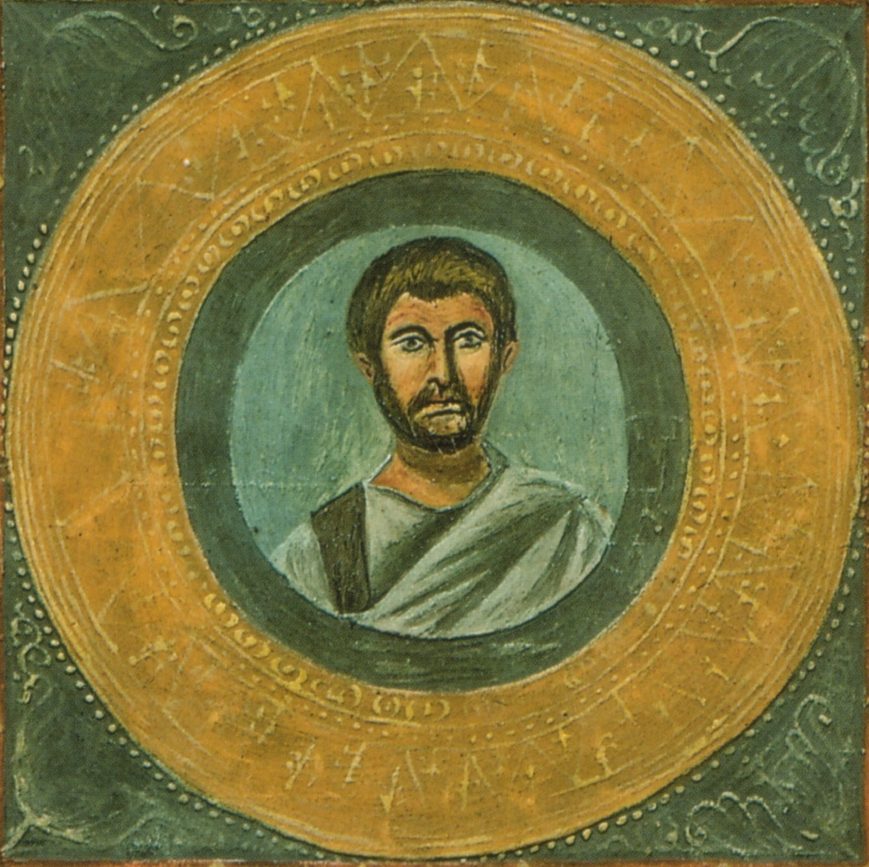
One of the earliest literary figures associated with African origins in Roman culture was Publius Terentius Afer, known in English as Terence. His comedy Andria was staged in 166 BC, during the Roman Republic, when Rome was expanding its influence across the Mediterranean.
According to the ancient biography of Terence attributed to Suetonius and preserved by the later commentator Donatus, Terence was born in Carthage and came to Rome as an enslaved person owned by the senator Terentius Lucanus. The account claims that his owner recognized his abilities, provided him with an education, and eventually freed him. The biography also describes Terence presenting Andria to the playwright Caecilius Statius for approval.
These details require caution. The surviving account was written long after Terence’s lifetime, and modern scholars have questioned aspects of the traditional biography, including whether his supposed Carthaginian origin can be independently established. The name Afer, meaning “the African,” does not by itself prove his birthplace or ancestry.
What is more secure is Terence’s literary legacy. Six comedies attributed to him survive. His Eunuchus was reportedly performed twice in one day and earned 8,000 sesterces, according to the ancient biographical tradition—a remarkable commercial success by the standards reported for Roman drama.
Terence’s career demonstrates that a person associated with Africa could become a lasting part of Rome’s literary tradition. It does not, however, establish how common such success was, nor does it mean that slavery was an easy route to social advancement. His reported trajectory depended on unusual circumstances, education, patronage, and literary talent.
Roman Identity Was Not the Same as Modern Racial Identity
Any account of Africans in Rome must distinguish ancient categories of identity from modern concepts of race.
Romans commonly identified people through geographical origins, political affiliations, citizenship, legal status, and cultural practices. Terms such as Punic, Libyan, Maurus and Aethiops appeared in different contexts and did not all describe the same populations. Mauri, for example, was associated with peoples of northwestern Africa, while Aethiops was used in ancient Greek and Roman writing for people perceived as having dark skin, particularly those associated with regions south of Egypt.
These labels were neither perfectly consistent nor equivalent to modern national or racial categories. North Africa itself contained diverse populations, including communities shaped by indigenous traditions, Phoenician settlement, Greek influence, and Roman rule.
In his 1970 book Blacks in Antiquity, classicist Frank M. Snowden Jr. argued that the Greeks and Romans did not develop a racial ideology equivalent to the modern systems that emerged in later history. His influential interpretation has since been debated and refined. Scholars have continued to investigate how ancient people understood physical appearance, foreignness, status, ethnicity, and cultural difference.
It would therefore be misleading to claim either that Rome was free of prejudice or that Roman society operated according to the same racial framework as modern societies. The evidence instead points to a complex world in which ancestry and appearance could matter, but where legal standing, enslavement, wealth, citizenship, and political connections also profoundly shaped people’s lives.
Leptis Magna: The Provincial City That Produced an Emperor
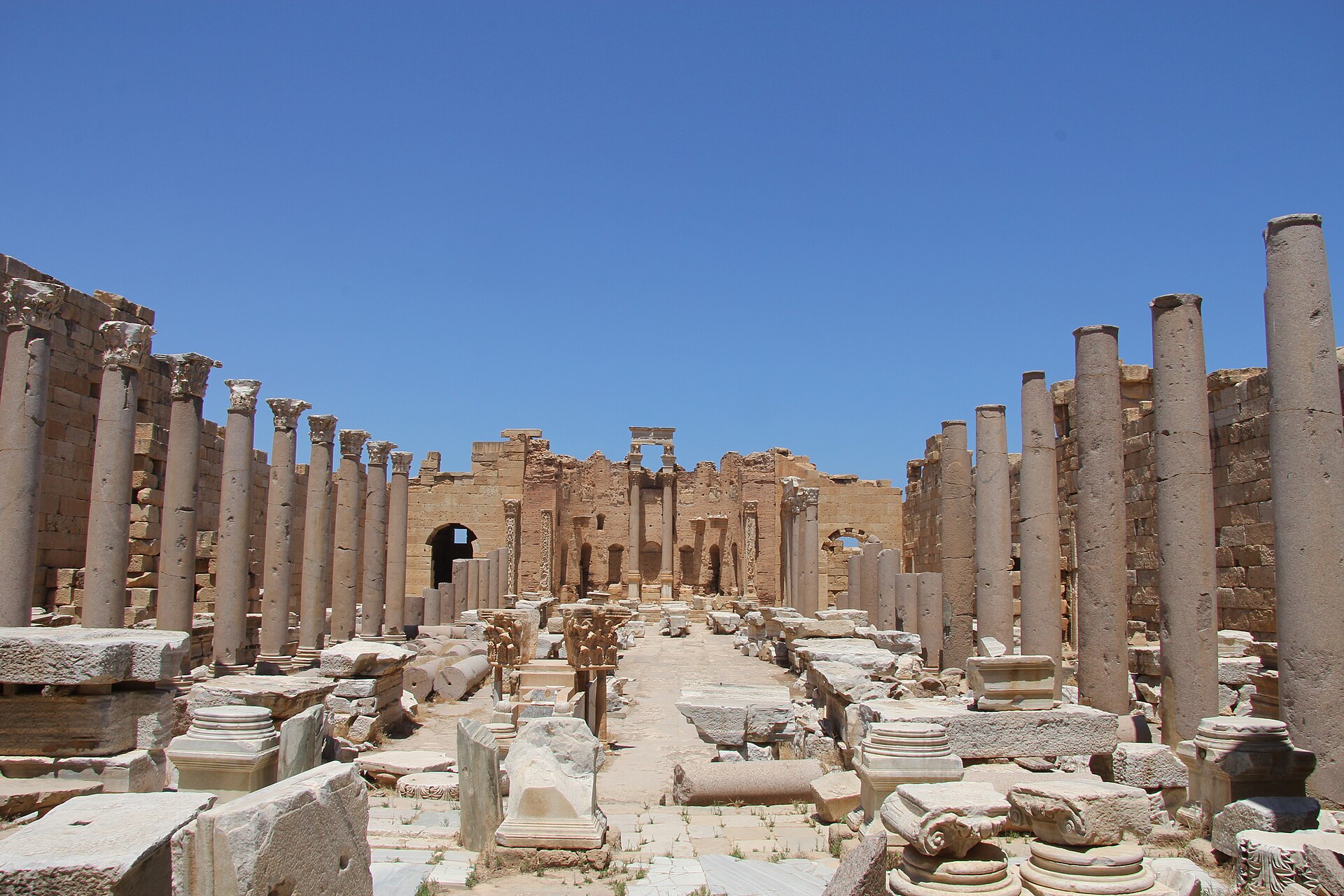
The rise of Septimius Severus illustrates how provincial elites could enter the highest levels of Roman government.
Severus was born around AD 145 at Leptis Magna, a prosperous city on the Mediterranean coast of what is now Libya. The city had deep Punic roots and developed into an important Roman urban center, benefiting from maritime commerce and the export of agricultural products, including olive oil. Its wealthy families participated in Roman political and economic institutions long before one of their descendants became emperor.
Severus belonged to this provincial elite. His father’s family was of Punic background, while his mother’s family had Italian connections. Members of his extended family had held Roman public office, giving him advantages that distinguished him from people without wealth or influential relatives.
He entered the imperial administration and pursued the conventional sequence of public offices before becoming emperor. His career shows that Roman power was not confined to men born in Italy. Provincial families who possessed citizenship, resources, education, and established connections could become part of the empire’s governing class.
That distinction matters. Severus did not rise from an undifferentiated population simply because he was African. He came from a privileged family already embedded in Roman political life.
Lucius Quietus and the Military Path to Power
A different route to imperial influence was followed by Lucius Quietus, a commander associated with the Mauri of northwestern Africa.
During the reign of Trajan, Quietus served in the Roman military system and became known for his cavalry. Riders identified with Moorish troops appear on Trajan’s Column in Rome, a monument commemorating the emperor’s campaigns against Dacia. Quietus subsequently held important commands during the eastern campaigns and became governor of Judaea and consul around AD 117. His rise demonstrates how military ability and imperial patronage could elevate a provincial commander into the upper ranks of Roman public life.
His career was also precarious. After Trajan died in AD 117, the new emperor Hadrian removed Quietus from his position. Quietus was killed soon afterward, although the circumstances and the extent of Hadrian’s personal involvement remain uncertain.
Quietus never became emperor, and claims that Trajan considered him a successor should be treated cautiously. Nevertheless, his advancement reveals that military service could create opportunities for men whose origins lay outside Italy, even as their fortunes remained dependent on the emperor and the political struggles of the court.
Septimius Severus Becomes Emperor
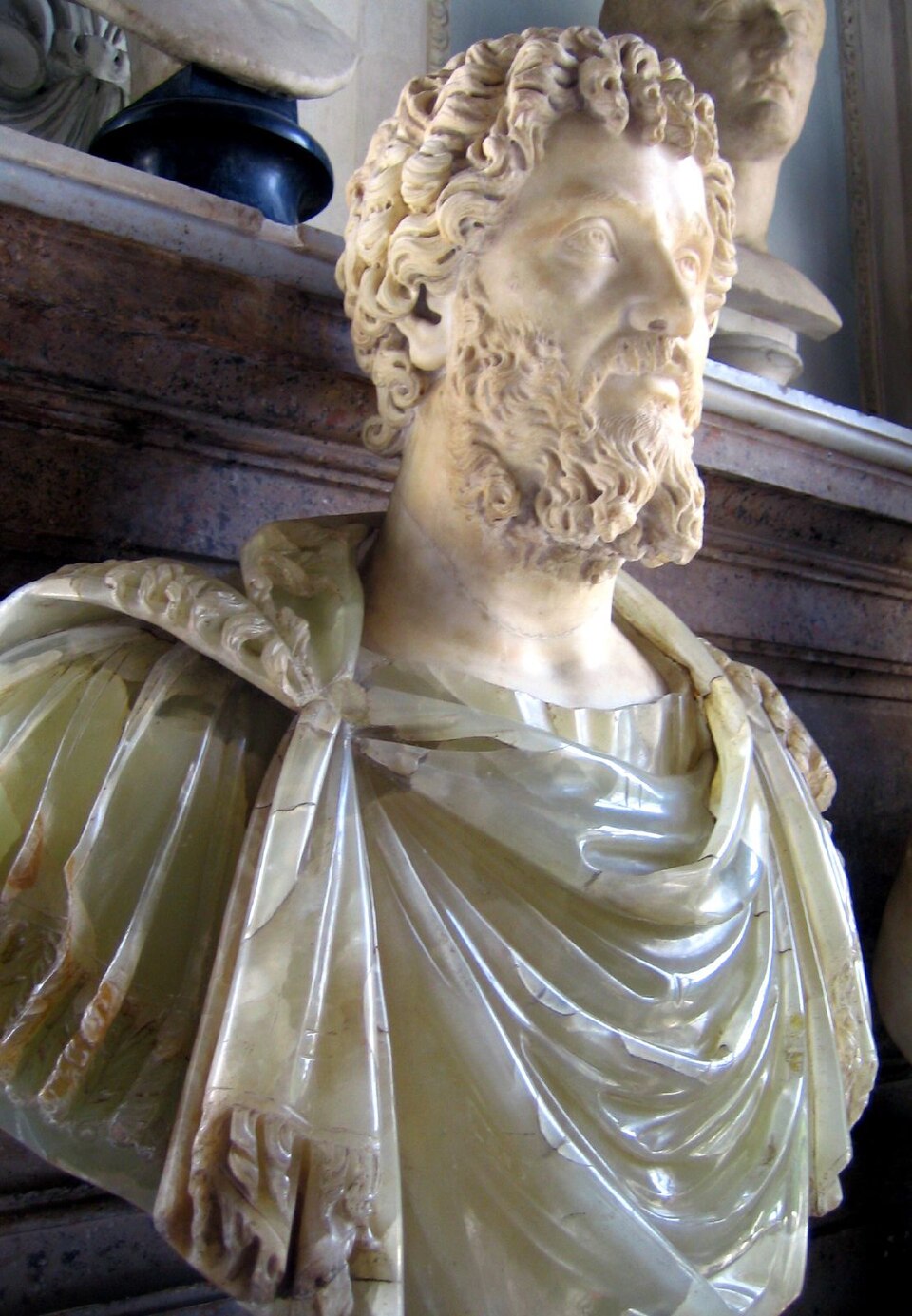
In AD 193, the year later remembered as the Year of the Five Emperors, Severus transformed his provincial career into an imperial reign.
The crisis began after the murder of Emperor Commodus in December AD 192. His successor, Pertinax, was killed after only a few months in power, and the Praetorian Guard subsequently backed Didius Julianus, whose accession became notorious for the reported payment he offered the soldiers.
Severus, then governing Pannonia Superior along the Danube frontier, received the support of his legions and was proclaimed emperor in April AD 193. He marched on Rome, where Julianus was executed. Severus still faced rival claimants: Pescennius Niger in the eastern provinces and Clodius Albinus in Britain. After defeating Niger and subsequently Albinus, Severus secured sole rule by AD 197.
His victory was not the product of African ancestry alone. It rested on the military strength of the Danubian legions, his experience in imperial administration, strategic alliances, and the ability to defeat competing armies. His subsequent reign also demonstrated the violence through which Roman imperial power was maintained.
Severus strengthened the army’s position in government and campaigned against the Parthian Empire, capturing its capital, Ctesiphon, in AD 197–198. He also pursued an ambitious building program in Rome and in his home city.
His African background was significant, but it did not make his government a representative administration for Africa. Severus ruled an empire whose political institutions, military resources, and social hierarchies remained firmly Roman.
Leptis Magna and the Power of Imperial Patronage

Severus’s rise brought considerable imperial attention to Leptis Magna. During his visit in AD 203, the emperor supported major building projects, including a forum, basilica, and monumental arch. These structures transformed the city’s public landscape and celebrated both its standing within the empire and the achievements of the Severan dynasty.
The surviving ruins reveal the resources available to a prosperous provincial city whose elite had cultivated Roman citizenship and public office over generations. Severus’s patronage also illustrates how emperors used their birthplaces to advertise dynastic legitimacy and demonstrate their generosity.
Leptis Magna’s prominence did not mean that all inhabitants of Roman Africa shared the emperor’s advantages. The benefits of imperial patronage were concentrated in urban centers and among groups with access to wealth and political influence. Rural populations, enslaved people, and those without citizenship experienced Roman rule differently.
Nevertheless, the city’s monuments preserve a clear historical point: the empire’s cultural and political center was not exclusively Italian. A North African city could become an important stage for imperial power.
Victor and the African Connections of Early Christianity
African participation in Roman life extended beyond the military and political spheres.
Victor I, who became bishop of Rome during the late second century, is traditionally associated with the Roman province of Africa. He led the Christian community at Rome during a period when Christianity remained religiously diverse and was still developing its institutional structures.
Victor is particularly associated with the controversy over the date of Easter. Some Christian communities in Asia Minor observed the celebration on the fourteenth day of the Jewish month of Nisan, while others in Rome and elsewhere celebrated on Sunday. Victor attempted to impose a common practice and threatened to exclude the Asian churches from communion. Irenaeus of Lyons urged him to maintain unity rather than pursue a rupture.
The episode demonstrates that disputes over authority, tradition, and regional practice were already shaping Christian institutions. It also shows that people connected with the African provinces could occupy influential positions in a religious movement whose networks crossed the Mediterranean.
The surviving evidence does not provide a detailed biography of Victor’s early life, and his African origin should not be used to infer his appearance or ancestry with certainty. His importance lies principally in the development of early Christian leadership and the growing connections among communities across the empire.
Citizenship and Caracalla’s Transformation of the Empire
One of the most consequential developments of the Severan period came in AD 212, when Severus’s son Caracalla issued the measure known as the Constitutio Antoniniana.
The enactment extended Roman citizenship to nearly all free inhabitants of the empire who did not already possess it. The surviving evidence indicates that some category of people was excluded, although the precise interpretation of the relevant passage remains debated. The principal surviving documentary witness is Papyrus Giessen 40, a damaged Greek text associated with the edict.
Before this measure, citizenship had already spread far beyond Italy through military service, grants to individuals and communities, and the advancement of provincial elites. Yet many free inhabitants remained noncitizens. Caracalla’s enactment greatly widened the reach of Roman legal identity.
Its significance should not be overstated. Citizenship did not eliminate slavery, economic inequality, or differences in political power. Nor did it make a farmer in North Africa socially equivalent to a senator in Rome. It expanded a shared legal status while existing distinctions of wealth, occupation, local custom, and influence continued.
The emperor’s motives are disputed. Cassius Dio, a contemporary senator who wrote critically of Caracalla, claimed that the measure was intended in part to increase imperial revenue. Modern scholars have questioned whether this explanation adequately captures the edict’s purpose or its broader administrative context. The surviving text does not settle the question.
For the history of Africans in Rome, the measure is important because it belongs to a longer process in which provincial populations became increasingly integrated into the empire’s legal and political framework. It was not a special grant to Africans; it applied across the empire.
Macrinus: An Emperor Born in North Africa

Caracalla’s assassination in AD 217 created another opening for a man of North African origin. Marcus Opellius Macrinus, the emperor’s praetorian prefect, was proclaimed emperor by the army shortly afterward.
Macrinus was born at Caesarea in Mauretania, near modern Cherchell in Algeria, and came from an equestrian background. Unlike Severus, he had not advanced through the Senate to a consulship before becoming emperor. His career had instead progressed through administrative and legal service, eventually bringing him to command the Praetorian Guard.
His accession is therefore a useful counterpoint to Severus’s rise. Both men came from North Africa, but their routes to the throne differed. Severus possessed a provincial aristocratic background and a conventional senatorial career; Macrinus reached the highest office through imperial service and military authority.
Macrinus faced serious difficulties, including conflict with Parthia and opposition from members of the Severan family. In AD 218, forces loyal to the young Elagabalus defeated him. His reign lasted little more than a year.
Macrinus’s brief rule demonstrates both the opportunities and the instability of Roman imperial politics. Provincial origin was no absolute barrier to the throne, but accession depended on support from the army, the court, and other powerful institutions.
Africans on Hadrian’s Wall

The African presence in the Roman Empire was not confined to its southern provinces. Military deployments, trade, migration, and imperial administration moved people across enormous distances.
Archaeological and epigraphic evidence provides particularly revealing examples from Roman Britain. At Aballava, the fort associated with modern Burgh-by-Sands near Hadrian’s Wall, a Roman inscription records the Numerus Maurorum Aurelianorum, a unit associated with the Mauri of northwestern Africa. An altar dedicated to Jupiter by the unit’s commander, Caelius Vibianus, is dated to the mid-third century. The inscription offers direct evidence for a military unit connected with North Africa serving on Britain’s northern frontier.
Other inscriptions and burials reveal how soldiers, freedmen, and migrants could establish lives far from their places of origin. Such evidence is valuable precisely because it does not depend entirely on elite literary narratives. A name, an inscription, or a burial can preserve traces of an individual whose life would otherwise have disappeared from written history.
These discoveries must still be interpreted carefully. A unit’s name can indicate its original recruitment region without proving that every soldier came from there, particularly after years of service and local recruitment. Likewise, an individual’s name or burial objects cannot always establish ancestry conclusively.
Even with those limitations, the evidence shows that Roman Britain was connected to a much wider imperial world. North African soldiers were not merely an imagined possibility at the empire’s edge; military inscriptions provide tangible evidence of their presence.
The Ivory Bangle Lady of Roman York

One of the most discussed discoveries associated with African ancestry in Roman Britain is the woman known as the Ivory Bangle Lady.
Her burial was discovered in 1901 at Sycamore Terrace in York, the Roman city of Eboracum. She was approximately 18 to 23 years old when she died and was buried in a stone coffin with an array of grave goods, including ivory bangles, jewellery, a blue glass vessel, and a mirror. These objects suggest that she was buried with considerable care and may have belonged to a relatively prosperous household.
In 2010, a multidisciplinary research team led by archaeologists associated with the University of Reading published a study of the burial in the journal Antiquity. The researchers examined skeletal morphology, isotopic evidence, and the grave goods to investigate her ancestry, mobility, and social identity. Their findings supported the interpretation that she had North African connections and had spent part of her early life in a warmer climate before arriving in York.
The conclusions require qualification. Skeletal morphology cannot assign a person’s ancestry with absolute certainty, while isotopic analysis identifies aspects of geographic mobility rather than a precise birthplace. Her grave goods illuminate her burial and possible social standing, but they cannot tell us everything about her life, language, or self-identification.
Her significance is not that she represents every African person in Roman Britain. It is that scientific analysis of a single burial, considered alongside archaeological context, can reveal evidence of mobility and cultural connections that ancient literary sources rarely record.
The woman remains unnamed. Yet the objects buried with her and the scientific investigation of her remains have made her one of the most recognizable individuals associated with the diverse population of Roman York.
Saint Maurice and the Limits of Historical Memory
A later tradition offers a different example of how African identity was remembered in Europe. According to a Christian account written in Late Antiquity, a legion associated with Thebes in Egypt, led by Maurice, was executed near Agaunum in what is now Switzerland after refusing to sacrifice to the Roman gods.
The story became influential in medieval Christian tradition, but historians debate whether the event occurred as described or whether the account developed as a religious narrative. Its details should therefore not be treated as straightforward evidence for a specific historical massacre.
In medieval Europe, Maurice was sometimes depicted with dark skin. The reasons for the development of this iconography are not fully understood, and artistic representations changed across regions and periods. The later image of the saint tells us about medieval religious culture and the reception of African identity as much as it tells us about the Roman world.
This distinction is essential: later memory can preserve, transform, or invent elements of the past. It is a historical source in its own right, but it does not automatically verify the events it depicts.
What the Evidence Reveals About Africans in Rome
The evidence for Africans in the Roman world comes from different kinds of sources, each with its own strengths and limitations. Literary biographies preserve traditions about figures such as Terence; imperial histories describe the careers of Severus and Macrinus; inscriptions record soldiers and public officials; monuments document imperial patronage; and burials provide evidence for mobility, material culture, and individual lives.
Taken together, these sources reveal a society connected across the Mediterranean and beyond. People associated with North Africa could participate in Roman literature, military service, urban government, religious leadership, and imperial politics. Some held citizenship and inherited privilege, while others experienced enslavement or served far from home.
Their stories should not be reduced to a modern narrative of racial categories, but neither should the complexity of Roman identity obscure evidence of African ancestry and presence. The ancient world had its own ways of defining belonging, difference, and status, and these shaped individual lives in ways that do not map neatly onto modern concepts.
The most defensible conclusion is that African participation was a longstanding feature of Roman history, not a marginal exception. From the disputed biography of Terence to Severus’s imperial monuments and the remains of the Ivory Bangle Lady, the evidence shows a world in which people, ideas, and cultural traditions moved across the boundaries of a vast empire.
The surviving record is uneven, and many individuals remain unnamed. But the combination of texts, inscriptions, archaeology, and scientific analysis makes it possible to recover a more complete account of Roman society—one that recognizes its provincial foundations, its unequal structures, and the diverse lives lived within its borders.
