
By the beginning of the 3rd century BC, Rome had become the dominant power in much of Italy. City after city had fallen under its influence, and the Roman Republic was steadily expanding southward. But in southern Italy, Rome encountered something it had not faced on this scale before: a powerful Hellenistic king with a professional army, experienced soldiers, and war elephants. His name was Pyrrhus, king of Epirus.
For several years, Pyrrhus fought Rome in one of the earliest major wars between the Roman Republic and the Greek world. He defeated Roman armies in spectacular battles, but victory came at a terrible price. His campaign would eventually give the world the expression “Pyrrhic victory” — a victory so costly that it is almost indistinguishable from defeat. More importantly, he became one of the first great rulers to discover just how difficult it was to stop Rome once the Republic had committed itself to expansion. And his unusual death came as a cherry on top.
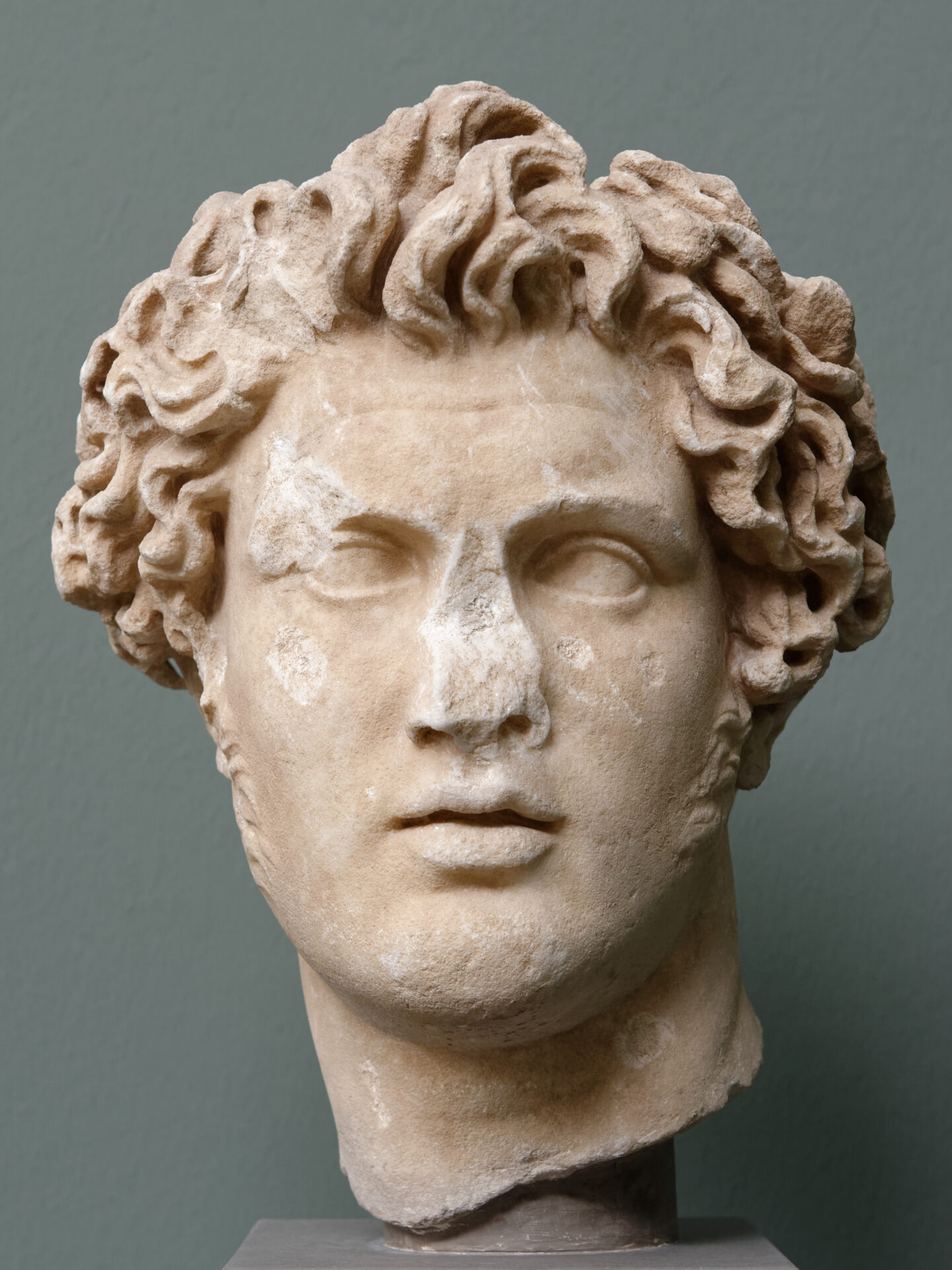
Rome Meets the Greek World
Rome’s conflict with Pyrrhus began with Tarentum, a wealthy Greek city in southern Italy. By the late 4th and early 3rd centuries BC, Rome had conquered or allied with much of the Italian peninsula. Its growing power inevitably brought it into contact with the Greek cities of Magna Graecia, which had been established in southern Italy centuries earlier. Tarentum was particularly powerful and fiercely protective of its independence. When tensions with Rome escalated, the Tarentines sought help from across the Adriatic. They turned to Pyrrhus of Epirus.
Pyrrhus was not simply a local ruler taking his chances fighting Rome. He was an ambitious Hellenistic monarch who dreamed of creating a kingdom that could rival the great powers of the eastern Mediterranean. He also saw the conflict in Italy as an opportunity to expand his influence. In 280 BC, he crossed the Adriatic with an army that included cavalry, infantry, and something the Romans had rarely encountered in war: elephants.
Heraclea: Rome Faces the Elephants
The first major confrontation came at Heraclea in 280 BC. The Roman army was commanded by the consul Publius Valerius Laevinus, while Pyrrhus personally led his forces. The battle was hard-fought, but the Romans were ultimately unable to withstand the combined strength of Pyrrhus’s army and his elephants. The elephants were particularly frightening to the Romans and disrupted their formations. Pyrrhus emerged victorious. Yet the victory revealed an uncomfortable truth. Pyrrhus had won, but his losses were heavy.
Ancient sources give varying figures for the casualties, and they cannot be accepted literally. But the general picture is clear: Pyrrhus could defeat Roman armies, yet he could not afford to lose large numbers of experienced soldiers in every battle. According to the famous tradition preserved by ancient writers, Pyrrhus looked at the cost of his victory and remarked that another such victory would ruin him. Whether he actually said those exact words is impossible to establish. But the story captured something important about his campaign — and eventually gave us the expression Pyrrhic victory.
Asculum: Another Victory, Another Problem
He continued his campaign and met the Romans again at Asculum in 279 BC. Once again, the battle was fiercely contested. Once again, Pyrrhus eventually forced the Romans from the field. And once again, his victory came at enormous cost. Pyrrhus had defeated Rome twice, but Rome itself had not been defeated. This was one of the fundamental differences between the two sides.
Pyrrhus was fighting with an army that represented the military resources of a relatively small kingdom. Rome, meanwhile, could draw upon a vast network of communities and allies across Italy. When Roman armies suffered devastating casualties, Rome could raise new armies. Pyrrhus could replace some of his losses, but not indefinitely. The king was therefore facing a strategic problem that victory on the battlefield could not solve. He could beat Rome’s armies. But could he outlast Rome?

Pyrrhus Turns Toward Sicily
While Pyrrhus was campaigning in Italy, events elsewhere offered him another opportunity. The Greek cities of Sicily were facing pressure from Carthage, Rome’s future great rival in the western Mediterranean. The Sicilian Greeks invited Pyrrhus to intervene. In 278 BC, he crossed into Sicily. For a time, his campaign was remarkably successful. He captured territory from the Carthaginians and took control of much of the island. His ambitions now stretched far beyond Italy. But the campaign began to unravel.
Pyrrhus wanted to continue the war against Carthage, while the Sicilian Greeks became increasingly unhappy with the demands imposed by his rule and military operations. His position deteriorated, and eventually he abandoned Sicily. He returned to Italy in 275 BC. There, the Romans were waiting.
Beneventum: Rome Finally Holds
Pyrrhus’s final major confrontation with Rome came at Beneventum in 275 BC. The battle did not produce the kind of victory he had achieved at Heraclea and Asculum. Roman forces under the consul Manius Curius Dentatus managed to withstand Pyrrhus at Beneventum, and the battle effectively ended his ability to continue the Italian campaign. The exact course of the battle is debated in the ancient sources, but its consequence was clear. Pyrrhus could no longer maintain his Italian campaign.
He withdrew from Italy, leaving behind the Greek cities that had called upon him for help. Within a few years, Rome would complete its conquest of southern Italy. Pyrrhus had fought Rome at the height of his military ability. He had brought an army capable of defeating Roman legions and had demonstrated that the Republic was far from invincible on the battlefield. But Rome had survived, and that mattered more.

The Death of Pyrrhus
Pyrrhus returned to Greece, but Italy had not ended his ambitions. He continued fighting elsewhere, becoming involved in struggles for control of Macedonia and eventually turning his attention to the city of Argos.
In 272 BC, he entered Argos during a confused night battle. The ancient accounts of his death are dramatic. According to one tradition, as Pyrrhus fought through the streets, a woman watching the battle from above threw a roof tile that struck him. He was knocked from his horse, and an enemy soldier then killed him.
The story may contain dramatic embellishment, so the exact circumstances of his death remain uncertain. What is certain is that Pyrrhus died at Argos in 272 BC, aged about 46. He had fought Romans, Carthaginians and Greeks, intervened in Macedonia, conquered territory in Sicily and twice defeated Roman armies. Yet his greatest failure had perhaps been his inability to turn battlefield victories into lasting strategic success.
The Man Who Could Beat Rome — But Not Stop It
Pyrrhus left Italy, but Rome did not. His intervention had failed to prevent Roman expansion into the Greek cities of southern Italy. Soon, Rome would possess the entire peninsula and begin looking beyond it. Within a generation, the Republic would enter its great struggle with Carthage. Eventually, Rome would dominate the Mediterranean. Still, Pyrrhus occupies an important place in the story of Rome’s rise.
He was not Rome’s first enemy, nor was he the last foreign ruler to defeat Roman armies. But he was among the first great commanders to challenge Rome on a scale that revealed both its military strength and its extraordinary ability to recover from defeat. He could win battles against Rome, but what he couldn’t do was make Rome stop fighting.

Hello, my name is Vladimir, and I am a part of the Roman-empire writing team.
I am a historian, and history is an integral part of my life.
To be honest, while I was in school, I didn’t like history so how did I end up studying it? Well, for that, I have to thank history-based strategy PC games. Thank you so much, Europa Universalis IV, and thank you, Medieval Total War.
Since games made me fall in love with history, I completed bachelor studies at Filozofski Fakultet Niš, a part of the University of Niš. My bachelor’s thesis was about Julis Caesar. Soon, I completed my master’s studies at the same university.
For years now, I have been working as a teacher in a local elementary school, but my passion for writing isn’t fulfilled, so I decided to pursue that ambition online. There were a few gigs, but most of them were not history-related.
Then I stumbled upon roman-empire.com, and now I am a part of something bigger. No, I am not a part of the ancient Roman Empire but of a creative writing team where I have the freedom to write about whatever I want. Yes, even about Star Wars. Stay tuned for that.
Anyway, I am better at writing about Rome than writing about me. But if you would like to contact me for any reason, you can do it at contact@roman-empire.net. Except for negative reviews, of course. 😀
Kind regards,
Vladimir