
The deaths of Roman emperors reveal the fundamental weakness of imperial power: an emperor could command armies, control vast territories, and exercise authority over millions, yet remain vulnerable to the people closest to him. From political conspiracies in the Senate to mutinies within the Praetorian Guard, Rome’s rulers frequently faced dangers that military victories and immense wealth could not overcome.
Between the assassination of Julius Caesar in 44 BC and the catastrophic defeat of Emperor Valens in AD 378, Roman leaders met their ends through conspiracies, poisoning, strangulation, battlefield violence, and political betrayal. Some deaths were deliberate attempts to change the succession. Others resulted from military disasters or the collapse of personal loyalty.
The historical record, however, requires caution. Ancient writers often described imperial deaths to emphasize a ruler’s virtues, vices, or political failures. Some dramatic details are disputed, and accounts written decades or centuries later cannot always be treated as eyewitness testimony. Separating established events from sensational stories is essential to understanding how these emperors actually died.
1. Julius Caesar — Murdered by the Men Who Claimed to Save the Republic
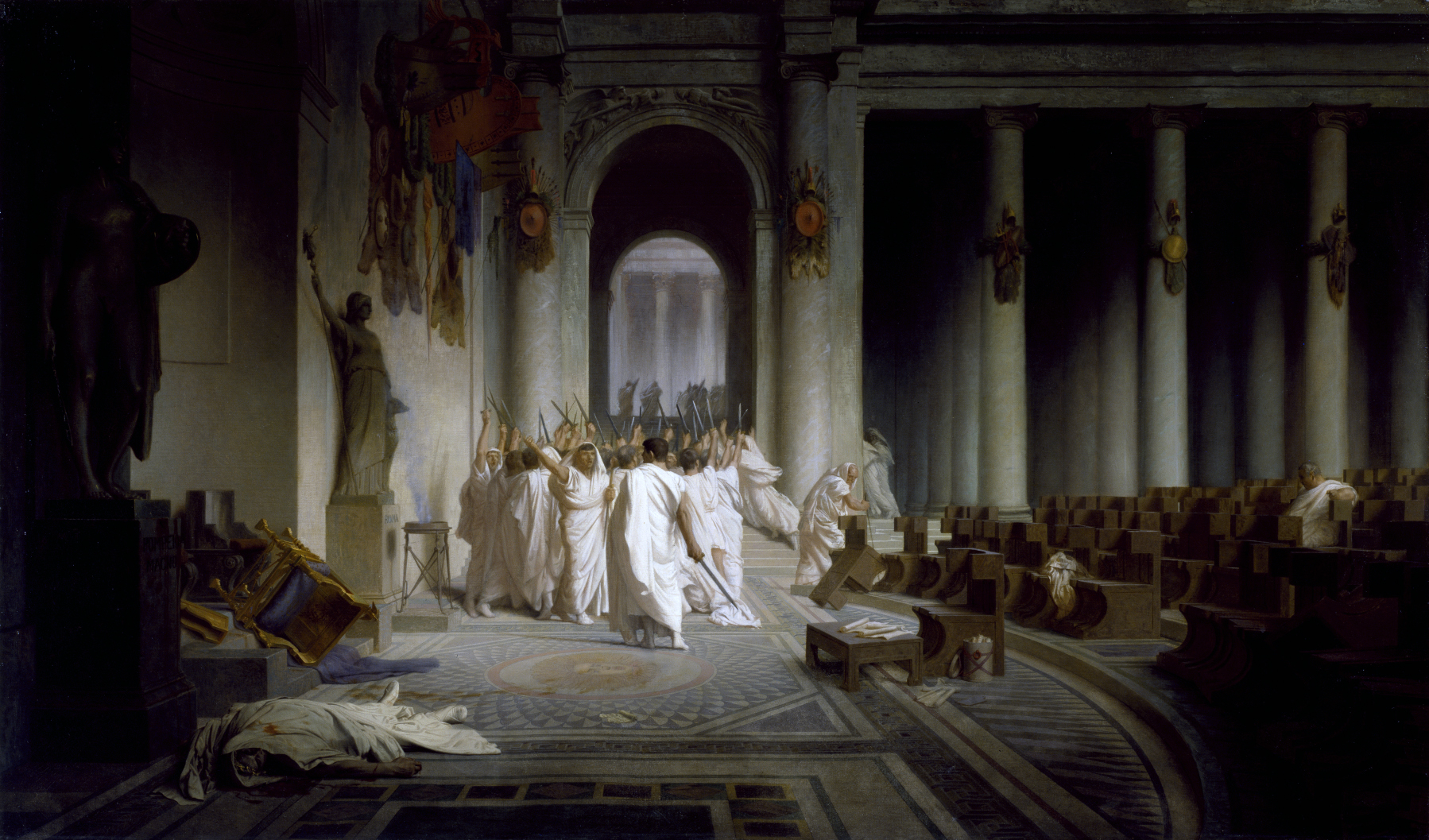
Date: March 15, 44 BC · Location: Pompey’s Theatre, Rome · Cause of death: Multiple stab wounds
Julius Caesar‘s assassination was one of the defining political murders of Roman history. Although Caesar was not an emperor in the later constitutional sense, his concentration of power helped establish the political conditions that ultimately produced imperial rule.
After conquering Gaul and defeating his Roman rivals in a civil war, Caesar accumulated extraordinary authority. In early 44 BC, he was appointed dictator perpetuo, or dictator in perpetuity. To his opponents, this threatened the survival of the Republic, whose institutions traditionally distributed power among magistrates, the Senate, and popular assemblies.
A conspiracy involving senators, including Marcus Junius Brutus and Gaius Cassius Longinus, developed around the claim that Caesar had to die to restore republican liberty. The conspirators included men Caesar had previously pardoned after the civil war, making the assassination especially consequential as an act of political betrayal.
On the Ides of March, Caesar attended a Senate meeting held in the complex associated with Pompey’s Theatre. The conspirators surrounded him under the pretext of presenting a petition. When Tillius Cimber approached with a request concerning his exiled brother, he reportedly seized Caesar’s toga, signaling the attack.
The first blow is traditionally attributed to Publius Servilius Casca. Other conspirators then joined in, stabbing Caesar repeatedly. Ancient accounts differ in their details, but Suetonius reports that Caesar received 23 wounds.
The famous words Et tu, Brute? come from Shakespeare’s later dramatization, not a securely established historical transcript. Likewise, the precise details of Caesar’s final gestures remain uncertain.
Caesar died at the foot of a statue of Pompey, his former political ally and later civil-war adversary. His assassination did not restore the Republic. Instead, the ensuing struggle for power led to further civil wars and ultimately the establishment of Augustus as Rome’s first emperor.
Historical significance: Caesar’s death demonstrated that eliminating a powerful ruler does not necessarily eliminate the political conditions that enabled his rise. The conspirators killed the dictator but failed to rebuild a stable republican system.
2. Caligula — Assassinated by His Own Imperial Guard
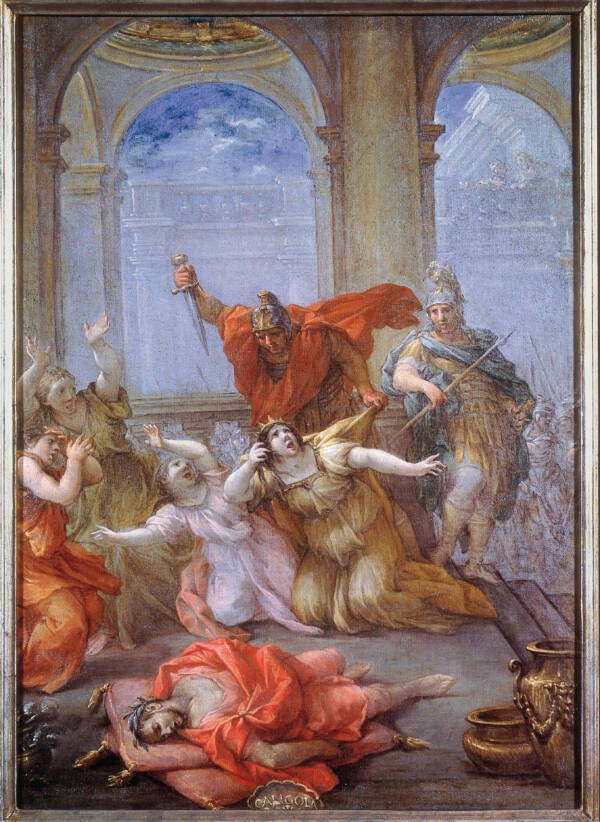
Date: January 24, AD 41 · Location: Imperial palace complex, Rome · Cause of death: Assassination
Gaius Caesar, better known as Caligula, became emperor in AD 37 following the death of Tiberius. Initially welcomed by the Roman population, he soon became the subject of hostile accounts describing cruelty, extravagant behavior, and conflicts with the Senate and imperial household.
Caligula’s reputation depends heavily on ancient writers such as Suetonius and Cassius Dio, whose accounts were shaped by political hostility and later traditions. Some of the most sensational stories about his reign cannot be independently verified. Nevertheless, his violent death confirms that serious opposition had developed within the imperial establishment.
The Praetorian Guard, responsible for protecting the emperor, became central to the conspiracy. Its officers possessed close access to the ruler and the military power to make an assassination effective. Cassius Chaerea, a tribune whom ancient sources describe as having been repeatedly humiliated by Caligula, emerged as a principal conspirator.
According to the traditional account, Caligula was attacked in a passageway beneath or adjoining the palace’s theatrical complex while leaving performances. Chaerea struck first, and other conspirators joined the assault. Caligula was killed in the ensuing violence.
His wife, Caesonia, and their young daughter, Julia Drusilla, were also murdered. The killings eliminated immediate members of the imperial family who might otherwise have complicated the succession.
Caligula’s death exposed the precarious relationship between the emperor and the Praetorian Guard. Although the guard existed to protect imperial authority, its commanders could become kingmakers when they turned against the ruler.
The aftermath also demonstrated that assassination did not automatically end the imperial system. Claudius, Caligula’s uncle, was proclaimed emperor after the killing, reportedly with decisive support from members of the guard.
Historical significance: Caligula’s assassination established a recurring pattern in Roman politics: the ruler’s personal security force could become a direct threat to the ruler himself.
3. Claudius — The Emperor Allegedly Killed by Poisoned Mushrooms
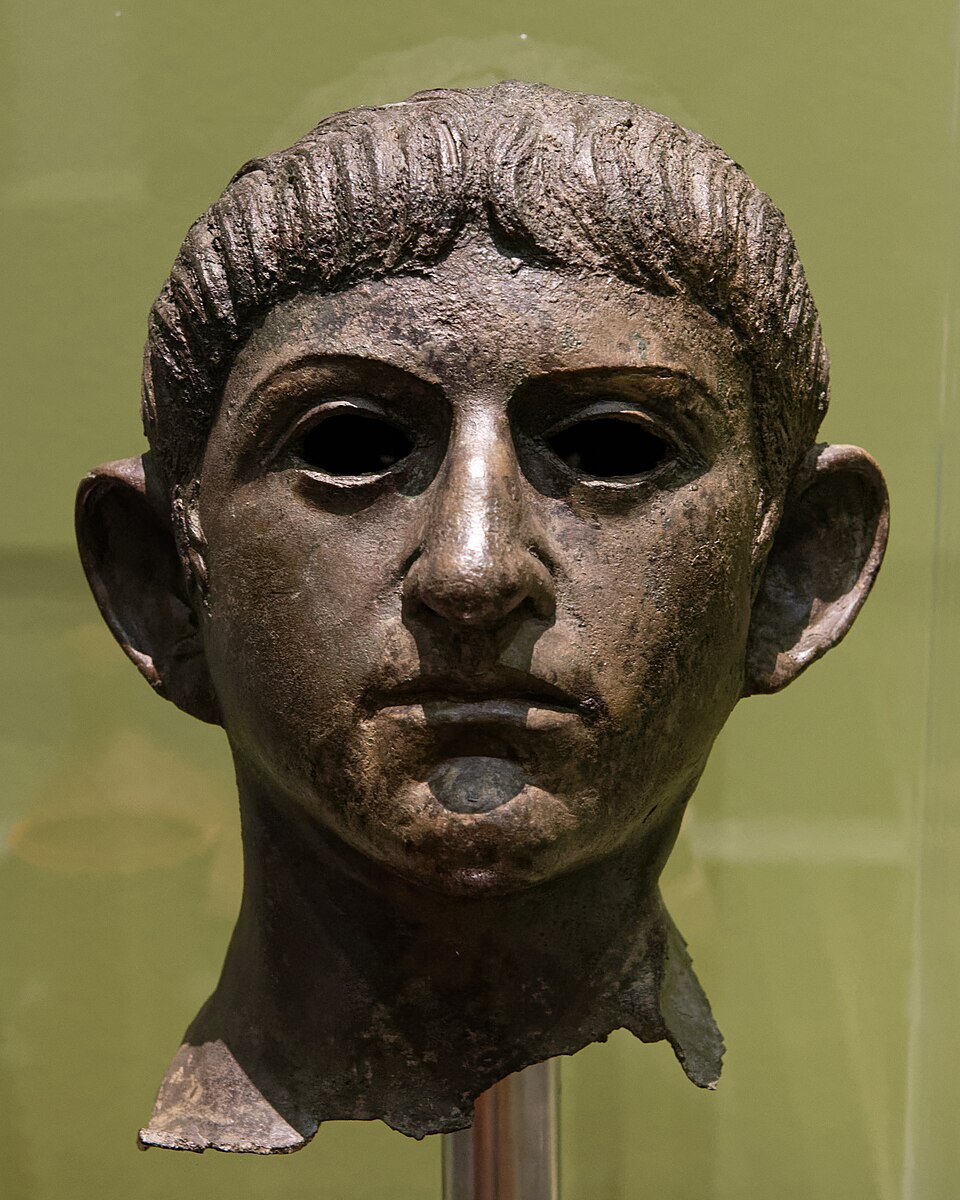
Date: October 13, AD 54 · Location: Rome · Reported cause of death: Poisoning
Claudius succeeded Caligula in AD 41 and ruled for approximately 13 years. Despite being regarded by some members of the imperial family as an unlikely candidate for power because of his physical disabilities, he proved to be an effective administrator and expanded Roman control into Britain.
His death, however, became one of antiquity’s most enduring poisoning stories.
Claudius’s wife Agrippina the Younger had a powerful political incentive to secure the succession for her son, Nero. Claudius already had a biological son, Britannicus, whose existence created a potential rival to Nero’s position.
Ancient accounts, particularly those of Tacitus, Suetonius, and Cassius Dio, associate Claudius’s death with poisoned mushrooms. In the traditional narrative, Agrippina enlisted Locusta, a woman associated with the preparation of poisons, to administer the substance during a meal.
Some versions add that Claudius’s physician, Xenophon, administered further poison while ostensibly helping him vomit. These details are difficult to verify, and the accounts differ over the method and sequence of events.
Claudius died in AD 54, after which Nero was proclaimed emperor. Agrippina’s political position strengthened considerably under her son’s accession, although their relationship later deteriorated.
The story of the mushrooms became a symbol of dynastic intrigue in Rome. Yet the historical distinction matters: Claudius’s death is certain, while the precise mechanism of his death and the full extent of Agrippina’s involvement remain matters of historical debate.
Historical significance: Claudius’s reported poisoning illustrates how succession disputes could turn the imperial household into a center of political conspiracy. In a system without a consistently enforced rule of hereditary succession, control over the emperor’s immediate environment could influence who ruled next.
4. Nero — The Emperor Who Died by Suicide
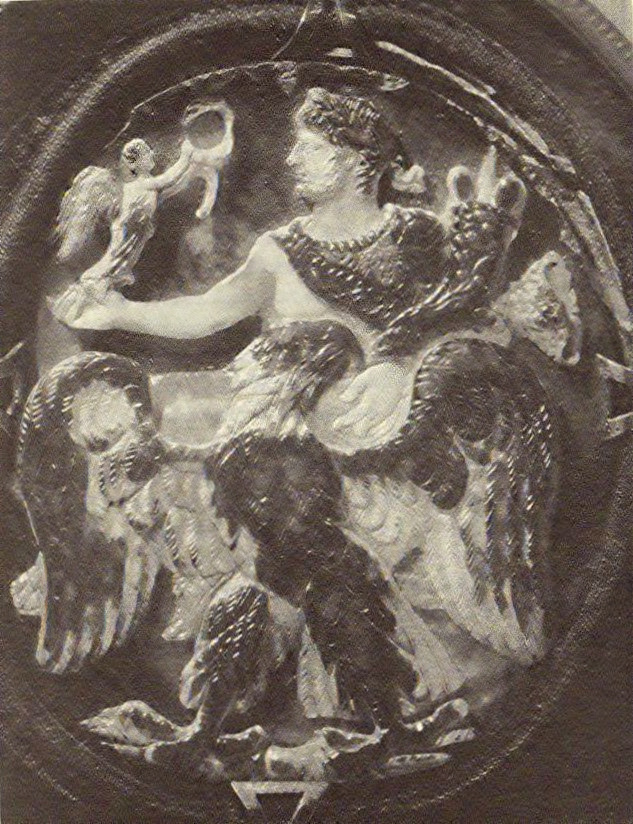
Date: June 9, AD 68 · Location: Near Rome · Cause of death: Suicide
Nero’s fall marked the end of the Julio-Claudian dynasty, the imperial family that had governed Rome since Augustus.
Nero became emperor in AD 54 and initially benefited from the guidance of experienced advisers, including Seneca and the Praetorian prefect Sextus Afranius Burrus. Over time, political executions, conflicts with the Senate, and unrest among provincial elites and military commanders weakened his position.
The Great Fire of Rome in AD 64 damaged large sections of the city. Later Roman accounts connected Nero with the disaster, but the allegation that he deliberately started the fire is not established fact. His response to the destruction and his building projects became part of a wider controversy over his rule.
By AD 68, opposition had escalated into open rebellion. Gaius Julius Vindex revolted in Gaul, and Galba, governor of Hispania Tarraconensis, gained support from forces opposing Nero. The Senate ultimately declared Nero a public enemy as his political and military support collapsed.
Nero fled Rome and sought refuge at a villa associated with his freedman Phaon. According to Suetonius, he learned that he faced execution and contemplated suicide, but struggled to carry it out.
With the authorities closing in, Nero inflicted a fatal wound on himself with assistance from his secretary Epaphroditus. His reported final remark, Qualis artifex pereo—usually translated as “What an artist dies in me”—reflects the ancient tradition that he regarded himself as a performer and artist as well as a ruler.
Nero’s death was not a conventional assassination. It was the outcome of political isolation, military rebellion, and the collapse of his authority.
His removal triggered a succession crisis known as the Year of the Four Emperors, during which Galba, Otho, Vitellius, and Vespasian successively claimed imperial power.
Historical significance: Nero’s downfall demonstrated that imperial legitimacy depended on more than formal appointment or dynastic inheritance. Once military support disappeared, the emperor could no longer rely on the institutions that had sustained his position.
5. Commodus — Strangled by a Wrestler
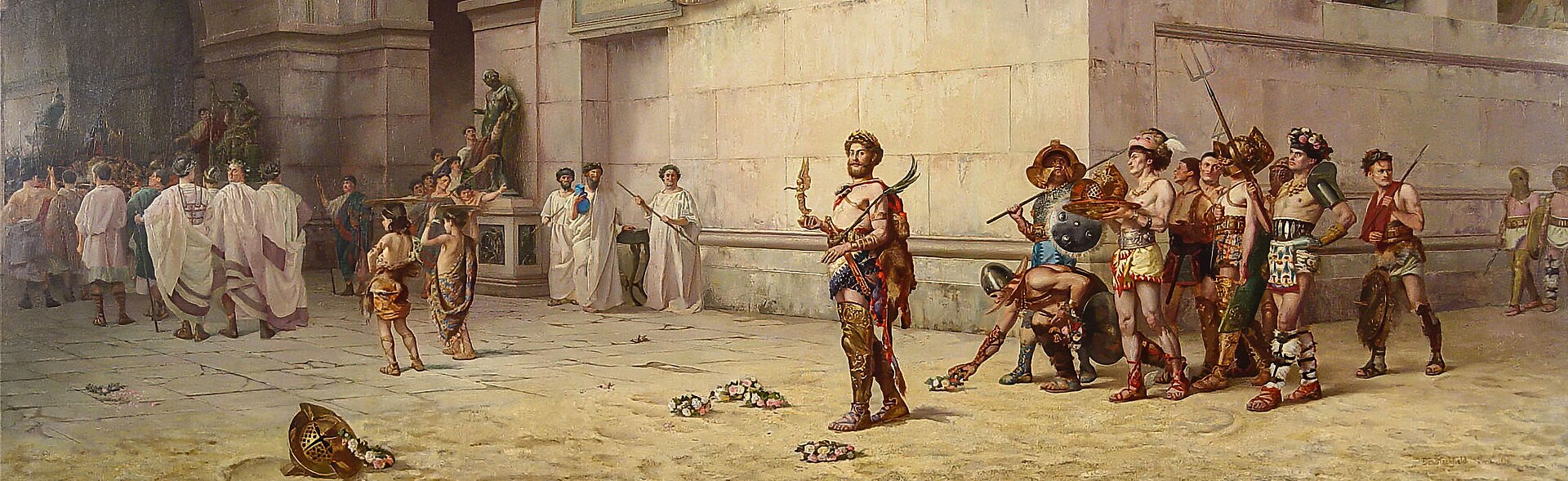
Date: December 31, AD 192 · Location: Rome · Cause of death: Strangulation
Commodus, son of Marcus Aurelius, ruled from AD 180 until the final day of AD 192. His reign became notorious in ancient accounts for court intrigue, executions, and his enthusiasm for gladiatorial combat. He also cultivated an association with Hercules, presenting himself as a figure of extraordinary physical strength.
By the end of his reign, Commodus had alienated influential members of his administration. The Praetorian prefect Quintus Aemilius Laetus, chamberlain Eclectus, and Commodus’s mistress Marcia became involved in a conspiracy against him.
According to Cassius Dio, Marcia administered poison to Commodus in food on New Year’s Eve. The emperor vomited, however, and survived the initial attempt. The conspirators then sent Narcissus, an athlete and wrestling partner, to kill him.
Narcissus strangled Commodus while he was bathing. The emperor’s death ended the Antonine dynasty’s direct line of rule and plunged Rome into another succession crisis.
The Senate subsequently condemned Commodus’s memory, although the extent to which his reputation reflected political hostility is debated. His successor, Pertinax, was murdered by the Praetorian Guard within months, demonstrating how unstable imperial authority had become.
Historical significance: Commodus’s murder illustrates how palace officials, personal relationships, and military officers could combine to remove an emperor when they believed their interests were threatened.
6. Caracalla — Killed During a Brief Stop on Campaign
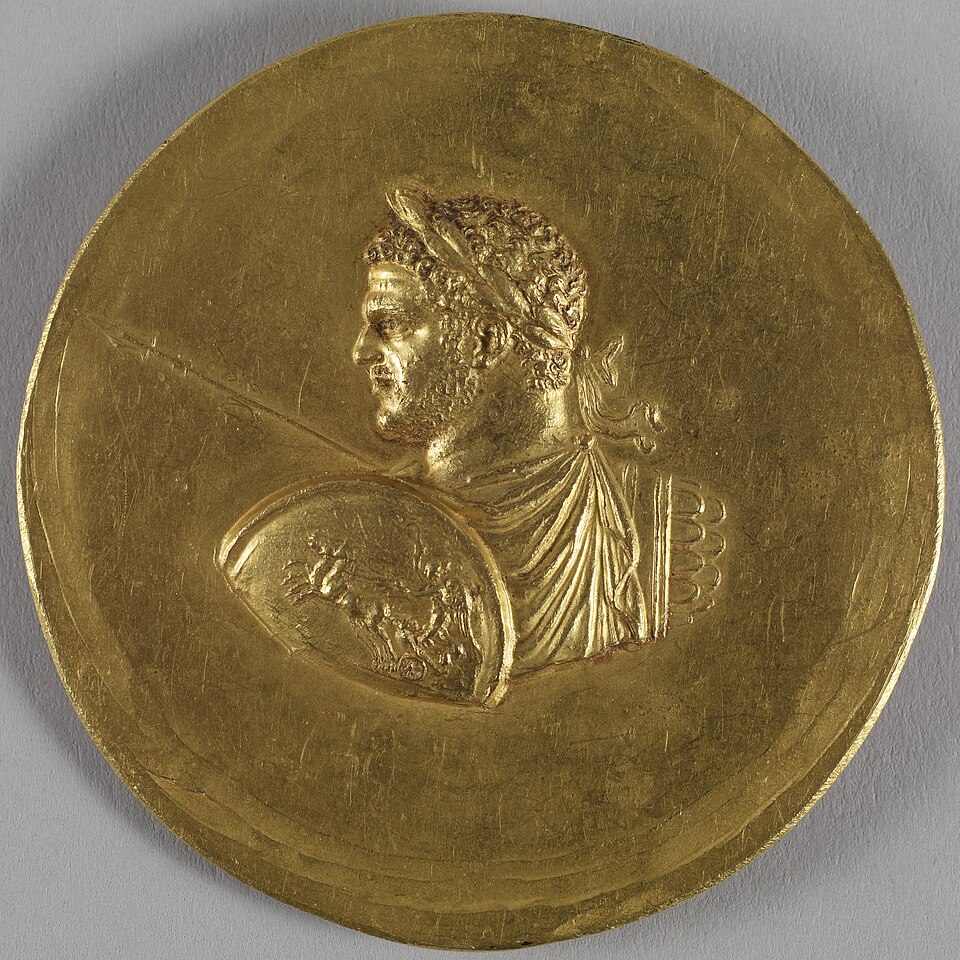
Date: April 8, AD 217 · Location: Near Carrhae, Mesopotamia · Cause of death: Assassination
Caracalla, born Marcus Aurelius Antoninus, ruled from AD 198 alongside his father, Septimius Severus, and later became sole emperor. His reign was marked by military campaigning, severe political violence, and the murder of his brother Geta in AD 211.
In AD 217, Caracalla was campaigning in the eastern provinces, preparing for renewed conflict with the Parthian Empire. While traveling near Carrhae, in present-day southeastern Turkey, he briefly left his entourage to relieve himself.
A soldier named Julius Martialis attacked him. Ancient accounts associate Martialis’s hostility with personal grievances, including the execution of his brother. Other sources also implicate the Praetorian prefect Macrinus, who succeeded Caracalla as emperor and had political reasons to support the conspiracy.
Martialis struck Caracalla with a weapon, fatally wounding him. The soldier was then killed by the emperor’s guards, but the assassination had already succeeded.
Caracalla’s death enabled Macrinus to claim the throne. He became the first emperor who was not a senator to rise to the position through his own military and administrative career rather than imperial family connections.
The incident’s seemingly ordinary setting has made it memorable, but the broader political circumstances mattered far more than the moment itself. Caracalla was traveling in a military environment where personal grievances and succession ambitions converged.
Historical significance: Caracalla’s assassination exposed the vulnerability of an emperor who depended on military personnel for both his security and his continued political survival.
7. Elagabalus — Murdered and Disgraced by the Praetorian Guard
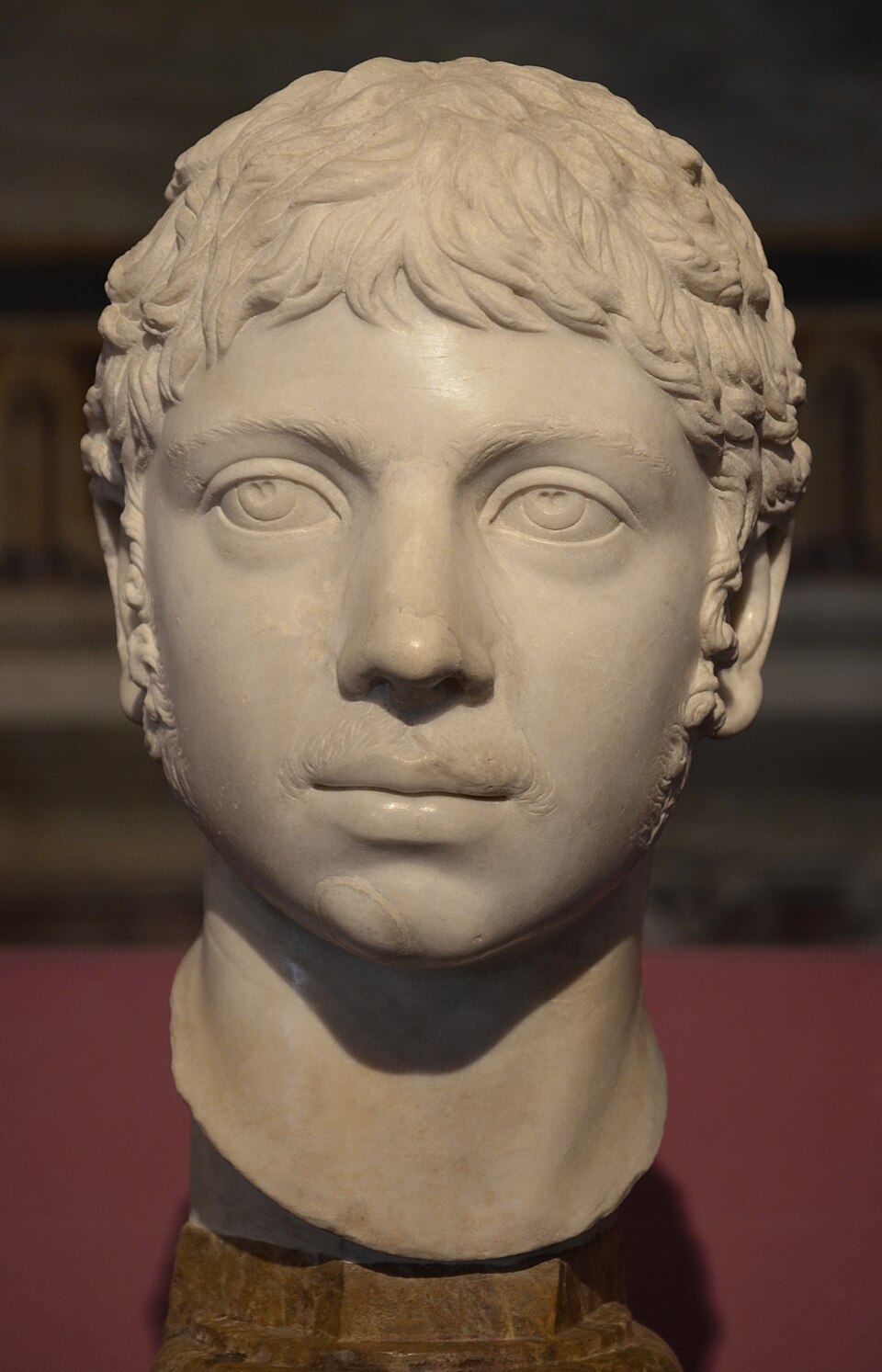
Date: March 11–12, AD 222 · Location: Rome · Cause of death: Assassination
Elagabalus became emperor in AD 218 at approximately 14 years of age, following a revolt organized by his grandmother, Julia Maesa. His reign became associated with religious controversy, court intrigue, and conflict over the succession.
He promoted the worship of Elagabal, a Syrian solar deity whose cult was central to his religious identity. His attempt to elevate the deity within Rome’s established religious hierarchy provoked resistance among traditional elites. Ancient writers also portrayed his personal conduct in hostile and sometimes sensational terms, making it necessary to distinguish political conflict from moralizing accounts.
The decisive confrontation involved his cousin Severus Alexander, whom Elagabalus had initially designated as his successor. Julia Maesa shifted her support toward Alexander as opposition to Elagabalus grew.
Tensions with the Praetorian Guard intensified when Elagabalus attempted to punish soldiers who supported Alexander. The guards revolted and killed Elagabalus and his mother, Julia Soaemias, in March AD 222.
The aftermath was deliberately degrading. Ancient accounts describe the bodies being dragged through Rome and eventually thrown into the city’s sewer system, which connected to the Tiber. Such treatment was intended to deny the emperor the dignity of burial and publicly repudiate his rule.
Historical significance: Elagabalus’s death illustrates how religious controversy and succession disputes could undermine an emperor, particularly when the military abandoned him. His fate also shows how the treatment of a ruler’s body could become an instrument of political condemnation.
8. Valerian — The Emperor Who Died in Persian Captivity
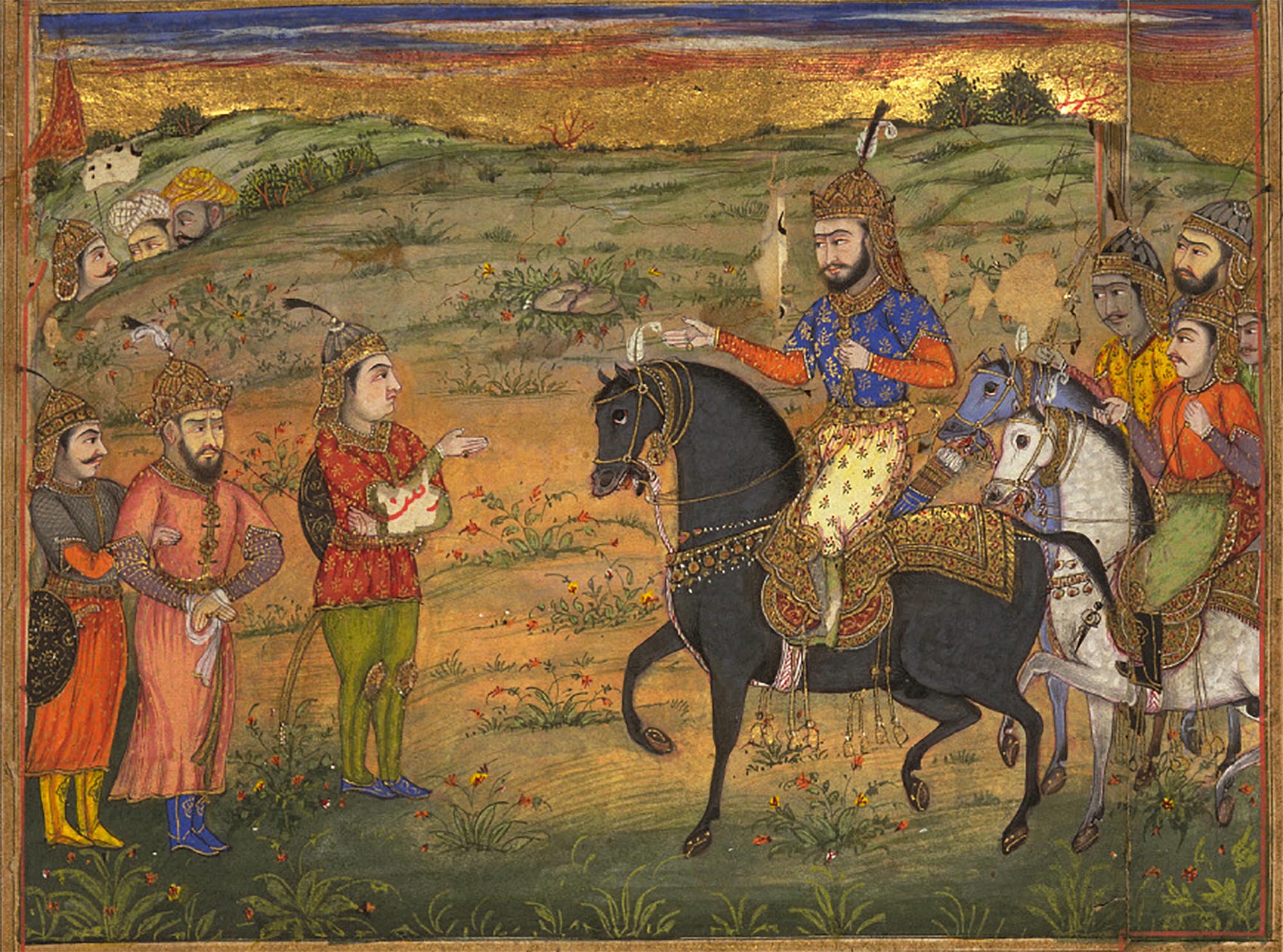
Captured in AD 260 · Location: Persian Empire · Cause of death: Unknown
Valerian‘s fate differed from that of emperors murdered by their own subjects. He was captured by the Sasanian Persian king Shapur I during Rome’s third-century crisis, when imperial authority was weakened by military defeats, civil conflict, and pressure along multiple frontiers.
In AD 260, Roman forces suffered a disastrous defeat near Edessa. Valerian, who had personally led the eastern campaign, was taken prisoner. He became the first Roman emperor known to have been captured alive by a foreign enemy.
Shapur commemorated the victory in inscriptions and monumental reliefs that depicted his triumph over Roman rulers. These Persian sources provide important evidence for the capture, independently of Roman literary accounts.
Valerian’s subsequent fate is less certain. Later writers described his captivity as humiliating, claiming that Shapur used him as a human footstool when mounting his horse. The Christian author Lactantius went further, alleging that Valerian’s skin was removed after his death, dyed, and displayed as a trophy.
These stories must be treated cautiously. Lactantius wrote with a strong religious and polemical purpose, portraying Valerian’s suffering as divine punishment for his persecution of Christians. The precise circumstances of Valerian’s death have not been established, and the most graphic details are not independently confirmed by contemporary Persian evidence.
Historical significance: Valerian’s capture was a major symbolic and strategic defeat for Rome. It demonstrated that an emperor’s authority could not guarantee personal safety against a powerful foreign state, especially when imperial leadership was directly exposed on the battlefield.
9. Valens — Lost in the Disaster at Adrianople
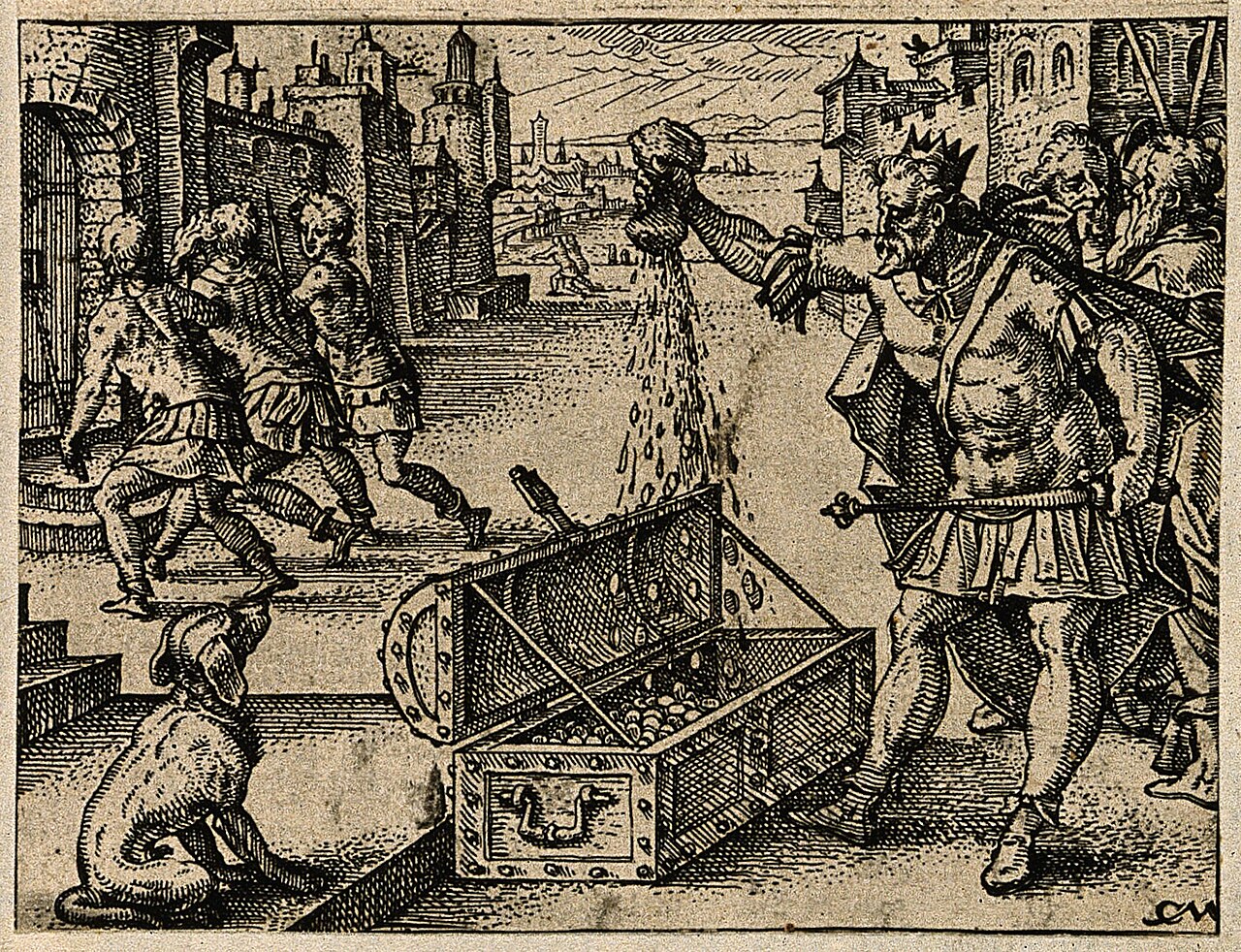
Date: August 9, AD 378 · Location: Near Adrianople, modern Edirne, Turkey · Cause of death: Uncertain
Emperor Valens ruled the eastern half of the Roman Empire from AD 364 until his death at Adrianople. His reign ended during one of the most consequential Roman military defeats of late antiquity.
The conflict developed from the movement of Gothic groups across the Danube frontier and the breakdown of Roman efforts to manage and settle them within imperial territory. Relations deteriorated amid administrative abuses, supply problems, and growing hostility. By AD 378, Roman forces were confronting a substantial Gothic military coalition.
Valens advanced against the Goths near Adrianople without waiting for the full support of his western co-emperor, Gratian. On August 9, the Roman army engaged the enemy under difficult conditions. Gothic cavalry returned to the battlefield at a critical moment, attacking Roman forces already struggling to maintain formation.
The result was catastrophic. Roman units collapsed, many soldiers were killed, and Valens disappeared amid the defeat.
His precise fate remains unknown. One account holds that he died on the battlefield without being identified. Another, preserved in later historical tradition, claims that wounded Valens was carried to a farmhouse or cottage, where he perished when Gothic warriors set the building on fire, unaware that the emperor was inside.
The second story is memorable, but it cannot be established as fact. The absence of a securely identified body contributed to uncertainty surrounding his final hours.
Historical significance: Adrianople exposed serious weaknesses in Roman military leadership and frontier management. Valens’s death was not simply the loss of a ruler; it accompanied a military disaster that had lasting consequences for the eastern empire’s relationship with Gothic forces.
10. Tiberius — The Emperor Allegedly Smothered After Recovering
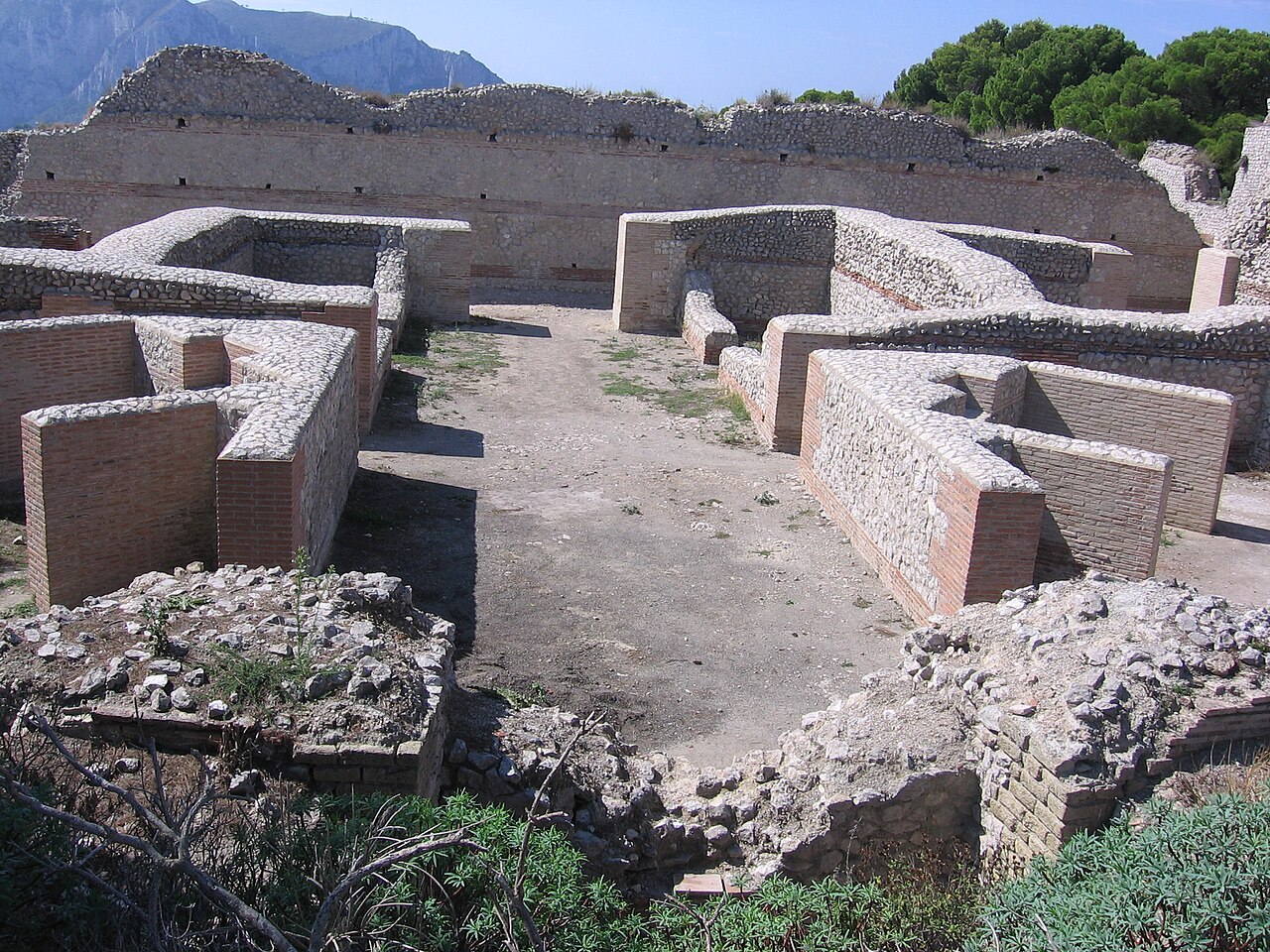
Date: March 16, AD 37 · Location: Misenum, near Naples · Cause of death: Disputed
Tiberius succeeded Augustus in AD 14 and ruled for more than two decades. His later years were marked by withdrawal from Rome, residence on Capri, and a political atmosphere in which accusations of treason could lead to severe punishment.
In AD 37, while staying at a villa at Misenum, Tiberius became seriously ill. His advanced age and deteriorating health prompted those around him to anticipate his death. Caligula, his designated successor, was present as preparations for the transfer of power began.
The historian Tacitus provides the most famous account of what followed. Tiberius was believed to have stopped breathing, and Caligula began receiving congratulations as the next emperor. Then Tiberius reportedly revived and asked for food.
This unexpected recovery threatened the emerging succession arrangements. According to Tacitus, the Praetorian prefect Naevius Sutorius Macro ordered Tiberius to be smothered beneath a pile of bedclothes. Caligula’s position was secured, and the death was treated as natural.
The story is not universally accepted. Suetonius records alternative versions, including the possibility that Tiberius died naturally after his illness. Because the accounts differ, the alleged smothering cannot be regarded as certain.
Nevertheless, the narrative captures the political danger inherent in an uncertain succession. The emperor’s death was not merely a medical event: it determined who controlled the army, the administration, and the resources of the state.
Historical significance: Tiberius’s disputed death highlights the role of the Praetorian prefect in imperial politics and the dangers created when succession arrangements depended on a ruler’s immediate circle rather than an uncontested constitutional process.
Why Roman Emperors Died Violently
The deaths of these ten rulers reveal recurring weaknesses in Roman imperial government. Although emperors exercised immense authority, their position depended on the continued cooperation of military commanders, court officials, provincial armies, and political elites.
Three patterns stand out.
First, the imperial household could become a center of lethal succession politics. The reported poisoning of Claudius, the conspiracy against Commodus, and the disputed death of Tiberius all involved people close to the ruler.
Second, military loyalty was essential but never guaranteed. Caligula and Elagabalus were killed by the Praetorian Guard, while Caracalla fell victim to a conspiracy involving military personnel. Valerian’s capture and Valens’s death demonstrate the additional dangers posed by military defeat.
Third, removing an emperor rarely resolved Rome’s underlying political problems. Caesar’s assassination helped unleash further civil war. Nero’s fall led to a succession crisis. Commodus’s death was followed by another rapid change of emperors.
The Roman Empire survived because its institutions, armies, and administrative systems could often continue functioning despite the violent removal of individual rulers. Yet the repeated assassinations and contested successions exposed a central contradiction: emperors claimed extraordinary authority, but the practical security of their rule depended on maintaining the loyalty of those who surrounded them.
In Rome, supreme power could command armies and reshape the empire. It could not make its holder invulnerable to betrayal, political calculation, or defeat.
