
For more than 1,700 years, one of the most important gatherings in the history of the Roman world has had a missing address. In AD 325, bishops from across the Roman Empire travelled to Nicaea in Bithynia. They came at the invitation of Emperor Constantine, who wanted to resolve disputes threatening the unity of the Christian Church. Their meeting would become one of the defining events of late Roman history.
The bishops debated the nature of Christ, dealt with disputes and questions of church discipline, and produced the creed that became the foundation of what is now known as the Nicene Creed. But where, exactly, did they meet?
For centuries, historians have debated the question. The imperial palace of Nicaea has never been securely identified, while later Christian tradition connected the council with a church associated with Saint Neophytos. Now, archaeologists excavating an ancient basilica beside Lake İznik in modern Turkey have uncovered the remains of an earlier church beneath it. The excavation team believes they may have finally found the missing building. But there is a problem. We don’t have enough evidence to confirm it or deny it.

A Nicaea Council for a Changing Roman Empire
The First Council of Nicaea took place at a remarkable moment in Roman history. Only a generation earlier, Christianity had been a persecuted religion. Under Diocletian and his colleagues, Christians across the Empire had faced some of the most severe persecutions of the Roman period. Then everything changed.
Constantine’s victory over Maxentius at the Battle of the Milvian Bridge in AD 312 and the subsequent settlement with Licinius transformed Christianity’s position within the Empire. By AD 324, Constantine had defeated Licinius and become sole emperor. But political unity did not automatically produce religious unity.
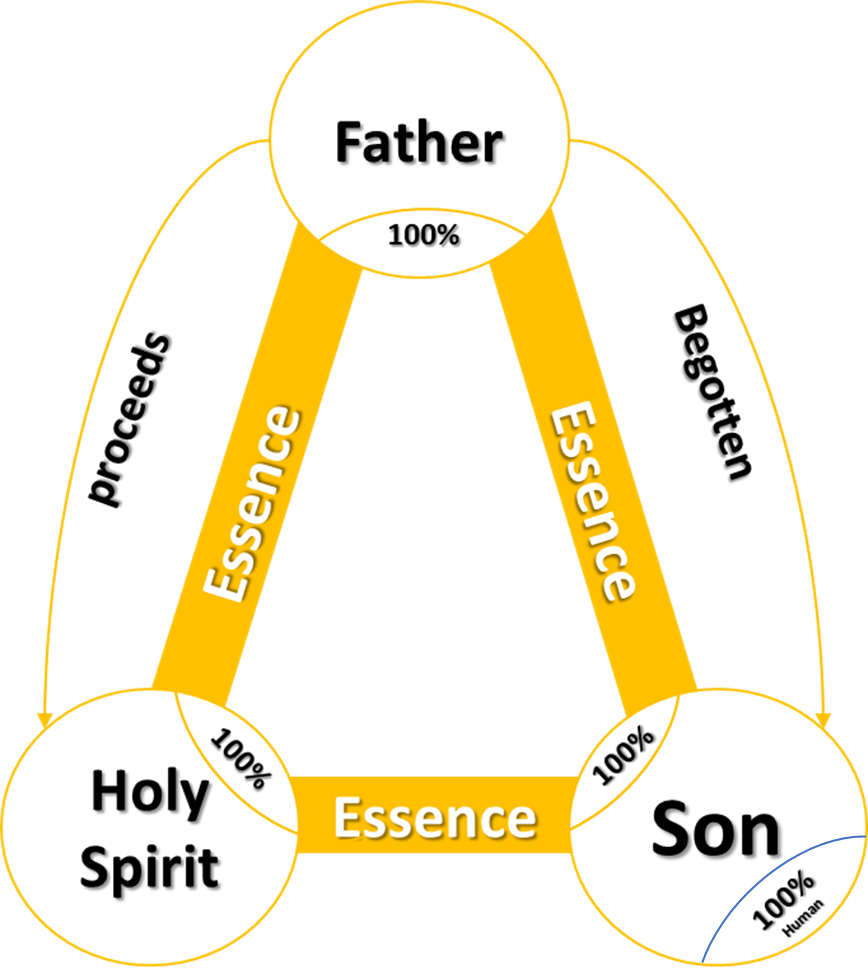
One of the most serious disputes concerned Arius, a presbyter from Alexandria who argued that the Son was not co-eternal with the Father. His opponents, particularly Alexander of Alexandria and the young Athanasius, rejected his position, and the controversy spread far beyond Alexandria. For Constantine, this was not merely a theological argument. Religious disputes threatened the unity and stability of an Empire he had only recently reunited. So he summoned the bishops to Nicaea.
The emperor even helped arrange their journeys, providing transportation and other assistance. Eusebius of Caesarea, who attended the council himself, described bishops arriving from an extraordinary range of regions: Syria, Cilicia, Phoenicia, Arabia, Palestine, Egypt, Mesopotamia and even Persia. The exact number of bishops is uncertain. The famous figure of 318 became firmly established in Christian tradition, while modern estimates often place the actual attendance somewhere around 250–300 bishops. Whatever the precise number, it was an extraordinary gathering. But where in Nicaea exactly?
The Basilica Beneath the Water
The archaeological story began in 2014. An aerial survey revealed the remains of a large Christian basilica lying in the shallow waters of Lake İznik, only a short distance from the shore. The ancient city of Nicaea stood immediately nearby. The discovery attracted enormous attention. Excavations began in 2015 under Professor Mustafa Sahin of Bursa Uludag University, and the remains gradually revealed a substantial Christian building dating to the late fourth or early fifth century. The basilica was apparently built outside the ancient city walls, close to the lake shore. It was an impressive discovery in its own right.
Archaeologists soon began wondering whether something even older was hidden underneath it. The floor of the later basilica appeared to lie above an earlier structure. Beneath the later church, excavations revealed evidence of another building, including earlier flooring and traces of wooden construction. That raised an intriguing possibility. Perhaps the large basilica was not the beginning of the site’s Christian history. Perhaps it had been built over something much older.

The Church Beneath the Church
The breakthrough came during the 2026 excavation season. Archaeologists concentrated on the eastern side of the basilica, near a chamber known as the prothesis, where sacred objects were prepared and stored. A paved surface had already been discovered inside the chamber. The question was whether it continued beyond the walls of the later basilica. A trench was opened outside the eastern wall. It did. The same floor continued beyond the footprint of the later building. Excavators also uncovered sections of wall and a column base belonging to an earlier structure. For the excavation team, the meaning was clear: there had been an earlier church beneath the basilica.
Professor Sahin has identified this earlier structure as the Church of Saint Neophytos. According to the reconstruction proposed by the excavation team, this church was destroyed by an earthquake in AD 368. A larger building, known as the Church of the Holy Fathers, was subsequently constructed on the same site, probably after AD 380. And that name is important. The Church of the Holy Fathers appears to have been associated with the bishops who had gathered at Nicaea. If the reconstruction is correct, the later basilica may therefore have preserved the memory of the place where the council had taken place. But there is still a missing piece.
Saint Neophytos
Saint Neophytos was, according to Christian tradition, a young Christian from Nicaea who was martyred during the persecutions of the early fourth century, probably around AD 303. A shrine was associated with his martyrdom, and the excavation team believes that this early place of Christian worship eventually developed into the church now being uncovered beneath the later basilica.
Earlier research at the site had already found evidence of wooden construction beneath the later marble floor, including charcoal, pieces of wood and numerous nails. The possibility therefore exists that the earliest structure was not a monumental stone church at all, but a relatively modest building incorporating substantial wooden elements. That would make sense for an early Christian sanctuary constructed only a few decades after the martyrdom of Neophytos. And it would also make the site potentially compatible with one of the most intriguing descriptions of the Council of Nicaea.
What Eusebius Actually Tells Us
One of the most important witnesses to the council was Eusebius of Caesarea, as he was there. In his Life of Constantine, Eusebius describes the astonishing gathering of bishops at Nicaea and writes that a single “house of prayer” was able to contain representatives from across the Christian world. That passage has attracted considerable attention from archaeologists working at İznik. Could the small earlier church beneath the basilica have been that building in Nicaea? Professor Sahin believes it could.
The argument is attractive. A relatively small early Christian church, standing outside the city, could explain why Eusebius described the building as being miraculously sufficient to contain such a large gathering. But Eusebius also tells us something else. When describing the actual meeting of the council, he says that the participants gathered in the central building of the imperial palace. According to his account, the hall was large enough to accommodate the assembled participants, and Constantine entered after everyone had taken their seats. That is why the location of the council remains controversial.

The Palace That Has Disappeared
The imperial palace of Nicaea has never been securely identified. Modern scholarship has generally taken Eusebius seriously and placed the main council sessions within the imperial complex. A study by the historian Cyril Mango argued that the meeting place was probably part of the palace and may have been a centrally planned building, possibly with a rotunda and central opening. More recent scholarship has likewise examined the palace as the likely venue, while acknowledging that its exact form and location remain uncertain. The palace may even have stood somewhere near the modern lake.
The newly discovered church could have been associated with the council without necessarily being the main room where the bishops conducted their formal sessions. It could have been a place of worship used by the gathered Christians. It could have been connected with the later memory of the council. It could even have hosted some part of the gathering. But at present, archaeology cannot prove that it was the actual meeting hall.
A Discovery That Is Still Unfolding
That uncertainty does not make the discovery less important, quite the opposite. The excavations have now revealed that the Christian history of this site goes considerably deeper than the visible basilica. The earlier floor extends beyond the later building, while the wall remains and column base demonstrate that a different structure once occupied the site. The team has therefore been able to distinguish a previously hidden phase in the history of the complex.
Other finds from the excavation, including a gold ring decorated with a palm tree and sword and a metal thimble, provide additional evidence for the site’s long history, although they do not themselves prove a connection with the council. And perhaps the most exciting evidence is still waiting to be uncovered. The dimensions of the earlier church are not yet fully known. Much of its structure may have been made from materials that did not survive. More excavation and scientific dating will be needed before archaeologists can establish exactly when the building was constructed and how it was used. That is why the safest conclusion is also the most intriguing one. And ancient Nicaea may provide an answer.

Hello, my name is Vladimir, and I am a part of the Roman-empire writing team.
I am a historian, and history is an integral part of my life.
To be honest, while I was in school, I didn’t like history so how did I end up studying it? Well, for that, I have to thank history-based strategy PC games. Thank you so much, Europa Universalis IV, and thank you, Medieval Total War.
Since games made me fall in love with history, I completed bachelor studies at Filozofski Fakultet Niš, a part of the University of Niš. My bachelor’s thesis was about Julis Caesar. Soon, I completed my master’s studies at the same university.
For years now, I have been working as a teacher in a local elementary school, but my passion for writing isn’t fulfilled, so I decided to pursue that ambition online. There were a few gigs, but most of them were not history-related.
Then I stumbled upon roman-empire.com, and now I am a part of something bigger. No, I am not a part of the ancient Roman Empire but of a creative writing team where I have the freedom to write about whatever I want. Yes, even about Star Wars. Stay tuned for that.
Anyway, I am better at writing about Rome than writing about me. But if you would like to contact me for any reason, you can do it at contact@roman-empire.net. Except for negative reviews, of course. 😀
Kind regards,
Vladimir