
For centuries, the story of the Roman Empire has been told from the Mediterranean outward: Roman legions marching north, Roman generals confronting Germanic tribes, and Roman influence spreading across Europe. But some new archaeological discoveries give us a very different perspective. Nearly 1,800 years ago, a large army from Scandinavia was probably marching toward the Roman world. But not as conquerors. In fact, they wanted to be mercenaries.
This new theory is supported by new research and dramatic archaeological finds in Denmark. Rather than existing in isolation, these northern communities may have been connected to Rome through trade, warfare, and military service. Did the people later known as the Vikings and the Romans meet?
A Mysterious Army Lost in a Danish Bog – Vikings?
The story begins in eastern Jutland, Denmark, where archaeologists uncovered a massive collection of weapons and military equipment in a bog. Over time, what was once a small pond had preserved thousands of objects: swords, shields, spears, horse gear, and personal belongings belonging to a defeated army.
The huge scale of the discovery stunned researchers. The equipment appears to have belonged to a force of roughly 1,000 soldiers, which was an unusually large and well-organized army for northern Europe in the early third century.
After their defeat in battle around the year 205 AD, the victors gathered the weapons, armor, and valuables of the fallen army from Scandinavia and threw them into a lake as an offering to the gods. Over the centuries, the lake turned into a bog, preserving the objects in remarkable condition.
But the most amazing discoveries were Roman coins, high-quality military equipment, and items clearly influenced by Roman design. This suggested something extraordinary: the defeated army had strong connections to the Roman world.
Warriors with Roman Equipment and Runic Names
Many of the swords, shields, and fittings were either Roman imports or closely modeled on Roman military equipment. But some items bear runic inscriptions. In fact, these are the oldest known runes discovered so far. It was probably the names of individual warriors, such as Lagutewaz, Gaups, Nithijo, and Swarta.
Yes, we even know the identities of the Vikings who fell in the battle. They were not anonymous statistics but individuals with names, equipment, and a level of organization that suggests professional military experience.
According to archaeologist Dagfinn Skre of the University of Oslo, the army appears to have been structured similarly to the Roman military organization. This has led to the striking conclusion that the warriors may have been on their way south to serve as mercenaries in the Roman army.

The idea of the army from Scandinavia serving Rome may sound ludicrous, but it fits within a broader historical context. From the second century onward, the Roman Empire increasingly relied on foreign recruits, especially Germanic auxiliaries, to defend its vast frontiers.
By around 160 AD, Roman emperors urgently needed reinforcements along the Danube frontier. Large numbers of men from northern Europe began traveling south to join Roman forces, attracted by regular pay, opportunities for wealth, and the promise of status. Just like today, the call of the gold was strong.
A Roman military career offered significant rewards. Soldiers received an annual salary and, after 25 years of service, could expect a substantial bonus and even Roman citizenship. These incentives drew thousands of warriors from across the Germanic world, including southern Scandinavia.
Evidence suggests that many of these men eventually returned home, bringing with them Roman goods, wealth, and new ideas about warfare and social organization. Around the late second century, Scandinavian societies began to change dramatically, likely influenced by returning veterans who had served in the Roman military system.
Vikings on the Move
Researchers believe the army discovered in Denmark was originally from western Norway. The soldiers likely traveled by ship across the North Sea and into Danish territory, possibly with the intention of continuing south toward Roman lands. One theory suggests that the force consisted of multiple ships equipped in a coordinated and professional manner.
Their organization and equipment indicate that they were not a random raiding party but a disciplined military expedition. Some scholars believe they were heading toward the Roman frontier to sell their services as mercenaries. However, these Vikings never reached their destination. Instead, they were defeated in battle somewhere in Denmark. Their enemies gathered the captured weapons and valuables and deposited them in the bog as a ritual offering, leaving behind one of the most significant archaeological discoveries of the Roman Iron Age. =
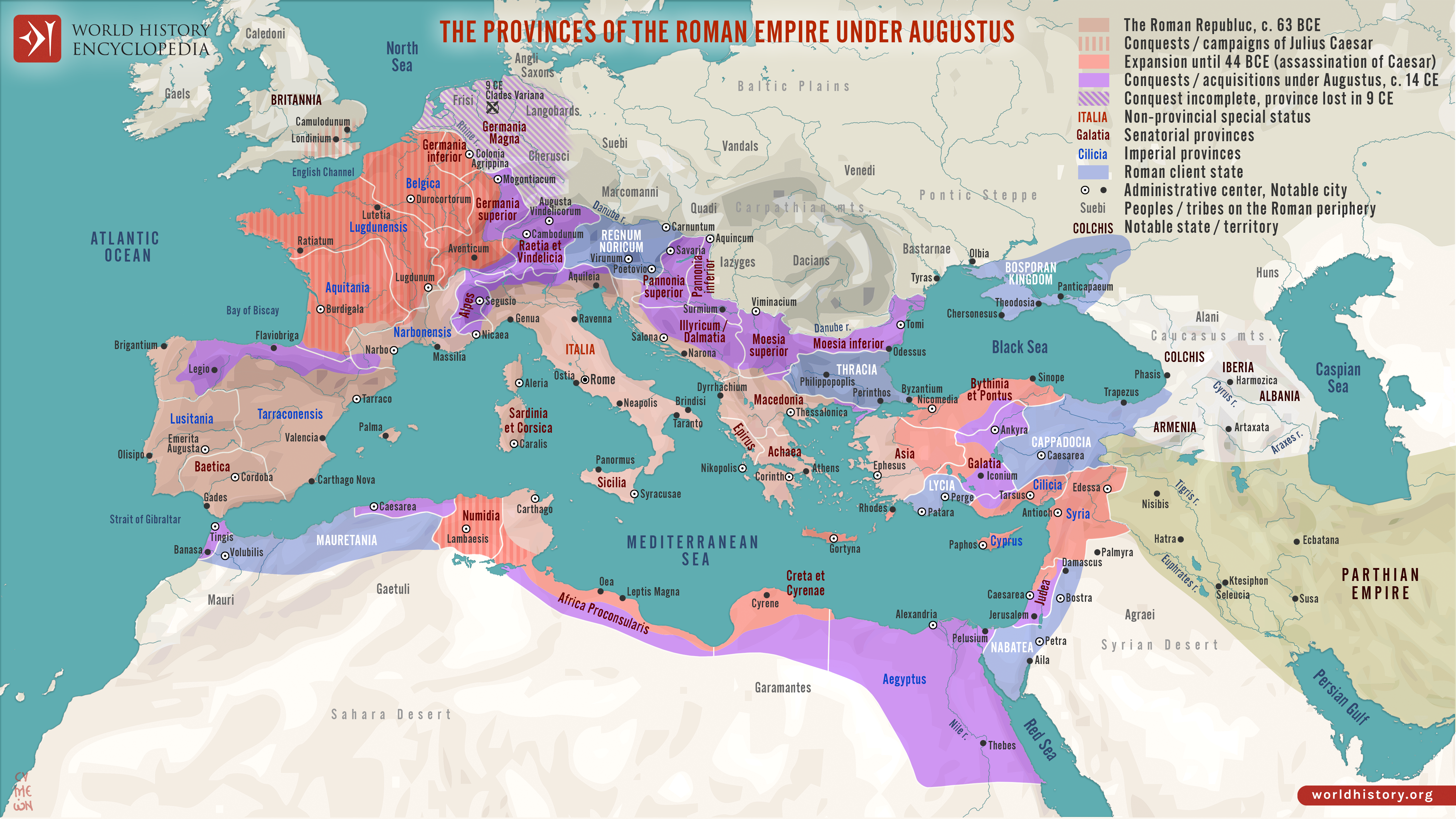
The discovery highlights how deeply Roman influence reached into northern Europe, even beyond the empire’s political borders. Scandinavia was never conquered by Rome, yet Roman goods and ideas circulated widely through trade and military service. Roman swords, coins, and luxury items have been found across Scandinavia, suggesting strong economic and cultural connections. These items often served as status symbols among local elites, reinforcing their power and prestige.
Some Scandinavian warriors may have spent years serving in Roman units before returning home. Their experiences would have exposed them to Roman tactics, discipline, and hierarchy, elements that may have influenced the development of organized warfare in the north.
This pattern continued long after the fall of the Western Roman Empire. During the Viking Age and the Middle Ages, Scandinavian warriors famously traveled to serve in the Byzantine Empire, forming elite units such as the Varangian Guard. The roots of this tradition may stretch back centuries to the Roman era.
The idea that thousands of Vikings from Norway were moving toward the Roman Empire challenges traditional views of ancient Europe. Rather than a sharp boundary between “Roman” and “barbarian,” the evidence suggests a more interconnected world.
Trade routes, migration, and military service created networks that linked the Mediterranean to the far north. Roman coins circulated in Scandinavia, while northern warriors traveled south to fight in Roman wars. This exchange transformed both sides. The Roman army became increasingly diverse, incorporating recruits from across Europe. Meanwhile, Scandinavian societies absorbed Roman influences that shaped their political and military structures.
The army discovered in Denmark may represent a moment within this larger story, a snapshot of northern warriors caught in the process of entering the Roman world.
A Window into a Forgotten Connection
These Vikings were not merely outsiders observing Rome from afar. They were participants in its military system, economic networks, and cultural sphere.
Although many details remain uncertain since we don’t know who exactly they were, where they were heading, and why they fought in Denmark, some pieces of evidence point to a striking conclusion: nearly two millennia ago, the influence of Rome reached far beyond its borders, drawing even the warriors of distant Scandinavia into its orbit.
In the end, the bog in Denmark preserved more than weapons and armor. It preserved a story that could change our understanding of the Roman Empire, not only as a closed Mediterranean world, but as a vast and interconnected system that reached all the way to the northern edge of Europe.


Hello, my name is Vladimir, and I am a part of the Roman-empire writing team.
I am a historian, and history is an integral part of my life.
To be honest, while I was in school, I didn’t like history so how did I end up studying it? Well, for that, I have to thank history-based strategy PC games. Thank you so much, Europa Universalis IV, and thank you, Medieval Total War.
Since games made me fall in love with history, I completed bachelor studies at Filozofski Fakultet Niš, a part of the University of Niš. My bachelor’s thesis was about Julis Caesar. Soon, I completed my master’s studies at the same university.
For years now, I have been working as a teacher in a local elementary school, but my passion for writing isn’t fulfilled, so I decided to pursue that ambition online. There were a few gigs, but most of them were not history-related.
Then I stumbled upon roman-empire.com, and now I am a part of something bigger. No, I am not a part of the ancient Roman Empire but of a creative writing team where I have the freedom to write about whatever I want. Yes, even about Star Wars. Stay tuned for that.
Anyway, I am better at writing about Rome than writing about me. But if you would like to contact me for any reason, you can do it at contact@roman-empire.net. Except for negative reviews, of course. 😀
Kind regards,
Vladimir