
A Discovery That Changes How We See Rome
When we think about the Roman camp, we imagine a firm stronghold somewhere in Italy, or somewhere in Spain, or in the Balkans. Maybe even in the Middle East or North Africa. But some Roman military camps were on much more hostile territory, not when it comes to enemies, but with nature. High in the Swiss Alps, more than 2,000 meters above sea level, archaeologists found something that challenges the image of sunny days in a Roman camp completely. Something you don’t expect to find there.
A Roman military camp. Remains, of course. Not in a valley. Not near a town.
But perched high above the landscape, on what feels like the roof of Europe.
For nearly 2,000 years, this site remained hidden, blending into the rugged terrain. Now that it has been rediscovered, it forces us to rethink how Roman legions operated, especially in extreme environments.
Because this wasn’t just a camp, it was a statement of power.

The Roman Camp in the Alps
The site lies in the Colm la Runga area of modern-day Switzerland, a strategic corridor through the Alps. Today, it’s a remote and challenging location, accessible mostly to experienced hikers. But in antiquity, it was something else entirely, a very important route through one of Europe’s most formidable natural barriers.
At an altitude of roughly 2,200 meters, the discovery of a Roman camp here is remarkable on its own. But what truly stands out is how deliberately it was built. Using advanced LiDAR technology, researchers were able to identify features that are almost invisible at ground level:
- Three defensive ditches
- A structured rampart
- Clear signs of an organized military layout
This wasn’t an improvised shelter thrown together by exhausted troops. It was a carefully planned encampment, constructed according to Roman military standards, even in one of the harshest environments imaginable. And its position was no accident.
From this elevated point, Roman soldiers had a commanding view over several valleys and mountain routes below. Anyone moving through the area, like traders, travelers, or enemies, would have been visible from a distance. This was surveillance, control, and strategic dominance built into the very geography of the Alps.
A Battlefield Below
The story becomes even more compelling when you look below the camp. Roughly 900 meters downhill lies an ancient battlefield, dated to around 15 BC, the period when Emperor Augustus launched campaigns to subdue the Alpine tribes and secure Rome’s northern frontier.
For years, this battlefield was studied in isolation. Archaeologists found weapons, projectiles, and traces of violent conflict, but the broader context remained unclear. Now, with the discovery of the mountain Roman camp above it, everything falls into place.
The battlefield marks the clash.
The camp marks the control.
This suggests a coordinated Roman military operation. After engaging local forces in the valley, Roman troops likely established a fortified position above to monitor movement, secure the region, and prevent further resistance. It’s a classic Roman approach: fight, secure, and dominate.
Evidence of the Roman Soldiers
One of the most fascinating aspects of this discovery is how tangible it feels. The objects left behind by Roman soldiers provide a direct connection to the men who once stood on that mountain ridge.
Among the most important finds are lead sling bullets stamped with the mark of a Roman legion, likely the Third Legion. These small projectiles were standard Roman weapons, used by trained slingers to devastating effect.
But they are more than just weapons. They are identifiers.
Stamped ammunition allows historians to trace which units were present, linking the camp and the battlefield to specific elements of the Roman army.
Other discoveries include:
- Hobnails from legionary boots (caligae)
- Arrowheads scattered across the terrain
- Fragments of military equipment

Individually, these might seem insignificant. But together, they paint a picture of life and conflict in the high Alps. You can almost imagine the scene: soldiers climbing steep slopes, carrying heavy gear, setting up fortifications, and preparing for battle in thin, cold air.
Why the Alps Were So Important
To understand why Rome went to such lengths, you have to look beyond the mountains themselves. The Alps were not just a natural obstacle; they were a strategic gateway.
Control the Alpine passes, and you control movement between Italy and the rest of Europe. Trade routes, military campaigns, and communication networks all depended on these narrow corridors through the mountains. For Augustus, securing the Alps was not optional. It was essential.
The campaigns of 15 BC were part of a broader effort to stabilize the empire’s northern frontier. By subduing the Alpine tribes and establishing control over key routes, Rome ensured safer passage for armies and merchants alike.
The camp at Colm la Runga fits perfectly into this strategy. It represents a point of oversight—a place from which Roman forces could monitor, respond, and maintain dominance. This wasn’t just about winning battles.
It was about controlling the map.
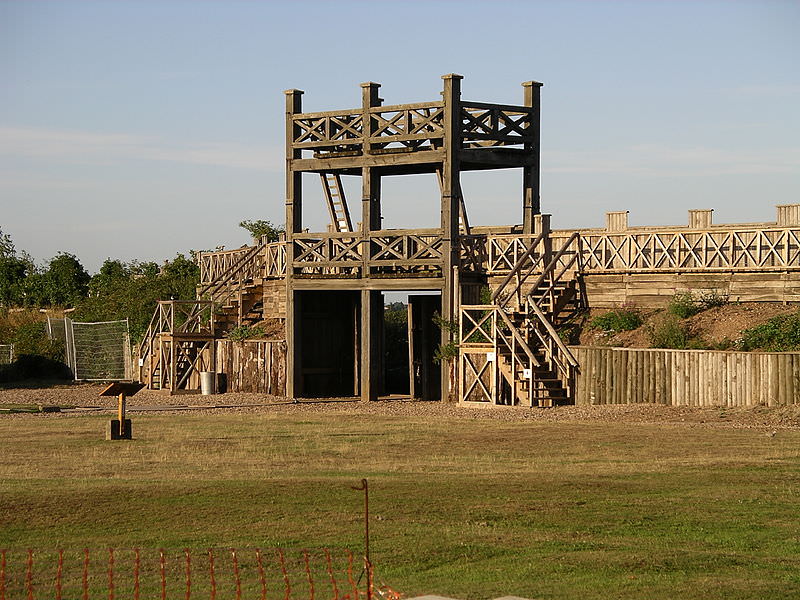
War in Extreme Conditions
What makes this discovery truly remarkable is the environment in which it took place. At over 2,000 meters above sea level, conditions are harsh even today. Temperatures can drop quickly, weather changes unpredictably, and the terrain is physically demanding.
Now imagine operating there as a Roman soldier.
- Wearing heavy armor
- Carrying equipment and supplies
- Building fortifications from scratch
- Fighting in unfamiliar terrain
It challenges a common assumption that ancient armies avoided extreme environments whenever possible. The Romans didn’t. Instead, they adapted.
It’s likely that some units involved in these campaigns were recruited from mountainous regions, making them more capable of handling the conditions. The Roman army was known for its flexibility, often incorporating local knowledge into its operations.
This adaptability was one of Rome’s greatest strengths. Whether in deserts, forests, or mountains, Roman forces found ways to operate effectively and often decisively.
Reconstructing the Roman Advance
The discovery of the Roman camp doesn’t just tell us about a single location. It helps historians reconstruct an entire campaign.
By connecting the battlefield below with the Roman camp above, researchers can trace how Roman forces moved through the Alps:
- Engaging enemy forces in the valleys
- Securing high ground for observation and control
- Establishing a network of positions across key routes
This layered approach reveals a level of planning that goes far beyond simple conquest. It shows a military system designed to dominate space, not just occupy it. And it adds depth to our understanding of how Rome expanded its influence across Europe.
More Than Just an Archaeological Find
At first glance, this discovery might seem like a niche piece of history. Interesting, but limited in scope. In reality, it has much broader implications.
It shows that:
- Roman military operations were more versatile than previously thought
- The Alps were an active theater of war, not just a barrier
- Even the most remote regions played a role in Rome’s expansion
Perhaps most importantly, it reminds us that history is still being uncovered. Sites like this don’t just add details, they reshape the story.
Conclusion: Rome Above the Clouds
Two thousand years ago, Roman soldiers stood high in the Alps, looking out over the valleys below. They were far from home, in an environment that tested their limits. And yet, they were not out of place. They were in control.
The Roman camp at Colm la Runga is more than just a military installation. It is a symbol of Roman ambition, adaptability, and strategic brilliance. Because for Rome, no place was too remote. No terrain was too difficult. Even the roof of Europe was within reach.

Hello, my name is Vladimir, and I am a part of the Roman-empire writing team.
I am a historian, and history is an integral part of my life.
To be honest, while I was in school, I didn’t like history so how did I end up studying it? Well, for that, I have to thank history-based strategy PC games. Thank you so much, Europa Universalis IV, and thank you, Medieval Total War.
Since games made me fall in love with history, I completed bachelor studies at Filozofski Fakultet Niš, a part of the University of Niš. My bachelor’s thesis was about Julis Caesar. Soon, I completed my master’s studies at the same university.
For years now, I have been working as a teacher in a local elementary school, but my passion for writing isn’t fulfilled, so I decided to pursue that ambition online. There were a few gigs, but most of them were not history-related.
Then I stumbled upon roman-empire.com, and now I am a part of something bigger. No, I am not a part of the ancient Roman Empire but of a creative writing team where I have the freedom to write about whatever I want. Yes, even about Star Wars. Stay tuned for that.
Anyway, I am better at writing about Rome than writing about me. But if you would like to contact me for any reason, you can do it at contact@roman-empire.net. Except for negative reviews, of course. 😀
Kind regards,
Vladimir