
The Roman army was far more than a fighting force. It was one of the principal instruments through which Rome imposed order, projected imperial authority, built infrastructure, collected revenue, and maintained control across territories that could be thousands of miles from the political center of the empire. In many provincial communities, the soldier could be the most immediate and tangible representative of Roman power.
Among those soldiers, few embodied that authority more clearly than the centurion.
The centurion is often presented simply as the professional officer who commanded a century of legionaries. That was certainly his fundamental military function, but it does not adequately describe his place within the Roman state. Centurions occupied a crucial position between senior commanders and ordinary soldiers, and their responsibilities could extend into engineering, policing, administration, security, taxation, intelligence, and diplomacy.
The surviving evidence shows that the centurion was not merely a battlefield commander. He was one of Rome’s most useful agents on the ground.
The Backbone of the Legion
The basic tactical unit of the Roman legion was the century, commanded by a centurion. In the imperial period, a legion normally contained sixty centurions, although the organization and strength of centuries changed over Rome’s long history.
The centurion’s ordinary responsibilities were substantial. He trained soldiers, maintained discipline, supervised duties, inspected equipment, and ensured that orders issued by higher command were actually carried out. Ancient descriptions emphasize qualities such as steadiness, judgment, discipline, and the ability to hold a position under pressure rather than simple recklessness.
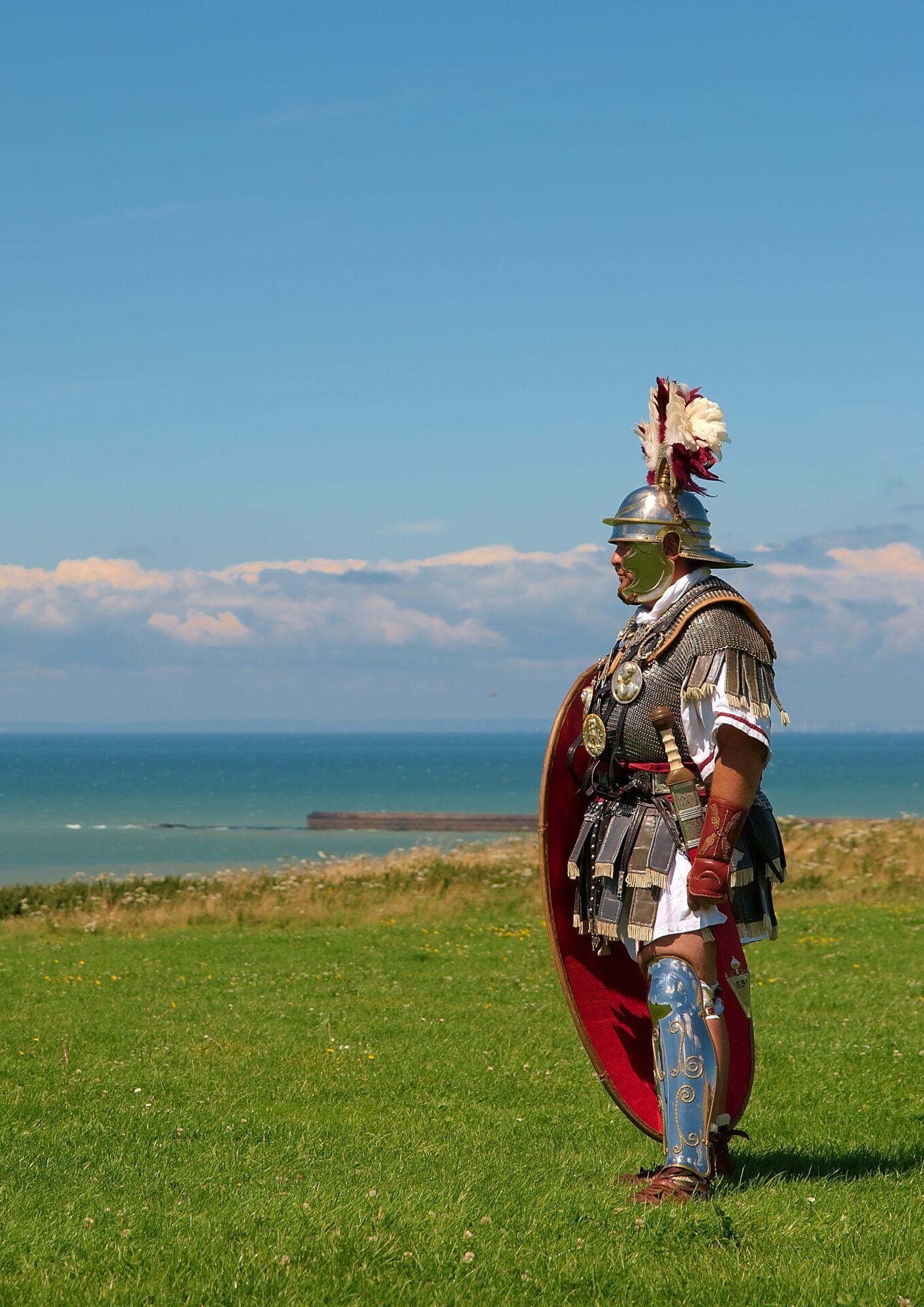
His authority was therefore practical as well as ceremonial. A legionary encountered the Roman state through its orders, punishments, regulations, and military organization, and the centurion was one of the officers responsible for making those systems function.
He also had to lead by example.
In battle, centurions could be conspicuous figures at the front of their units. Their position exposed them to considerable danger, but that visibility served an important purpose. Soldiers needed to know where their commander was, while commanders needed officers capable of maintaining cohesion when formations broke down and battlefield conditions became chaotic.
This combination of authority and personal risk helped make the centurion one of the defining figures of the Roman military system.
More Than a Soldier
The distinction between military and civilian administration in the Roman Empire was not always as clear as it might appear today.
Rome governed a vast territory without anything resembling a modern centralized civil service. Provincial governors possessed administrative staffs, and various civilian officials, procurators, contractors, and local authorities handled different aspects of government. Nevertheless, the army was an enormous organization with trained personnel, logistical resources, and an established command structure. Roman authorities consequently used soldiers for tasks that went well beyond fighting. Modern scholarship emphasizes that detached soldiers could perform policing and administrative functions throughout the provinces.
Centurions were particularly valuable because they combined authority with experience.
They were accustomed to managing men, enforcing regulations, organizing resources, and operating within a strict chain of command. In provinces where Roman administrative institutions were relatively thin, such qualities made experienced military officers useful intermediaries between Roman authorities and local populations.
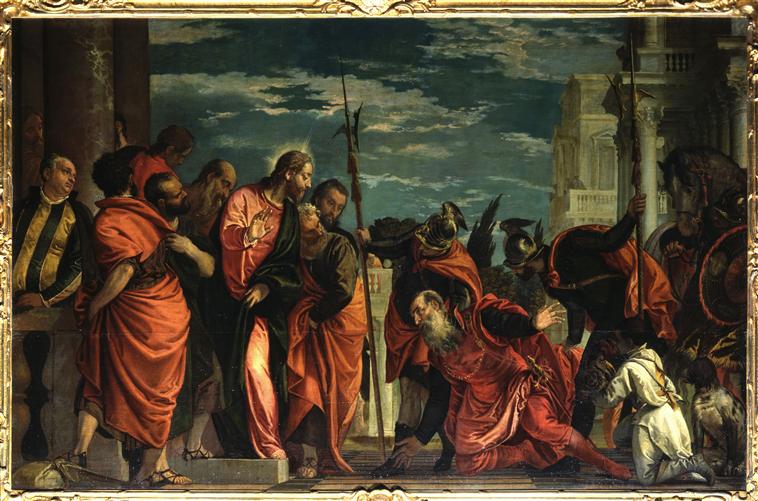
Recent scholarship has specifically identified centurions as agents of imperial power who could exercise delegated administrative and judicial responsibilities. Their involvement in provincial administration was not simply an accidental consequence of having soldiers nearby; it formed part of a broader Roman practice in which military personnel helped operate a state that possessed comparatively limited bureaucracy.
Engineers and Construction Supervisors
One of the least appreciated aspects of Roman military organization was its enormous engineering capability.
Roman armies constructed roads, bridges, fortifications, camps, siege works, ramps, towers, and other infrastructure. Centurions, accustomed to organizing large groups of soldiers and supervising demanding works, could play an important role in these projects.
The source material associated with the centurion’s responsibilities describes him supervising the construction of military works and, in some circumstances, participating in larger engineering projects. Roman military expertise could also be applied to civilian infrastructure. Evidence discussed in modern scholarship includes senior centurions being employed in major engineering schemes outside the immediate battlefield environment.
This was not necessarily because every centurion was a trained architect. Rather, the Roman army possessed an institutional culture of engineering and organized labor. A centurion’s experience coordinating men and enforcing schedules made him an effective supervisor of such operations.
The same skills that allowed him to keep a military unit functioning could therefore be transferred to construction.
Keeping Order
The Roman army also had an important policing function.
This was especially significant in territories where the state’s administrative presence was limited. Soldiers could guard roads and bridges, protect strategic locations, pursue bandits, arrest fugitives, and enforce the decisions of Roman authorities. Roman military personnel detached from their regular units were increasingly involved in policing during the imperial period.
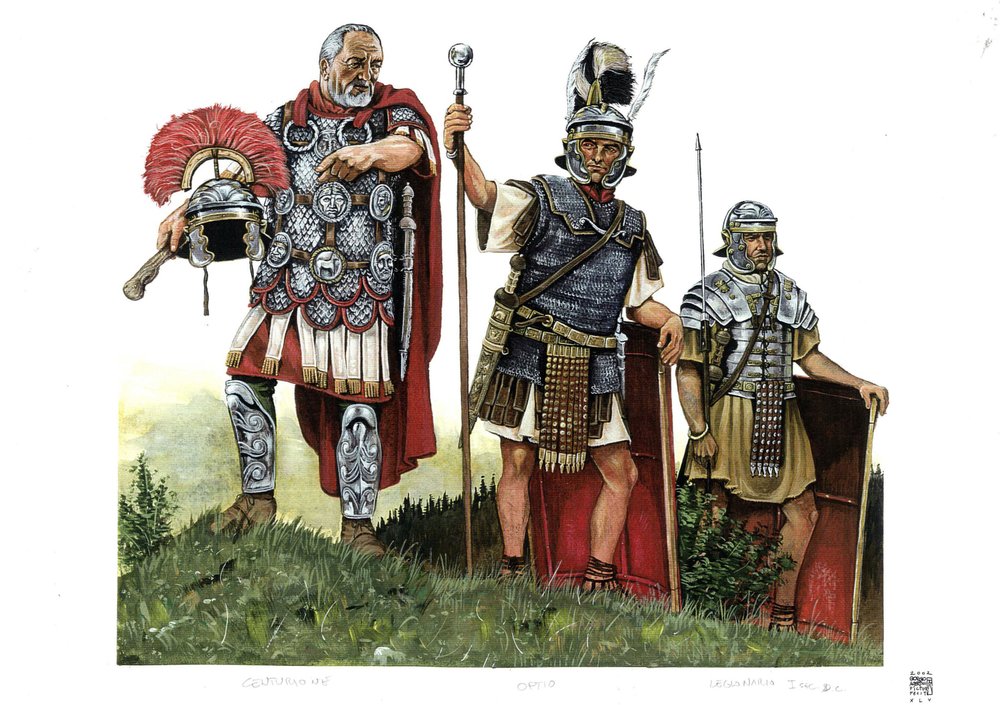
A centurion could consequently find himself dealing with problems that had little connection to conventional warfare.
His authority derived from the Roman military system, but his practical mission could involve maintaining public order. In a world without modern police forces, communications networks, or centralized emergency services, the disciplined manpower of the army was an obvious resource for governors and other officials.
That did not make centurions civilian police officers in the modern sense. Their powers and responsibilities depended upon the circumstances, their superior’s orders, and the institutions of the particular province. Nevertheless, the boundary between soldier and law-enforcement official could become remarkably fluid.
Revenue, Customs, and Taxation
The relationship between soldiers and taxation requires particular care.
It would be misleading to portray the centurion as the standard Roman tax collector. Roman taxation involved a complicated system of provincial communities, procurators, publicani, local officials, customs authorities, and other agents, and the precise arrangements changed over time and from province to province.
Yet soldiers could become involved in the practical enforcement and collection of state revenues.
Roman customs duties were collected at designated stations, including ports and other points of commercial movement, while the army could provide security and coercive authority when required.
The military’s involvement could also extend to supporting officials responsible for taxation and requisitioning supplies. This is important because the Roman state depended upon the army not only to defend imperial territory but also to make its administrative decisions enforceable.
Thus, a centurion appearing at a settlement or transport route could represent something considerably more consequential than military discipline. His presence could signal that the authority of the governor, emperor, or Roman state stood behind whatever official business was being conducted.
Special Assignments and Security
Centurions were also suitable candidates for sensitive assignments.
Their military careers demanded loyalty, discipline, discretion, and the ability to command violence when necessary. Those characteristics made experienced officers useful for special security duties and other missions requiring trusted personnel.
Such assignments could include guarding important individuals, conducting arrests, dealing with disturbances, or carrying out politically sensitive orders. The Roman state routinely relied upon military force when confronting threats to imperial authority, and soldiers could be detached from their normal units for precisely these purposes.
The mere appearance of an armed centurion could therefore have a deterrent effect. He represented not simply himself but the authority of the Roman command structure behind him.
That distinction mattered enormously in a provincial society.
Diplomacy and Negotiation
Perhaps the most surprising extension of the centurion’s role was diplomacy.
Roman commanders frequently required officers capable of communicating with local communities, negotiating surrender, arranging cooperation, delivering demands, or dealing with allied forces. A centurion’s military status could make him an appropriate intermediary in circumstances where an ordinary soldier lacked sufficient authority but a senior aristocratic official might attract unwanted attention.
The wider Roman system of provincial government depended heavily upon negotiation with local elites. Rome did not govern every community through a dense network of Roman officials. Local institutions and aristocracies remained important components of imperial administration.
A centurion who possessed experience, knowledge of local conditions, and personal relationships could therefore become a useful intermediary.
This was particularly valuable because Roman imperial power was not exercised exclusively through force. It depended on convincing provincial communities that cooperation with Rome was preferable to resistance. Soldiers remained the ultimate coercive instrument, but experienced officers could sometimes accomplish through negotiation what an army would accomplish at much greater cost.
Why the Centurion Mattered So Much
The importance of the centurion ultimately came from his position within the Roman system.
He was neither an ordinary soldier nor a distant political figure. He occupied the operational middle ground where imperial decisions became practical actions.
The emperor might issue an order in Rome. A provincial governor might interpret and implement it. But someone still had to organize the men, enforce the regulations, supervise the work, secure the location, maintain order, or negotiate with the people affected.
That person could be a centurion.
This explains why the centurion became such a powerful symbol of Roman authority. His authority was backed by the army, but his responsibilities could reach far beyond the battlefield. He trained soldiers, enforced discipline, supervised labor, participated in engineering projects, maintained security, assisted with administrative tasks, and could serve as an intermediary between Roman officials and provincial communities.
The Roman Empire did not function solely because its legions defeated enemies. It endured because Rome developed mechanisms for turning military power into sustained political control.
The centurion was one of the people who made that transformation possible.
He was a commander, disciplinarian, administrator, engineer, security officer, and intermediary—but none of these descriptions alone captures his importance. In a vast empire where Roman governmental institutions were often thin on the ground, the centurion could provide a direct and highly visible connection between the provincial population and the power of Rome.
That is why reducing him to a mere battlefield officer misses the larger historical significance of the rank. The centurion was one of the practical faces of Roman imperial power.
