
Archaeology rarely delivers a single discovery capable of reshaping how we understand an entire civilization’s early development. Yet the recent excavation of a monumental stone-lined basin at the ancient city of Gabii, just east of Rome, does exactly that. Dating to around 250 BC, this structure challenges long-held assumptions about Roman urban planning, architectural influence, and the pace at which Rome absorbed and adapted ideas from the wider Mediterranean world. What initially appeared to be an isolated feature has now become a key piece of evidence in reevaluating Rome’s formative centuries.
Gabii, once a powerful Latin city and later closely tied to Rome, has long existed in the shadow of its famous neighbor. Ancient authors mentioned it only briefly, often framing it as a subordinate or declining settlement. The newly uncovered basin forces historians to reconsider that narrative, revealing a level of sophistication that places Gabii firmly within broader Mediterranean architectural traditions rather than on Rome’s periphery.
1. A Monumental Basin Unlike Anything Previously Known in Early Rome
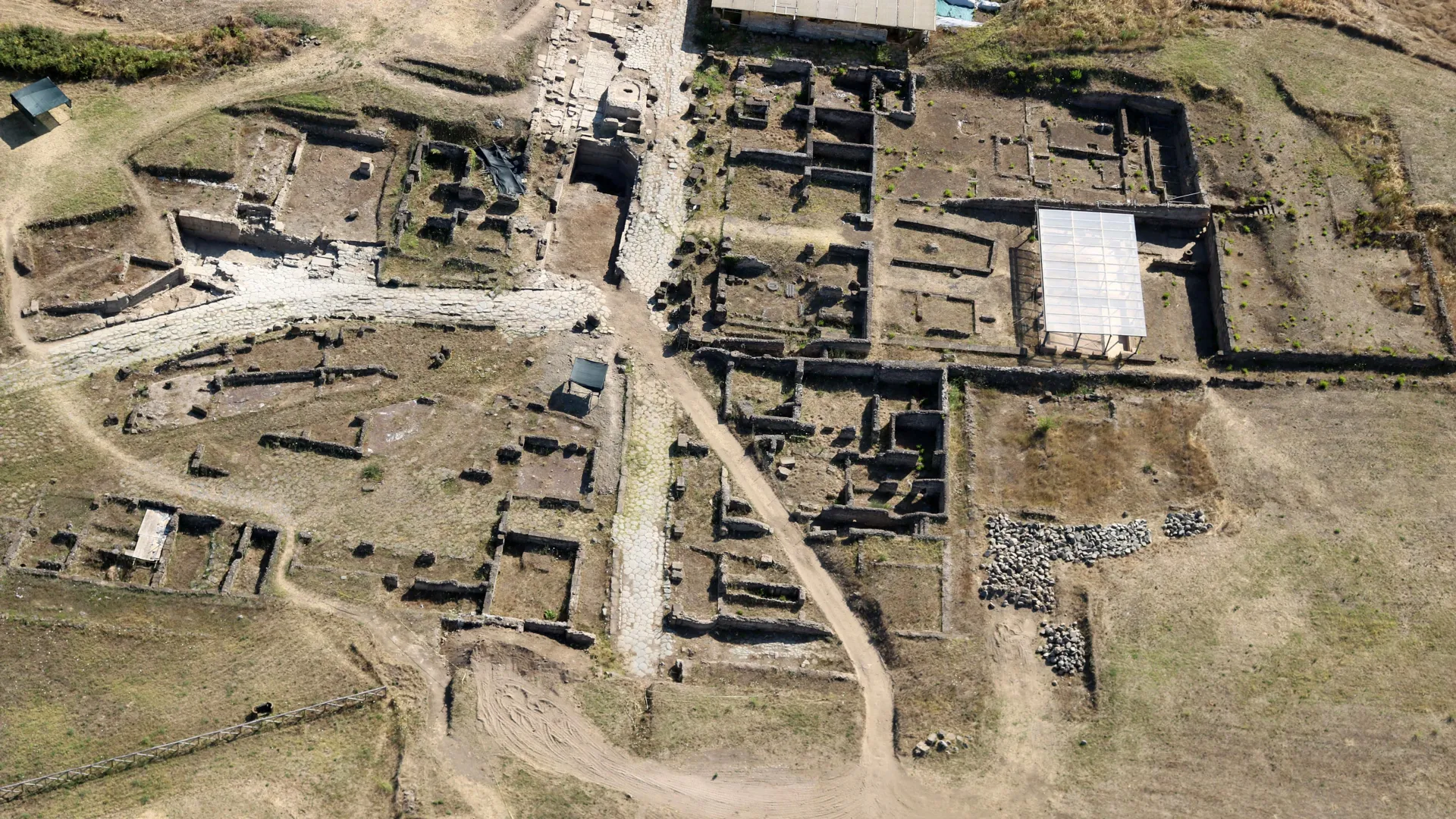
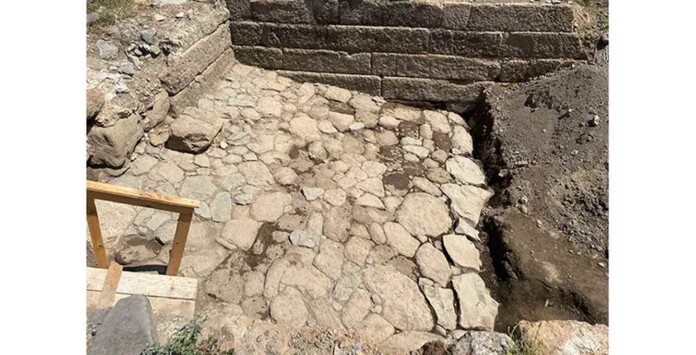
The basin uncovered at Gabii is exceptional in both scale and construction. Measuring roughly 30 meters in length, it is lined with large, carefully cut stone blocks and sits within a deliberately engineered urban space. According to the researchers cited in the ScienceDaily report, nothing comparable from this early period has been identified in Rome itself. This immediately raises questions about how advanced urban design was in central Italy during the third century BC.
Rather than serving a purely practical function, such as water storage, the basin appears to have been conceived as a monumental civic feature. Its size and craftsmanship suggest it was intended to be seen, approached, and experienced as part of the city’s public life. This challenges the traditional view that early Roman and Latin cities were primarily functional, with monumental public architecture emerging only later under stronger Greek influence.
2. Clear Evidence of Greek Architectural Influence
One of the most striking aspects of the Gabii basin is its architectural language. The design closely resembles Greek monumental water features, particularly those found in sanctuaries and civic spaces across the eastern Mediterranean. According to the archaeologists involved, this suggests that Greek architectural concepts were being actively adopted in central Italy much earlier than previously thought.
This discovery undermines the idea that Rome and its neighboring cities were late imitators of Greek urban forms. Instead, it supports a model in which architectural ideas moved fluidly across the Mediterranean, reaching Latium well before Rome’s political dominance. Gabii, in this context, appears not as a backwater but as an active participant in this exchange of ideas, capable of adapting Greek concepts to local needs and traditions.
3. Rethinking Early Roman Urban Planning
The basin’s location within Gabii is just as important as its form. It was integrated into a broader urban layout, suggesting careful planning rather than organic growth. Streets, open spaces, and monumental features appear to have been coordinated in a way that anticipates later Roman urbanism. This runs counter to older models that describe early Roman cities as loosely organized settlements that only later adopted systematic planning.
The ScienceDaily article emphasizes that Gabii may represent an alternative developmental path for early Roman urbanism. Rather than Rome inventing its cityscape independently, it may have drawn inspiration from neighboring Latin cities like Gabii, which were experimenting with ambitious public architecture at an earlier stage. This reframes Rome not as a solitary innovator, but as part of a regional network of urban development.
4. A Civic Space, Not Just Infrastructure
While water management was undoubtedly important, the basin’s monumental scale suggests a broader social and symbolic function. The researchers argue that it likely served as a civic gathering place, possibly connected to ritual, public display, or communal identity. In Greek cities, similar water features often occupied prominent positions in sanctuaries or public squares, reinforcing social cohesion and civic pride.
If this interpretation is correct, it suggests that communities like Gabii were investing heavily in shared public spaces well before Rome’s imperial era. Such investments imply not only technical capability but also a political culture that valued collective identity and public life. This adds an important social dimension to our understanding of early Roman and Latin cities, highlighting the role of architecture in shaping civic experience.

Source: Carlomorino, CC BY-SA 3.0 <https://creativecommons.org/licenses/by-sa/3.0>, via Wikimedia Commons
5. Gabii’s New Place in Roman History
Perhaps the most significant consequence of the discovery is how it elevates Gabii’s historical importance. Long overshadowed by Rome, Gabii now emerges as a key site for understanding how urban ideas developed in central Italy. The basin demonstrates that architectural innovation was not confined to Rome itself but was present across the region.
The researchers suggest that Gabii may have served as a testing ground for architectural and urban ideas that later became associated with Rome. This possibility forces historians to reconsider the traditional, Rome-centric narrative of early Roman development. Instead of a single dominant city imposing its models outward, the picture that emerges is one of multiple centers influencing one another in complex ways.
Why This Discovery Matters?
The Gabii basin is not simply an impressive archaeological find; it is a reminder of how fragile our historical narratives can be. For decades, assumptions about early Roman urbanism were built on limited evidence, much of it drawn from Rome itself. The emergence of a monumental structure like this, outside the city proper and dating to such an early period, forces a reassessment of those assumptions.
By revealing early adoption of Greek architectural forms, sophisticated urban planning, and investment in monumental civic spaces, the Gabii basin reshapes how we understand Rome’s rise. It suggests that Rome’s later success was built not in isolation, but within a vibrant regional context where ideas circulated freely. Gabii, once a footnote in Roman history, now stands as a crucial witness to a formative moment in Mediterranean urban development.

Hello, my name is Vladimir, and I am a part of the Roman-empire writing team.
I am a historian, and history is an integral part of my life.
To be honest, while I was in school, I didn’t like history so how did I end up studying it? Well, for that, I have to thank history-based strategy PC games. Thank you so much, Europa Universalis IV, and thank you, Medieval Total War.
Since games made me fall in love with history, I completed bachelor studies at Filozofski Fakultet Niš, a part of the University of Niš. My bachelor’s thesis was about Julis Caesar. Soon, I completed my master’s studies at the same university.
For years now, I have been working as a teacher in a local elementary school, but my passion for writing isn’t fulfilled, so I decided to pursue that ambition online. There were a few gigs, but most of them were not history-related.
Then I stumbled upon roman-empire.com, and now I am a part of something bigger. No, I am not a part of the ancient Roman Empire but of a creative writing team where I have the freedom to write about whatever I want. Yes, even about Star Wars. Stay tuned for that.
Anyway, I am better at writing about Rome than writing about me. But if you would like to contact me for any reason, you can do it at contact@roman-empire.net. Except for negative reviews, of course. 😀
Kind regards,
Vladimir