
Hidden among the rolling hills of central Sicily, near the modern town of Piazza Armerina, stands one of the most extraordinary surviving examples of Roman domestic architecture. Known as Villa Romana del Casale, this late Roman country residence preserves an exceptional collection of floor mosaics that offers a rare glimpse into the wealth, artistic tastes, entertainment, and everyday activities of the Roman elite during Late Antiquity.
Built primarily during the 4th century AD, the villa was far more than a luxurious country house. Its elaborate architectural arrangement, private bathing complex, reception rooms, and extensive mosaic decorations reveal the resources and cultural ambitions of an exceptionally wealthy household. Although centuries of abandonment and natural disasters buried much of the complex, that same burial helped protect its remarkable artworks.
Today, Villa Romana del Casale is one of the most important archaeological sites in the Roman world and a UNESCO World Heritage Site.
A Monument to Roman Wealth and Prestige
The villa was constructed over an earlier settlement, with its principal building phase generally dated to approximately AD 320–340. It developed into an enormous residential and administrative complex associated with a large agricultural estate, known in Latin as a latifundium. Such estates formed an important part of the Roman countryside’s economic structure, producing agricultural goods such as grain, olive oil, and wine.
The identity of the villa’s original owner remains uncertain. Archaeologists have proposed several possibilities, including a member of the Roman senatorial aristocracy and a high-ranking imperial official. Some earlier interpretations even suggested an imperial residence, but there is no conclusive evidence establishing that an emperor owned or lived there.
What is clear is that the owner possessed considerable wealth and influence. The architecture and decoration were designed not only to provide a comfortable residence but also to demonstrate the household’s social standing to visitors, estate workers, and distinguished guests.
An Architectural Showcase of Late Roman Luxury
Villa Romana del Casale was an impressive complex containing more than 60 rooms, including residential apartments, reception spaces, courtyards, and a substantial bathing establishment. Its buildings extended across several levels, following the natural slope of the surrounding landscape.
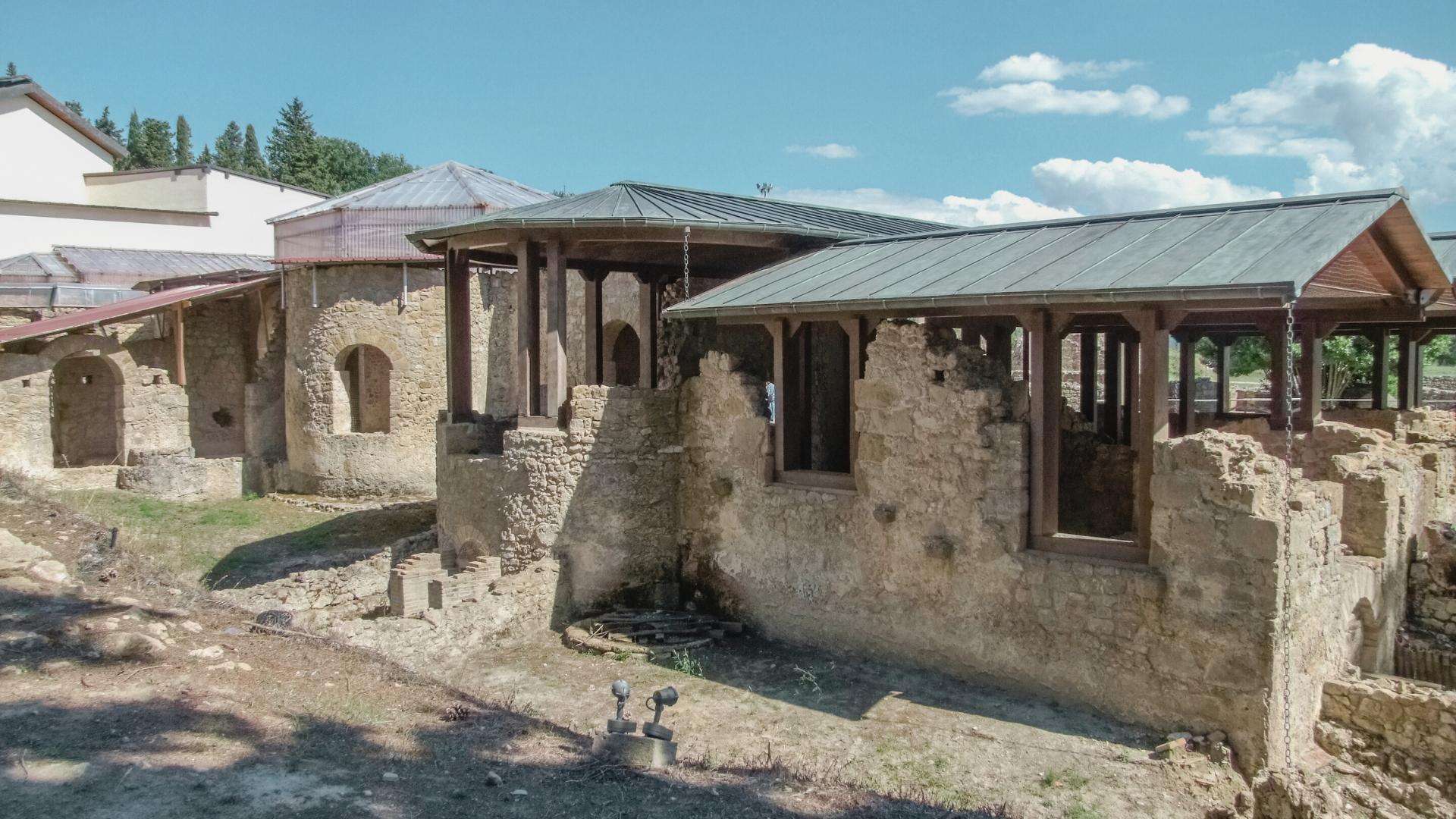
The main entrance opened into a courtyard, beyond which visitors encountered the bathing complex. From there, the architectural arrangement led toward the principal peristyle, a courtyard surrounded by covered colonnades. A monumental fountain once occupied its centre, creating an impressive focal point for the surrounding rooms.
The complex also contained an elliptical peristyle connected to a magnificent dining room, known as a triclinium. Roman dining rooms were important settings for social interaction, where wealthy households entertained guests through elaborate meals and displays of hospitality.
One of the villa’s most prestigious spaces was its basilica, a large reception hall used for formal gatherings and audiences. Unlike the surrounding mosaic floors, its pavement was constructed from coloured marble, demonstrating the range of expensive decorative materials available to the household.
The private baths, meanwhile, reveal the importance of bathing in Roman social and domestic culture. Their arrangement included spaces associated with different stages of bathing, reflecting practices that extended well beyond simple personal hygiene.
Together, these architectural features demonstrate that the villa was both a private residence and an important centre for managing a wealthy rural estate.
The Mosaics: A Picture of Roman Society
The greatest treasure of Villa Romana del Casale is its extraordinary collection of floor mosaics. Covering approximately 3,500 square metres, these intricate compositions decorate 42 rooms and rank among the most impressive surviving examples of Roman mosaic art.
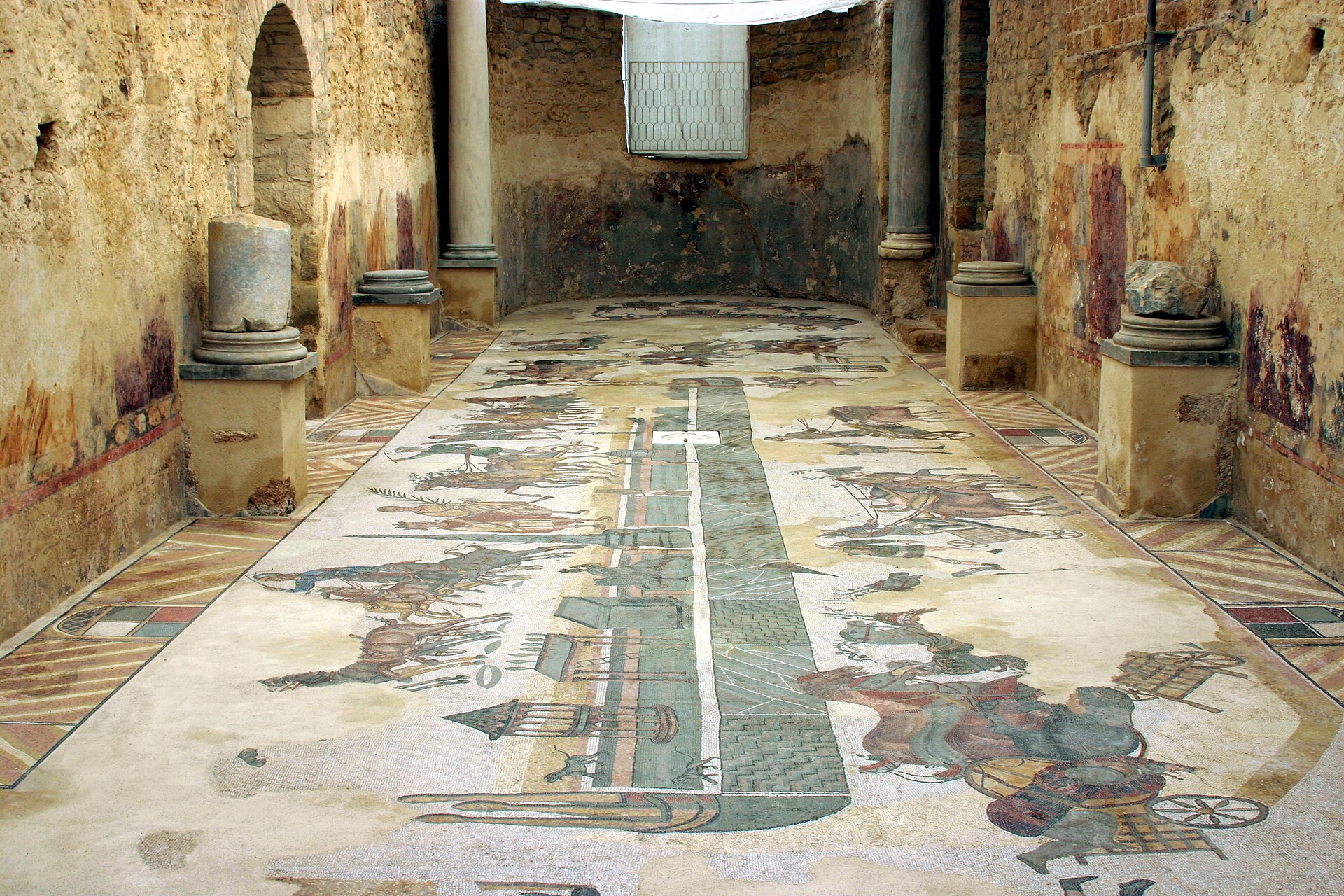
The mosaics were assembled from thousands of small coloured pieces, known as tesserae. Their subjects range from classical mythology and hunting expeditions to athletic competitions, domestic activities, and scenes involving exotic animals.
Their artistic quality reflects the sophisticated workshops operating throughout the Roman Mediterranean. Archaeological and stylistic evidence points particularly toward connections with North African mosaic traditions, illustrating the movement of artistic techniques and craftsmen across the empire.
These floors were not simply decorative additions. Their subjects communicated ideas about education, wealth, cultural sophistication, and the social position of the villa’s owner.
The Great Hunt: An Expedition Across the Roman Empire
Among the most impressive artworks is the Great Hunt mosaic, which stretches along a corridor approximately 60 metres long.
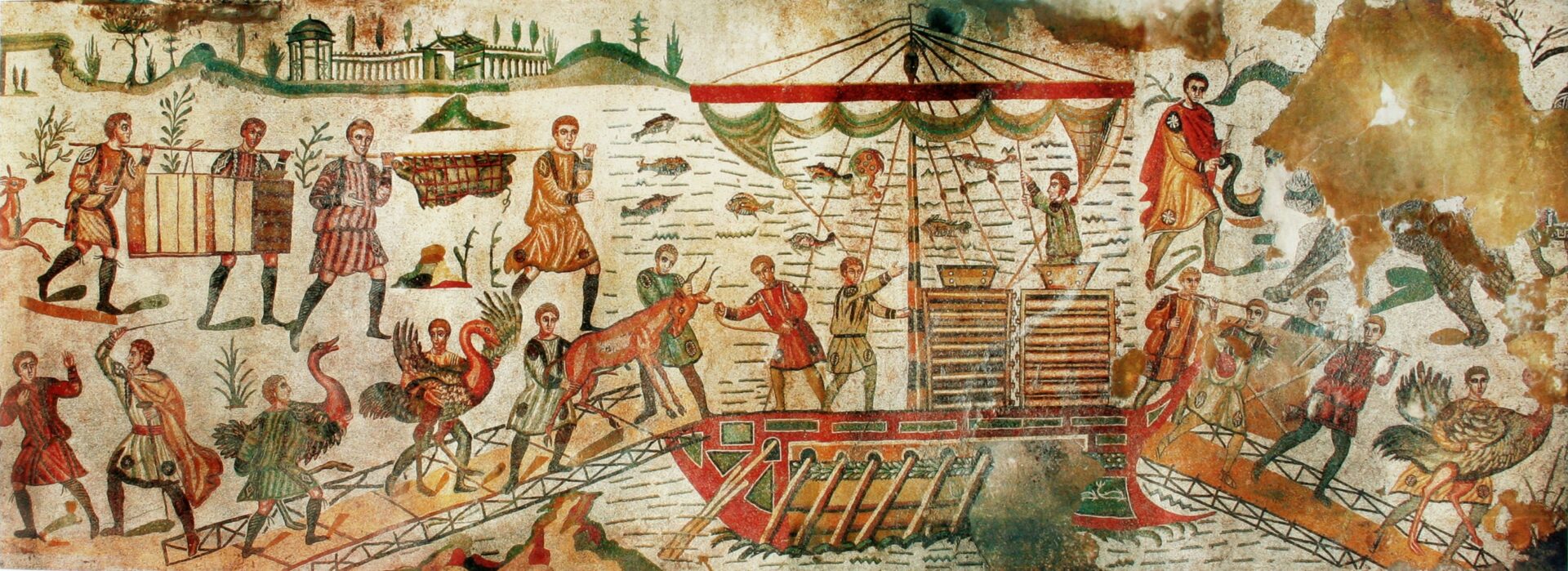
Rather than depicting an ordinary hunting expedition, the composition presents the capture and transportation of wild animals from different parts of the Roman world. Lions, elephants, antelopes, ostriches, and other exotic creatures appear in elaborate scenes involving hunters, ships, and animal handlers.
The mosaic is particularly valuable because it provides visual evidence of the networks that connected the provinces of the Roman Empire. Captured animals were transported over considerable distances, sometimes destined for public spectacles in amphitheatres.
The scenes also reflect the economic and political significance of controlling distant territories. Exotic animals were expensive and difficult to obtain, making their possession and display powerful expressions of wealth and influence.
The Great Hunt therefore reveals more than Roman enthusiasm for spectacle. It illustrates the logistical networks, commercial connections, and resources that supported elite entertainment during Late Antiquity.
The Bikini Girls: Athletic Women in Ancient Rome
Perhaps the villa’s most recognizable artwork is the mosaic commonly called the Bikini Girls, located in the Room of the Ten Girls.
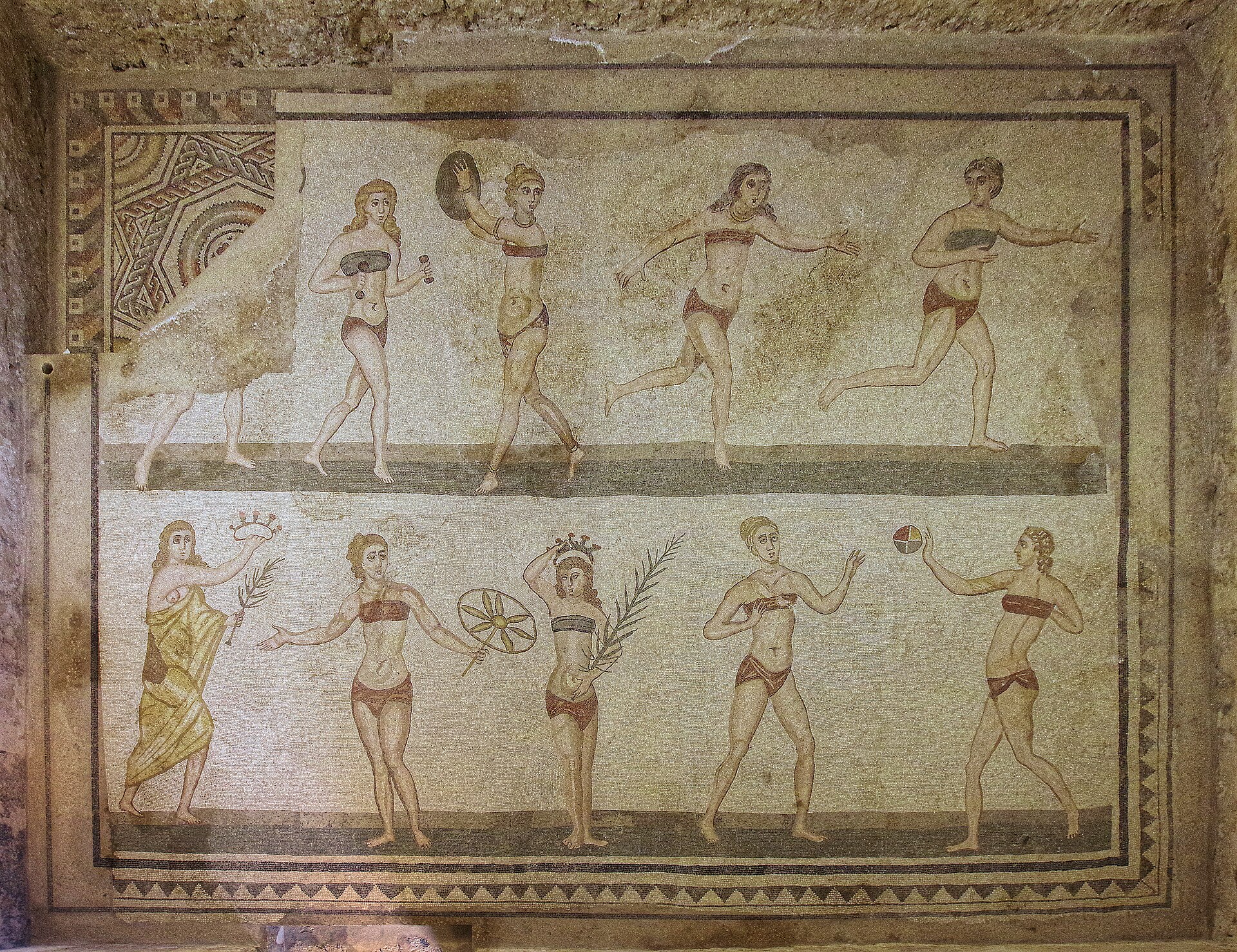
The composition depicts young women participating in athletic activities, including running, discus throwing, ball games, and exercises involving weights. Their garments consist of two-piece athletic outfits that resemble modern bikinis, although interpreting them as direct equivalents of contemporary swimwear would be misleading.
The scene originally represented ten women, although only nine are substantially preserved today. Their activities suggest a connection with physical training and athletic competitions, rather than an ordinary domestic gathering.
The mosaic challenges simplistic assumptions about the representation of women in Roman art. It demonstrates that female athletic activity was a subject worthy of elaborate artistic treatment, even though opportunities for women to participate in public sporting events varied according to social circumstances and historical context.
It should not, however, be interpreted as evidence that Roman women generally enjoyed the same sporting opportunities as men. The image provides a specific glimpse into an elite cultural environment, not a comprehensive picture of women’s lives throughout the empire.
Mythology, Dining, and the Roman Imagination
The historical and artistic importance of Villa Romana del Casale received international recognition in 1997 when UNESCO added it to the World Heritage List.
The designation acknowledged three important qualities: the exceptional artistic achievement of its mosaics, the influence of artistic traditions shared across the Roman Empire, and its outstanding representation of the social and economic structure of the late Roman world.
Preserving the site has required considerable conservation work. The mosaics are particularly vulnerable to moisture, temperature fluctuations, and physical deterioration. Protective roofing structures and controlled visitor access help reduce these risks.
An important decision in the site’s conservation history was to preserve the mosaics in their original archaeological setting rather than remove them for display in a museum. This allows visitors to appreciate the relationship between the artworks, the architecture, and the rooms for which they were originally designed.
The result is an archaeological experience that reveals not simply individual masterpieces but an entire Roman residential environment.
Villa Romana del Casale: A Window into the Roman World
Villa Romana del Casale is far more than an impressive collection of ancient mosaics. It provides an unusually detailed picture of the wealth, artistic traditions, agricultural economy, and domestic culture of the Roman elite during the 4th century AD.
Its architecture demonstrates the sophistication of late Roman residential design, while its decorative floors reveal connections between Sicily, North Africa, and other regions of the Mediterranean. From the extraordinary Great Hunt to the famous athletic women, its mosaics preserve details of a society that might otherwise be difficult to reconstruct.
Perhaps most importantly, the villa reminds us that the Roman Empire was not defined exclusively by emperors, military campaigns, and monumental cities. Its history also unfolded across rural estates, where wealthy households managed agricultural production, entertained visitors, and expressed their status through architecture and art.
Nearly 1,700 years after its principal construction phase, Villa Romana del Casale remains one of the most remarkable surviving records of Roman life. Its preservation allows modern visitors to encounter the ancient world through the very spaces and artworks that once surrounded its inhabitants.
