
Modern Trier, in western Germany, is a city where the ancient Roman world remains remarkably visible. Medieval streets, modern buildings, and university campuses stand alongside enormous Roman monuments, including the famous Porta Nigra, the Imperial Baths, and the towering Basilica of Constantine.
These structures are more than architectural curiosities. They tell the story of a city that once served as one of the Roman Empire’s most important political centers north of the Alps, survived the collapse of Roman imperial authority in the West, and adapted to a very different medieval world.
By the early Middle Ages, Trier was no longer the powerful imperial residence it had been under Constantine the Great. Its population had declined, its urban landscape had changed, and many of its monumental buildings had lost their original functions. Yet the city never disappeared. Instead, medieval inhabitants built their lives around the physical remains of Roman civilization.
The Rise of Roman Trier
The history of Trier stretches back before the arrival of the Romans. The surrounding region was inhabited by the Treveri, a Celtic-speaking people who occupied parts of modern-day western Germany, Luxembourg, and northeastern France.
Following Julius Caesar’s campaigns in Gaul during the first century BC, Roman influence expanded across the region.
Around 16 BC, during the reign of Augustus, the Romans established the settlement of Augusta Treverorum. Its location along the Moselle River made it strategically valuable, connecting the region with important commercial routes and the military frontier along the Rhine.
The settlement developed into a major administrative and commercial center. Its importance increased during the third century AD, when political instability and military pressures encouraged Roman emperors to establish additional centers of imperial government.
By the late third century, Trier had become one of the principal imperial residences of the Western Roman Empire. It was also an important administrative headquarters, overseeing territories extending across Gaul, Germania, Britannia, and Hispania.
The city reached its greatest political prominence during the reigns of Constantius Chlorus and his son, Constantine the Great.
Constantine frequently resided in Trier during the early fourth century, overseeing military campaigns and imperial administration from the city. Its monumental architecture reflected this elevated status, earning it the reputation of the Second Rome.
Trier had become one of the largest and most influential cities in the western provinces.
A City Built to Display Imperial Power
Roman Trier was filled with monumental buildings designed to demonstrate the authority and sophistication of the empire.
Its most recognizable surviving structure is the Porta Nigra. Constructed around AD 170, this enormous sandstone gate formed part of the city’s defensive fortifications. Its massive stone blocks were assembled without conventional mortar, creating one of the most impressive surviving examples of Roman military architecture north of the Alps.
The city also possessed enormous public bathing facilities.
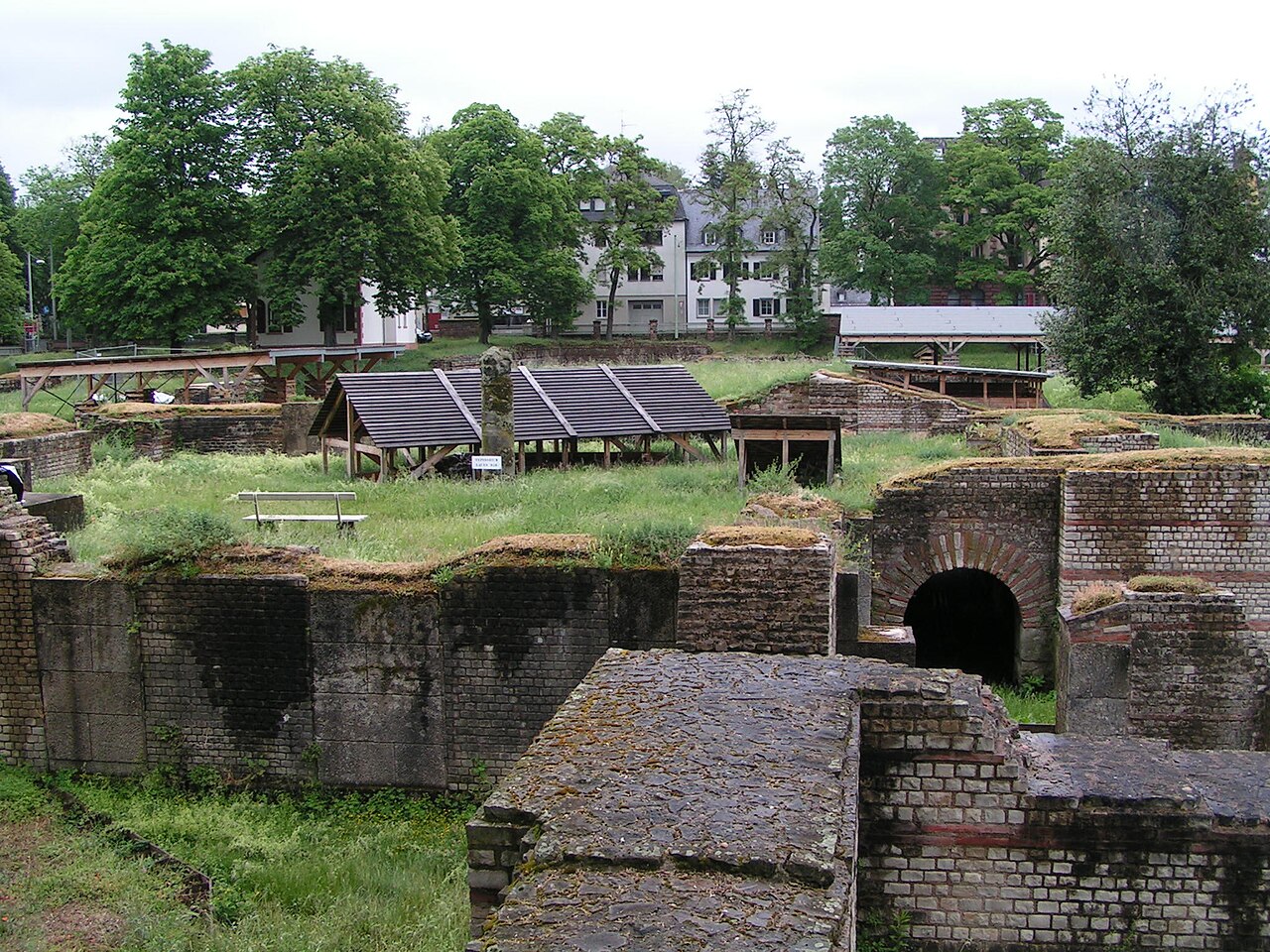
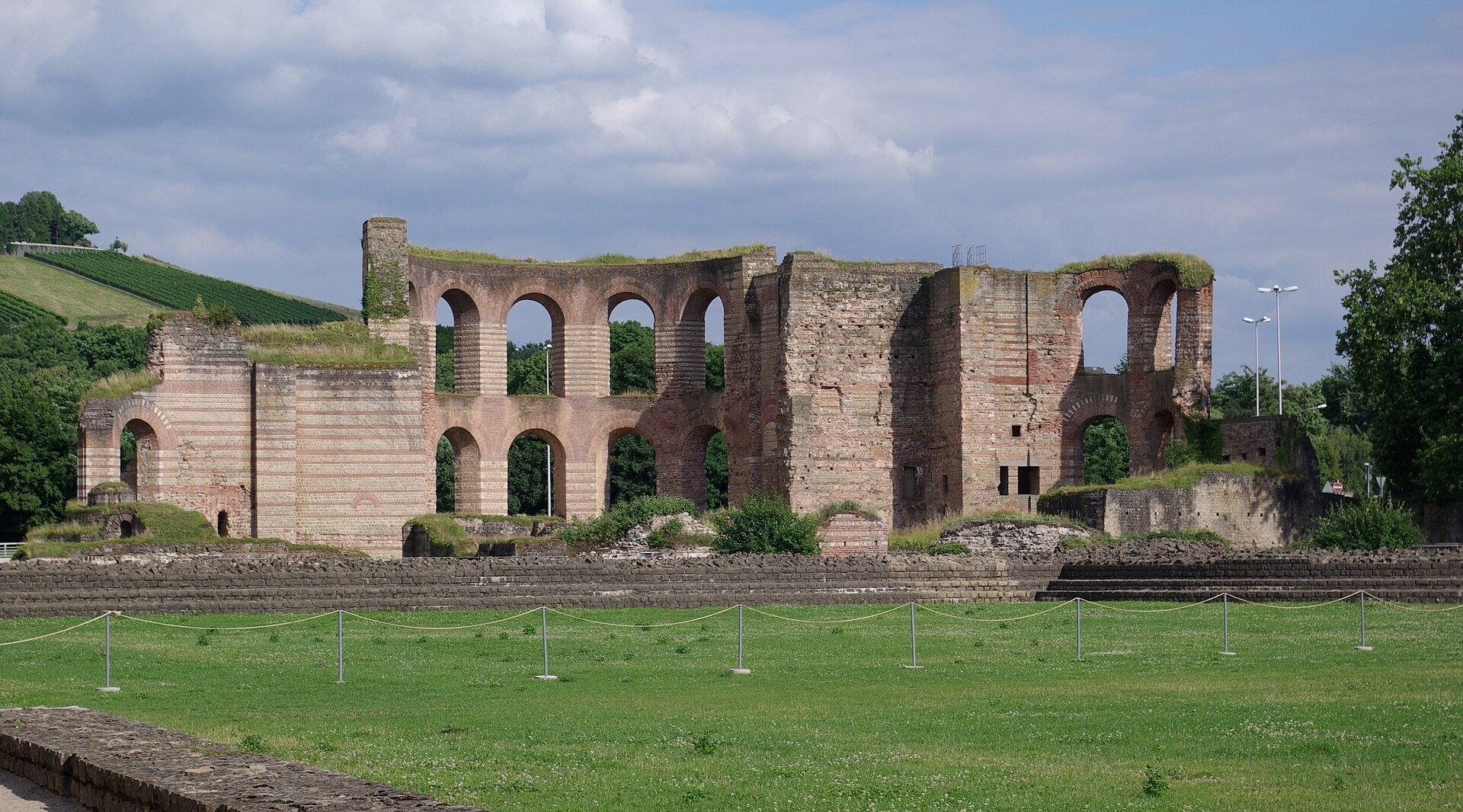
The Imperial Baths of Trier were designed on a monumental scale, incorporating heated rooms, bathing facilities, underground service passages, and sophisticated heating infrastructure. Although the complex was never completed in its originally intended form, its surviving remains demonstrate the ambition of Roman urban engineering.
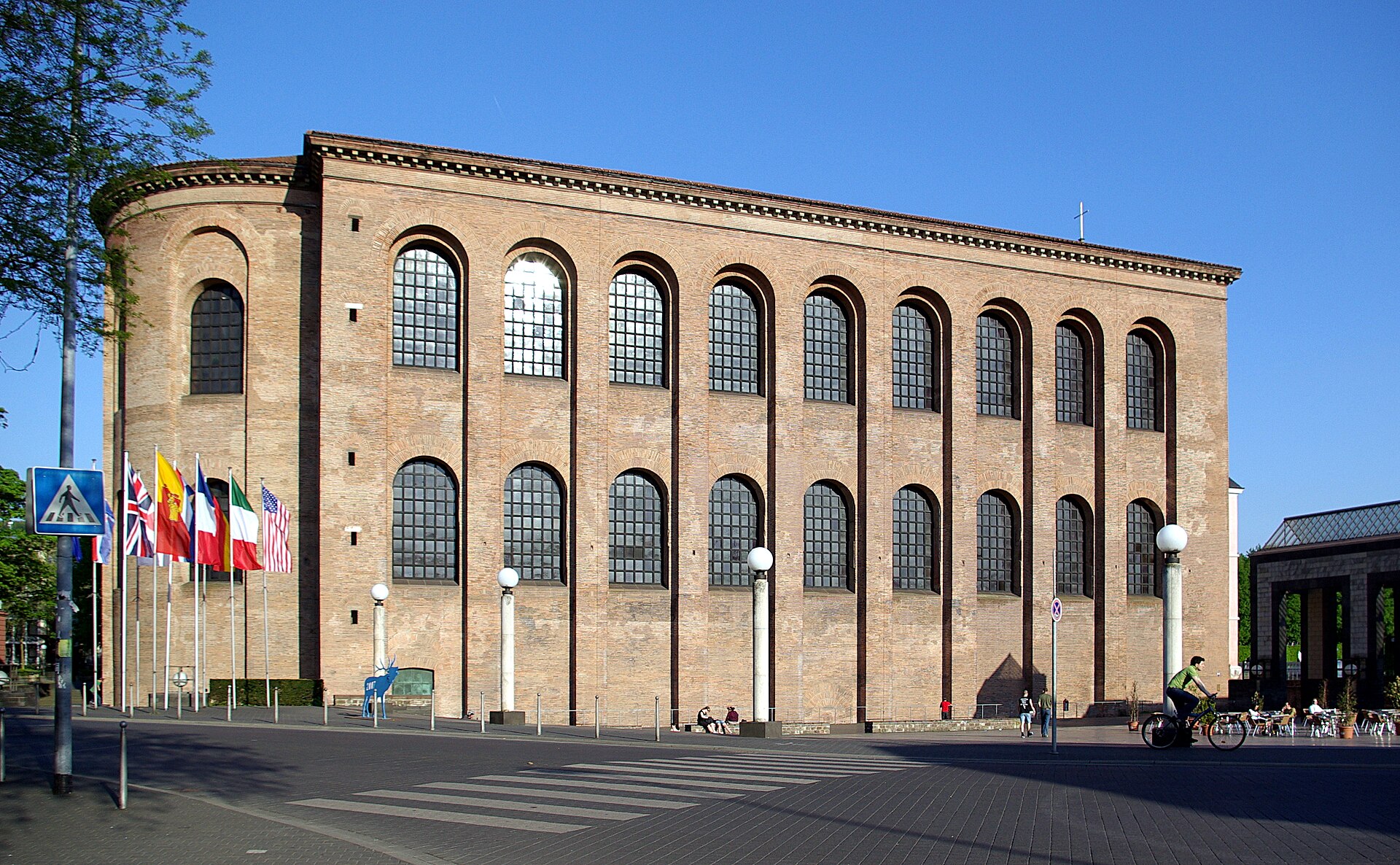
Perhaps the most impressive building was the Aula Palatina, also known as the Basilica of Constantine.
Constructed during the early fourth century, this enormous brick hall measured approximately 67 meters long and 27 meters wide, with an interior height of around 30 meters. Its vast, uninterrupted interior provided a monumental setting for imperial audiences and administrative ceremonies.
Unlike a modern Christian basilica, the original building was a Roman imperial audience hall rather than a church. Its architecture communicated the authority of the emperor to officials, visitors, and petitioners.
These structures were not isolated monuments. Together with the amphitheater, Roman bridge, defensive walls, and imperial palace complex, they made Trier a major center of Roman urban life.
The Decline of Roman Imperial Authority
Trier’s prosperity depended heavily on its political and administrative importance. When the Western Roman Empire began experiencing increasingly severe instability, the city was particularly vulnerable.
The first major disruptions came during the third century. In AD 275–276, Frankish and Alamannic groups raided the region, causing considerable destruction. Trier subsequently recovered some of its importance, particularly under the emperors of the late third and fourth centuries.
However, the situation deteriorated during the fifth century.
The crossing of the Rhine by several Germanic groups in AD 406–407 intensified the instability of Roman Gaul. Trier experienced repeated attacks and changes in political control. Literary sources describe several sackings, although the precise chronology and details of individual attacks remain debated.
By approximately AD 475, Frankish forces had taken control of the city.
The deposition of Romulus Augustulus in AD 476 is conventionally used to mark the end of the Western Roman Empire. However, Roman authority in Gaul had already weakened considerably, and Trier’s decline had begun well before that date.
The disappearance of imperial administration meant the loss of the political institutions and resources that had supported the city’s monumental infrastructure.
Large public buildings became increasingly difficult to maintain. Commercial activity contracted, urban populations declined, and parts of the former Roman settlement were gradually abandoned.
Life Among Roman Ruins in the Early Middle Ages
By the early Middle Ages, approximately between the sixth and ninth centuries, Trier was considerably smaller than its fourth-century predecessor.
The exact population is unknown, and there is insufficient evidence to establish a reliable figure. Nevertheless, archaeological evidence indicates substantial urban contraction.
Entire sections of the former Roman city were no longer occupied in their original form. Some areas became agricultural land, while other surviving buildings were adapted for residential, defensive, or commercial purposes.
Roman infrastructure nevertheless continued to influence the settlement.
The old street network remained important, while surviving walls and substantial stone buildings provided useful foundations for medieval construction. Materials from abandoned Roman structures were also reused in later buildings.
The enormous Aula Palatina, however, should not be confused with the medieval churches that developed elsewhere in the city. Its original imperial function had ended, and its present appearance reflects much later changes and restoration. It became a Protestant church in 1856.
The Porta Nigra experienced a different transformation. During the eleventh century, Archbishop Poppo of Babenberg converted the Roman gate into a double church dedicated to Saint Simeon. This medieval adaptation helped preserve the structure that might otherwise have been dismantled for building materials.
For medieval residents, these ancient buildings were practical resources as much as reminders of the past. Their enormous dimensions also distinguished Trier from many smaller settlements developing across the former western provinces.
Christianity Preserved Trier’s Importance
One of the most important reasons Trier survived as a significant settlement was the continued influence of Christianity.
A Christian community existed in the city by approximately AD 270, and a bishopric was established by the late third or early fourth century. Bishop Agricius is historically documented at the Council of Arles in AD 314.
The Christian community developed an impressive architectural complex around the location of the present Trier Cathedral.
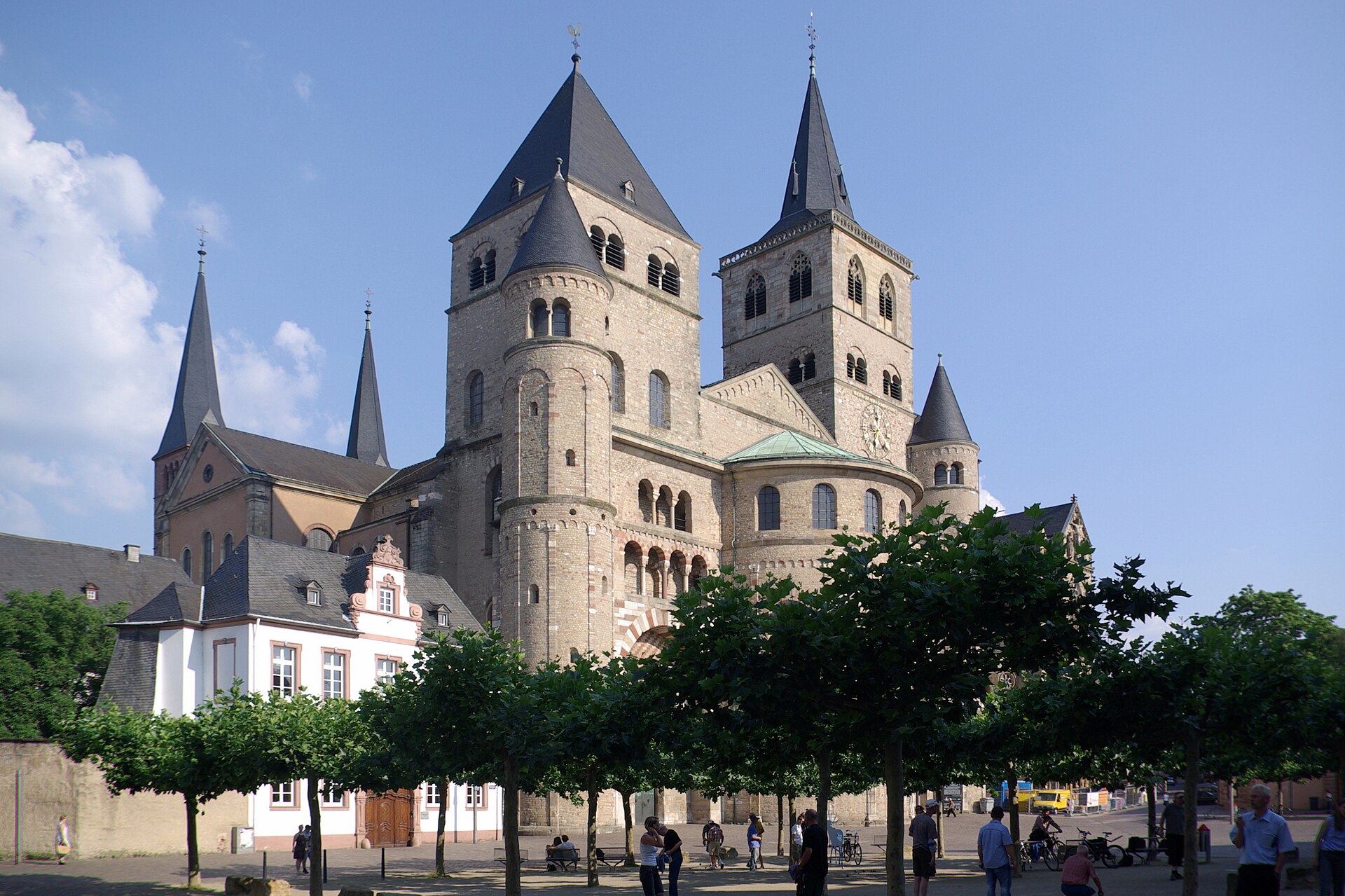
Its origins date to the Constantinian period, when several monumental church buildings were constructed over earlier Roman residential structures. The complex eventually became one of the largest Christian architectural centers of the fourth century.
Although the original church complex suffered destruction during the disturbances of the fifth century, Bishop Nicetius, who died around AD 561, oversaw significant rebuilding.
The bishopric consequently became an important source of political and religious continuity.
During the early medieval period, Trier’s bishops increasingly exercised authority beyond religious affairs. As imperial administration disappeared, ecclesiastical institutions helped organize local society and maintain the city’s regional importance.
Christianity had effectively become one of the principal institutions connecting Roman Trier with medieval Europe.
Trier Under the Frankish Kingdom
Following the establishment of Frankish authority, Trier became part of a new political landscape.
The Merovingian dynasty controlled much of the former Roman territories in Gaul, and Trier remained an important ecclesiastical center within their kingdom.
Its bishops maintained connections with Frankish rulers and neighboring religious institutions. During the sixth century, figures such as Bishop Nicetius played important roles in the city’s continued development.
By the Carolingian period, Trier was incorporated into the expanding political world of Charlemagne.
Charlemagne’s reign (768–814) witnessed efforts to strengthen Christian institutions, education, administration, and imperial authority across western and central Europe.
Although these initiatives drew inspiration from Roman traditions, Carolingian government was not simply a restoration of the ancient Roman Empire.
Trier nevertheless benefited from its established religious institutions and historical prestige. Its Roman heritage remained visible, even though its political and economic importance was considerably different from what it had been under Constantine.
What Did Daily Life Look Like?
Life in early medieval Trier would have been considerably different from life during its imperial heyday.
Instead of the enormous commercial districts and crowded public spaces of the fourth century, residents encountered a smaller urban settlement organized increasingly around religious institutions, local markets, and surviving infrastructure.
Timber buildings and smaller stone structures occupied parts of the former Roman city. Craftspeople produced everyday necessities, including pottery, metal objects, leather goods, and tools.
Agriculture remained essential to the surrounding economy, while the Moselle River continued to provide a valuable transportation route.
Local and regional merchants could move agricultural products and other goods along the river, connecting Trier with settlements elsewhere in the Moselle and Rhine regions.
Christianity also shaped the rhythm of everyday life. Churches, religious festivals, burial grounds, and ecclesiastical institutions played increasingly important roles in the community.
However, it would be misleading to imagine that medieval residents lived entirely surrounded by abandoned Roman monuments. Some ancient structures had disappeared, others had been dismantled, and several had been incorporated into new buildings.
The city was not a preserved Roman settlement frozen in time. It was a continuously changing community adapting to the circumstances of a different age.
From Roman Imperial Residence to Modern European City
Over subsequent centuries, Trier gradually developed into an important medieval city. Its ecclesiastical institutions expanded, its political influence increased, and its urban landscape acquired new churches, monasteries, and residential buildings.
The Porta Nigra became a church complex, the cathedral evolved from its late Roman foundations, and the surrounding city continued to incorporate elements of its ancient architectural heritage.
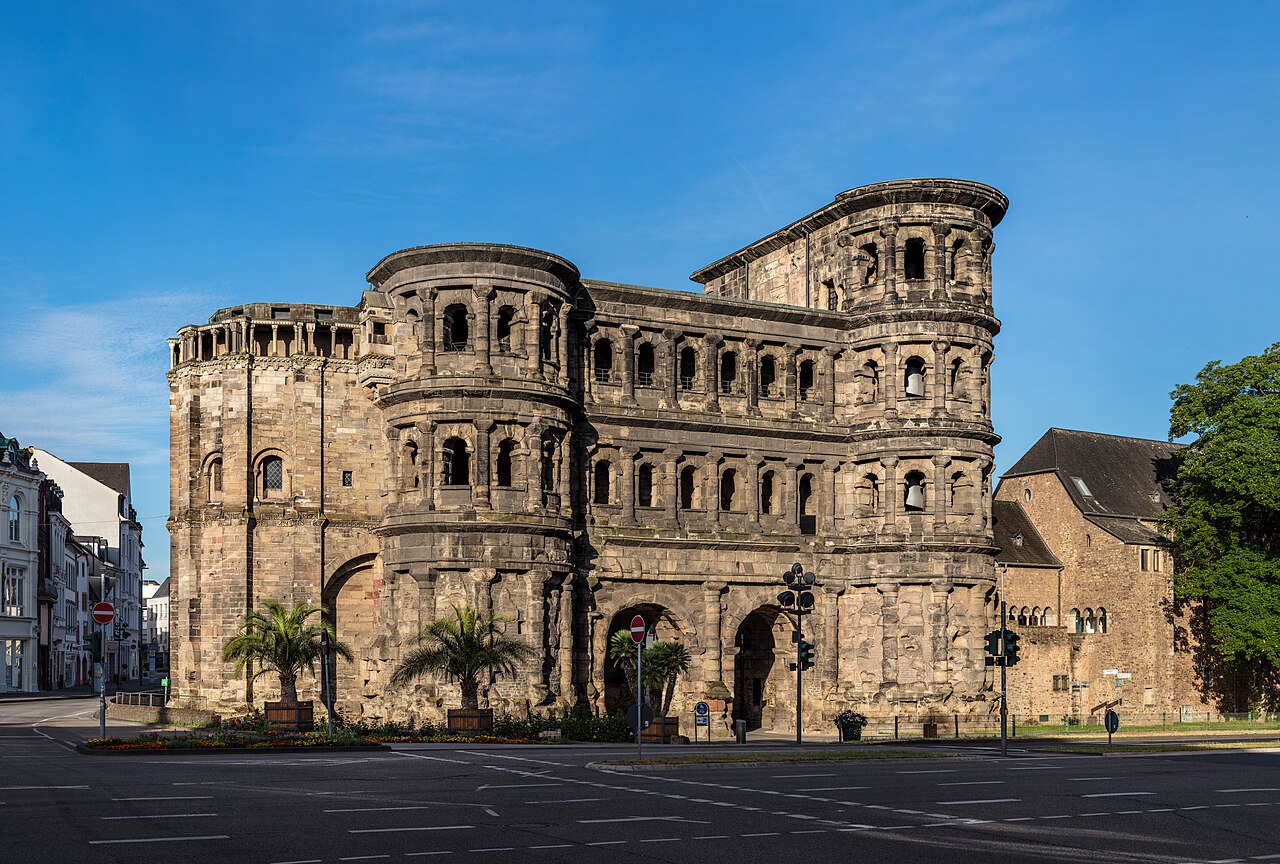
Today, Trier preserves an extraordinary concentration of Roman monuments. In 1986, its Roman monuments, cathedral, and Church of Our Lady were collectively designated a UNESCO World Heritage Site.
The surviving structures include the Porta Nigra, Imperial Baths, Aula Palatina, amphitheater, Roman bridge, and cathedral complex. Together, they provide an exceptional record of Roman urban development and the transformation of the ancient city during the medieval period.
Trier’s history demonstrates that the fall of an empire does not necessarily mean the disappearance of its cities. Political authority can collapse, populations can decline, and economic systems can transform, yet the physical foundations of urban life often survive.
Once an imperial residence under Constantine the Great, Trier eventually became a medieval Christian center built around the remains of Roman civilization.
Its ancient stones survived not because the Roman world remained unchanged, but because successive generations found new ways to use, adapt, and preserve them.
Trier is therefore more than a surviving Roman city. It is a remarkable example of how the ancient world gradually transformed into medieval Europe.
