
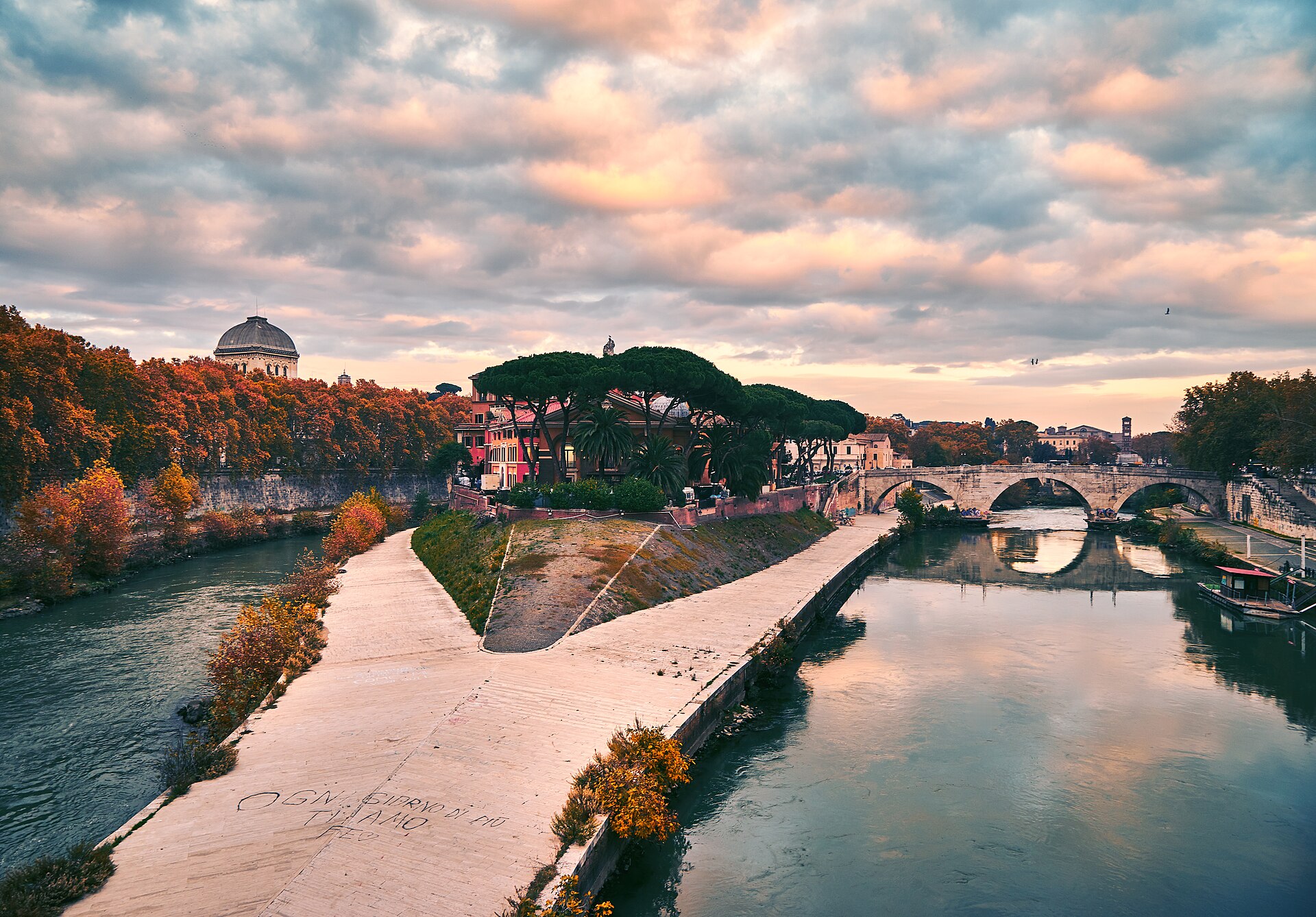
In the heart of Rome, where the Tiber River winds through the historic city, lies a small island with an extraordinary history. Known as Tiber Island (Insula Tiberina), it is one of the most distinctive geographical features of ancient Rome. Connected to both riverbanks by bridges, the island played an important role in the city’s development and eventually became one of its most famous centers of healing.
Its origins are associated with the legendary expulsion of Rome’s kings, while its religious history dates back to the third century BC. Remarkably, its association with medicine has survived through centuries of political, religious, and architectural change.
The Origins of Tiber Island
Roman tradition attributes the island’s formation to the overthrow of the last king, Lucius Tarquinius Superbus (Tarquin the Proud), traditionally dated to 509 BC.
According to Livy, when the Romans expelled the Tarquin dynasty, they confiscated grain growing in the Campus Martius, a large area dedicated to Mars. Rather than distributing the harvest, they threw it into the Tiber. The river was supposedly running low, allowing the grain and other material to accumulate in its bed until an island emerged.
This story, recorded by ancient writers including Livy, Dionysius of Halicarnassus, and Plutarch, belongs to Rome’s foundation traditions rather than established historical fact.
Modern archaeological research has provided a more convincing explanation. A 2026 study published in the Journal of Roman Studies, based on geoarchaeological investigations and sediment cores, found that the island did not exist as a permanent landmass during Rome’s earliest centuries. Instead, the area initially contained a low, seasonal riverbed formation that may have helped people cross the Tiber.
The researchers concluded that the permanent island emerged through rapid sediment accumulation during the late sixth century BC. Environmental changes, potentially including extensive deforestation associated with urban development, may have contributed to this process.
A Strategic Crossing Point on the Tiber
Tiber Island eventually became an important feature of Rome’s river crossings. Its position divided the river into two channels, creating a natural location for bridges and facilitating movement between the eastern and western banks.
Before permanent bridges were constructed, people likely relied on ferries and other crossing methods. The island subsequently became connected to the surrounding city through two bridges, giving it the ancient name Inter Duos Pontes, meaning “between two bridges.”
The two structures are the Pons Fabricius and the Pons Cestius.
The Pons Fabricius was constructed in 62 BC and remains one of the best-preserved ancient bridges in Rome. The Pons Cestius also originated in antiquity, although it underwent extensive reconstruction, particularly during the nineteenth century. Together, they preserve the island’s remarkable connection to Rome’s ancient infrastructure.
The Arrival of Asclepius and the Healing Sanctuary
The island’s most significant historical development came in 293 BC, when Rome was suffering from a devastating plague. According to Roman accounts, the authorities consulted the oracle at Epidaurus in Greece, home to an important sanctuary dedicated to Asclepius.
A sacred serpent associated with the healing god was brought back to Rome aboard a ship. According to the traditional account, the serpent escaped from the vessel upon reaching the Tiber and swam toward the island. The Romans interpreted this as a divine sign that Asclepius had chosen the location for his sanctuary.
A temple was subsequently established in his honor, transforming Tiber Island into a religious center associated with medicine and healing. Worshippers visited the sanctuary seeking divine assistance for their illnesses, following practices associated with the cult of Asclepius throughout the Greek and Roman worlds.
Archaeological evidence supports the island’s importance as a healing sanctuary. Excavations and recovered objects, including anatomical votive offerings and dedicatory inscriptions, provide evidence of religious activity associated with the healing cult. The precise architectural layout of the original temple, however, remains uncertain.
Why Does the Island Look Like a Ship?
One of Tiber Island’s most unusual features is its distinctive ship-like appearance. This was not entirely a natural coincidence.
During the first century BC, the Romans substantially monumentalized the island, constructing stone embankments that emphasized the shape of a vessel. Its southern end featured travertine masonry resembling a ship’s prow, with decorative reliefs associated with Asclepius and his sacred serpent.
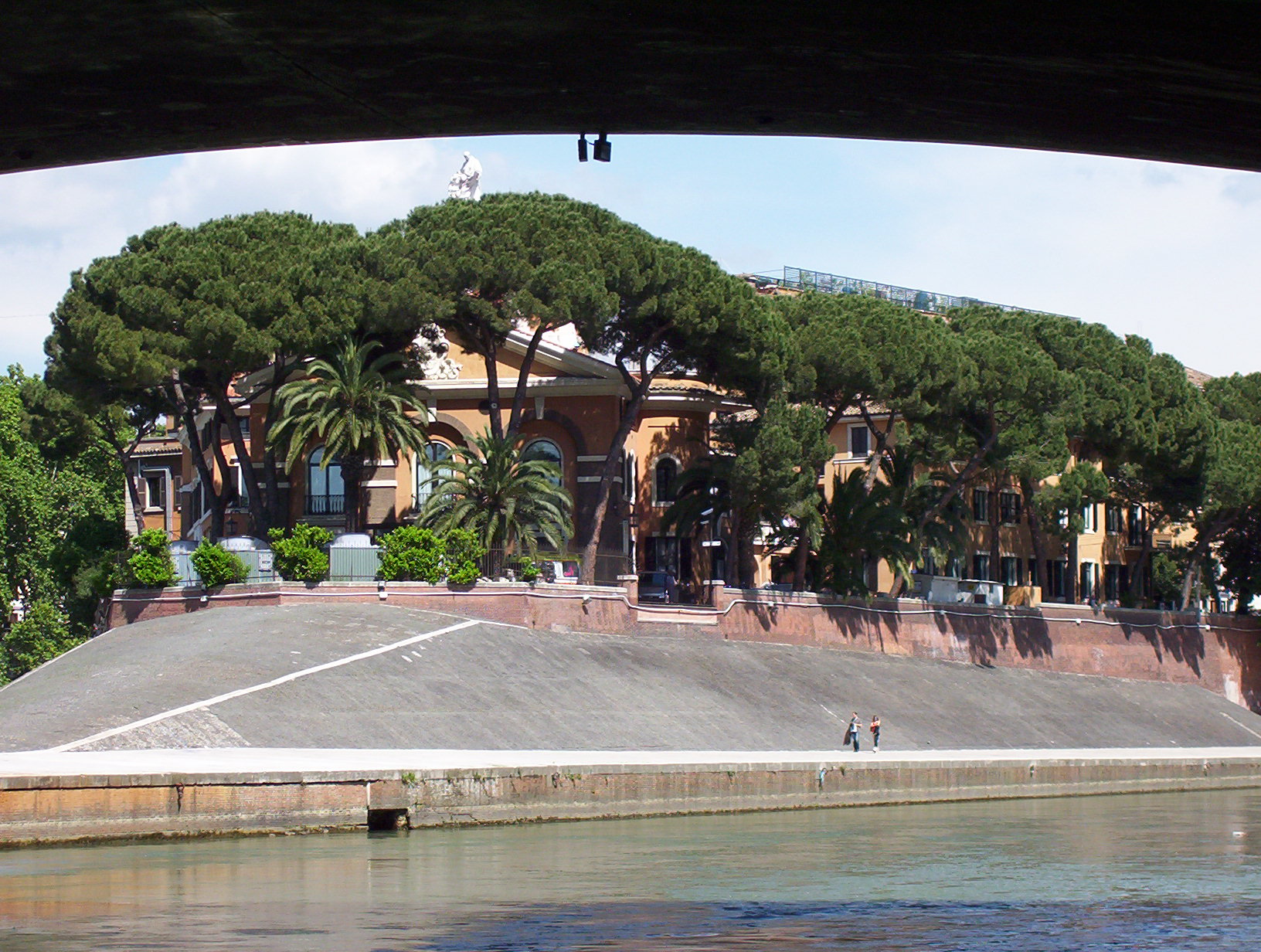
The design commemorated the legendary arrival of the healing god’s serpent from Greece. An obelisk once stood on the island and is thought to have represented the ship’s mast, although only fragments survive today.
The island’s natural shape provided the foundation for this symbolic transformation, combining geography, religious tradition, and Roman engineering.
A Healing Tradition That Survives Today
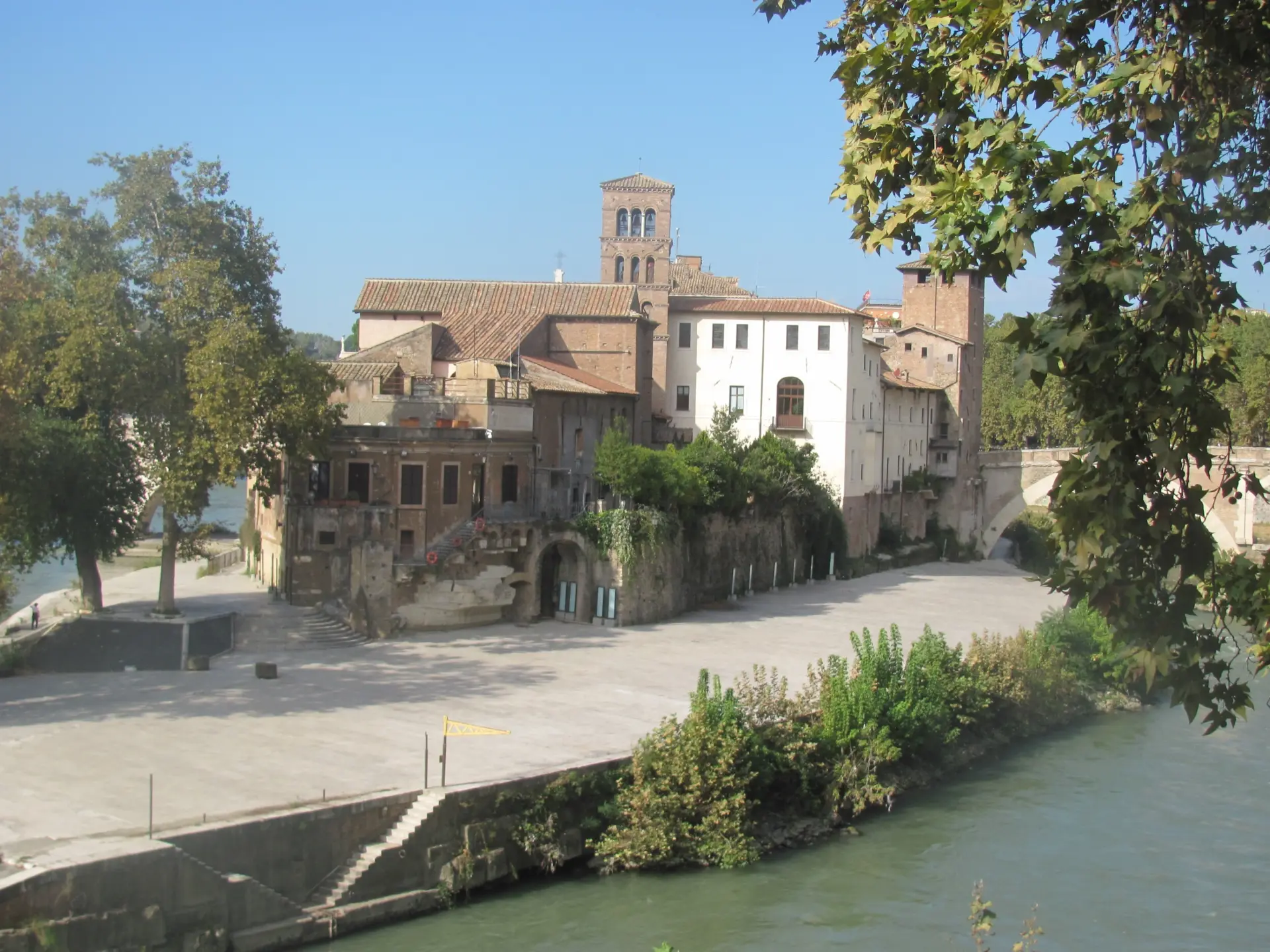
Tiber Island’s association with medicine did not disappear with the decline of pagan Roman religion. During the Christian period, religious institutions developed on the island, including the Basilica of San Bartolomeo, built near the location traditionally associated with the ancient temple of Asclepius.
The island eventually became home to the Fatebenefratelli Hospital (Ospedale Fatebenefratelli), established in 1585. The hospital continues to operate there today.
Although the ancient sanctuary and modern hospital are different institutions, their presence reflects an extraordinary continuity in the island’s association with healthcare. For more than two millennia, Tiber Island has remained closely connected with religious devotion, medical care, and the treatment of the sick.
The Legacy of Tiber Island
Tiber Island is much more than a picturesque landmark in central Rome. Its geological formation offers insights into the changing landscape of early Rome, while its bridges demonstrate the importance of river crossings in the city’s development.
Its sanctuary of Asclepius also illustrates how Roman religious practices incorporated Greek traditions, creating a lasting center of healing.
Today, the island preserves an unusual connection between ancient mythology, archaeology, Roman engineering, and modern medicine. Few places in Rome demonstrate so clearly how the city’s ancient landscape continues to shape its identity.
