
Archaeologists investigating a Roman cemetery in York, England, uncovered an extraordinary collection of human remains that raised questions about violence, public entertainment, and the treatment of the dead in Roman Britain. Among 82 skeletons recovered from the site, at least 46 had been decapitated. One individual presented an even more unusual discovery: severe puncture and crushing injuries to his pelvis, believed to have been inflicted by a large carnivore, possibly a lion.
The findings have prompted competing theories about who these people were and how they died. Were they gladiators who met their deaths in the arena, condemned criminals executed during public spectacles, or individuals subjected to other forms of Roman punishment? The evidence offers intriguing possibilities, but the complete story remains uncertain.
The Discovery of York’s Unusual Roman Cemetery
The investigation began in 2004, when archaeologists excavated land at Driffield Terrace ahead of construction work. The site contained part of a Roman cemetery situated beside a road leading into Eboracum, the Roman settlement that developed around a legionary fortress established in approximately AD 71.
York became an important military and administrative center in Roman Britain. Its population included soldiers, officials, traders, and civilians living outside the fortress.
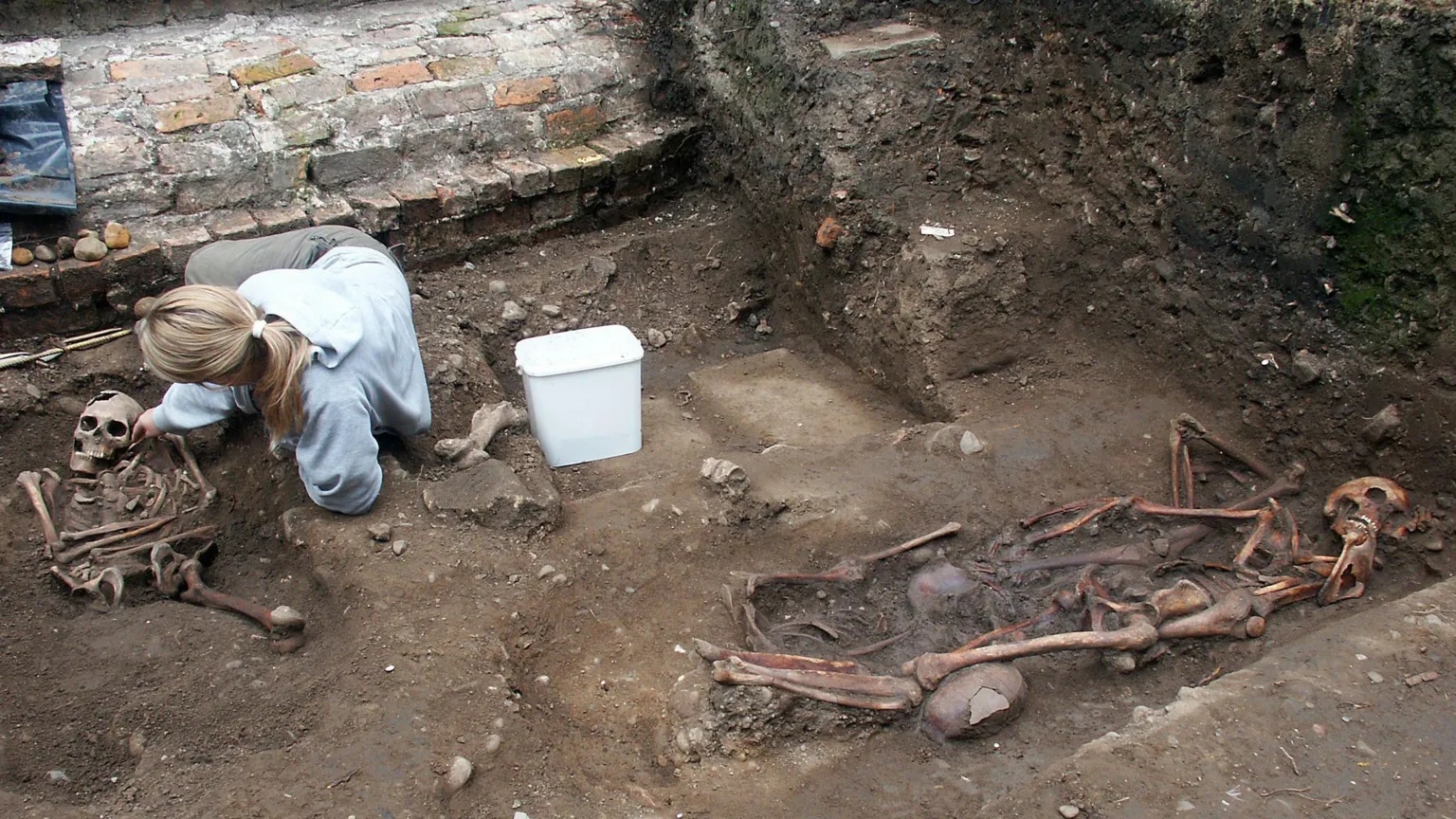
The Driffield Terrace cemetery, however, contained an unusual burial population. Among the adults whose biological sex could be established, researchers identified 66 men and only one woman. Most of the adults were between 18 and 45 years old, while older individuals were notably scarce.
The most striking feature was the frequency of decapitation. Some skulls had been placed beside their respective bodies, while others rested on the torso or near the legs. In one unusual double burial, the skulls appeared to have been exchanged, with each man’s head occupying the other’s position.
These arrangements suggested that the bodies had been deliberately handled after death.
Pottery, coins, and archaeological stratigraphy indicated that the cemetery had been used over several centuries, from the first or early second century into the late fourth century AD. Consequently, the burials did not represent a single massacre or isolated violent event. Instead, they revealed a recurring pattern of unusual deaths and burial practices.
Were These Men Executed by Roman Authorities?
Detailed examination of the cervical vertebrae, the bones forming the neck, revealed evidence of repeated cutting.
In many cases, the injuries were consistent with a single powerful sword stroke. However, some individuals displayed considerably more complicated damage. Four had evidence of at least five separate cuts, while one individual exhibited approximately 17 or 18 cutting marks.
Importantly, these marks do not necessarily represent that many blows delivered while the individual was alive. Some appeared to have been inflicted after the vertebrae had separated. The distinction matters because archaeological evidence cannot always establish whether an injury occurred immediately before or shortly after death.
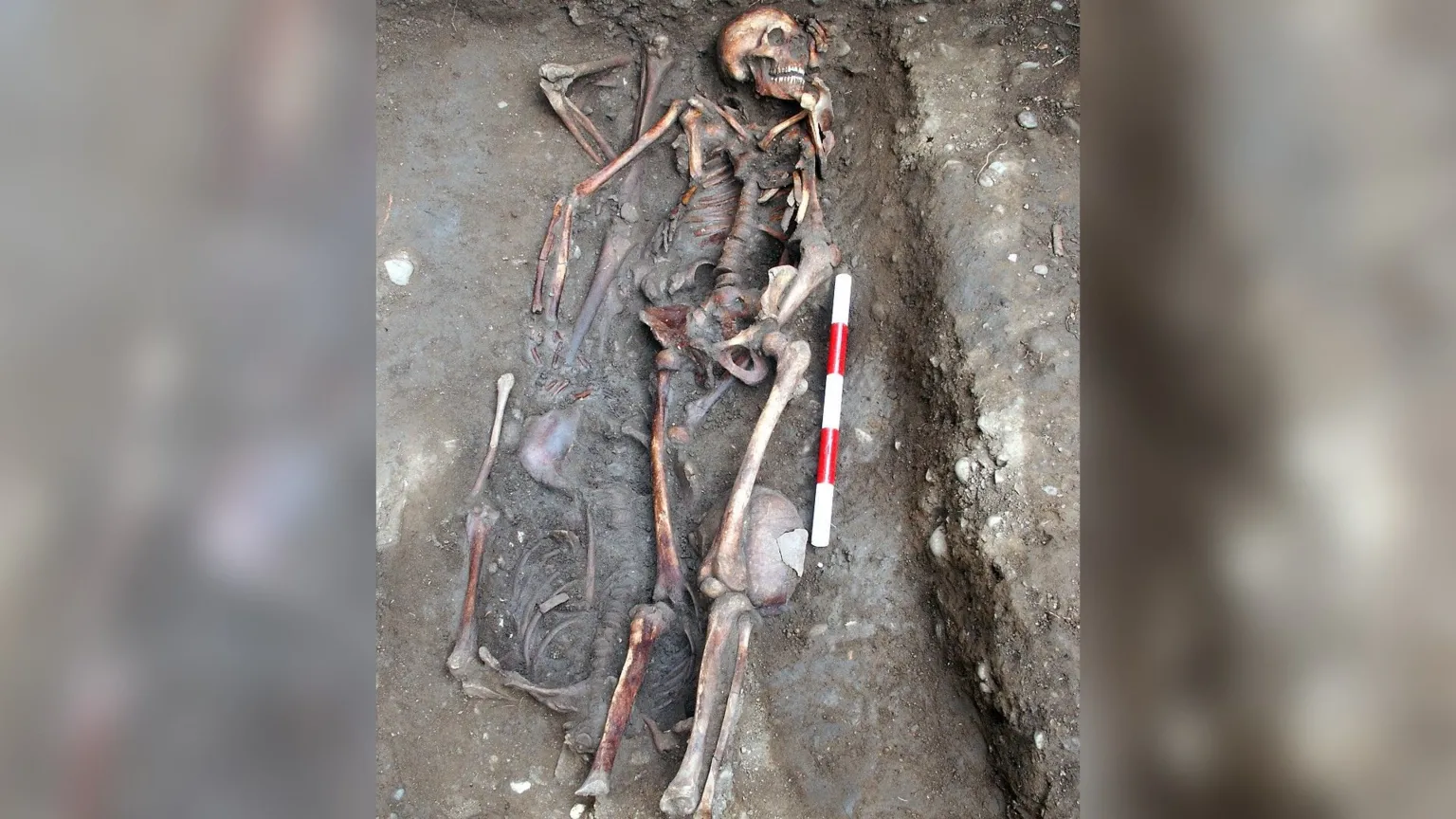
Most identifiable decapitation injuries originated from behind, although cuts from the front and sides were also documented.
The researchers considered whether some individuals had been executed. Roman authorities employed the sword as an instrument of capital punishment, while the penalties imposed on convicted individuals could vary according to legal status and social standing.
Roman law also distinguished between different forms of punishment. Enslaved people and individuals of lower status could face particularly severe penalties, including exposure to wild animals. Those of higher social standing generally enjoyed greater legal protections.
Some neck injuries at Driffield Terrace were consistent with execution. However, not every damaged neck showed complete decapitation. In certain cases, the cutting appeared insufficient to detach the head, suggesting that the objective may have been killing the individual rather than removing the skull.
This distinction makes it difficult to identify a single explanation for all the burials.
The Gladiator Theory: Injuries That Tell a Complicated Story
Another interpretation connects the cemetery with Roman gladiatorial combat.
Several individuals displayed healed fractures and older injuries, suggesting that they had survived considerable physical trauma during their lifetimes. One man had a healed blade wound measuring approximately 23 millimeters on his right femur. The injury had penetrated the bone but subsequently healed.
His skeleton also revealed other fractures, while his neck and jaw displayed evidence of approximately nine or ten separate cutting events.
Such injuries initially appear consistent with the experiences of professional fighters.
Gladiators trained in specialized schools known as ludi, where they received instruction, accommodation, and food. Training involved wooden weapons and repeated practice against posts before recruits entered the arena. Different gladiatorial categories required distinct weapons, armor, and fighting techniques.
Not all gladiators entered the profession voluntarily. Enslaved people, prisoners of war, and convicted criminals could be forced into combat, while some free men also volunteered.
Defeat did not automatically mean death. A defeated gladiator could surrender, and the sponsor of the games ultimately determined whether the fighter would be spared. The audience could influence that decision, while the financial investment in training experienced gladiators provided another incentive to preserve their lives.
Evidence from Roman Britain demonstrates that gladiatorial performances were not merely an activity described in distant Roman literary sources.
A locally manufactured Roman vase discovered in Colchester depicts two named gladiators, Memnon and Valentinus. An inscription identifies Memnon as a fighter with nine previous bouts, while Valentinus was appearing for the first time. One figure raises a finger in surrender.
The object provides evidence for gladiatorial entertainment in Britain and illustrates how experienced fighters could participate in repeated contests.
Nevertheless, comparisons with a better-documented gladiator cemetery at Ephesus, discovered in 1993, complicate the York interpretation.
The Ephesus cemetery contained tombstones identifying gladiators, allowing researchers to associate skeletal injuries with a much more securely identified population. Its remains displayed healed blade wounds, punctures, and blunt-force injuries.
At York, many suspected head injuries were instead shallow depressions. The injury patterns were therefore not sufficiently similar to establish that the Driffield Terrace individuals were professional gladiators.
Furthermore, the extensive decapitations remain difficult to explain as a routine consequence of gladiatorial defeat.
The Possible Lion Attack That Changed the Investigation
The most extraordinary evidence came from one man buried alongside two other individuals.
Estimated to have been between 26 and 35 years old at death, his pelvis displayed substantial punctures, indentations, and areas of crushed bone on both sides. Two particularly deep holes measured approximately six millimeters across.
Small fragments of bone had also been displaced into the damaged areas. Their coloration matched the surrounding bone, suggesting that the injuries occurred while the bone was still fresh.
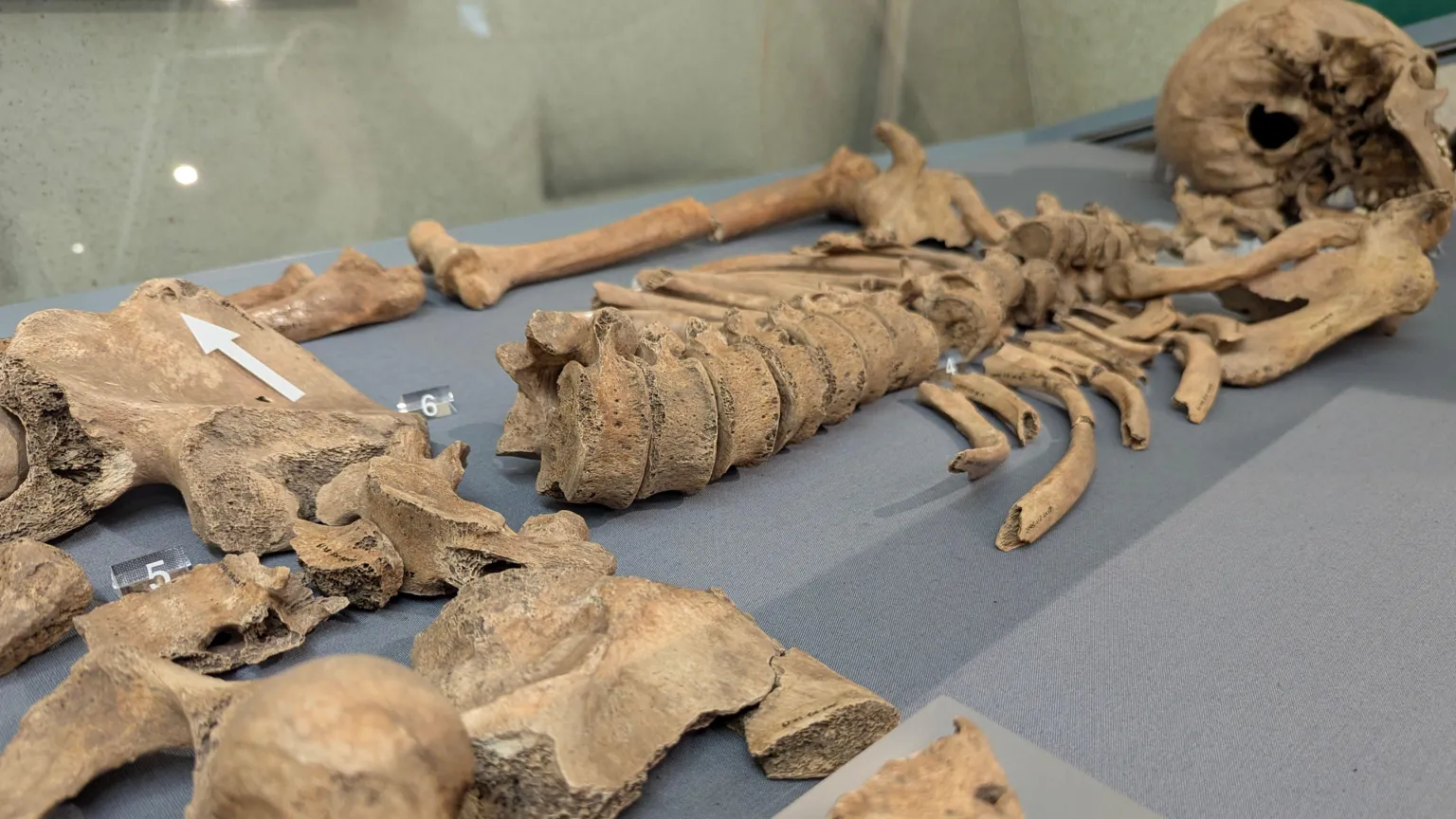
In 2025, archaeologists and forensic specialists published a dedicated investigation into these unusual marks.
Using three-dimensional scanning, the researchers documented the damaged surfaces and compared them with reference injuries from 72 horse-bone samples used in research involving large carnivores, including lions, tigers, leopards, and cheetahs.
They also considered alternative explanations involving weapons and other animals.
The strongest interpretation was that a large carnivore had bitten the man’s pelvis, with a lion considered the most likely culprit. A wolf could not be completely excluded, but the pattern of crushing and puncturing favored a larger feline predator.
If the identification is correct, the discovery provides remarkable evidence that a large exotic animal, potentially a lion, reached Roman York.
How Could a Lion Have Reached Roman Britain?
Wild animal spectacles were an established feature of Roman public entertainment. Emperors, provincial officials, and wealthy sponsors organized displays involving exotic animals, staged hunts, and executions.
Lions were particularly valuable attractions. Their presence demonstrated the resources and connections required to capture, transport, and maintain dangerous animals from distant parts of the empire.
Capturing a lion alive was only the beginning. Animals needed secure cages, experienced handlers, food, and water throughout their journey. Transport involved overland movement and shipping across considerable distances.
Ancient sources provide descriptions of methods used to capture large predators. The hunting poem traditionally attributed to Oppian, Cynegetica, describes techniques involving concealed pits and bait to trap lions in North Africa.
Other methods involved nets, enclosures, and coordinated hunting parties using men and horses.
Roman mosaics also depict the capture, confinement, and transportation of wild animals, illustrating the infrastructure behind these spectacles.
York’s military and administrative connections potentially made such an operation possible. The city maintained important links with other parts of the Roman Empire, and its military supply networks included connections with North Africa.
By the early third century, York had become the principal administrative center of northern Britain. Its military population, officials, and wealthy inhabitants provided a plausible setting for elaborate public entertainment.
However, the city’s amphitheater has not been securely identified archaeologically. Although Roman Britain possessed amphitheaters and evidence of animal spectacles, the frequency of imported lion performances in the province remains uncertain.
The skeletal evidence therefore establishes a possible animal encounter, not a documented lion show at York.
Gladiatorial Combat or Execution by Wild Animals?
Roman animal spectacles involved several distinct activities, and understanding these differences is essential to interpreting the York remains.
Professional animal fighters, known as venatores, confronted dangerous creatures using specialized weapons, including spears. Their performances demonstrated skill and courage, with the objective often being to kill or subdue the animal.
Condemned criminals faced an entirely different situation.
Roman authorities could sentence individuals to death by exposure to wild animals, a punishment commonly associated with damnatio ad bestias. Victims might be bound or otherwise prevented from defending themselves effectively.
The distinction was significant: one participant entered the arena as an armed performer, while the other was presented as a condemned victim.
A bronze key handle discovered in Leicester depicts a lion attacking a man, commonly interpreted as an illustration of this form of punishment. It demonstrates that such imagery circulated in Roman Britain, although it cannot establish where the depicted event occurred.
Roman games could also combine different spectacles throughout a single day, including animal hunts, executions, and gladiatorial contests.
The presence of possible lion injuries at York therefore cannot establish whether the individual was a trained fighter or a condemned prisoner.
Interestingly, the pelvic injuries may not have been responsible for his death. Large cats commonly attack the throat, neck, or head when killing prey. The surviving marks on this man’s pelvis were considered more consistent with feeding or dragging an incapacitated person or recently dead body.
A fatal injury elsewhere could have affected soft tissue without leaving corresponding marks on the skeleton.
His neck also displayed evidence of a single cutting event from behind, around the second and third cervical vertebrae. Researchers proposed two possibilities: the blade might have been used to end his suffering, or someone might have removed his head after death as part of a burial-related practice.
The available evidence cannot establish which injury occurred first.
Why Were Executed Individuals Given Formal Burials?
One particularly important aspect of the Driffield Terrace cemetery is that individuals who experienced extreme violence were nevertheless buried in organized graves.
This might initially seem inconsistent with Roman execution practices. However, Roman authorities did not invariably prevent the burial of executed individuals.
Legal provisions allowed relatives to request the bodies of executed people, although permission could be refused, particularly in cases involving treason. Other provisions also allowed bodies to be released to people who requested them.
Consequently, a person could suffer a public execution and still receive a formal burial through relatives or other individuals who wished to care for the remains.
A comparable pattern appears at Knobb’s Farm in Cambridgeshire. Archaeologists recovered 52 individuals from three late Roman cemeteries, including 17 who had been decapitated.
Researchers interpreted the decapitations as executions, yet the individuals were buried among other members of the community. Some were even placed in coffins.
This comparison demonstrates why organized burial arrangements cannot establish that the York individuals were respected gladiators rather than executed criminals.
The Three Men Buried Together
The man with the probable lion injuries was discovered in a shared grave with two other individuals, believed to date to approximately the late third century.
At the bottom was a man aged between 26 and 35, buried face down. His skull had been placed beneath the left side of his torso, and he displayed evidence of a possible healed head injury.
Above him lay an older individual, approximately 36 to 45 years old, positioned facing the opposite direction. His skeleton revealed evidence of previous leg injuries, while his neck displayed cutting consistent with a single event from behind.
His teeth suggested that he had spent his childhood in a considerably warmer region, potentially the southern Mediterranean or North Africa.
The third individual, the man with the suspected lion bites, was buried facing upwards. Iron nails near the upper part of the grave indicated that the group may have been placed inside a wooden container with a nailed lid.
An important detail emerged during subsequent examinations.
Initially, the man with the pelvic injuries had been classified as someone who had not been decapitated because his skull remained in its normal anatomical position. Later examination of his cervical vertebrae revealed evidence of a cutting injury consistent with decapitation.
Someone had apparently returned his severed head before the grave was closed.
This discovery reinforces the complexity of the burial practices at Driffield Terrace. The individuals had experienced severe violence, but their bodies were subsequently arranged and buried together.
What Really Happened to the Man Bitten by a Lion?
The York cemetery offers an extraordinary glimpse into the darker aspects of Roman life, but it does not provide a definitive explanation for the deaths of its occupants.
The pelvic injuries make an encounter with a large carnivore, most probably a lion, a credible possibility. The man’s decapitation establishes that someone also cut his neck, while the evidence of earlier injuries suggests that he had experienced physical trauma during his lifetime.
One possibility is that he was a trained animal fighter whose final encounter went disastrously wrong. Another is that he was a condemned individual exposed to a dangerous animal as part of a public execution.
The researchers have acknowledged that an armed participant and a defenseless victim could both account for aspects of the evidence.
Ultimately, the bones cannot establish whether the man entered the arena voluntarily, fought an animal, or was sent there to die.
What they do reveal is that Roman York was connected to a world in which public executions, gladiatorial entertainment, and exotic animal spectacles were possible. The Driffield Terrace cemetery also demonstrates that even people who experienced violent deaths could receive deliberate and sometimes carefully arranged burials.
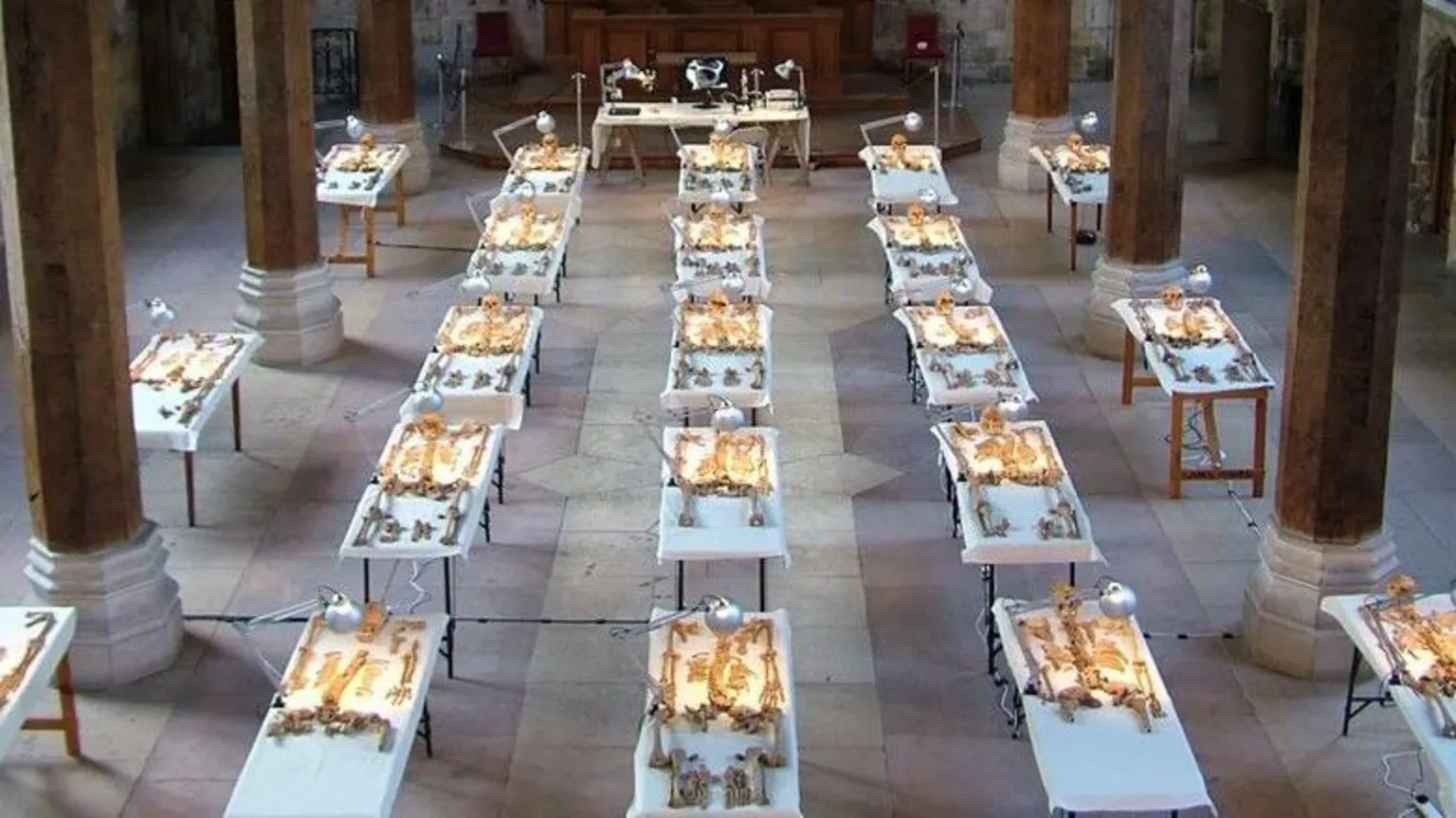
More than 1,700 years later, the remains continue to challenge archaeologists to distinguish between execution, entertainment, and burial ritual. The man with the possible lion bites remains one of the most fascinating examples of how much a Roman skeleton can reveal—and how much of its story may never be recovered.
