
Marcus Junius Brutus is remembered primarily as the Roman senator who joined the conspiracy that assassinated Julius Caesar on the Ides of March in 44 BC. Yet reducing Brutus to Caesar’s killer overlooks the political and intellectual forces that shaped his life. Born into an ancient Roman family associated with resistance to monarchy, Brutus grew up surrounded by republican ideals and the belief that no individual should possess unchecked power.
His decision to turn against Caesar was therefore not simply a personal betrayal. Brutus believed that Caesar’s accumulation of authority threatened the political system his family had long represented. The assassination, however, failed to restore the Roman Republic. Instead, it accelerated the civil wars that destroyed the republican order and ultimately cleared the way for Augustus and the Roman Empire.
Key Takeaways
- Brutus believed Caesar’s concentration of power threatened the Roman Republic, despite having previously accepted Caesar’s pardon and political patronage.
- The assassination of Caesar failed to restore the Republic. Instead, it triggered another series of civil wars that allowed Octavian to become Rome’s first emperor.
- Brutus’s defeat and death at Philippi in 42 BC effectively ended the last major republican resistance to Caesar’s heirs.
A Republican Born Into an Ancient Family
Marcus Junius Brutus was born around 85 BC to Marcus Junius Brutus the Elder and Servilia. His father was killed in 77 BC after becoming involved in the political conflict surrounding the rebellion of Marcus Aemilius Lepidus. Brutus was subsequently raised within the powerful network of his mother’s family.
His uncle was Cato the Younger, one of the most uncompromising defenders of the Roman Senate and traditional republican government. Cato’s influence was profound. Brutus developed a reputation for intellectual seriousness and became familiar with Greek philosophy, particularly Platonism and Stoicism.
His family history reinforced these convictions. The Junii claimed descent from Lucius Junius Brutus, the legendary figure traditionally credited with overthrowing Rome’s last king, Tarquinius Superbus, and establishing the Republic. Whether every detail of that ancestry was historically genuine mattered less than the political symbolism attached to it.
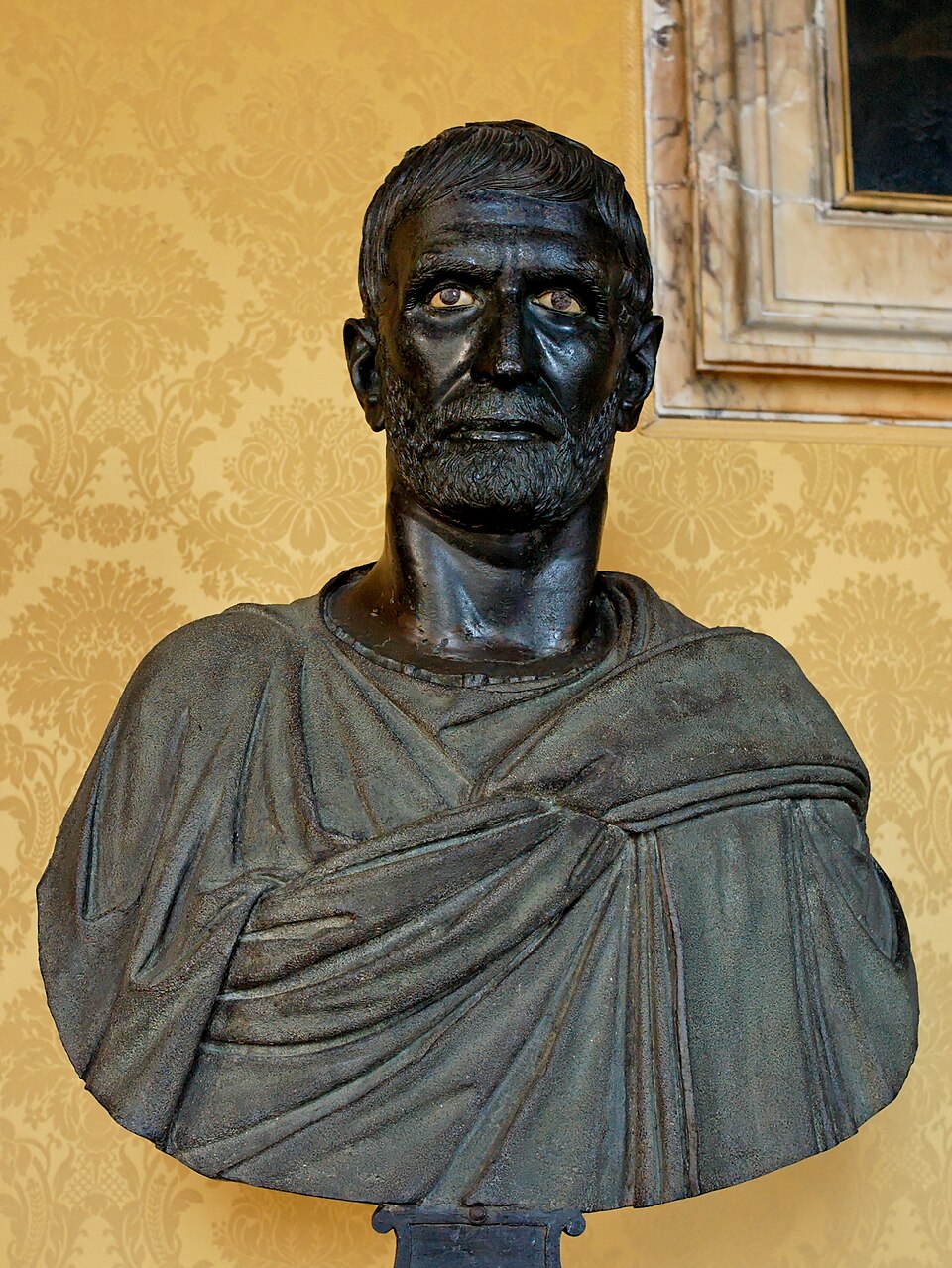
Brutus therefore inherited an identity built around resistance to kingship and concentrated power.
Brutus and the Crisis of the Republic
By the middle of the first century BC, the Roman Republic was already under enormous strain. Competition among ambitious politicians, military commanders and wealthy aristocrats had weakened traditional political institutions.
The First Triumvirate of Julius Caesar, Pompey the Great and Marcus Licinius Crassus demonstrated how far political power had moved outside normal republican mechanisms. Their alliance allowed each man to advance his own interests while bypassing opposition within the Senate.
The arrangement eventually collapsed. Julia, Caesar’s daughter and Pompey’s wife, died in 54 BC, while Crassus was killed during his disastrous campaign against Parthia in 53 BC.
With the alliance gone, Caesar and Pompey became rivals.
Brutus ultimately aligned himself with Pompey despite the fact that Pompey had been responsible for his father’s death. For Brutus, opposition to Caesar increasingly became a question of political principle rather than family loyalty.
Civil War Between Caesar and Pompey
Caesar’s conquest of Gaul had made him enormously powerful. His victories brought wealth, prestige and veteran soldiers whose loyalty was tied personally to their commander.
When Caesar’s command expired, his enemies in Rome demanded that he surrender his army before returning to political life. Caesar understood that doing so could expose him to prosecution by his political opponents.
On January 10, 49 BC, Caesar crossed the Rubicon with his army, violating the political boundary that separated his provincial command from Italy proper.
Civil war followed.
Brutus fought for Pompey, but Caesar defeated the Pompeian forces at Pharsalus in 48 BC. Pompey fled to Egypt, where he was murdered.
Brutus subsequently surrendered to Caesar and was pardoned.
Caesar’s Pardon and Brutus’ Rise
Caesar’s treatment of Brutus was remarkably generous. Rather than executing his former enemy, he incorporated him into his political order.
Brutus received important offices and honors, including a position in the priestly college of the pontiffs. He later governed Cisalpine Gaul and became praetor in 44 BC.
His rapid political rehabilitation demonstrated both Caesar’s confidence in his clemency and Brutus’ continuing importance within Roman political society.
Ancient writers also preserved a rumor that Caesar may have been Brutus’ biological father because of an alleged relationship with Servilia. There is no reliable evidence establishing that Caesar was Brutus’ father, and the story should be treated as ancient speculation rather than historical fact.
Despite accepting Caesar’s pardon, Brutus did not abandon his republican convictions.
The Conspiracy Against Caesar
Caesar’s growing authority increasingly alarmed members of the Senate.
In 44 BC, Caesar accepted the title of dictator perpetuo, or dictator for life. To Brutus and other conspirators, this appeared to confirm their fear that Caesar intended to replace republican government with permanent personal rule.
The conspiracy brought together senators with very different motives. Gaius Cassius Longinus was among its most important organizers, while Brutus became its most prominent public figure because of his reputation for integrity and his family’s traditional association with opposition to kingship.
The conspirators called themselves the Liberators.
They did not initially agree on the scope of their violence. Some wanted to eliminate Caesar’s closest political allies as well, but Brutus reportedly opposed expanding the assassination into a broader purge.
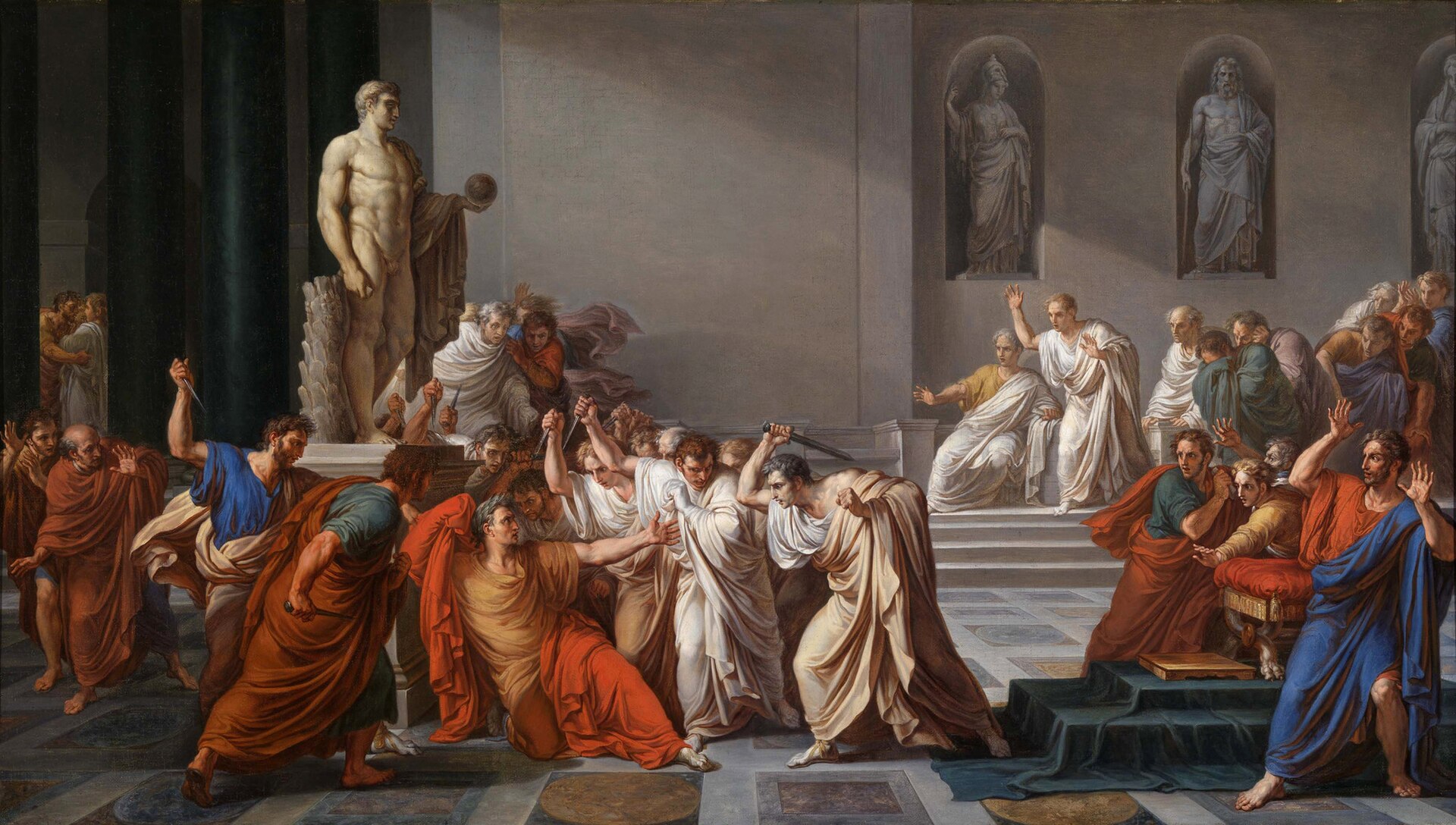
The conspirators eventually chose to strike while the Senate was meeting.
The Ides of March
The assassination took place on March 15, 44 BC.
According to ancient accounts, the conspirators surrounded Caesar and used a request for political assistance as the pretext for approaching him. One conspirator pulled Caesar’s toga as a signal, and the attack began.
Ancient sources disagree over Caesar’s exact final words. Suetonius records that Caesar may have spoken Greek to Brutus, but the famous Latin phrase “Et tu, Brute?” comes from Shakespeare rather than an ancient historical account.
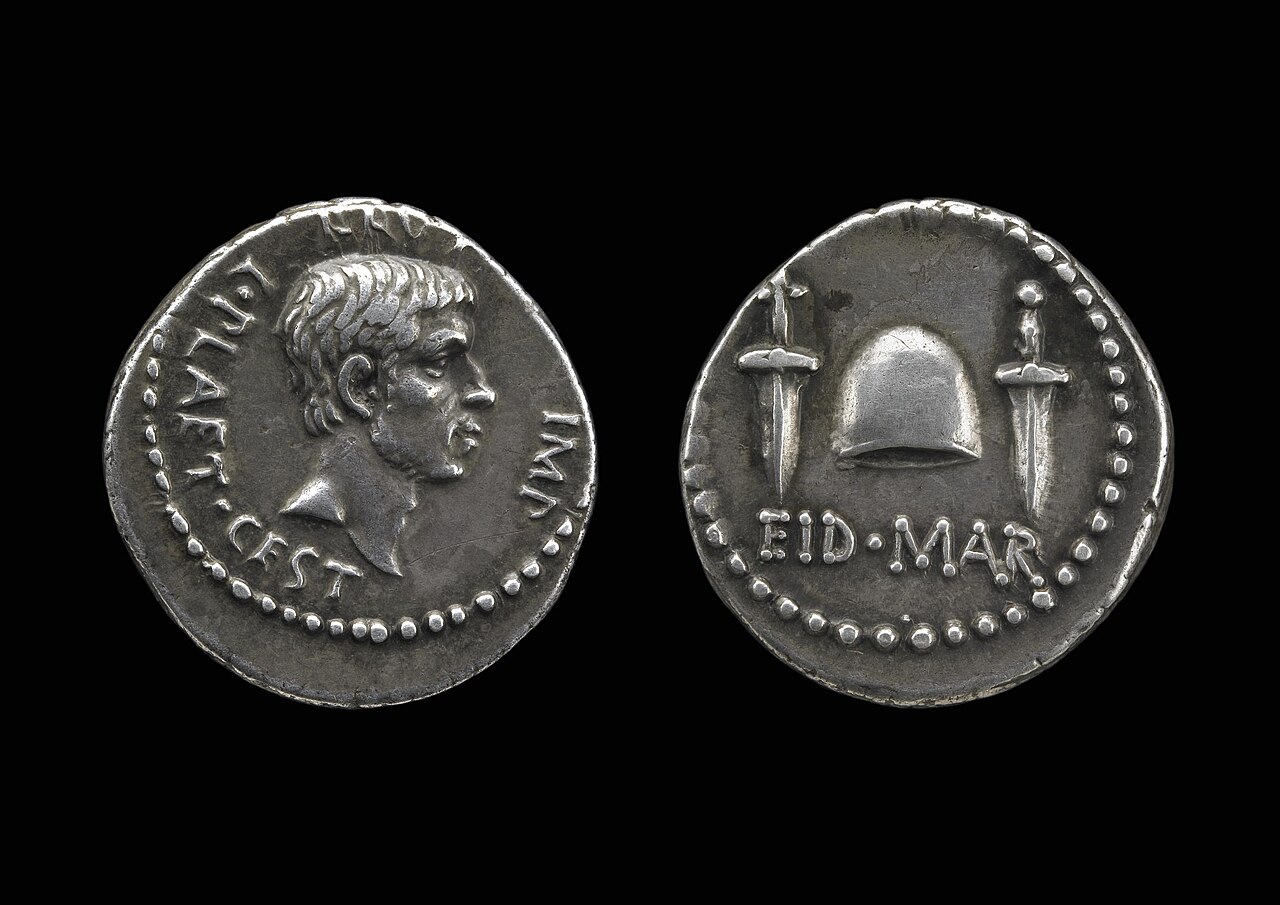
Likewise, the famous cry “Sic semper tyrannis” is not securely attested as something Brutus said after Caesar’s death.
What is certain is that Caesar was attacked repeatedly and died from multiple stab wounds. The conspirators believed they had removed a dictator and created the opportunity for the Republic to recover.
They were wrong.
Why Caesar’s Assassination Failed
The conspirators had underestimated Caesar’s popularity and failed to establish a workable political settlement immediately after his death.
Brutus attempted to justify the assassination as an act of liberation, but the political atmosphere quickly turned against him. Mark Antony, Caesar’s powerful ally, negotiated with the assassins while securing permission to deliver Caesar’s funeral.
That funeral became a turning point.
Antony exploited public sympathy for Caesar, displayed his bloodstained clothing and publicized provisions from Caesar’s will. Caesar had left money to Roman citizens and made his gardens available to the public.
Popular anger forced Brutus and Cassius to leave Rome.
The assassination had removed Caesar but failed to restore the political balance that had existed before his rise. Instead, it created another struggle for power.
Brutus and the Liberators’ Civil War
Brutus and Cassius eventually established themselves in the eastern Mediterranean, where they assembled substantial military forces.
In Rome, Mark Antony joined forces with Octavian, Caesar’s adopted son and heir, and Marcus Aemilius Lepidus. Together they formed the Second Triumvirate in 43 BC.
The triumvirs moved against Caesar’s assassins, producing another civil war.
The decisive confrontation came at Philippi in Macedonia in 42 BC.
The opposing armies met twice. In the first battle, Brutus defeated Octavian’s forces while Antony defeated Cassius. Believing the situation hopeless, Cassius killed himself before learning that Brutus had actually achieved a military success.
Brutus assumed command of the remaining republican forces.
The second battle, fought later in October, ended differently. The forces of Antony and Octavian defeated Brutus’ army.
The Battle of Philippi and Death
After the defeat at Philippi, Brutus fled with a small group of supporters. Realizing that his cause was finished, he chose suicide rather than capture.
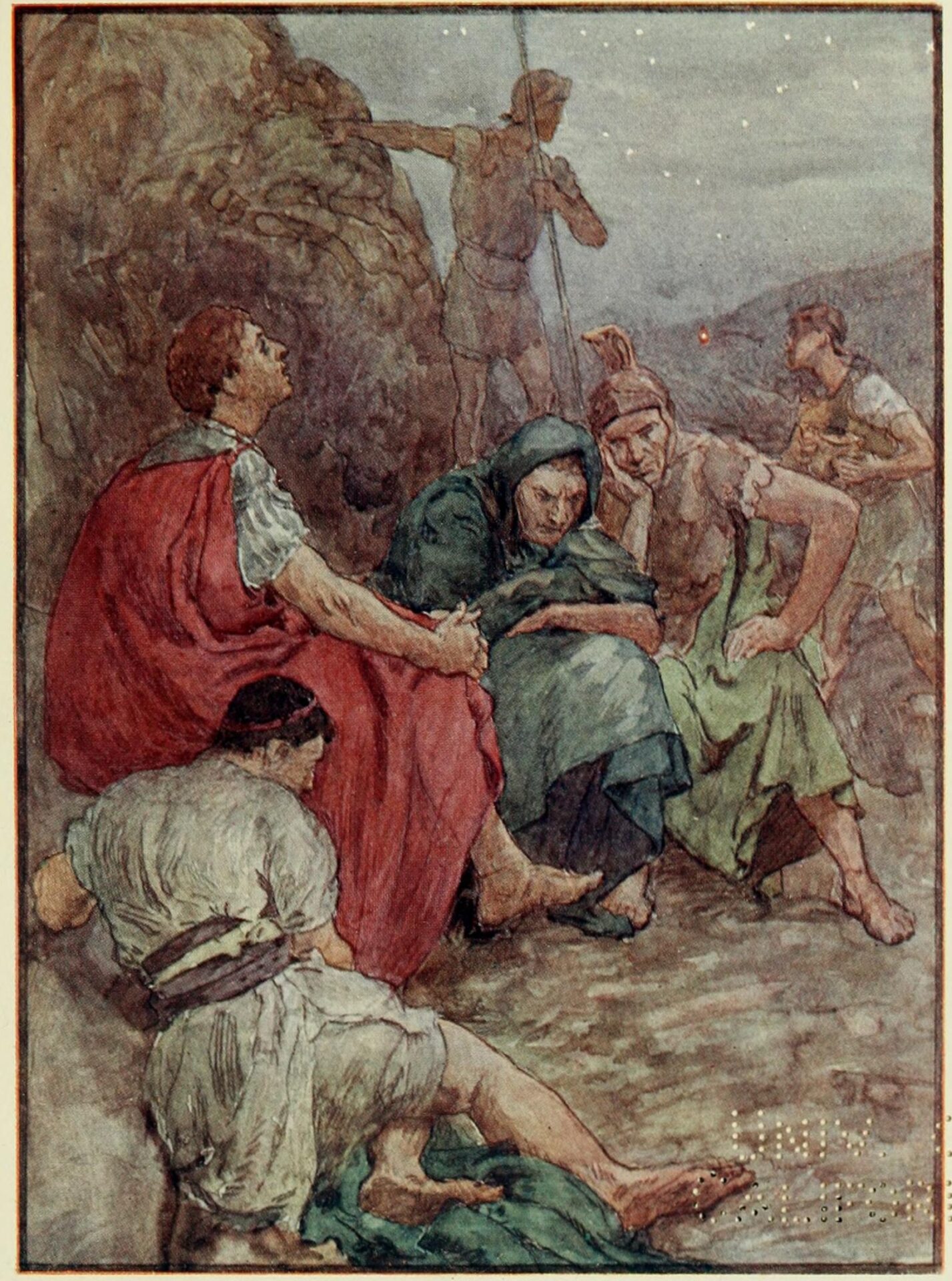
Ancient accounts differ over the precise circumstances, but Brutus died in 42 BC after falling on his sword with assistance from an associate.
Mark Antony reportedly treated his body with respect and ordered that it receive honorable treatment.
Brutus’ death effectively ended the organized republican resistance led by Caesar’s assassins.
The Republic itself did not disappear overnight, but its political structure had been irreversibly transformed. Octavian eventually defeated Antony and Cleopatra, became the dominant power in the Roman world and established a new political system under the title Augustus.
The Legacy of Marcus Junius Brutus
Marcus Junius Brutus became one of history’s most enduring symbols of political betrayal.
The popular image was largely shaped by later literature, especially Shakespeare’s Julius Caesar. The famous “Et tu, Brute?” scene transformed Brutus from a complex Roman politician into an almost universal symbol of treachery.
The historical Brutus was more complicated.
He was simultaneously an aristocrat, philosopher, politician, military commander and committed republican. He accepted Caesar’s mercy, benefited from Caesar’s political patronage and ultimately helped murder the same man who had restored his career.
His actions were driven partly by personal relationships, but also by a genuine belief that Rome’s political freedom was endangered by Caesar’s concentration of power.
The tragedy of Brutus is that his attempt to save the Republic helped destroy it.
The assassination of Caesar did not restore republican government. It unleashed another civil war, strengthened military politics and ultimately enabled Octavian to build the imperial system that Brutus had tried to prevent.
Brutus died believing that Caesar represented the death of Roman liberty. In the longer historical view, however, the Ides of March became one of the events that made the Roman Empire possible.
