
Publius Cornelius Scipio Africanus was one of the most consequential commanders of the Roman Republic. He defeated Hannibal at Zama in 202 BCE, ended the Second Punic War, destroyed Carthage’s position in Iberia, and helped establish Rome as the dominant military power in the western Mediterranean.
Yet Scipio’s achievement was not simply that he defeated Hannibal. His importance lies in how he learned from Rome’s greatest military disaster, studied the methods of his most dangerous enemy, and transformed Roman warfare without abandoning the institutional strengths of the Republic.
His career also exposed a political problem that would become increasingly important in Roman history: how could a republic reward extraordinarily powerful generals without allowing their personal authority to threaten the state?
Key Takeaways
- Scipio Africanus was born around 236 BCE into one of Rome’s leading patrician families.
- He experienced the Second Punic War from a young age and survived the catastrophe at Cannae in 216 BCE.
- After the deaths of his father and uncle in Spain, Scipio received extraordinary command authority despite his youth.
- His capture of Carthago Nova in 209 BCE crippled Carthage’s position in Iberia.
- Scipio defeated the remaining Carthaginian armies in Spain and established an alliance with the Numidian prince Masinissa.
- Instead of confronting Hannibal directly in Italy, Scipio transferred the war to North Africa.
- At Zama in 202 BCE, Scipio defeated Hannibal and ended the Second Punic War.
- His victory made Rome the dominant power in the western Mediterranean.
- Despite his immense popularity, Scipio eventually withdrew from Roman public life after political conflicts with his opponents.
Rome’s Greatest Military Crisis
The Second Punic War began in 218 BCE after Hannibal’s attack on Saguntum, a city allied with Rome. The conflict quickly became an existential struggle for the Roman Republic.
Hannibal Barca brought the war directly into Italy. His crossing of the Alps and subsequent victories demonstrated a level of tactical sophistication that repeatedly overwhelmed Roman commanders.
At the Trebia in 218 BCE and Lake Trasimene in 217 BCE, Roman armies suffered devastating defeats. Then came Cannae on 2 August 216 BCE.
Cannae was one of the worst disasters in Roman military history. Hannibal’s army surrounded and destroyed a substantially larger Roman force through a carefully executed double envelopment. The Roman consul Lucius Aemilius Paullus was killed, along with tens of thousands of Roman and allied soldiers.
Scipio was about nineteen years old when he experienced the disaster. Ancient accounts emphasize his leadership among the survivors, although many details surrounding his conduct after the battle are shaped by later literary traditions.
What mattered was the lesson.
Rome had discovered that numerical superiority and traditional battlefield discipline were not always enough. Hannibal could manipulate the battlefield itself, drawing Roman troops into positions from which their numerical advantage became a liability.
Scipio studied that lesson carefully. The source material portrays Hannibal as the young commander’s model and eventual master, describing Scipio as someone who learned from the Carthaginian’s use of stratagems, deception, and encirclement.
A Young Scipio Enters the Second Punic War
Scipio belonged to the Cornelii, one of the Republic’s most prominent aristocratic families. His father, Publius Cornelius Scipio, was consul in 218 BCE and commanded Roman forces during the opening phase of the war.
The younger Scipio entered military life early. According to Polybius and Livy, he was present during the campaigns against Hannibal and participated in the desperate fighting that followed Rome’s early defeats.
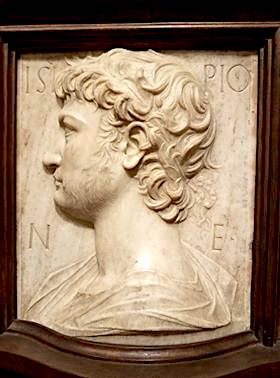
The ancient sources also preserve stories intended to portray Scipio as an exceptional figure from childhood, including legends surrounding his birth and divine favor. Such stories should be treated cautiously. Roman historians frequently used signs, omens, and miraculous episodes to explain the rise of extraordinary individuals.
The historical Scipio did not need supernatural origins to explain his success. His military education came from direct experience of a war unlike anything Rome had previously faced.
By his early twenties, he had already witnessed Rome suffer some of its worst defeats.
Then his family was struck directly by the war.
Cannae and the Making of a Commander
Cannae changed Scipio’s generation.
The battle demonstrated Hannibal’s ability to exploit Roman aggression against the Romans themselves. The Carthaginian center deliberately yielded ground while the flanks closed around the advancing Roman army. Once the Roman formation became compressed, Carthaginian cavalry attacked from the rear.
The result was catastrophic.
The source material describes the battle as the moment when Scipio began to study precisely why Hannibal had succeeded.
That interpretation is important because Scipio’s later campaigns show a commander who was willing to abandon rigid expectations about how Roman armies should fight.
He did not simply imitate Hannibal.
He adapted.
That distinction became central to his success.
Scipio Takes Command in Spain
In 211 BCE, disaster struck the Scipio family.
Scipio’s father and uncle, Publius and Gnaeus Cornelius Scipio, were killed during the Roman struggle in Spain. Their deaths left Rome without an established commander capable of restoring the Roman position there.
The Senate needed someone willing to take an extraordinarily dangerous command.
Scipio was barely twenty-five.
Despite his age, he was appointed to command Roman forces in Hispania. The source material correctly emphasizes how extraordinary this appointment was and how Scipio used the opportunity to reshape the campaign rather than simply consolidate Roman positions.
His objective was not merely to defend Roman territory.
He intended to destroy the Carthaginian strategic position in Spain.
That meant attacking New Carthage.
The Capture of New Carthage
Carthago Nova, modern Cartagena, was the center of Carthaginian power in Iberia.
It contained supplies, military equipment, political hostages, and access to the resources that supported Carthage’s armies. Capturing it could therefore damage the entire Carthaginian war effort rather than merely defeat one army.
Scipio marched rapidly toward the city in 209 BCE.
The city’s defenses appeared formidable. Its geography protected it on several sides, including a lagoon or marsh. Scipio, however, gathered intelligence about the area’s water levels and discovered a route that could be exploited during a period of low water.
The ancient tradition later connected the maneuver with divine assistance from Neptune. Historically, the important point is that Scipio combined reconnaissance, local intelligence, timing, and deception.
The attack succeeded.
Roman forces entered the city and captured one of Carthage’s most important bases in Iberia.
The victory demonstrated a defining characteristic of Scipio’s command: he preferred to solve military problems through intelligence and maneuver whenever possible rather than relying exclusively on brute force.
He also developed a reputation for clemency.
Livy famously presents Scipio as returning a captured woman to her fiancé rather than treating her as a personal prize. Whether every detail of the story is historical is uncertain, but the broader image of Scipio as a commander who cultivated loyalty through controlled clemency became an important part of his literary reputation.
Defeating Carthage in Spain
New Carthage was only the beginning.
Scipio defeated Hasdrubal Barca at Baecula in 208 BCE and later destroyed the remaining major Carthaginian field army at Ilipa in 206 BCE.
At Ilipa, Scipio demonstrated how far he had moved beyond conventional Roman battlefield practice.
Instead of allowing the enemy to dictate the engagement, he manipulated the Carthaginian commanders’ expectations about his deployment. His army’s final attack placed pressure on the weaker portions of the enemy formation while restricting the ability of the Carthaginians to respond effectively.
The result was a decisive Roman victory.
By 206 BCE, Carthaginian power in Iberia had effectively collapsed. Scipio had accomplished what Rome’s earlier commanders had failed to do: he removed Spain as a major source of Carthaginian manpower, money, and military support.
The source material identifies this as a crucial strategic stage in Scipio’s development, portraying Spain as the first major “center of gravity” he removed from Hannibal’s war effort.
Now Scipio turned toward the real center of Carthaginian power.
Africa.
From Spain to Africa
In 205 BCE, Scipio returned to Rome and was elected consul despite being only about thirty years old.
He proposed an audacious strategy.
Rather than attempting to defeat Hannibal in Italy, he would take the war to North Africa.
This was strategically dangerous. Rome’s Senate contained powerful opponents, particularly Quintus Fabius Maximus, who favored continuing the strategy of containing and exhausting Hannibal in Italy.
Scipio’s proposal offered something different.
If Roman forces threatened Carthage itself, the Carthaginians would be forced to recall Hannibal from Italy.
Scipio was not trying to win a single battle.
He was trying to change the geographical conditions of the entire war.
Eventually, the Senate authorized the African expedition. Scipio was not given the fresh army he wanted. Instead, he built his force partly from veterans who had survived Cannae and other disgraced or underused soldiers.
The source material emphasizes the transformation of these veterans from defeated survivors into an effective fighting force.
That achievement was as much organizational as tactical.
Scipio rebuilt an army that Rome had once regarded with suspicion.
The War Comes to Carthage
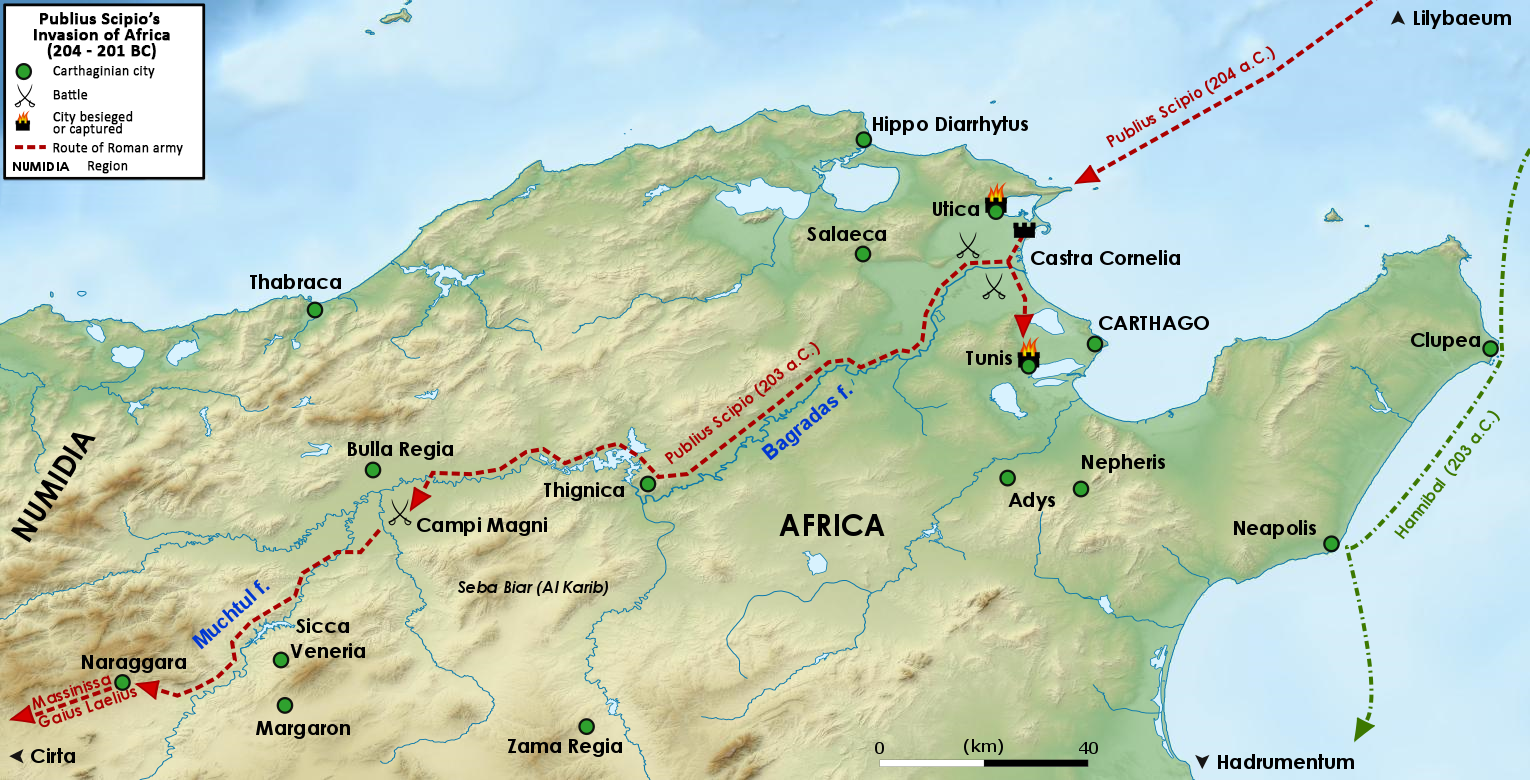
Scipio crossed into North Africa in 204 BCE.
His position became stronger when Masinissa, a Numidian prince, joined him. Numidian cavalry became one of the decisive elements of Scipio’s army.
Scipio’s campaign placed Carthage under immediate pressure.
In 203 BCE, he defeated the combined forces of Syphax and the Carthaginian commander Hasdrubal Gisco. The destruction of their camps demonstrated another feature of Scipio’s warfare: the use of surprise attacks and intelligence to strike before an enemy could fully organize.
These methods had once been associated most strongly with Hannibal.
Now Rome was using them against Carthage.
Hannibal was recalled from Italy.
After more than a decade of campaigning in Italy, Rome’s greatest enemy returned to Africa to defend his homeland.
The two commanders were finally approaching their decisive confrontation.
Scipio and Hannibal at Zama
In 202 BCE, Scipio and Hannibal met in North Africa.
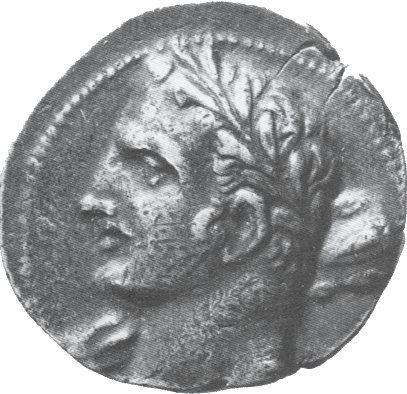
The battle is traditionally known as Zama, although the precise location remains debated. The two armies were large, and Hannibal possessed a significant elephant corps. His army also included veterans from his long Italian campaign as well as newer recruits.
Scipio understood the elephant threat.
Rather than forming a continuous wall of infantry, he arranged his troops with lanes between their formations. Light infantry could move aside as the elephants advanced, allowing many of the animals to pass through the Roman formation without breaking it apart.
The tactic neutralized one of Hannibal’s most dangerous weapons.
Scipio’s cavalry then became decisive.
Masinissa’s Numidian cavalry and Gaius Laelius’s Roman and allied horsemen drove the opposing cavalry from the field. Once the Carthaginian cavalry had been removed, the Roman horsemen were able to return to the battlefield at the critical moment.
The infantry battle was fierce.
Hannibal’s veterans fought with extraordinary determination, but Scipio’s army eventually gained the advantage. The returning cavalry attacked the Carthaginian army from behind.
The encirclement was complete.
Hannibal was defeated.
The battle ended the Second Punic War and established Scipio as Rome’s foremost military commander. Modern summaries of the battle emphasize that Scipio’s victory was built not simply on Roman discipline but on his ability to anticipate Hannibal’s methods and counter them.
The Defeat of Carthage
Carthage sued for peace.
The settlement imposed severe restrictions. Carthage surrendered its overseas military ambitions, accepted a substantial indemnity, and was required to abandon most of its fleet and its war elephants.
Rome did not destroy Carthage in 202 BCE.
That would happen generations later during the Third Punic War.
Instead, the settlement transformed Carthage from Rome’s greatest Mediterranean rival into a politically constrained state.
Scipio returned to Rome in triumph.
He received the agnomen Africanus, commemorating his victory in Africa.
His military career had transformed the strategic balance of the Mediterranean.
Rome now possessed control or influence over territories far beyond the Italian peninsula, including Spain, while Carthage had been reduced to a subordinate power.
The Political Fall of Scipio Africanus
Scipio’s greatest military success created a new problem.
He was enormously popular.
His soldiers admired him. His victories made him famous throughout the Mediterranean. His family possessed enormous political influence, and his relationship with his troops seemed unusually personal for a Roman commander.
For conservative senators, this created an uncomfortable precedent.
The Republic had been built on the principle that magistrates were temporary servants of the state. A victorious commander with immense personal prestige could potentially become more powerful than the institutions that had produced him.
Scipio did not become a king.
There is no solid evidence that he genuinely intended to overthrow the Republic.
Nevertheless, his political opponents increasingly portrayed him as a threat.
The most important of these opponents was Marcus Porcius Cato, later known as Cato the Elder.
When Scipio’s brother Lucius was accused of financial misconduct following the war against Antiochus III, Scipio became involved in the controversy. He eventually withdrew from active political life.
The source material describes his famous confrontation with his opponents and his eventual retirement to his estate at Liternum.
His political career had ended long before his reputation did.
Scipio’s Final Years
Scipio spent his final years away from the center of Roman politics.
He died in 183 BCE, approximately the same year as Hannibal.
Ancient tradition portrays the two former enemies as figures whose lives remained connected even after Zama. Hannibal fled into the eastern Mediterranean and eventually died by suicide when Roman pressure threatened to capture him.
Scipio, meanwhile, died in retirement.
The contrast was striking.
One commander had defeated the other, yet both ultimately became outsiders to the political systems they had served.
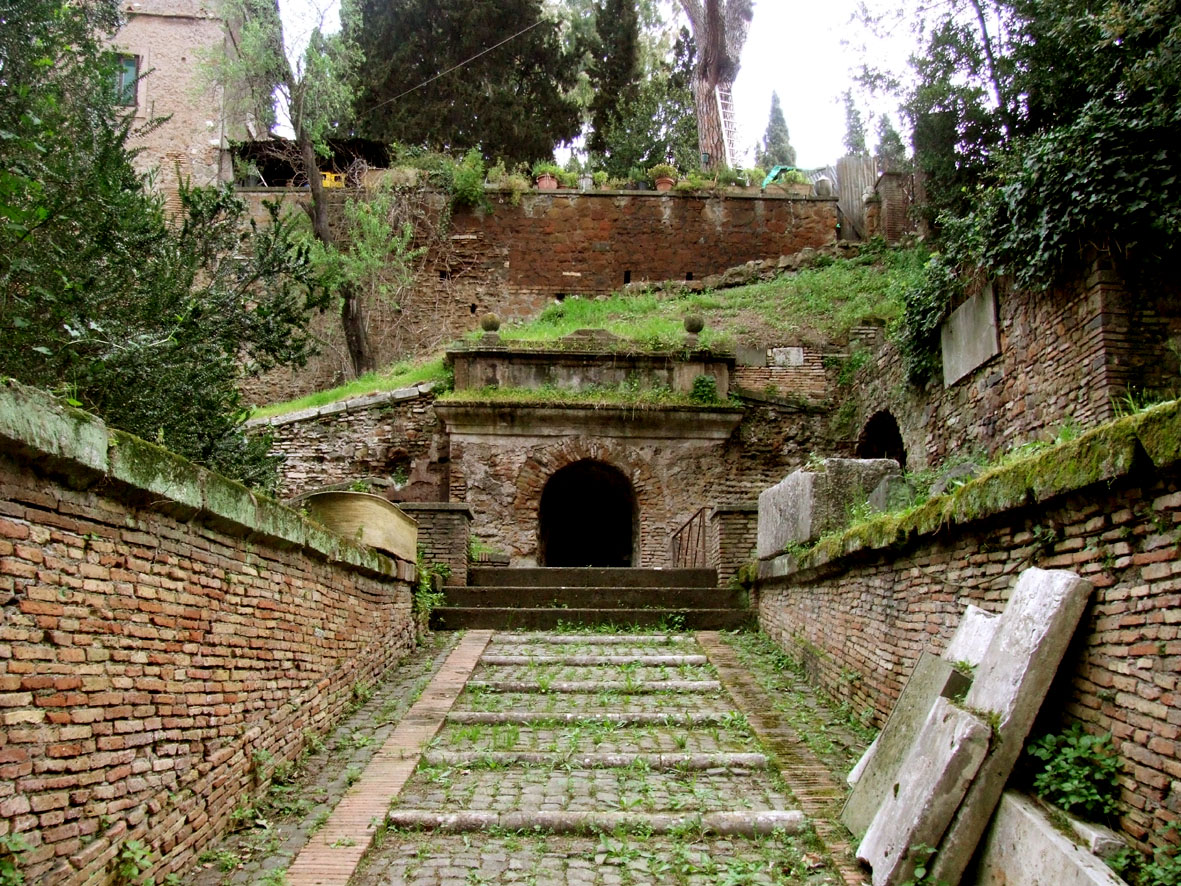
Scipio’s reported final bitterness toward Rome is preserved in ancient tradition, including the story that he wanted to be buried away from the city he believed had treated him with ingratitude. The precise wording and circumstances are uncertain, but his withdrawal from Roman public life is well established.
Legacy of Scipio Africanus
Scipio Africanus was more than the man who defeated Hannibal.
His importance lies in the transformation of Roman military strategy.
Rome had survived Hannibal through manpower, alliances, economic strength, and extraordinary political resilience. Scipio added another dimension: strategic flexibility.
He studied the enemy.
He used intelligence.
He cultivated alliances.
He attacked strategic centers rather than merely seeking battlefield victories.
He used deception when necessary.
And when he faced Hannibal himself, he defeated him partly by anticipating the methods that had made Hannibal so successful.
His capture of New Carthage destroyed a major Carthaginian base. His victories at Baecula and Ilipa eliminated Carthage’s military position in Spain. His African campaign forced Hannibal to abandon Italy. At Zama, he completed the process.
The victory changed the Mediterranean balance permanently.
Rome emerged from the Second Punic War as the dominant power in the western Mediterranean. Its subsequent expansion into the Hellenistic East would transform the Republic into the central imperial power of the ancient Mediterranean.
Yet Scipio’s career also foreshadowed a political development that would eventually become even more consequential.
Rome had learned how to create extraordinarily successful generals.
It had not yet solved the problem of what to do with them.
Scipio never became a Caesar, and he never attempted to establish a personal monarchy. But the immense prestige accumulated by victorious Roman commanders would become increasingly important during the final century of the Republic.
Julius Caesar, Pompey, and eventually Augustus would operate in a political world profoundly shaped by the precedent of men such as Scipio Africanus.
Scipio’s greatest legacy, therefore, was not simply that he defeated Hannibal.
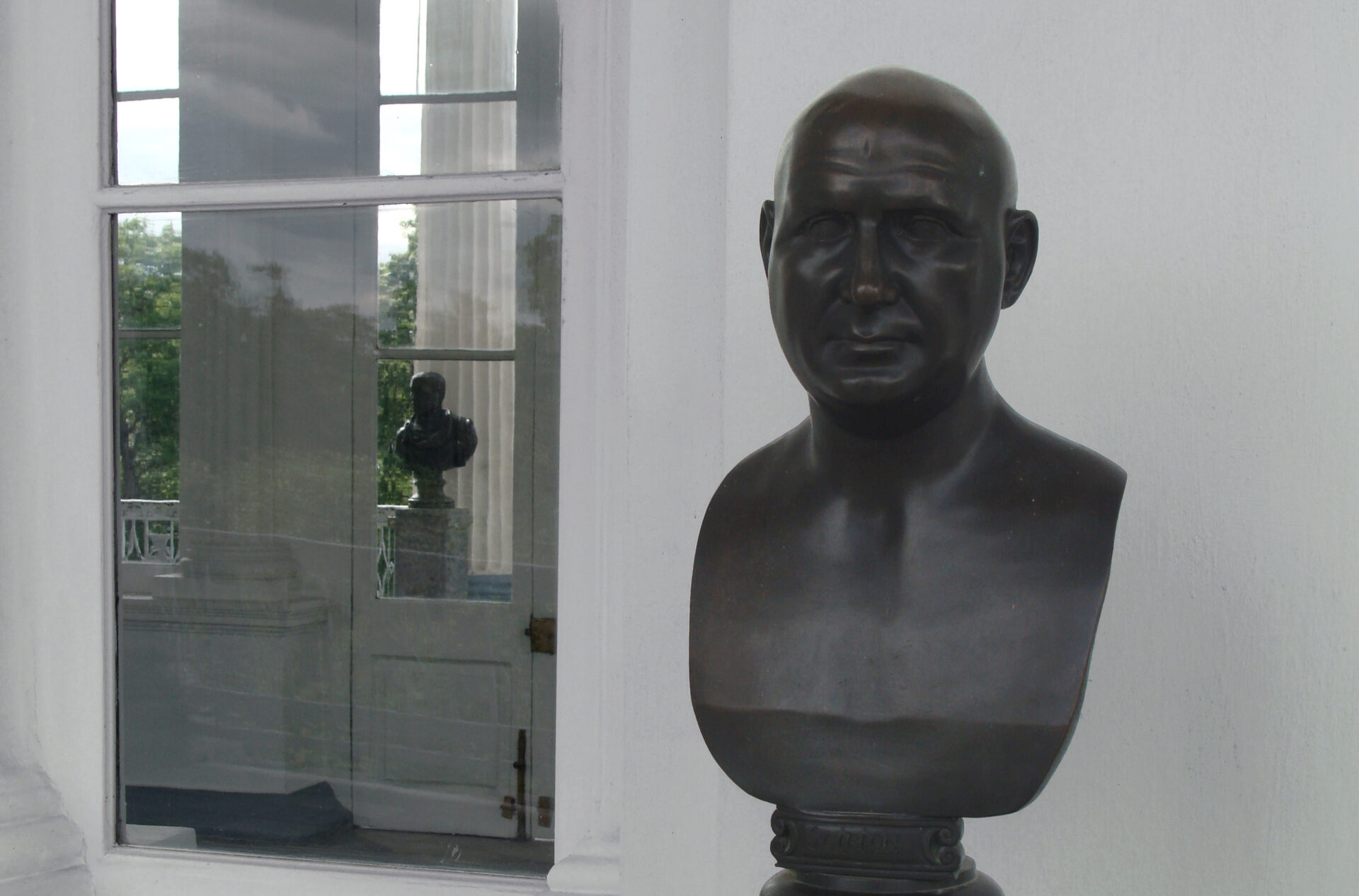
He demonstrated that Rome could absorb catastrophic defeat, learn from its enemies, adapt its military system, and return stronger.
Cannae had nearly destroyed the Republic.
Zama established that the Republic could destroy Carthage’s ability to challenge it.
The young commander who had watched Hannibal’s army annihilate Rome’s legions ultimately became the man who defeated Hannibal using many of the same principles of intelligence, maneuver, deception, and battlefield control.
That was Scipio Africanus’ extraordinary achievement—and one of the defining turning points in the history of Rome.
