
For more than two thousand years, the works of the Roman architect Vitruvius were a guide for architecture, engineering, and urban planning. His famous treatise De Architectura influenced generations. From Roman builders to Renaissance masters like Leonardo da Vinci, Vitruvius was the role model. Yet one mystery remained unsolved: the location of the only building Vitruvius himself claimed to have designed.
Now, that mystery may finally have been resolved. Archaeologists in Italy have uncovered what appears to be the long-lost basilica of Vitruvius in the ancient city of Fano, offering a bridge between Roman architectural theory and physical reality. The discovery has been described by Italian officials as one of the most important archaeological finds of the 21st century and could change the way we look at Vitruvius and also the modern understanding of Roman urban design.
A Discovery More Than 2,000 Years in the Making
The remains of the basilica were discovered in January 2026, near the city of Fano, known in antiquity as Fanum Fortunae. Archaeologists uncovered the structure during excavations connected to urban redevelopment projects in the city center.
Researchers quickly realized the scale of what they had found. The layout, proportions, and architectural features of the structure closely matched the description provided by Vitruvius in his famous architectural manual written in the late first century BC.
Italy’s culture minister compared the discovery to the unearthing of Tutankhamun’s tomb, underlining its significance for archaeology and architectural history. Such a comparison highlights the rarity of finding a structure directly tied to one of antiquity’s most influential thinkers.
For centuries, scholars had searched for this basilica. Vitruvius himself described it as a civic building he personally supervised, yet its location remained unknown. Now, more than 500 years after the search began in earnest during the Renaissance, archaeologists believe they have finally found it.
Who Was Vitruvius?
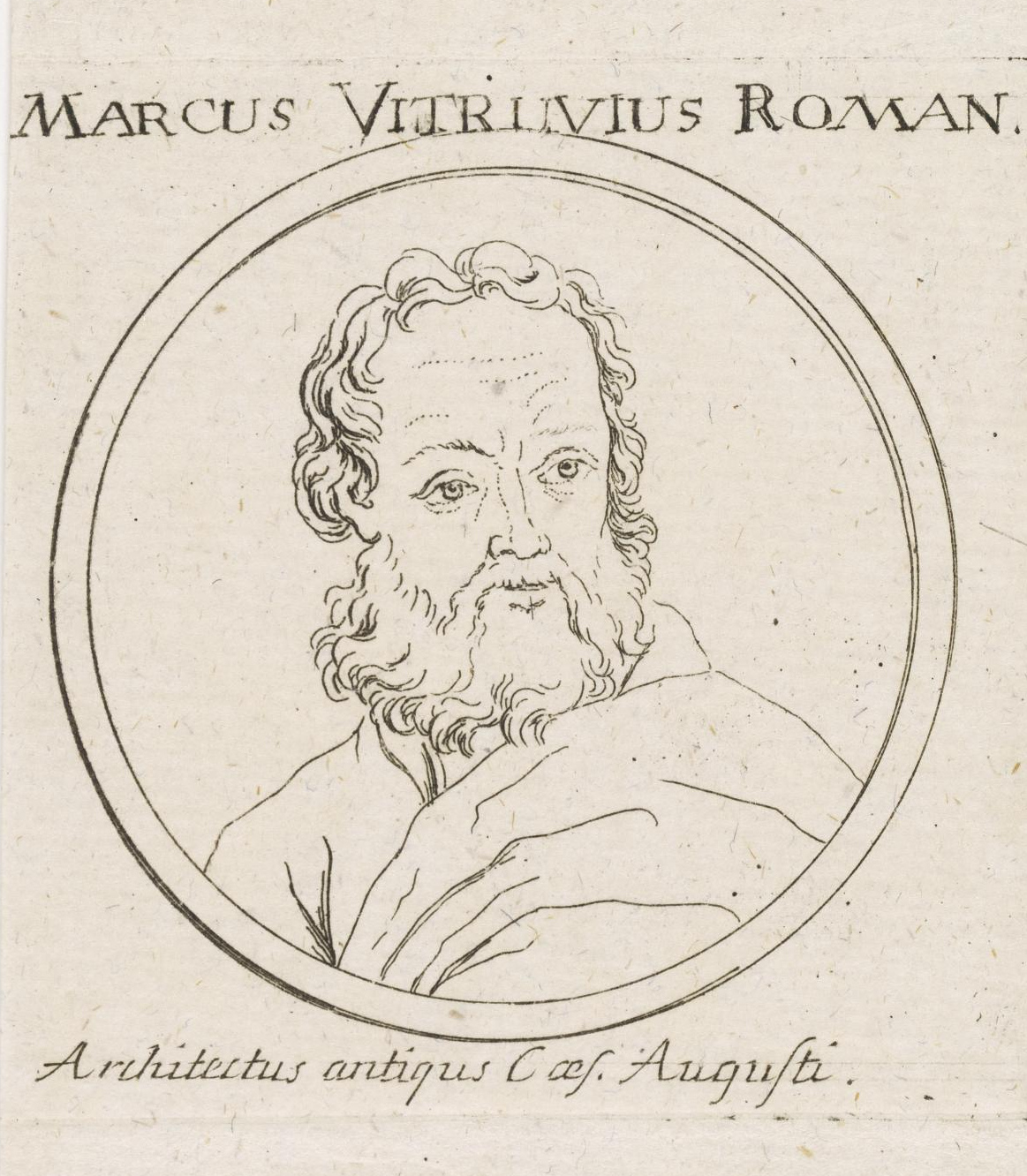
Marcus Vitruvius Pollio was one of the most influential architects and engineers of ancient Rome. Living in the first century BC during the age of Julius Caesar and Augustus, he served as a military engineer before dedicating himself to architecture and writing.
His ten-volume work De Architectura became the only surviving architectural treatise from antiquity. In it, Vitruvius outlined principles of design, engineering, urban planning, and proportion that would influence Western architecture for nearly two millennia. The treatise emphasized harmony, symmetry, and the relationship between human proportions and architecture, ideas that inspired Leonardo da Vinci’s famous “Vitruvian Man.”
Despite his immense influence, few buildings could be definitively attributed to Vitruvius himself. The basilica in Fano was long believed to be the only structure he explicitly claimed as his own work, making its discovery especially significant.
Confirming the Basilica’s Identity
The identification of the structure as Vitruvius’ basilica was not based on speculation alone. Archaeologists carefully compared the remains with the detailed description provided in De Architectura.
The building’s rectangular layout, orientation, and column arrangement correspond closely with Vitruvius’ account. Excavations revealed a colonnaded structure with proportions matching his specifications almost exactly, down to the centimeter in some cases.
Vitruvius described a basilica with columns arranged along each side and aligned with the city’s forum and temple complex. Archaeologists found that the newly uncovered structure fits this description precisely, confirming its likely identity.
Such a precise match between ancient text and archaeological evidence is extremely rare. For historians and architects, it offers a unique opportunity to study a building that can be directly connected to one of antiquity’s most important theoretical works.

What Was a Roman Basilica?
In the Roman world, a basilica was not originally a religious building. Instead, it served as a public civic structure used for legal proceedings, business transactions, and administrative functions.
These buildings were typically located near the forum, in the central public space of Roman cities. Inside, citizens gathered to conduct trade and participate in civic life. Basilicas were essential to the functioning of Roman urban society.
The basilica described by Vitruvius in Fano would have played exactly this role. Positioned near the city’s forum and aligned with other major public structures, it likely served as a central gathering place for legal and commercial activities. By studying this building, historians can better understand how Roman civic architecture functioned and how Vitruvius’ theoretical principles were applied in practice.
Why the Discovery Matters
The rediscovery of Vitruvius’ basilica is significant for several reasons. First, it provides rare physical evidence of a structure designed by one of antiquity’s most influential architects. For centuries, Vitruvius’ ideas were known primarily through texts. Now, scholars can study an actual building that embodies those principles.
Second, the discovery strengthens the connection between Roman architectural theory and real urban spaces. The basilica demonstrates that Vitruvius’ writings were not purely theoretical; they reflected practical design methods used in Roman cities.
Third, the find enhances the historical importance of Fano itself. During the Roman period, the city was already significant, but the presence of a Vitruvian basilica places it firmly within the story of Roman architectural innovation.
Finally, the discovery has broader cultural implications. Officials and scholars believe it will reshape the understanding of classical architecture and inspire new research into Roman urban planning and engineering.
A Rare Link Between Text and Reality
One of the most remarkable aspects of the discovery is the direct connection between Vitruvius’s written description and the physical remains of the building.
Ancient texts often survive without corresponding archaeological evidence. In this case, however, the basilica provides a tangible link between theory and construction. Scholars can now examine how Vitruvius’ principles of proportion, symmetry, and layout were applied in a real Roman city.
This connection allows historians to better visualize the architectural environment of the early Roman Empire. It also confirms the reliability and precision of Vitruvius’ writings, which have guided architects for centuries. The discovery, therefore, represents more than the unearthing of a single building. It offers a new framework for understanding Roman architecture as a whole.
What Comes Next?
Excavations at the site are ongoing, and researchers expect further discoveries in the coming years. Archaeologists hope to uncover more of the structure and surrounding urban landscape to better understand how the basilica functioned within the city.
There is also discussion about making the site accessible to the public in the future. If preserved and presented properly, it could become a major destination for those interested in Roman history and architecture.
Conclusion: Rediscovering the Architecture of an Empire
The rediscovery of Vitruvius’ basilica in Fano represents one of the most significant archaeological breakthroughs in recent years. After centuries of searching, scholars may finally have found the only known building designed by the man whose ideas shaped Western architecture.

Hello, my name is Vladimir, and I am a part of the Roman-empire writing team.
I am a historian, and history is an integral part of my life.
To be honest, while I was in school, I didn’t like history so how did I end up studying it? Well, for that, I have to thank history-based strategy PC games. Thank you so much, Europa Universalis IV, and thank you, Medieval Total War.
Since games made me fall in love with history, I completed bachelor studies at Filozofski Fakultet Niš, a part of the University of Niš. My bachelor’s thesis was about Julis Caesar. Soon, I completed my master’s studies at the same university.
For years now, I have been working as a teacher in a local elementary school, but my passion for writing isn’t fulfilled, so I decided to pursue that ambition online. There were a few gigs, but most of them were not history-related.
Then I stumbled upon roman-empire.com, and now I am a part of something bigger. No, I am not a part of the ancient Roman Empire but of a creative writing team where I have the freedom to write about whatever I want. Yes, even about Star Wars. Stay tuned for that.
Anyway, I am better at writing about Rome than writing about me. But if you would like to contact me for any reason, you can do it at contact@roman-empire.net. Except for negative reviews, of course. 😀
Kind regards,
Vladimir