
A Legacy in Stone and Concrete
When we think of ancient Rome, images of senators in togas or gladiators in the Colosseum often come first to mind. But the true backbone of Roman power was something far more practical: engineering. Long after emperors and battles faded, it’s the bridges, aqueducts, and buildings that continued to shape landscapes and societies far beyond the empire’s fall. Even today, we still see and use Roman engineering wonders.
The Romans didn’t invent architecture or construction; they learned from the Greeks and Etruscans, but they transformed it. Through systematic innovation and sheer ambition, Roman builders created structures that were not just massive but durable and functional. Their techniques still influence the way we build today.
The Arch: A Simple Idea With Massive Impact
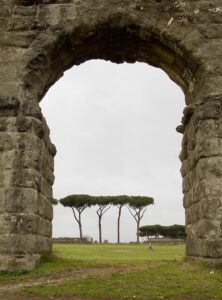
At the heart of Roman engineering was a deceptively simple idea: the arch. Instead of laying horizontal beams across vertical supports like their predecessors, Roman builders curved stones into arches that could bear enormous weight without collapsing. This allowed them to span wider gaps and support much larger structures than was previously possible. This was a true Roman engineering wonder.
Arches didn’t just make buildings bigger; they made bridges and aqueducts practical. With a series of repeated arches, the Romans constructed long, stable spans of stone that could cross rivers and valleys. In many places across Europe, the remains of these ancient bridges still carry traffic — sometimes even today’s modern roads.
Bridges That Linked an Empire
Bridges were more than architectural marvels; they were strategic lifelines. By connecting distant towns, forts, and trade routes, bridges allowed legions, merchants, and information to move rapidly. They were essential to Rome’s military dominance and economic integration.
One early example was the Pons Sublicius, traditionally built in the 7th century BC near the Forum Boarium in Rome. Though long gone, it symbolized Rome’s early recognition that controlling rivers meant controlling movement and influence.
In places like Trier (in modern Germany), you can still see the footprint of Roman bridge building in the Romerbrücke, whose core piers date to antiquity. These durable approaches set the standard for bridge construction for centuries.

Aqueducts: Water Over Land
If bridges carried people, aqueducts carried life itself. Roman cities were growing populations of tens or even hundreds of thousands. Supplying clean water for drinking, bathing, fountains, and public baths was not trivial. The solution was aqueducts: long channels that used gravity and gradient to bring water from distant springs into city centers.
Aqueducts combined careful surveying, precise construction, and, where necessary, bridges of arches to keep the water flowing across depressions in the landscape. The famous Pont du Gard in southern France, for example, shows how elegantly these systems married utility with monumental aesthetics.
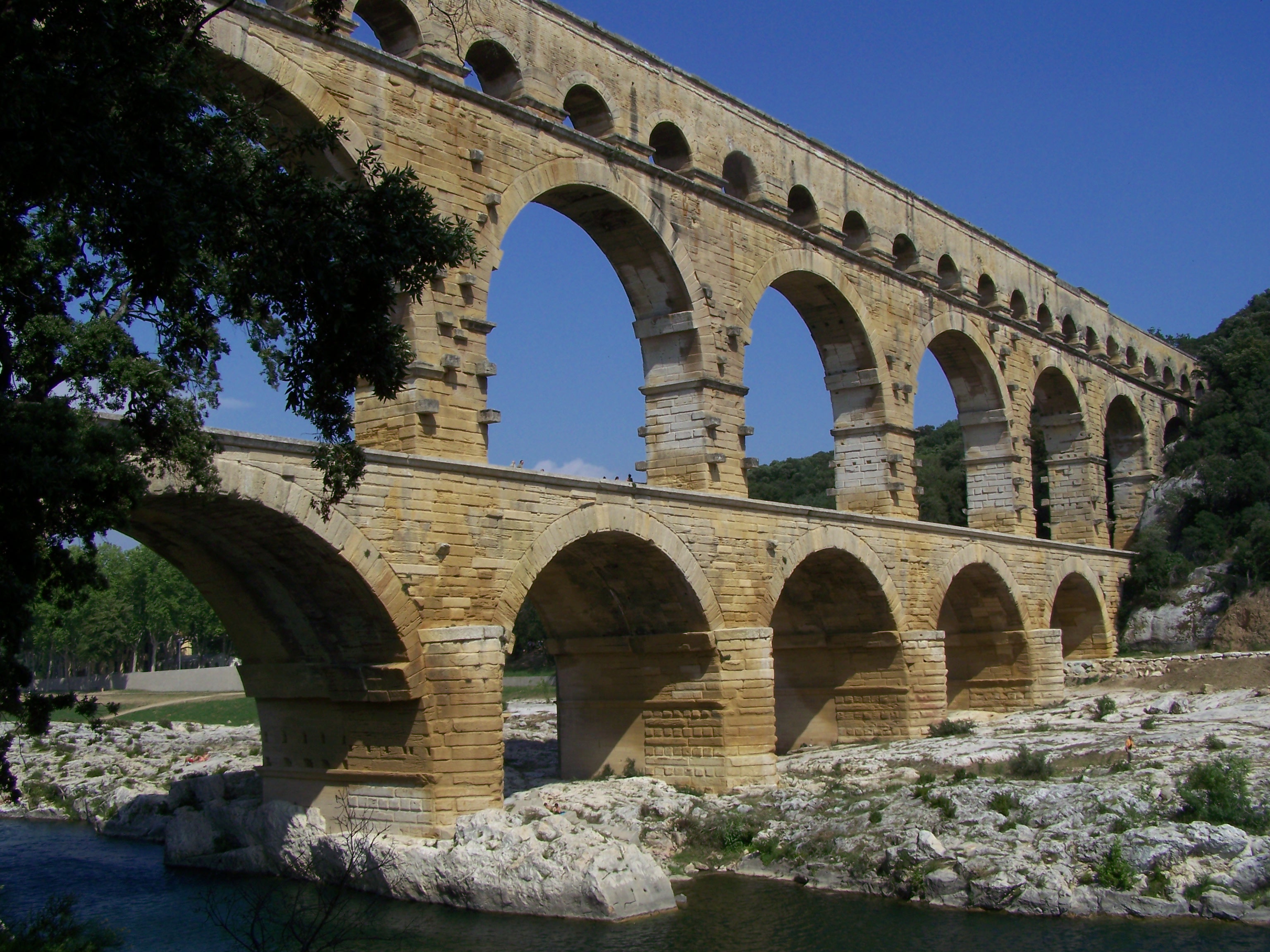
The success of the aqueduct system was not just in its scale, but also in its reliability. Some Roman aqueducts supplied water for hundreds of years without major interruption.
Roads: The Empire’s Circulatory System
While not discussed in depth in the National Geographic article, roads are inseparable from bridges and buildings in any discussion of Roman engineering. The Romans constructed an immense network of paved roads, at least 85,000 kilometers, linking outposts from Britain in the northwest to Mesopotamia in the east.
These roads were laid with layered stones, crowned to shed water, and built straight wherever possible. They connected military forts, cities, and ports with remarkable efficiency. Roads and bridges together formed a circulatory system that allowed the empire to function, unite diverse regions, and maintain stability across vast distances.
Public Spaces and Civic Identity
Beyond infrastructure, Roman engineering also shaped civic life. Forums, basilicas, amphitheaters, and baths were not airy temples to religion or leisure; they were expressions of Roman values and power.
The Colosseum stands as the most iconic example. Its elliptical shape, tiered seating, and complex internal structure showcased mastery of concrete, vaults, and crowd movement design. While the Colosseum’s symbolic value looms large in popular imagination, many ordinary towns across the empire had their own amphitheaters or bath complexes.
These public buildings weren’t just physically impressive. They reinforced a shared identity and connected far-flung provinces with a common architectural language.
Materials That Outlasted Empires
A big part of why Roman structures endured lies in their materials. While the Greeks favored marble and stone blocks, the Romans perfected concrete, a mixture of lime, volcanic ash, and aggregate that could set underwater and resist cracking. This allowed for bold shapes and massive vaults that would have been impractical with traditional stone alone.
Concrete and stone arches together became the backbone of Roman engineering, whether in bridges spanning rivers or vaults covering interior spaces. After the fall of Rome, these techniques didn’t disappear. Medieval builders learned from ruins and repurposed materials, and Renaissance architects studied Roman treatises to revive classical forms.
The Human Side of Roman Engineering
It’s easy to think of Roman engineering as abstract structures standing apart from society, but these were built by people responding to concrete needs: moving armies, addressing urban growth, distributing water, and creating spaces for community life. Skilled masons, surveyors, and laborers worked under imperial direction, often innovating on the go.
Roman engineers were practical problem-solvers in a world with no cranes, trucks, or modern tools. Instead, they relied on systems of pulleys, ramps, human and animal labor, clever surveying, and a deep understanding of how forces moved through stone and earth.
Why Their Work Still Matters
Today, when we cross a stone arch bridge, marvel at an aqueduct, or walk along a paved road, we’re following in footsteps laid down millennia ago. Roman engineering didn’t just link an empire; it laid foundations that shaped Western infrastructure long after Rome’s political power faded.
Their legacy reminds us that engineering is not just about grand visions, but about solving everyday problems in ways that endure.

Hello, my name is Vladimir, and I am a part of the Roman-empire writing team.
I am a historian, and history is an integral part of my life.
To be honest, while I was in school, I didn’t like history so how did I end up studying it? Well, for that, I have to thank history-based strategy PC games. Thank you so much, Europa Universalis IV, and thank you, Medieval Total War.
Since games made me fall in love with history, I completed bachelor studies at Filozofski Fakultet Niš, a part of the University of Niš. My bachelor’s thesis was about Julis Caesar. Soon, I completed my master’s studies at the same university.
For years now, I have been working as a teacher in a local elementary school, but my passion for writing isn’t fulfilled, so I decided to pursue that ambition online. There were a few gigs, but most of them were not history-related.
Then I stumbled upon roman-empire.com, and now I am a part of something bigger. No, I am not a part of the ancient Roman Empire but of a creative writing team where I have the freedom to write about whatever I want. Yes, even about Star Wars. Stay tuned for that.
Anyway, I am better at writing about Rome than writing about me. But if you would like to contact me for any reason, you can do it at contact@roman-empire.net. Except for negative reviews, of course. 😀
Kind regards,
Vladimir